AQA A Level Chemistry - Alcohols (organic)
No description yet. This curated deck is ready for daily study.
Card preview (17)
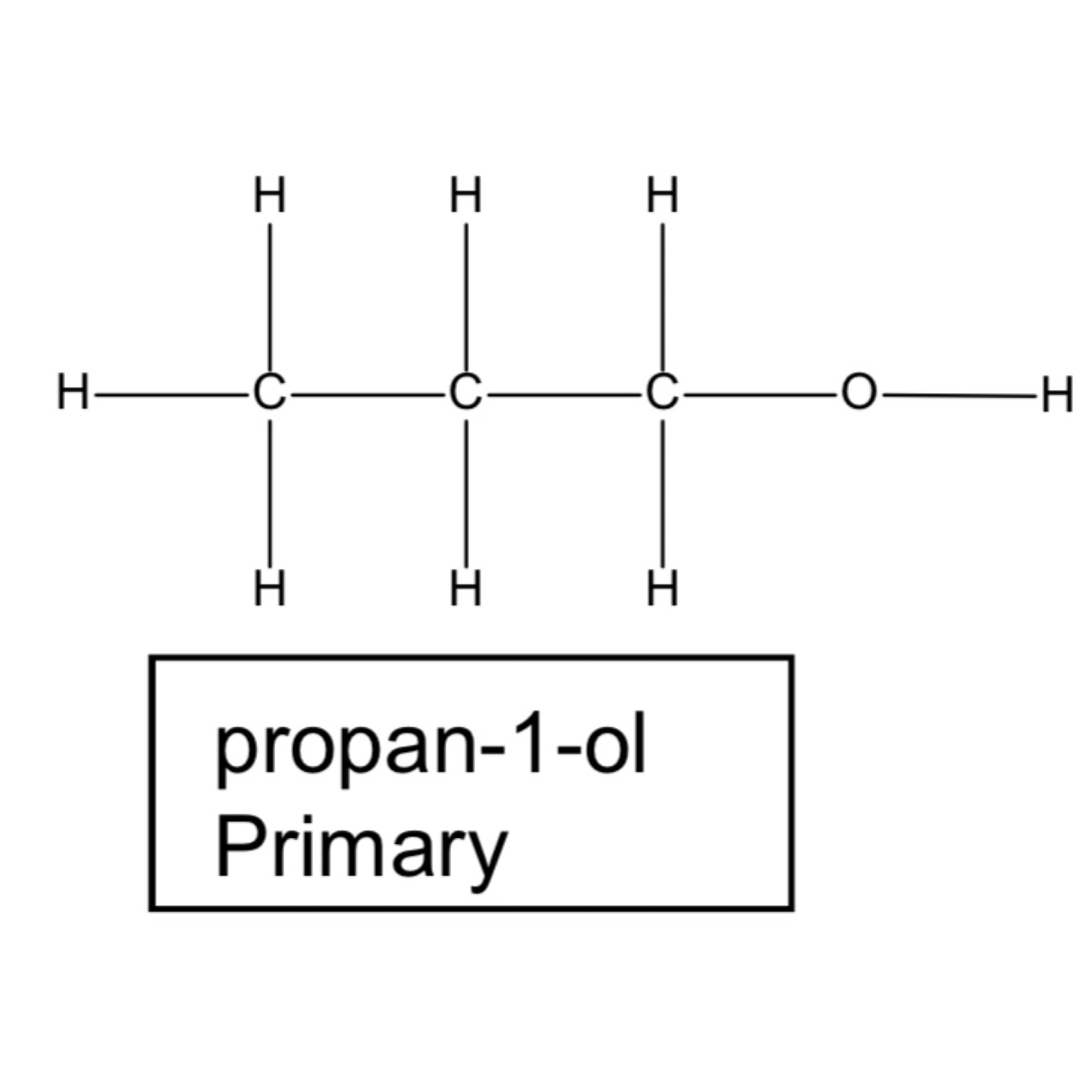
What are primary alcohols?
• Primary alcohols are alcohols where 1 carbon is attached to the carbon adjoining the oxygen
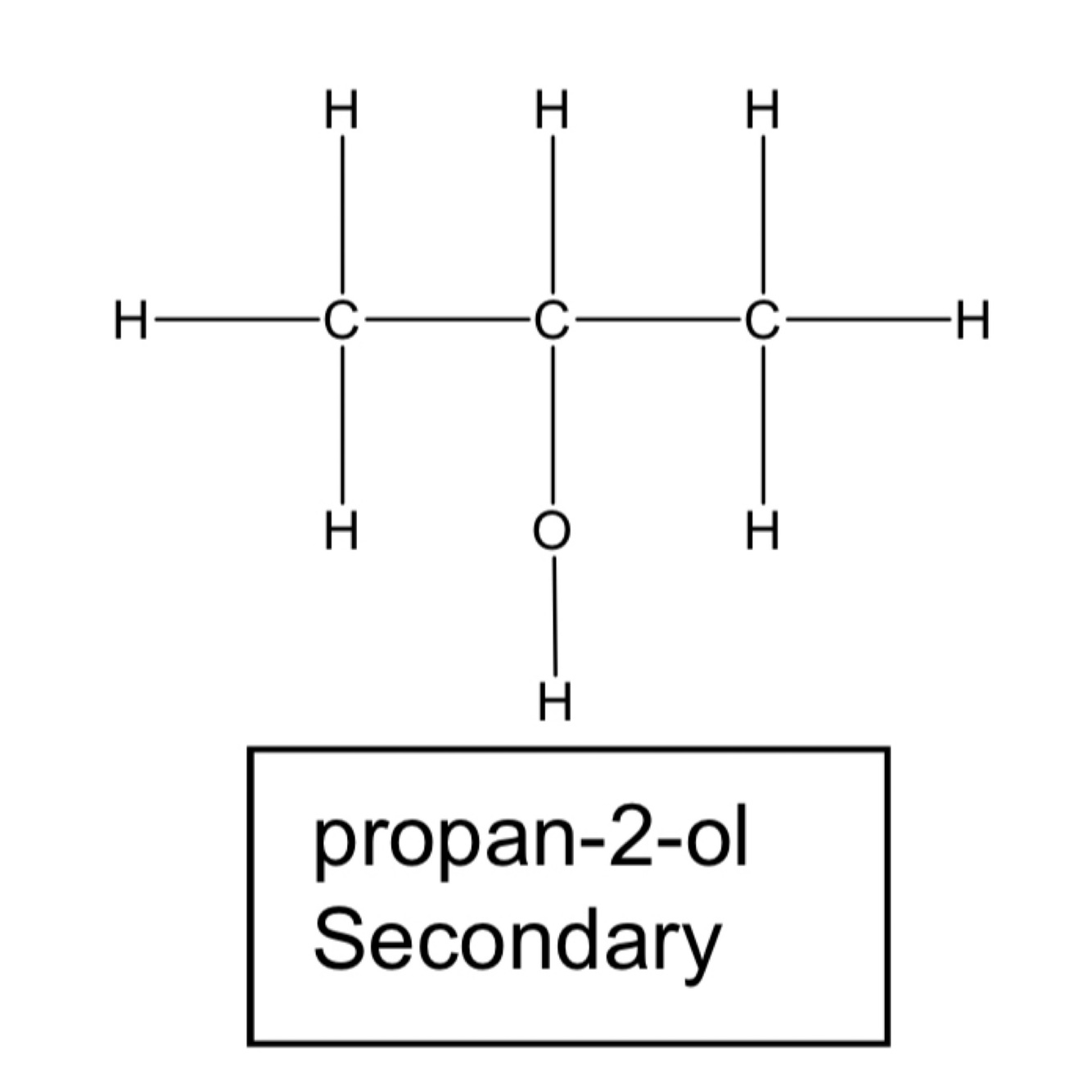
What are secondary alcohols?
• Secondary alcohols are alcohols where 2 carbons are attached to the carbon adjoining the oxygen
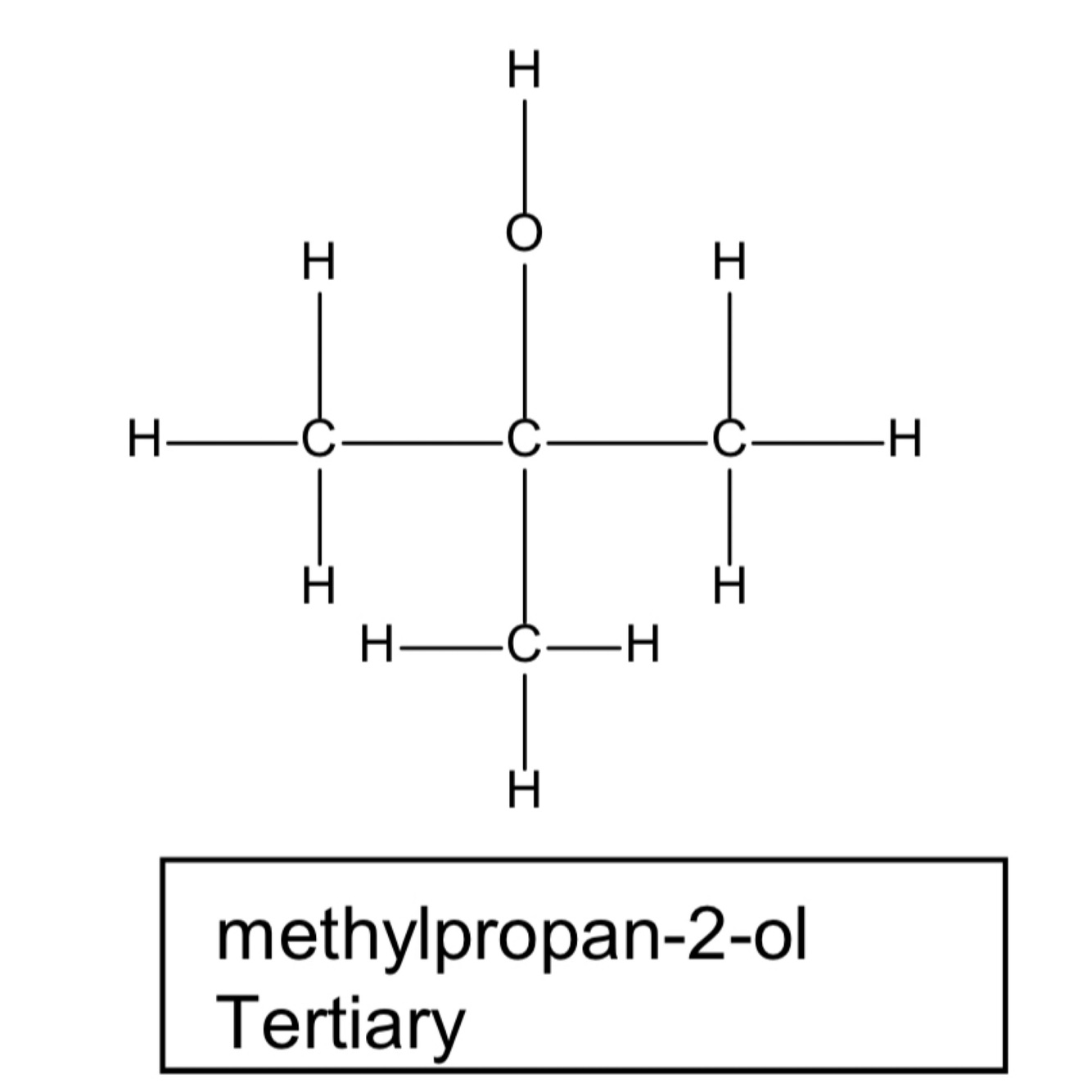
What are tertiary alcohols?
• Tertiary alcohols are alcohols where 3 carbons are attached to the carbon adjoining the oxygen
Partial oxidation of primary alcohols
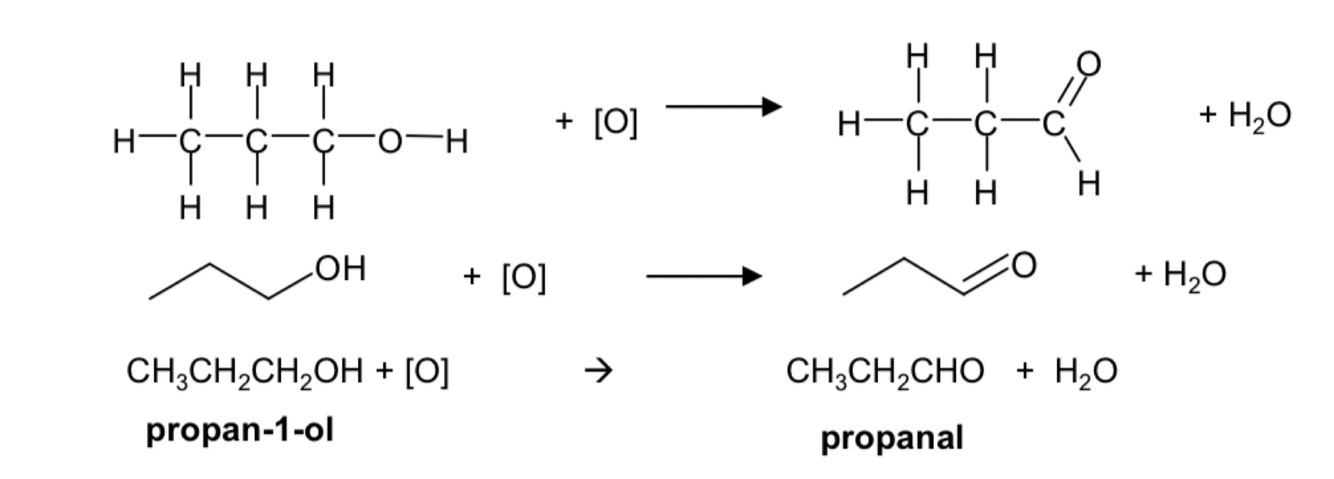
Reaction: primary alcohol -> aldehyde Reaction type: oxidation Reagent: acidified potassium dichromate (VI) solution and dilute sulfuric acid Conditions: Distillation, (use a limited amount of dichromate to prevent further oxidation of the aldehyde to a carboxylic acid), warm gently and distil out the aldehyde as it forms Observation: the orange dichromate ion (Cr2O72-) reduces to the green Cr3+ ion
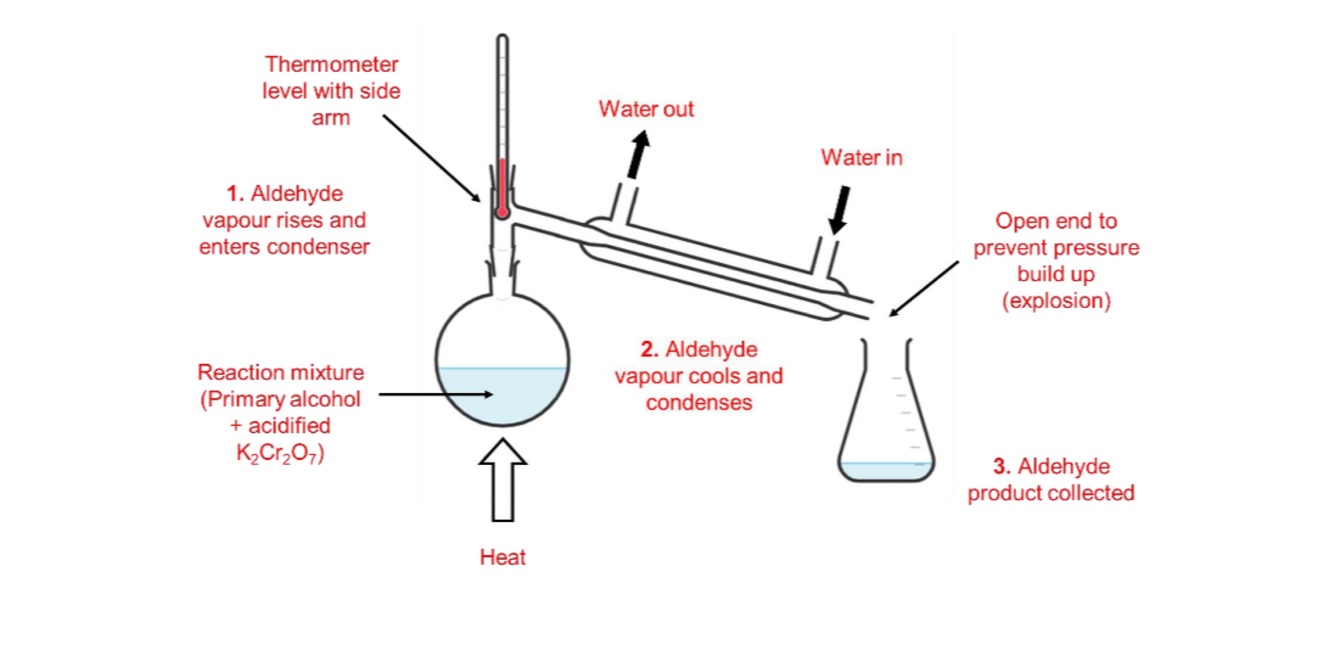
Distillation
• In general, distillation is used as a separation technique to separate an organic product from its reacting mixture. In order to maximise yield collected, only collect the distillate at the approximate boiling point of the desired aldehyde and not higher • The bulb of the thermometer should be at the T Junction connecting to the condenser to measure the correct boiling point • The water goes into the bottom of the condenser to go against gravity. This allows more efficient cooling and prevents back flow of water • Electric heaters are often used to heat organic chemicals. This is because organic chemicals are normally highly flammable and could set on fire with a naked flame. • Open end to prevent pressure build up (explosion) - Never seal the end of the condenser as the build up of gas pressure could cause the apparatus to explode. This is true of any apparatus where volatile liquids are heated including the distillation set up. • The reaction mixture is heated during both reflux and distillation, this can cause the formation of large bubbles and ‘bumping’ of the equipment, which is unsafe. Anti-bumping granules are added to the reaction mixture to prevent the formation of large bubbles. They prevent vigorous, uneven boiling by making small bubbles form instead of large bubbles • The collection flask can be cooled in ice to help improve the yield of the distillate • What happens to the aldehyde as it is produced during distillation? • The aldehyde forms as a vapour and escapes from the reaction mixture into the condenser • Why is distillation used when producing an aldehyde from a primary alcohol? • Distillation allows the aldehyde to escape the reaction mixture and prevents further oxidation
Full oxidation of primary alcohols
Reaction: Primary alcohol -> carboxylic acid Reaction type: Acidified potassium dichromate (VI) solution and dilute sulfuric acid Conditions: use an excess of dichromate, and heat under reflux: (distil off product after the reaction has finished) Observation: Observation: the orange dichromate ion (Cr2O72-) reduces to the green Cr 3+ ion
Ethanol can be oxidised to ethanal or ethanoic acid. Describe how ethanal can be made in high yield, as opposed to ethanoic acid
• Use distillation • Heat at the boiling point of ethanal • Collect ethanal as it is distilled off
Reflux
• Reflux is used when heating organic reaction mixtures for long periods. The condenser prevents organic vapours from escaping by condensing them back to liquids. • Why is reflux used to oxidise a primary alcohol to a carboxylic acid? • Reflux doesn’t allow any reactant vapour to escape
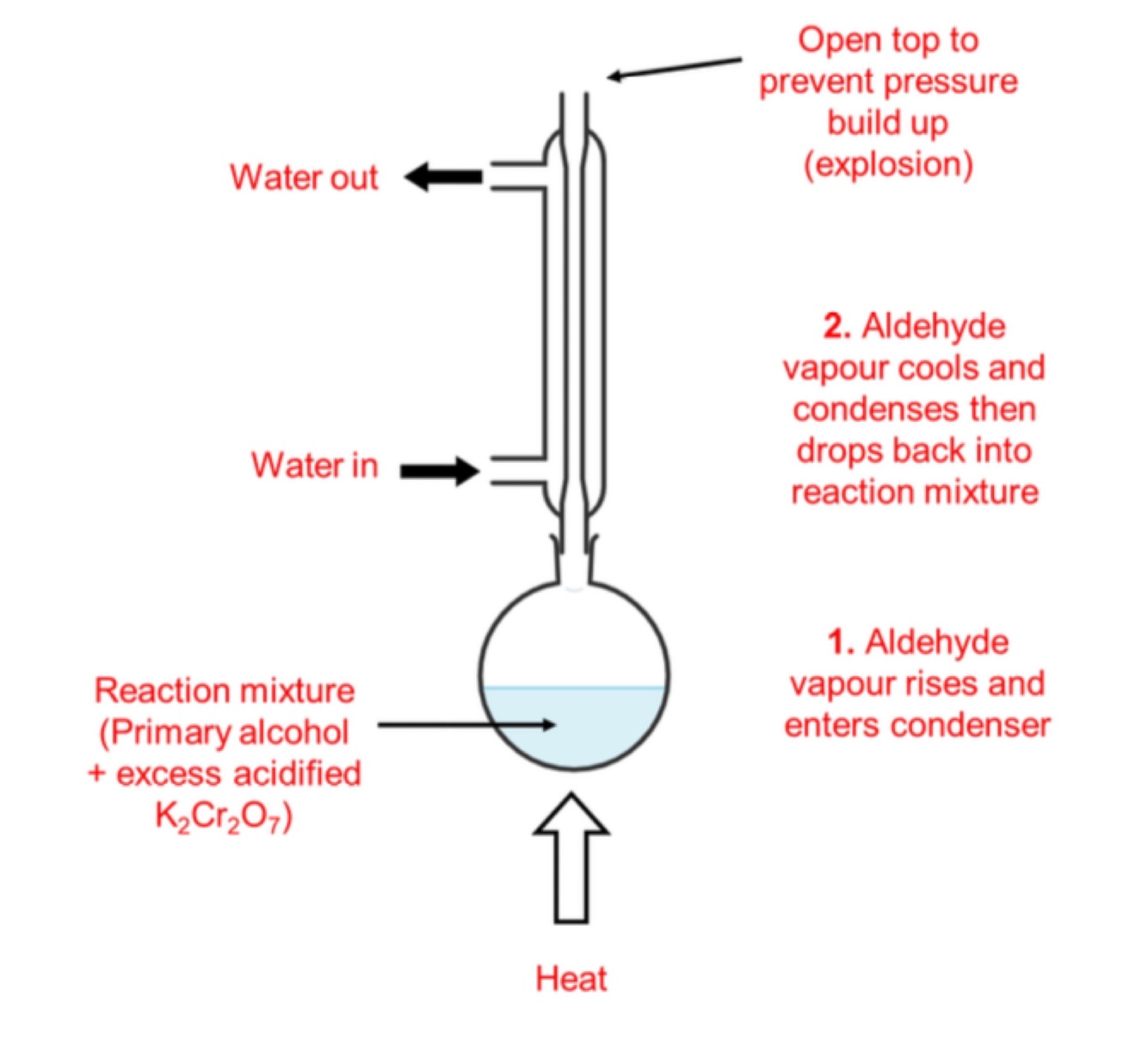
Ethanol can be oxidised by acidified potassium dichromate(VI) to ethanoic acid in a two-step process. ethanol → ethanal → ethanoic acid Describe what happens when a reaction mixture is refluxed and why it is necessary, for complete oxidation to a carboxylic acid
• Ethanol and acidified potassium dichromate(VI) are heated to boiling point for a prolonged time • Ethanal vapour is formed which escapes from the liquid mixture and is then condensed back into liquid and returned to the reaction mixture • Any ethanal and ethanol that initially evaporates can then be oxidised
Oxidation of secondary alcohols
Reaction: secondary alcohol -> ketone Reaction type: oxidation Reagents: acidified potassium dichromate (VI) solution and dilute sulfuric acid Conditions: heat under reflux Observation: the orange dichromate (Cr2O72-) ion reduces to the green Cr3+ ion There is no further oxidation of the ketone under these conditions • Tertiary alcohols cannot be oxidised at all by potassium dichromate. This is because there is no hydrogen atom bonded to the carbon with the -OH group • When ketones have 5C’s or more in one chain then it needs a number to show the position of the double bond eg pentan-2-one
Forming Ethanol -> Fermentation
• Glucose -> Ethanol + Carbon Dioxide • C6H12O6 -> 2CH3CH2OH + 2CO2 • The conditions needed are: Yeast, no air, temperatures 30-40 degrees celcius • Type of reaction: Fermentation • The optimum temperature for fermentation is around 38 degrees celcius • At lower temperatures the reaction is too slow • At higher temperatures the yeast dies and the enzymes denature • Fermentation is done in an absence of air because the presence of air can cause extra reactions to occur. It oxidises the ethanol produced to ethanoic acid (vinegar) • Advantages: • Sugar is a renewable resource • Production uses low level technology / cheap equipment • Disadvantages: • Batch process which is slow and gives high production costs • Ethanol made is not pure and needs purifying by fractional distillation • Depletes land used for growing food crops
Forming Ethanol -> From Ethene
• Reagent: ETHENE - from cracking of fractions from distilled crude oil • CH2CH2 (g) + H2O (g) -> CH3CH2OH (l) • Type of reaction: Hydration/addition • Hydration is the addition of water to a molecule • Essential conditions: high temperature 300 degrees celcius, high pressure 70 atm, strong acidic catalyst of concentrated H3PO4 • Advantages: • Fast rate of reaction • High purity ethanol produced • Continuous process (which means cheaper manpower) • Disadvantages: • High technology equipment needed (expensive initial costs) • Ethene is a non-renewable resource (will become more expensive when raw materials run out) • High energy costs for pumping to produce high pressures • High temperature and pressure requires a lot of energy (expensive)
Ethanol as a biofuel
• A biofuel is a fuel produced from plants • The term carbon neutral refers to ‘an activity that has no net annual carbon (greenhouse gas) emissions to the atmosphere’ • Ethanol produced from fermentation is a biofuel. It can be argued that ethanol produced from this method is classed as carbon-neutral because any carbon dioxide given off when the biofuel is burnt would have been extracted from the air by photosynthesis when the plant grew. There would be no net CO2 emission into the atmosphere • Equations to show no net contribution to CO2: • Removal of CO2 by photosynthesis: • 6 CO2 + 6 H2O -> C6H12O6 + 6O2 • 6 CO2 molecules are removed from the atmosphere when the plants grow by photosynthesis to produce one molecule of glucose • Production of CO2 by fermentation and combustion: • C6H12O6 -> 2CH3CH2OH + 2CO2 • 2CH3CH2OH + 6O2 -> 4CO2 + 6H2O • When 1 molecule of glucose is fermented 2 molecules of CO2 are emitted. The two ethanol molecules produced will then produce 4 molecules of CO2 when they are combusted • Overall for every 6 molecules of CO2 absorbed, 6 molecules of CO2 are emitted. There is no net contribution of CO2 to the atmosphere • This does not take into account any energy needed to irrigate plants, fractionally distil the ethanol from the reaction mixture or process the fuel. If the energy for these processes comes from fossil fuels then the ethanol produced is not carbon neutral.
• In a preparation of propanal, propan-1-ol is added dropwise to the oxidising agent and aldehyde is separated from the reaction mixture by distillation. (a) Explain, with reference to intermolecular forces, why distillation allows propanal to be separated from the other organic compounds in this reaction mixture.
• Aldehyde/propanol has dipole-dipole forces between molecules • Propan-1-ol/alcohol and propanoix acid have hydrogen bonding • The forces between the molecules in aldehyde are weaker than those in alcohol and acid so it will evaporate first
• Give two ways of maximising the yield of propanal obtained by distillation of the reaction mixture.
• Keep the temperature of the reaction mixture below the boiling point of propan-1-ol • Cool the distillate/collecting vessel
• What does producing alkenes from alcohols provide?
• Producing alkenes from alcohols provides a possible route to polymers without using monomers derived from oil
• What can happen in acid catalysed elimination?
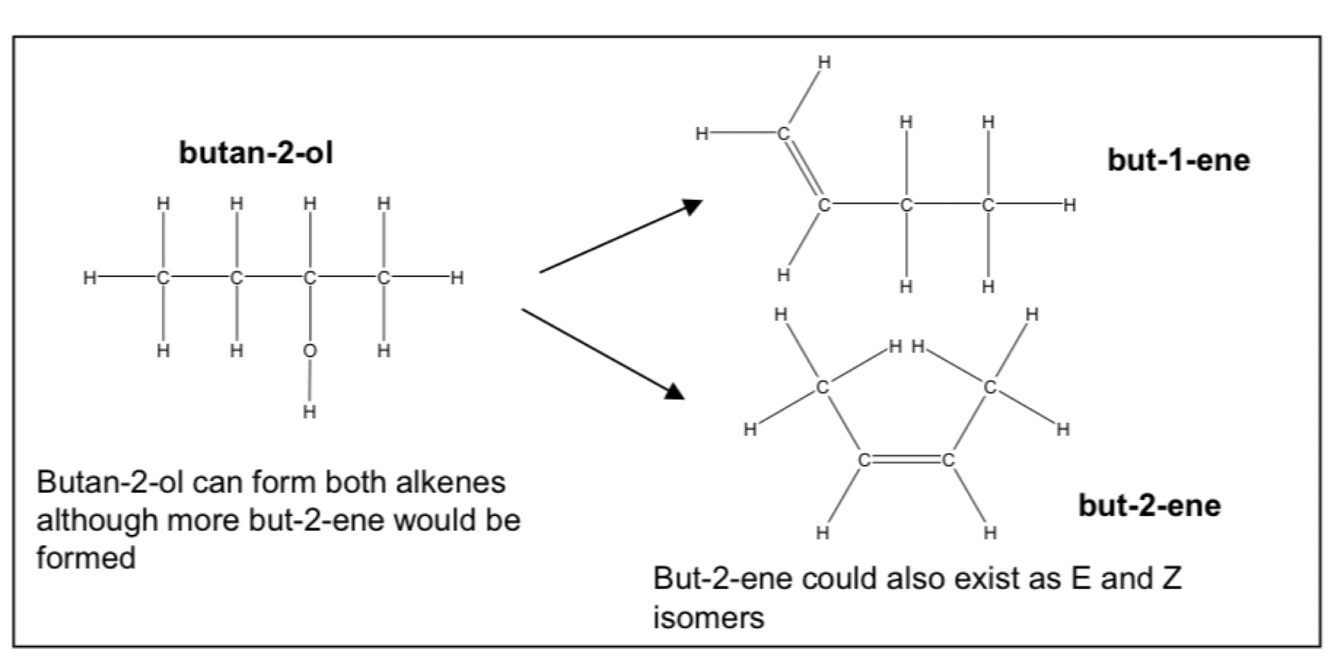
• Some secondary and tertiary alcohols can give more than one product when the double bond forms between different carbon atoms