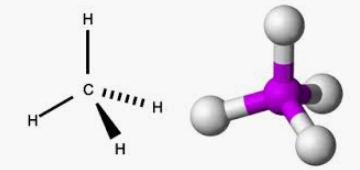
4. Covalent bonding
No description yet. This curated deck is ready for daily study.
Card preview (22)
Why do elements take part in reactions?
To achieve a full outer shell To achieve a stable electron arrangement To achieve a noble gas electron arrangement
How do non-metal atoms achieve a full outer shell when they react with one another?
The share unpaired electrons
What is a covalent bond?
A shared pair of electrons?
What holds the atoms together when they form covalent bonds?
The common (electrostatic) attraction the nuclei have for the shared pair of electrons.
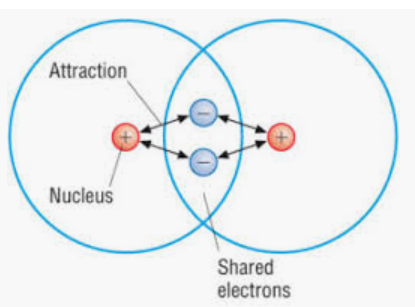
What is a molecule?
2 or more atoms joined by covalent bond(s)
What do we call the attractions between molecules?
Intermolecular attractions
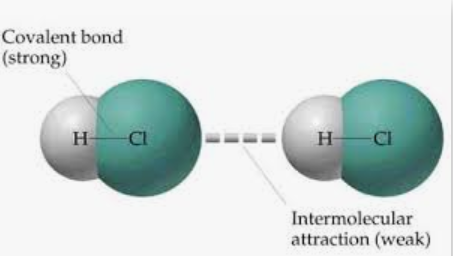
Are intermolecular bonds strong or weak?
Weak
What happens when we melt or boil substances composed of molecules?
We break the weak intermolecular attractions
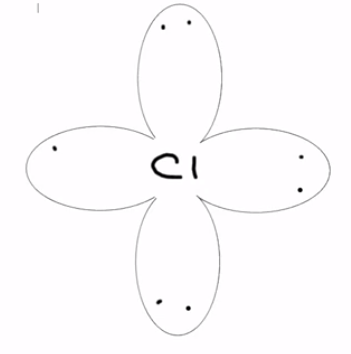
What is an orbital diagram?
Normally 4 lobes as shown in diagram with ONLY the outer electrons shown The diagram is for a Cl atom
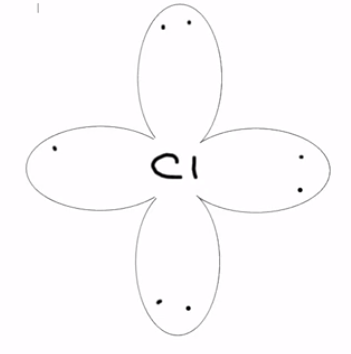
What is meant by valency?
The number of unpaired electrons an atom has in its outer (valence) shell. In the example shown for Cl , only 1 electron is unpaired so the valency is 1
Why do covalent compounds not conduct electricity:?
Because the molecules or networks do not carry any overall charge. The total number of protons and electrons are equal
Whys do covalent network substances have high melting points?
Because you have to break a lot of strong covalent bonds.
Why do covalent molecular substances have low melting and boiling points?
Because you only have to break weak intermolecular attractions
What type of bonsing is shown in the diagram?
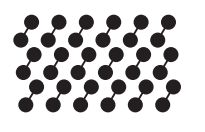
Covalent molecular
What type of bonding is shown?
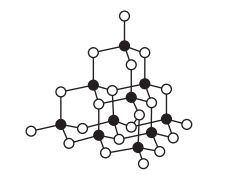
Covalent network
Name 2 covalent network structures
Diamond (Carbon) : Element Silicon Dioxide (Si O2 ) : Compound
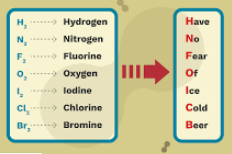
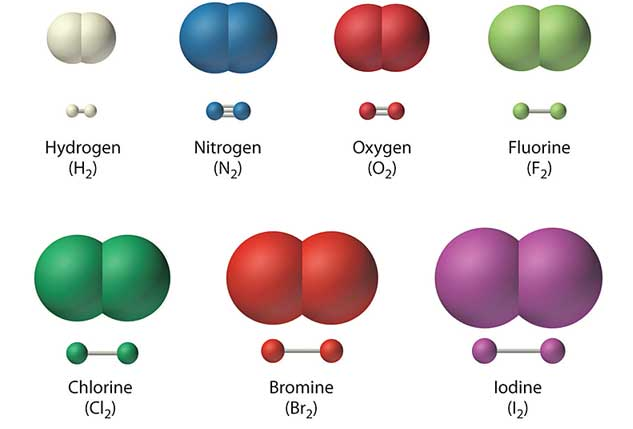
Name the 7 diatomic covalent molecular elements
Iodine Hydrogen Nitrogen Bromine Oxygen Chlorine Fluorine
What are the 4 molecular shapes we need to know?
• Linear • Angular • Pyrimidal • Tetrahedral
Whic shape do all diatomic molecules have:?
Linear
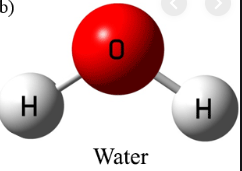
Which shape does water have?
Angular
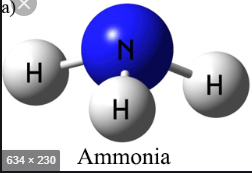
Which shape does ammonia (Nitrogen hydride) have?
Pyrimidal
Which shape does Methane have?
Tetrahedral