NB2-5 - Neurotransmitters and Synaptic Transmission 2
No description yet. This curated deck is ready for daily study.
Card preview (9)
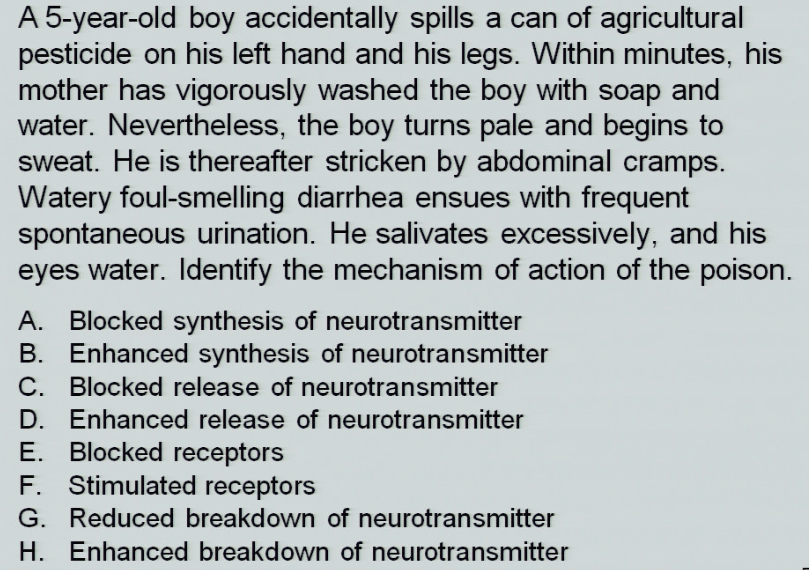
All of these symptoms have to do with neurons using acetylcholine. Therefore, most likely a reduction in the breakdown of ACh. G Organophosphates inhibit AChesterase
Define the quantal values we need to know when considering quantal neurotransmitter release.
• p = probability that a vesicle will exocytose • n = number of vesicles available for exocytosis • pn = number of vesicles expected to undergo exocytosis • Quantal Size - post synaptic response to single vesicle of NTs • Quantum Content - number of vesicles released per impulse
Describe what botulinum toxin is and how it affects the nervous system.
It is a bacterial protease that enters the terminals of peripheral motor neurons and cleaves synaptobrevin. This disrupts vesicle docking and prevents ACh release, causing weakness due to decreased quantal content
Describe what tetanus toxin is and how it affects the nervous system.
This toxin has the same affects as botulinum toxin except that it undergoes retrograde transport and gets transferred to inhibitory interneurons. This leads to the inhibition of glycine release on the motor neurons which leads to muscle spasms caused by decreased quantal content of glycine
Describe how aminoglycoside antibiotics affect the nervous system.
They block v-gated Ca++ channels on peripheral motor neurons which leads to muscle weakness caused by decreased quantal content
Describe how 4-aminopyridine affects the nervous system.
It blocks v-gated K+ channels which increases the duration of APs which enhances muscular contraction due to increased quantal content
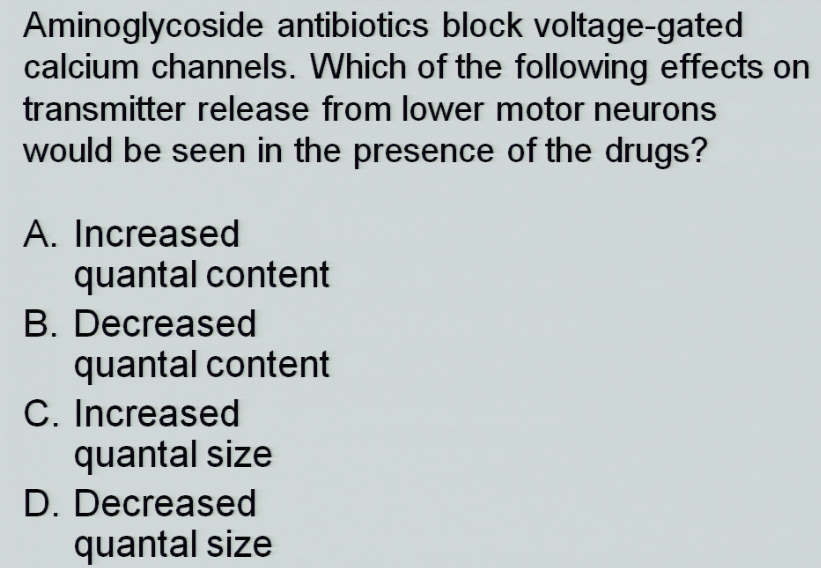
B
Describe the concepts of temporal and spatial summation.
An EPSP/IPSP will degrade over distance and time. Because of this, several EPSPs/IPSPs are often needed to trigger or effectively inhibit an AP in the postsynaptic neuron. This can occur from one neuron rapidly delivering EPSPs/IPSPs, known as temporal summation; or it can occur from several different neurons delivering EPSPs to the same neuron, known as spatial summation.
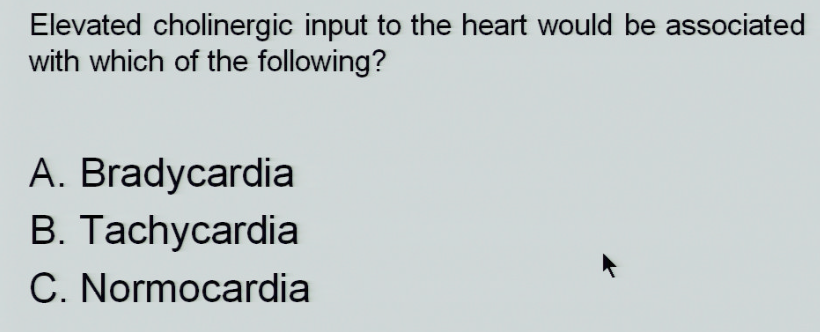
A