week 1
No description yet. This curated deck is ready for daily study.
Card preview (24)
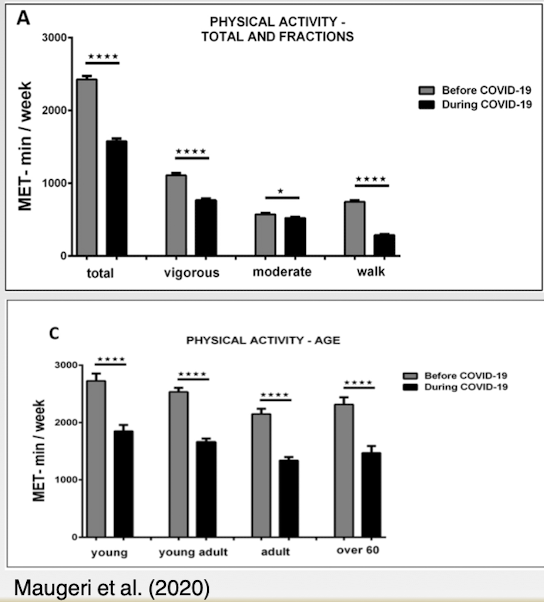
COVID and decreased physical activity
• significant decreases observed in all types of physical activity across all age groups
physical activity in hospital and SNF
• upright (standing/walking) in hospital: 5% • 12% of time in SNF
barriers for implementation of optimal practice patterns
• reimbursement-based vs evidence-based practice • limited incentives for high-quality transitional care (few ACOs) • fear of adverse events, penalties, or litigation • current emphasis is on returning patients to PLOF (often low) • lack of awareness of more effective clinical care strategies
reimbursement-based practice
• acute care • SNF - prior state (PPS) • SNF - current state (PDPM) • home health care - current state (PDGM)
limited incentives for high-quality transitional care
• historically very limited coordination of care across settings (hospital -> SNF -> home health) • changes that have prioritized transitional care: • improving medicare post-acute care transformation (IMPACT) act • accountable care organizations • bundled care
fear of litigation
• practice of “negative defensive medicine” prevalent in many settings, especially older adults • mobility is often avoided by nursing and CNAs because it is unnecessary fall risk • “do no harm principle” too extreme? • falls more quantifiable and more closely tied to financial penalties and are more likely to result in “fault” than deconditioning • so we avoid supervised and unsupervised mobility to decrease risk of falls – at risk of deconditioning
threshold of independence current emphasis on returning patients to PLOF
• independently standing from chair
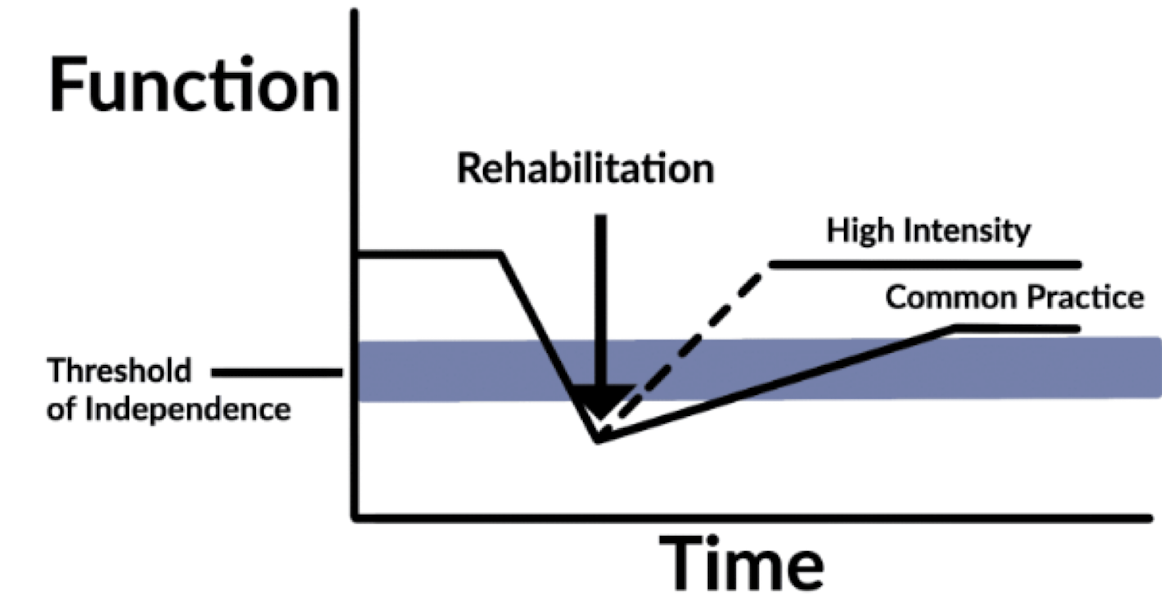
lack of awareness of more effective clinical care strategies
• safe dosage of exercise for medically complex patients • high-intensity is necessary but perceived as unsafe • older adults underdosed
updating practice patterns for older adults following hospitalization
• shift from conservative, low-intensity interventions –> high-intensity interventions • based on American college of sports medicine (ACSM) guidelines and the american geriatrics society (AGS)
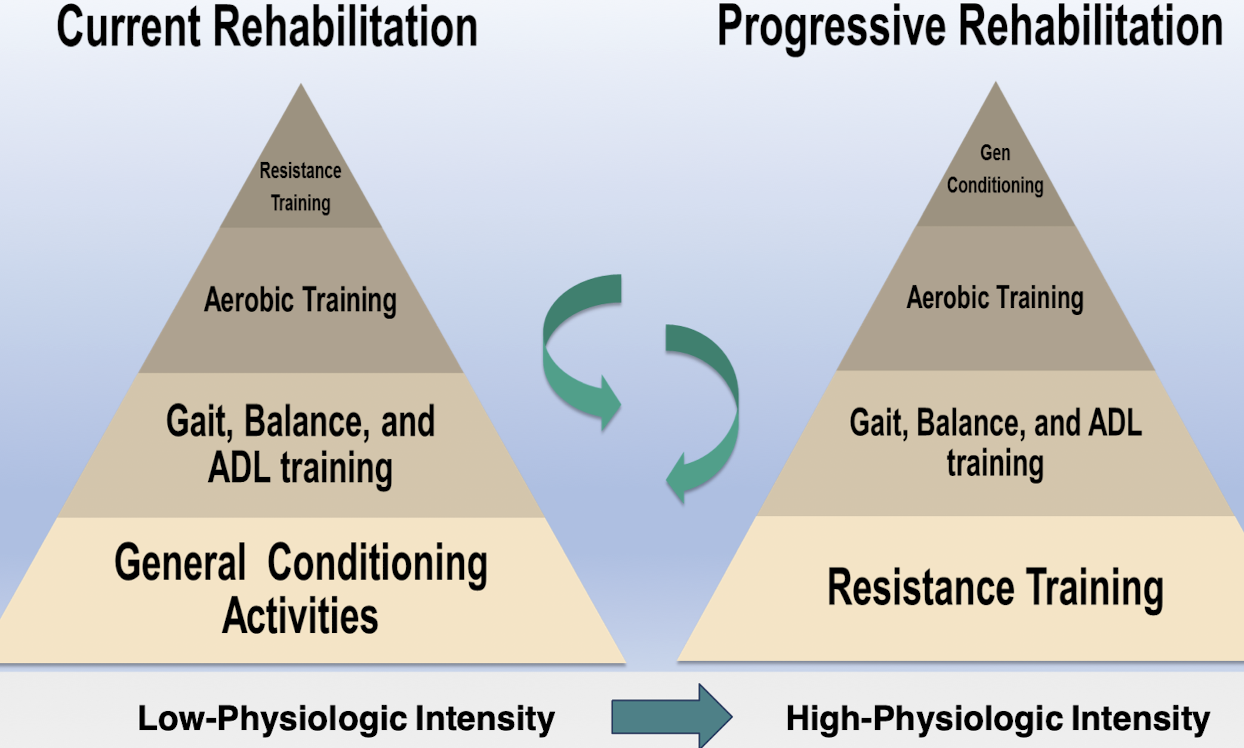
high-intensity prescription
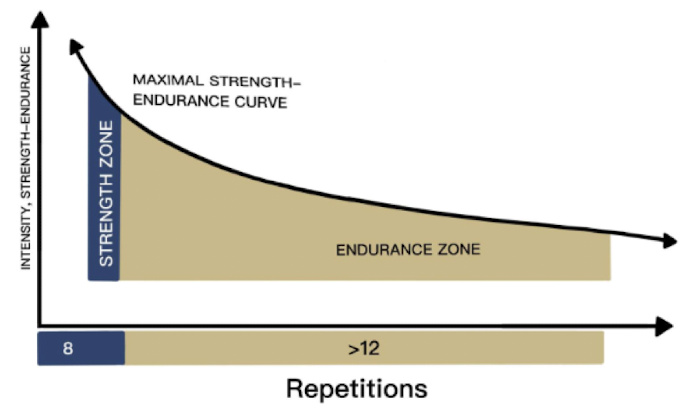
• achieving muscle overload • providing a stronger and different stimulus every time • objectively assessing progression daily • creating conditions for safe physiological adaptation • high resistance with low reps: T2 fibers, power, strength, hypertrophy • low resistance with high reps: T1, postural endurance
improving the lives of older adults - bottom line
• high-intensity rehabilitation has the potential to improve physical function across all settings • greater function, greater independence, less risk – better lives
anaerobic metabolism
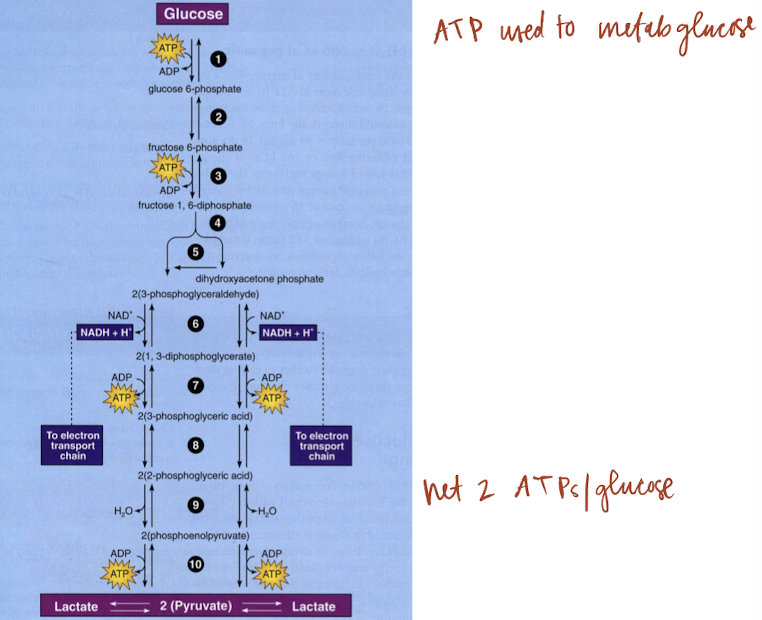
• does not require oxygen • utilizes only carbohydrate (glucose) • occurs in the cytoplasm of the cell • by-product is lactic acid • yields net 2 ATPs per molecule of glucose • less efficient • types of cells: connective tissue cell (bone, cartilage, RBCs - no mitochondria), skeletal muscle (fast twitch fibers)
aerobic metabolism
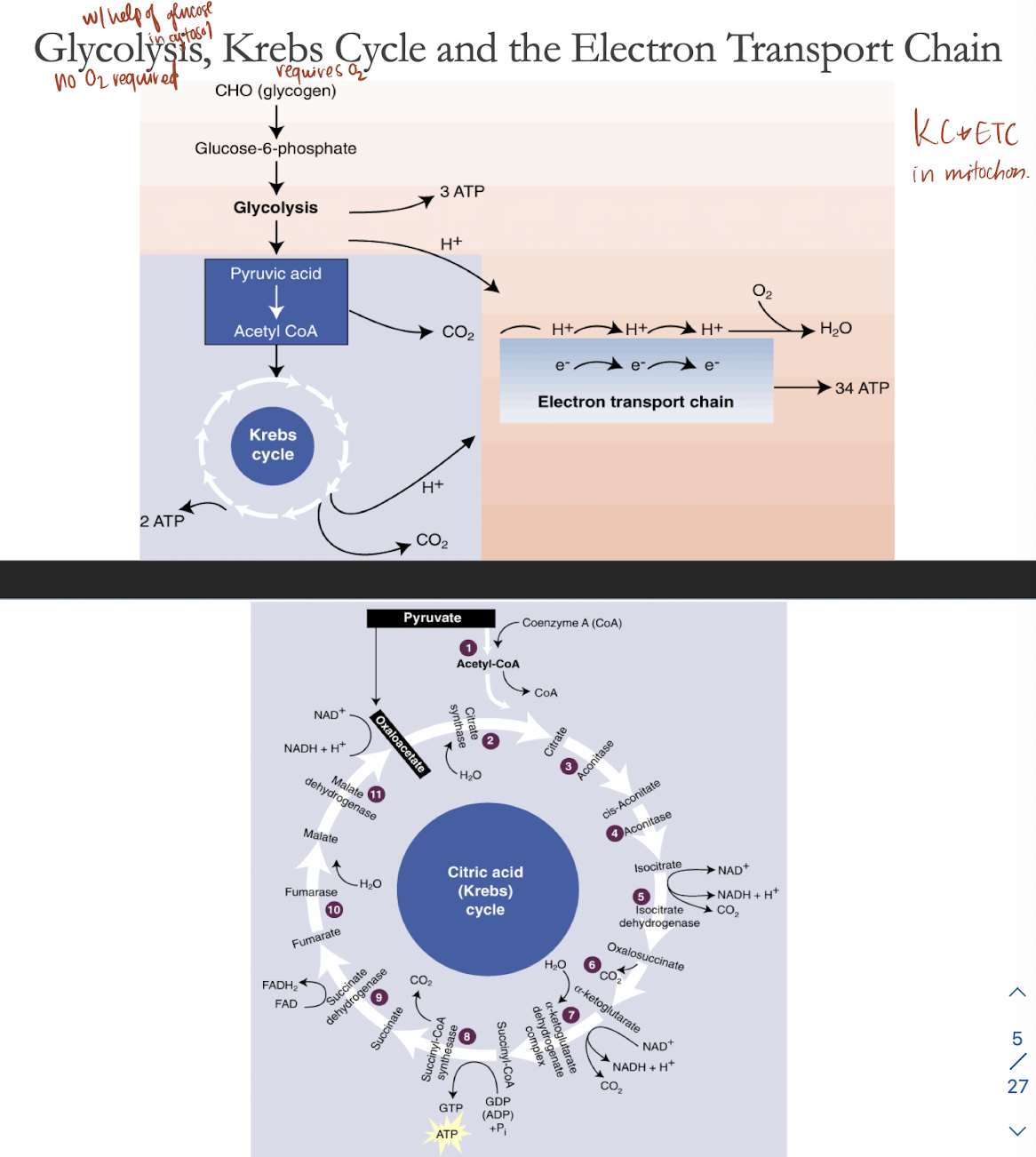
• requires oxygen • utilizes carbohydrates, fats, and proteins • occurs in the mitochondria • by-products: water and CO2 • yields 36 ATPs per molecules of glucose • more efficient • types of cells: heart, CNS/PNS, skeletal muscle (slow twitch fibers)
comparing anaerobic and aerobic metabolism
• anaerobic: 2 ATP/molecule of glucose • aerobic: 36 ATP/molecule of glucose
endurance - major factors
• oxygen consumption • VO2 max: max capacity of a person’s body to transport and use O2 during incremental exercise - reflects physical fitness • maximal • peak • variation • 4-6% in persons with no known impairments • 6-10% in persons with CP impairments
endurance or aerobic capacity testing
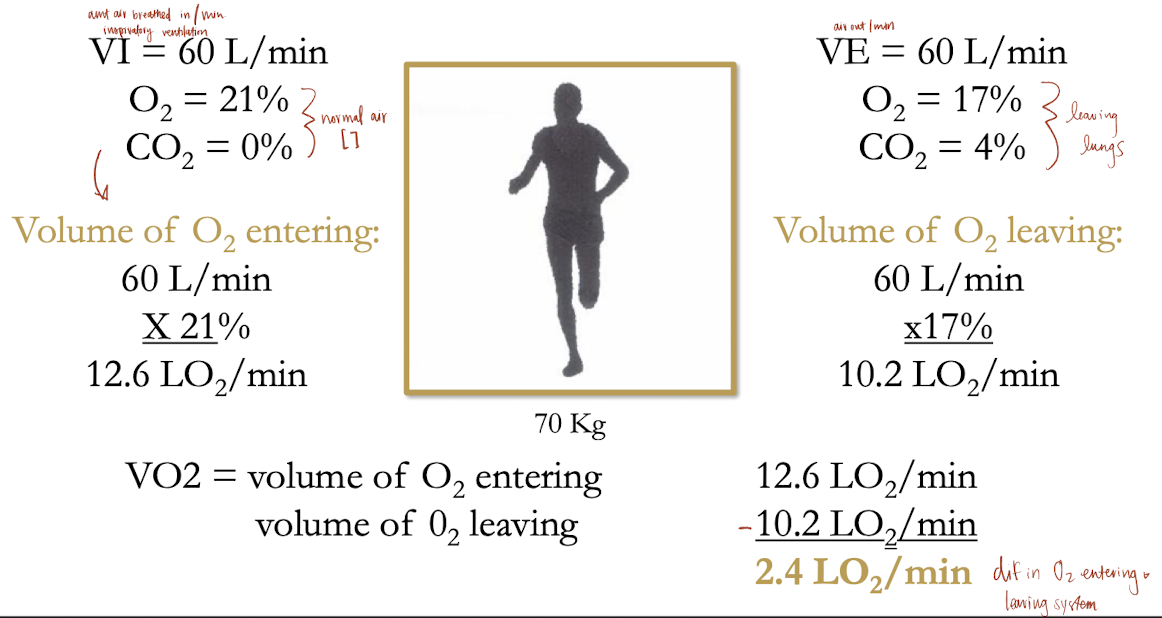
• evaluation of a person while performing work • gold standard - oxygen consumption (VO2) • ways to measure • VO2 = CO x a-v O2 difference • VO2 = volume of O2 entering lungs minus volume leaving lungs (used more often)
anaerobic threshold (AT)
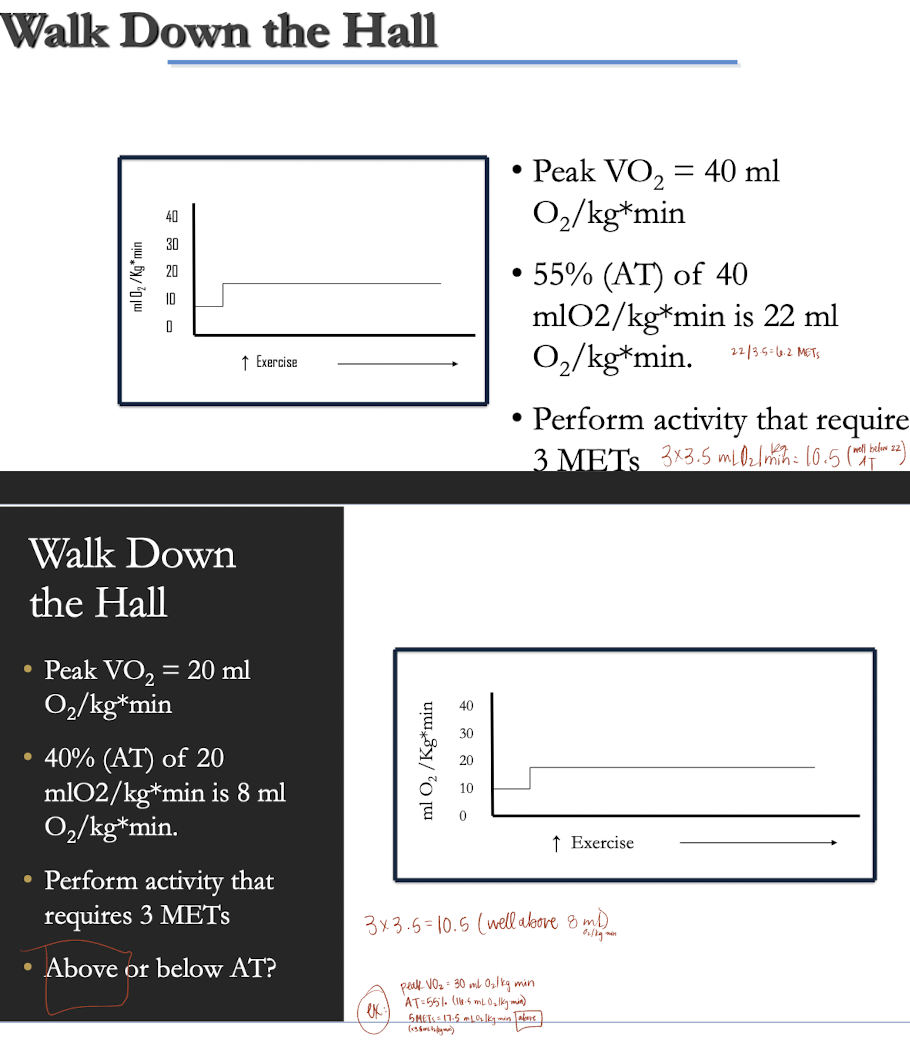
• point at which you are no longer capable of performing work solely aerobically (start to perform anaerobically so build up of lactic acid) • usually about 55% of max VO2 • with training increases (>55%) • with detraining decreases (<55%)
relationship of VO2 to METs
• 1 MET = requirement of O2 of tissue of body at rest • 1 MET = 3.5 mLO2/Kg x min • with activity VO2 increases and therefore METs increase • any activity that burns 3-6 METs is considered moderate-intensity physical activity • any activity that burns > 6 METs is considered vigorous-intensity physical activity
factors affecting peak VO2
• age • sex (men > women) • genetics (muscle fibers type) • body composition (fat:muscle) • endurance training • various diseases that affect oxygen transport • VO2 improves with training • loss of muscle mass contributes to age-related VO2 changes
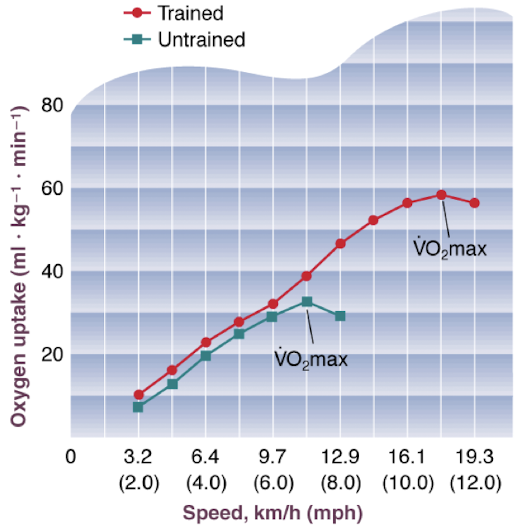
oxygen consumption and disability
• social security administration uses the criteria that < 18 mL/kgxmin (5 METs) is considered disabled – or struggles functioning independently • 18-20 range important for independence
before exercise capacity testing
• prelim screen • history • lab values • resting measurements - BP and HR • physical exam
risks of exercise testing
• muscle soreness • diaphoresis • SOB • angina • MI • stroke • death
risks and exercise testing
• for persons with CAD, risk of complications like MI or death are 60-100 times greater during exercise testing than in usual activity • actual risk of death is very low (0.5/10,000) due to appropriate screening and adherence to methods of conducting tests
sub-maximal test
• low level graded exercise test (LLGXT) • field testing - time, distance • other - walk, bike, activity