Paper 2 - Questions I Got Wrong
No description yet. This curated deck is ready for daily study.
Card preview (19)
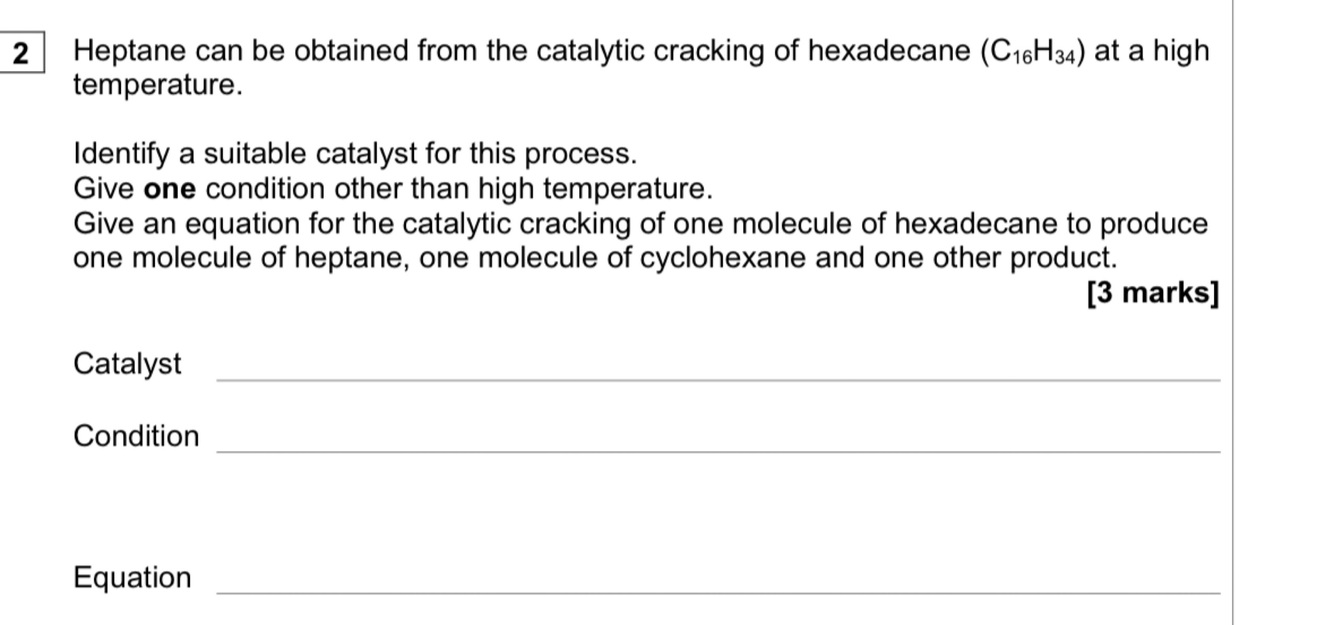
• Catalyst: zeolite or aluminosilicate • Condition: slight / moderate pressure • Equation: C16H34 -> C7H16 + C6H12 + C3H6
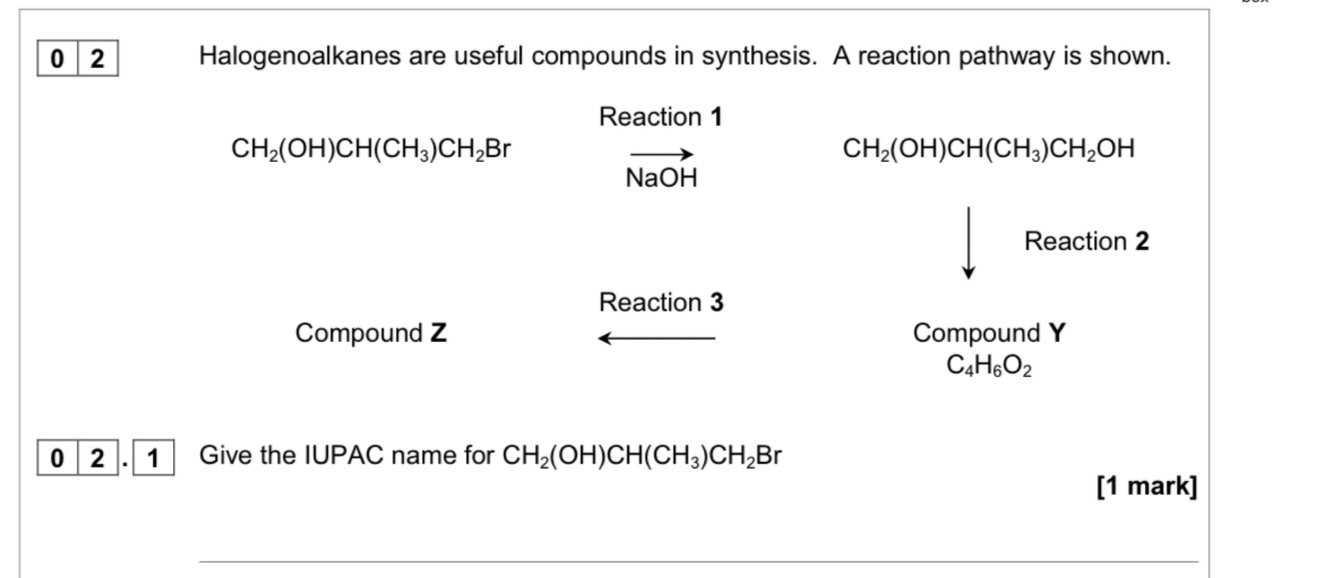
• 3-bromo-2-methylpropan-1-ol
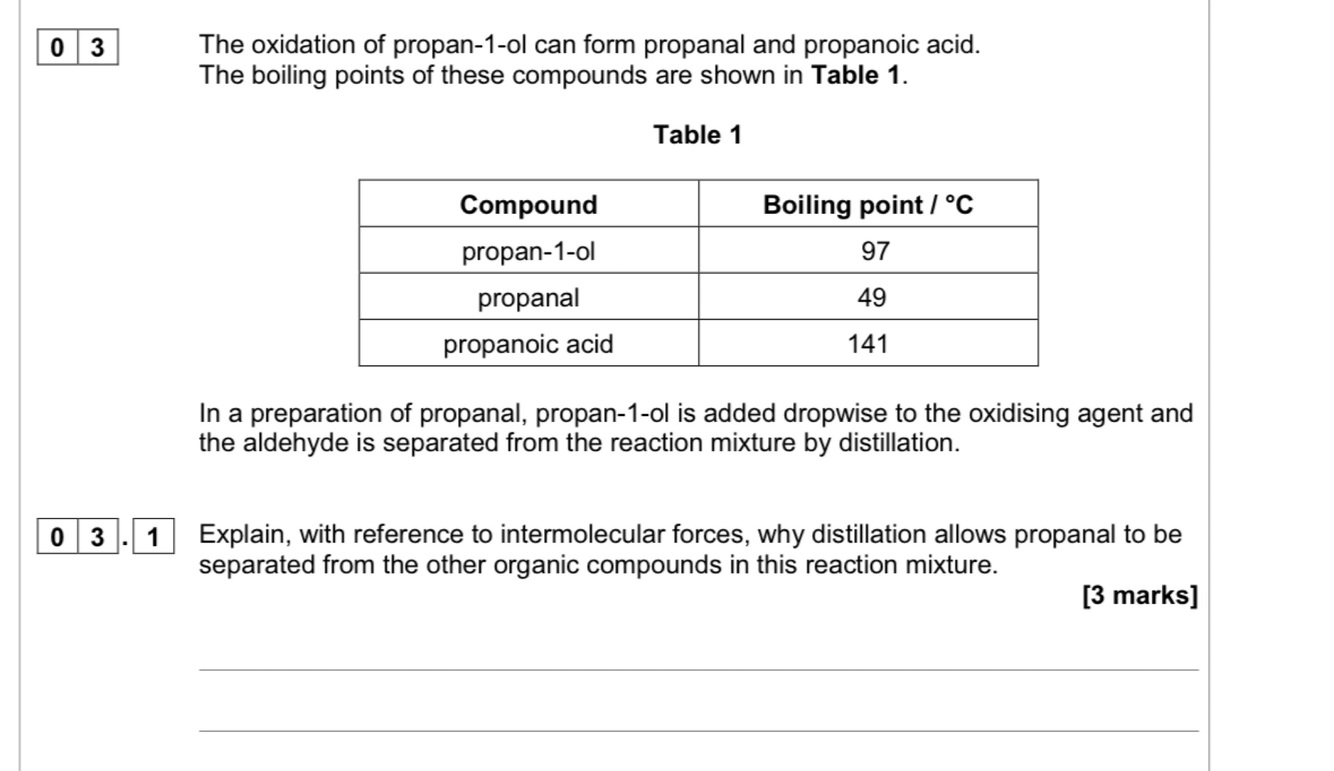
• Propanal has dipole-dipole forces between molecules • Propan-1-ol and carboxylic acid have hydrogen bonding between molecules • The forces between the molecules in aldehyde are weaker than those in alcohol and acid and so it will evaporate first
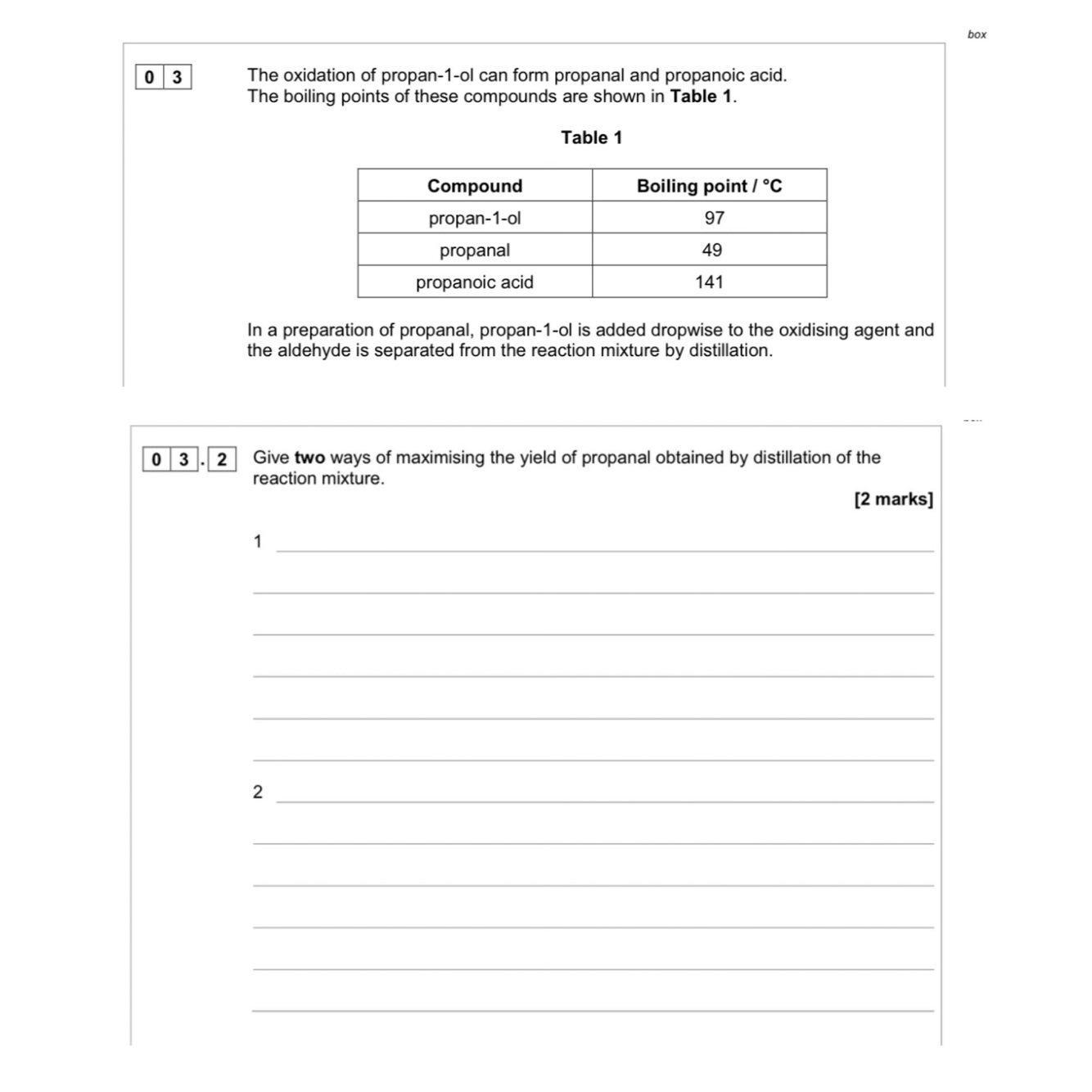
• Keep the temperature of the reaction mixture below the boiling point of propan-1-ol / below 97 ° C • Cool the distillate / collecting vessel
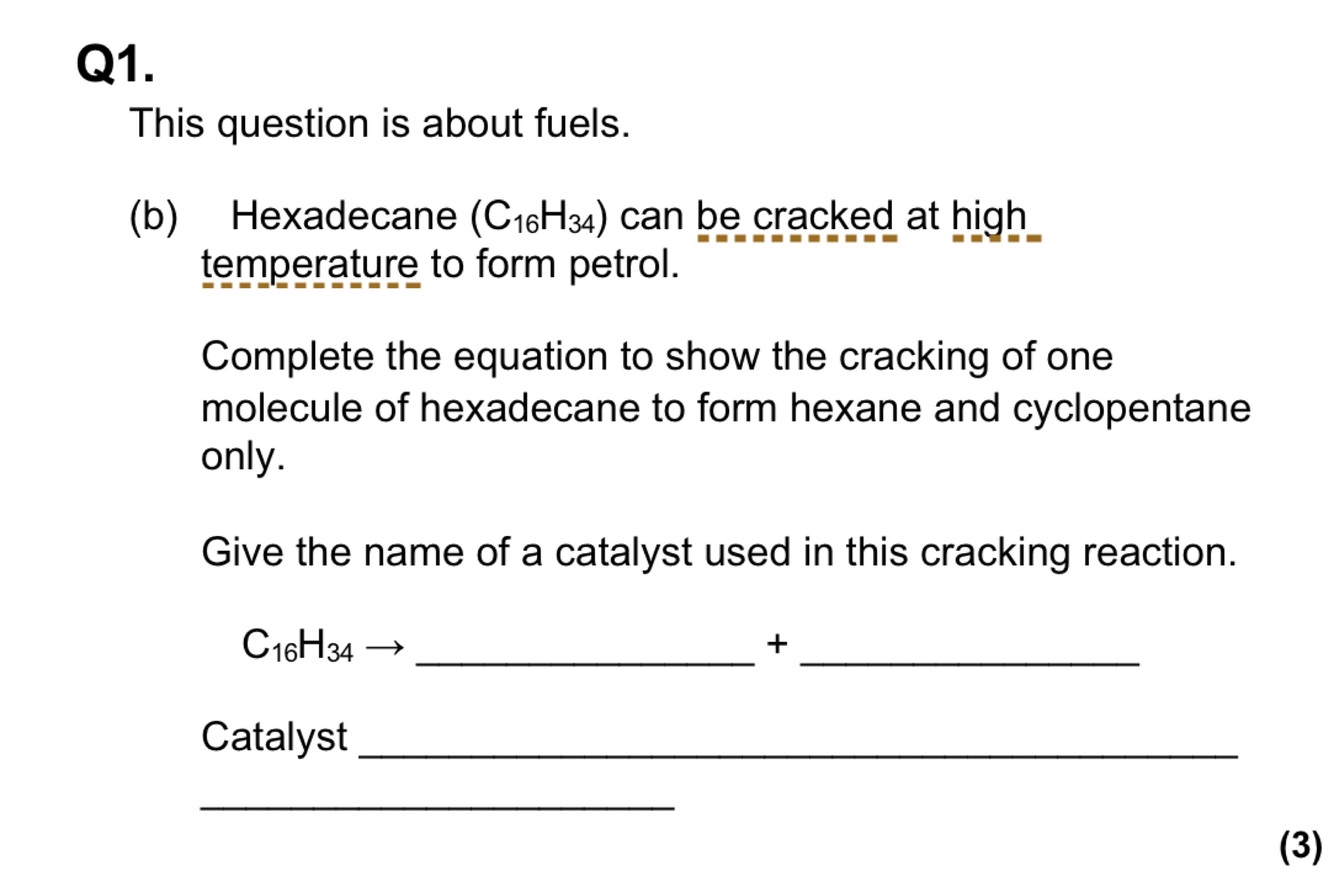
• Equation: C16H34 -> C6H14 + 2 C5H10 • Catalyst: zeolite
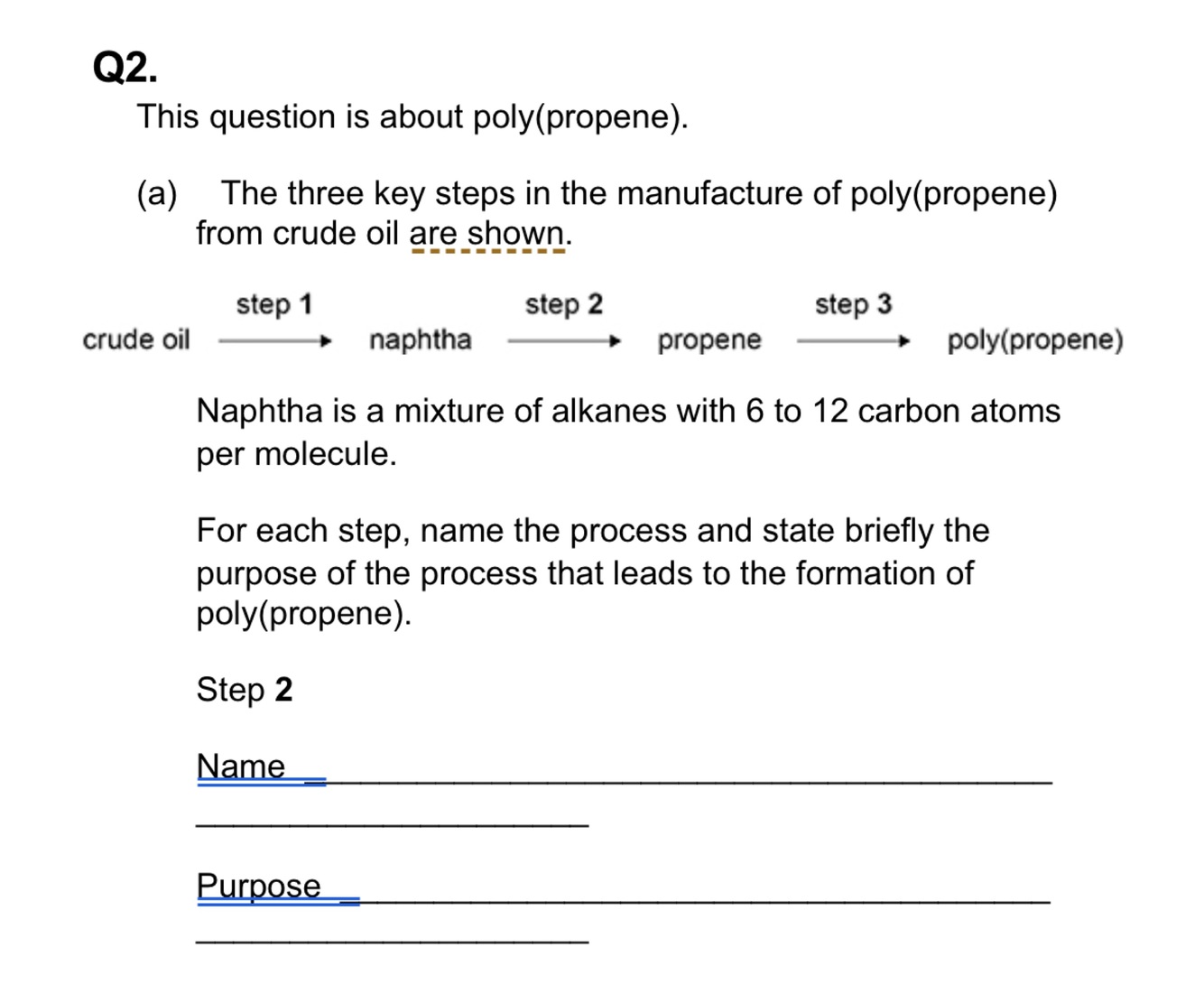
• Name: cracking / thermal cracking • Purpose: To make alkenes / shorter molecules
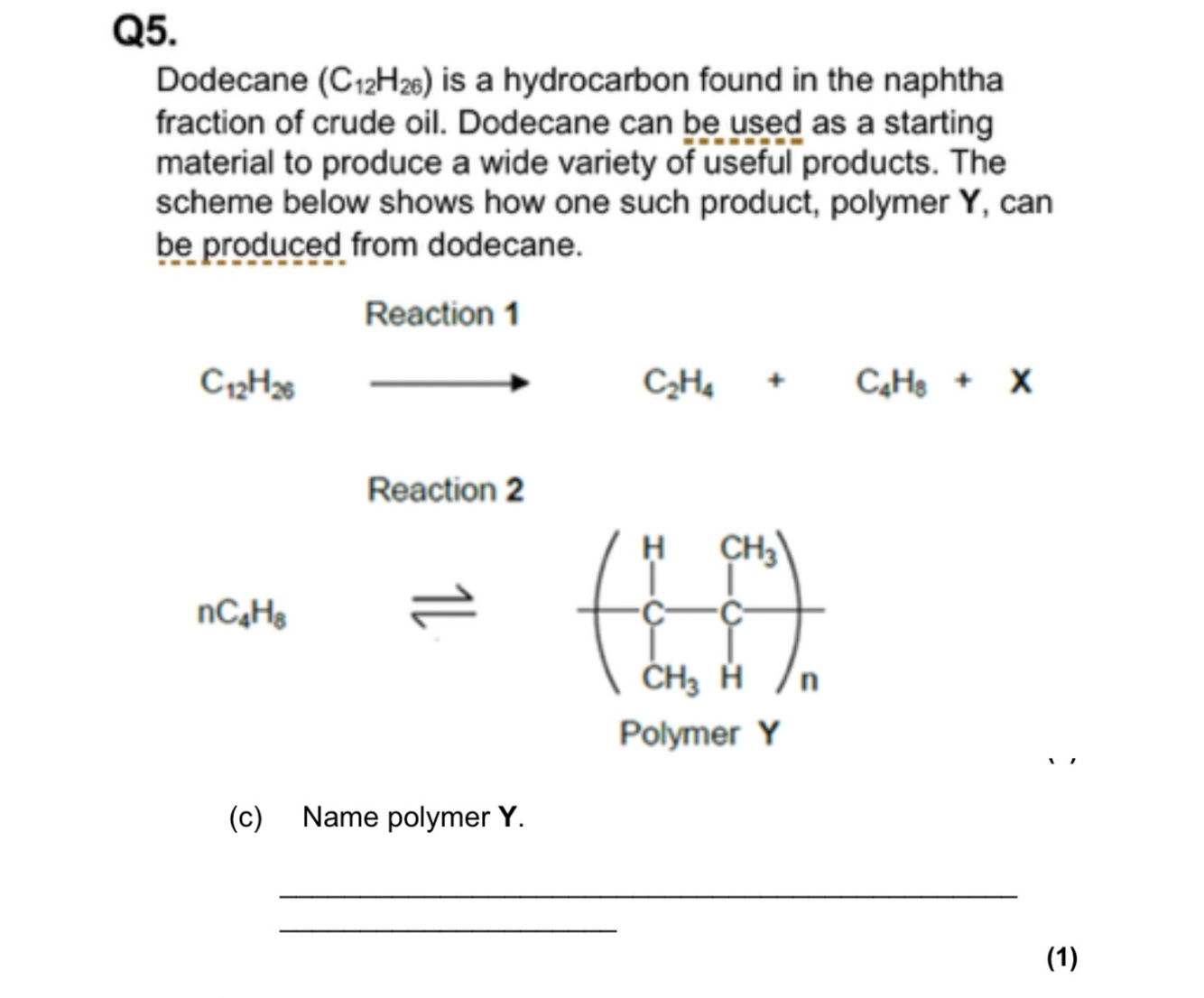
• Poly(but-2-ene)
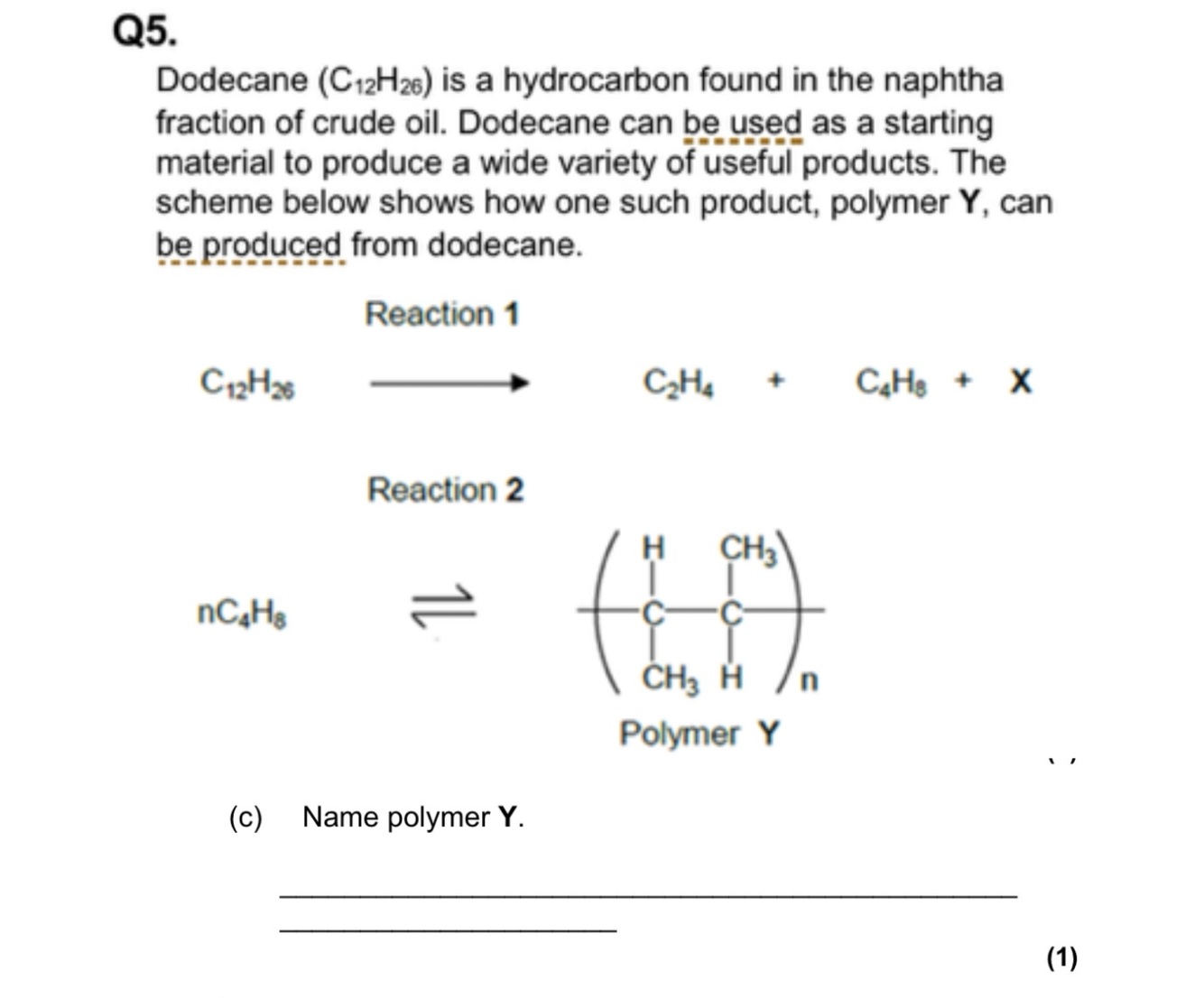
• Poly(but-2-ene)
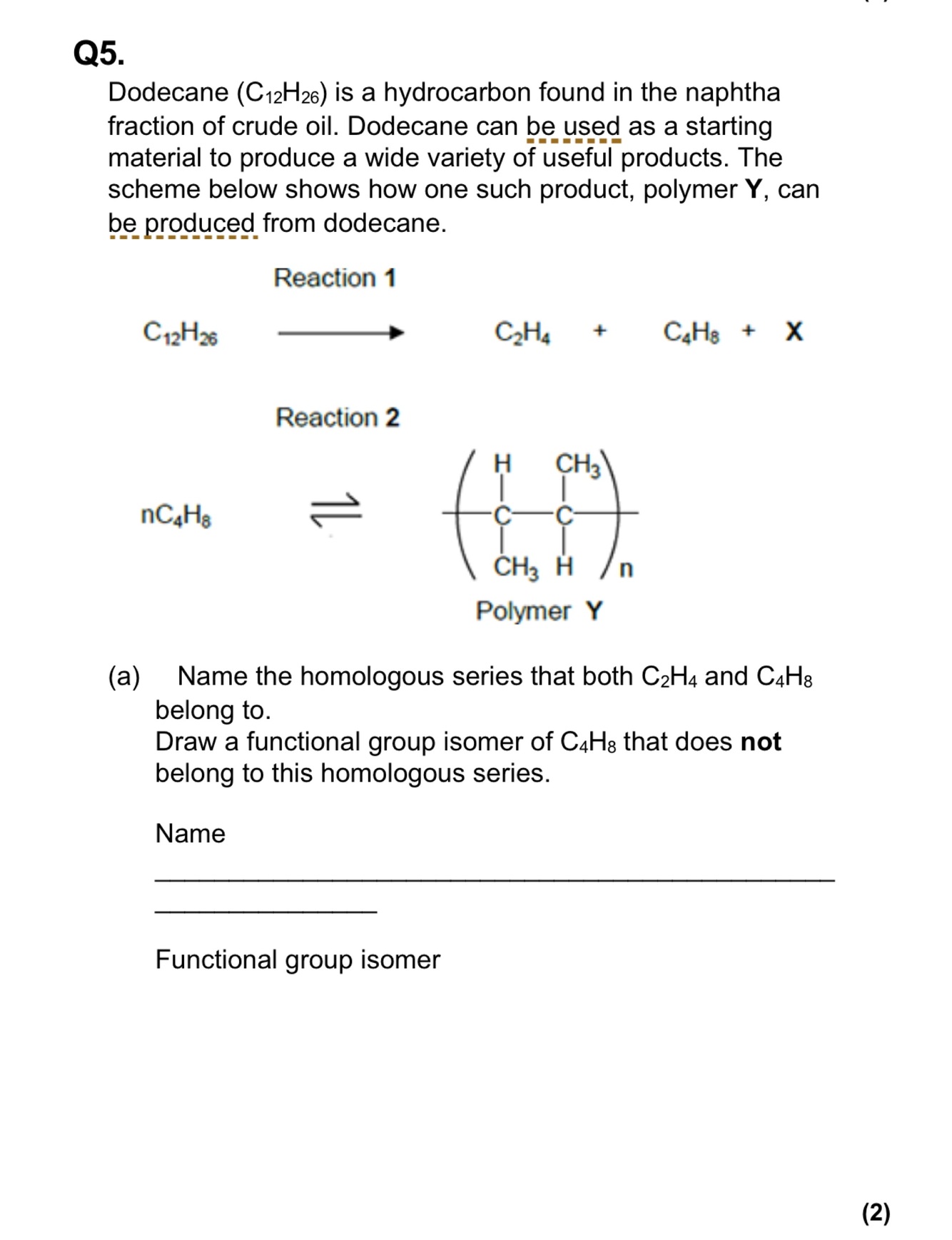
• Functional group isomer:
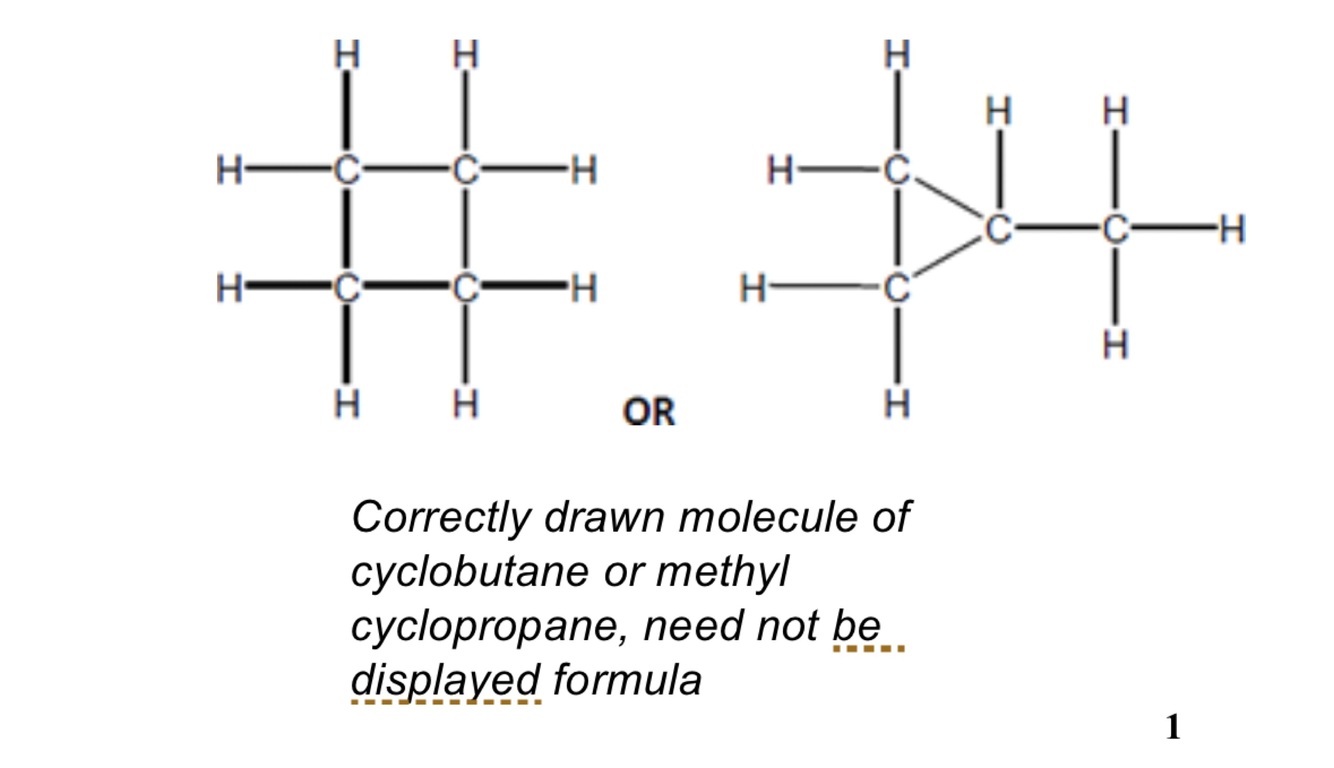
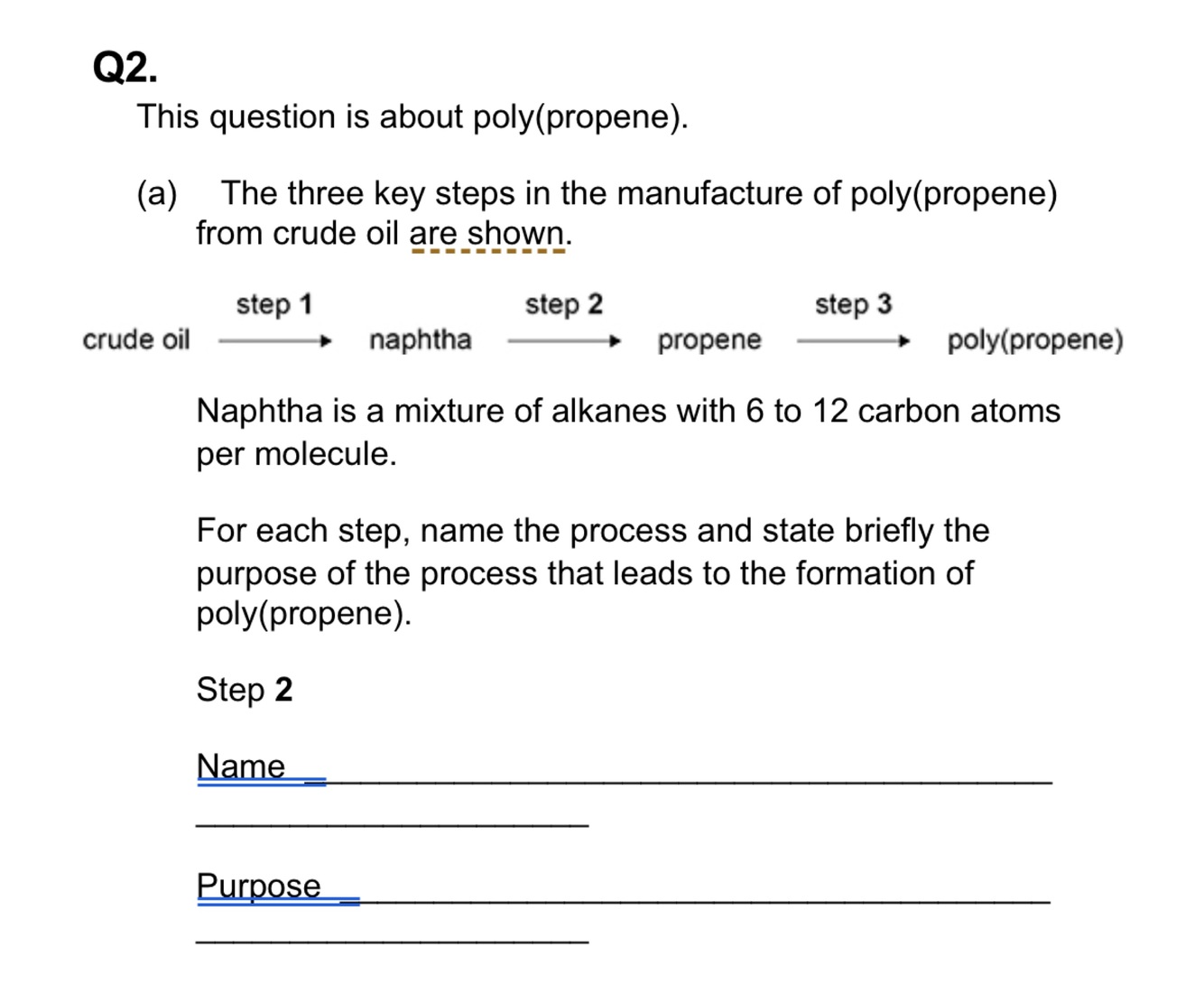
• Name: cracking / thermal cracking • Purpose: To make alkenes / shorter molecules
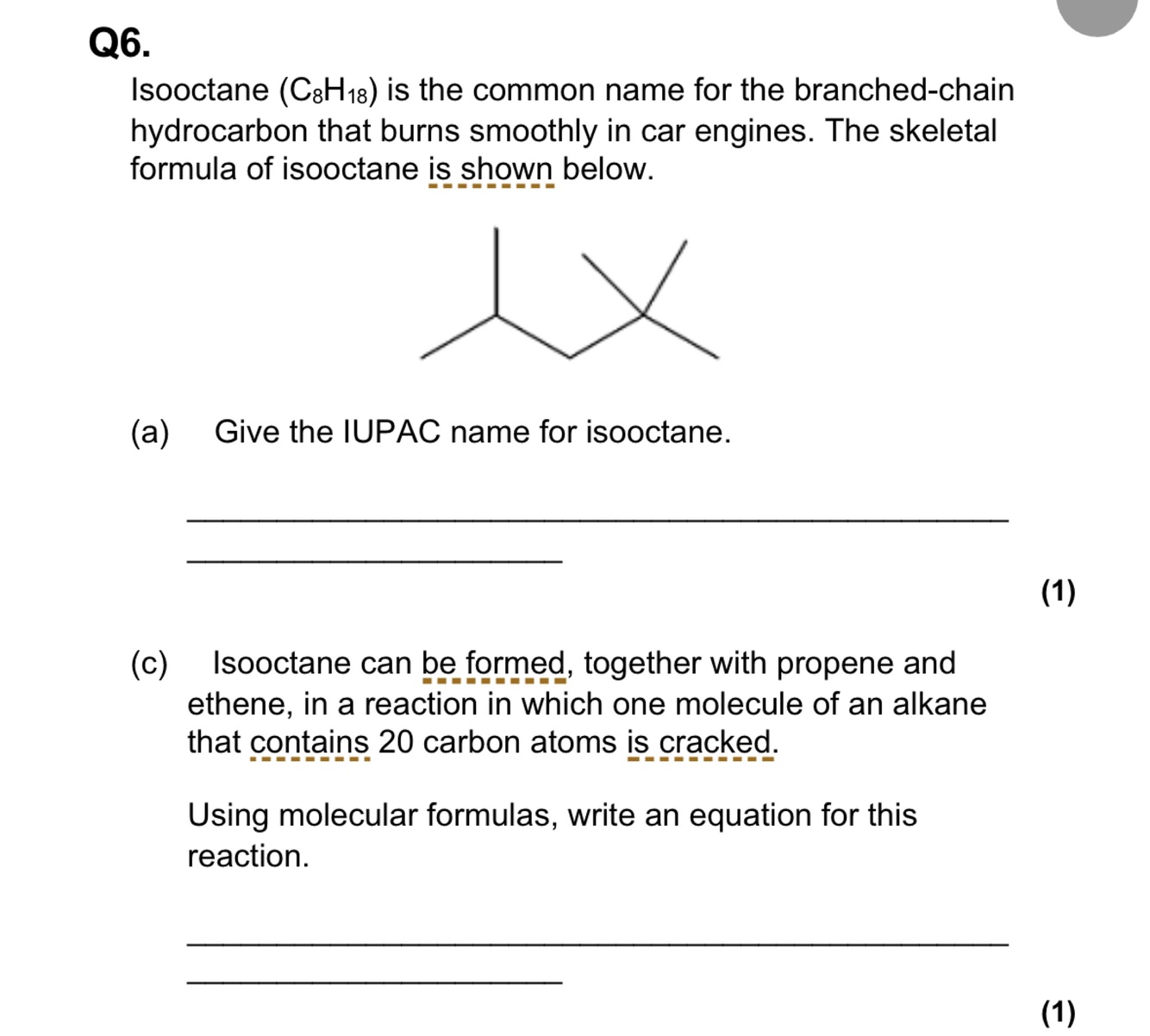
• Name for isooctane: 2,2,4-trimethylpentane • Equation: C20H42 -> C8H18 + 2C3H6 + 3C2H4
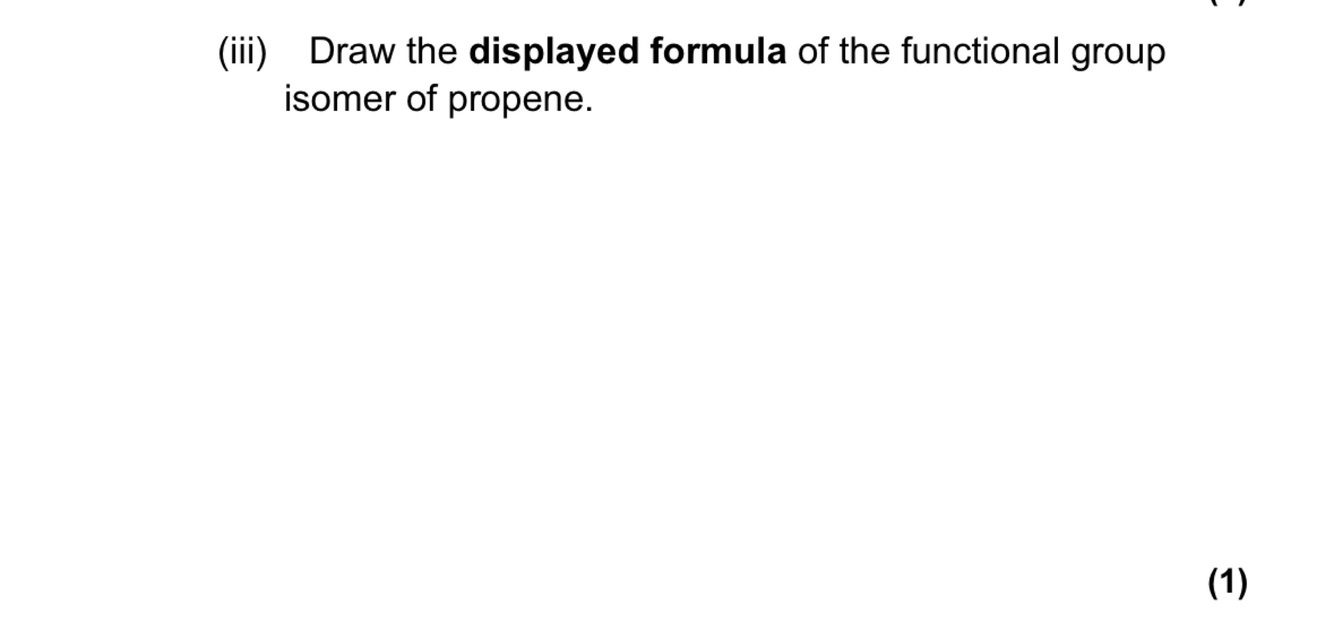
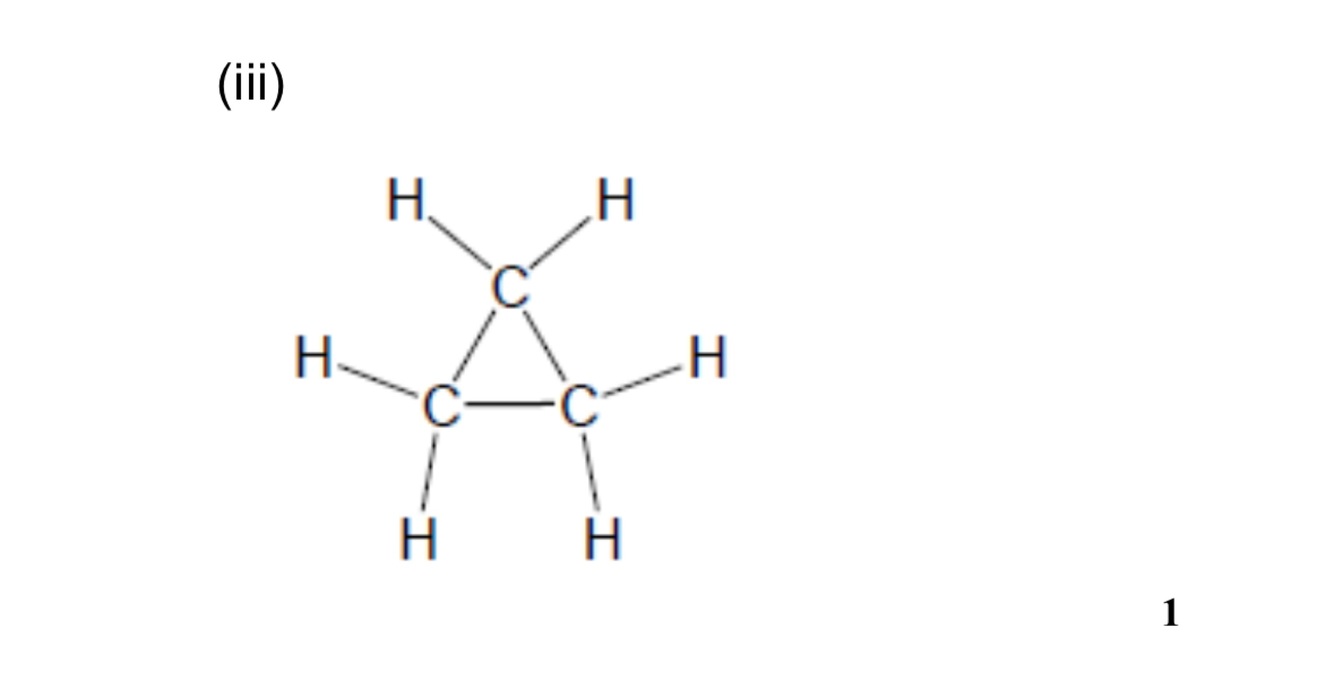
• Why is thermal cracking used in industry?
• To produce products that are in greater demand / more profitable
• Why is CH3CH2Br -> CH3CH2OH not used in industry to make ethanol?
• The yield is very low / elimination occurs (ethene formed) • The rate of reaction slow • Bromoethane has to be manufactured /made first • Bromoethane is expensive
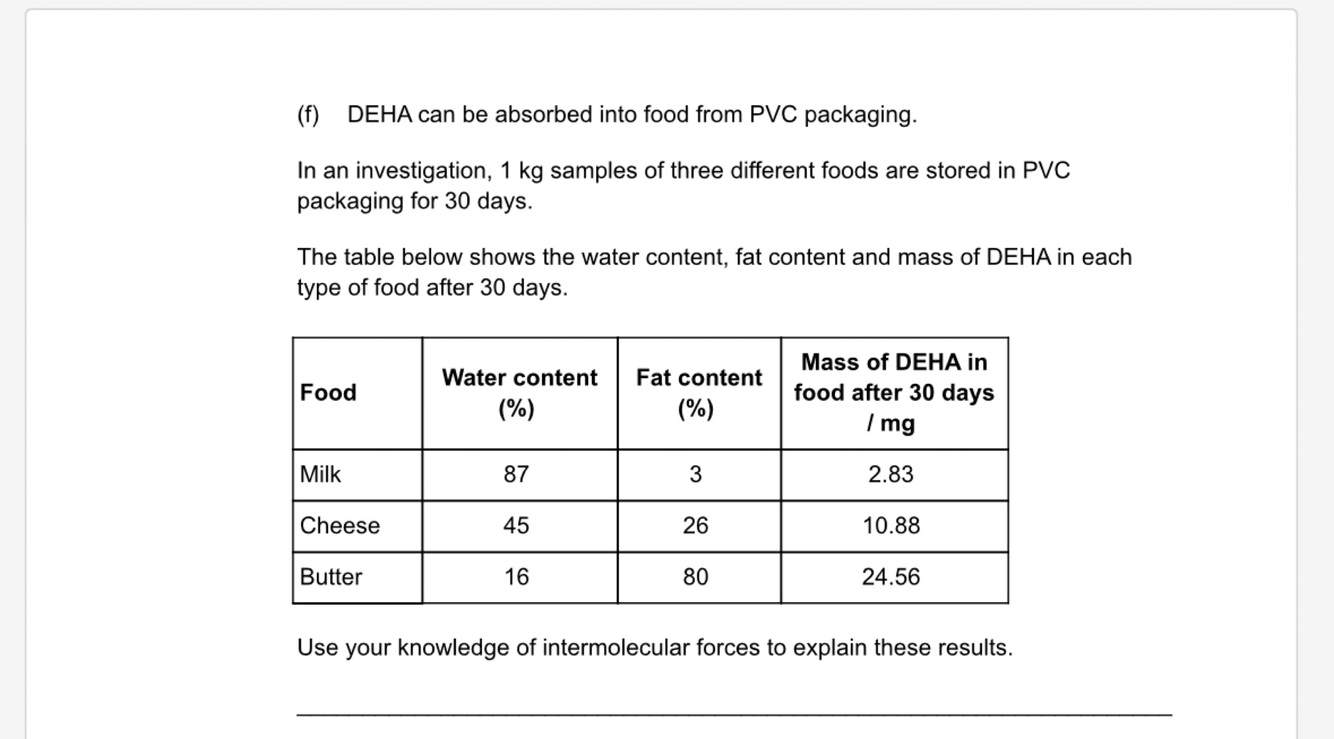
• The more fat that is present, the larger the mass of DEHA that is absorbed from plastic to the food • DEHA and fats contain long alkyl chains • DEHA is non polar / hydrophobic • Relatively strong / many Van Der Waals forces are formed between DEHA and fats
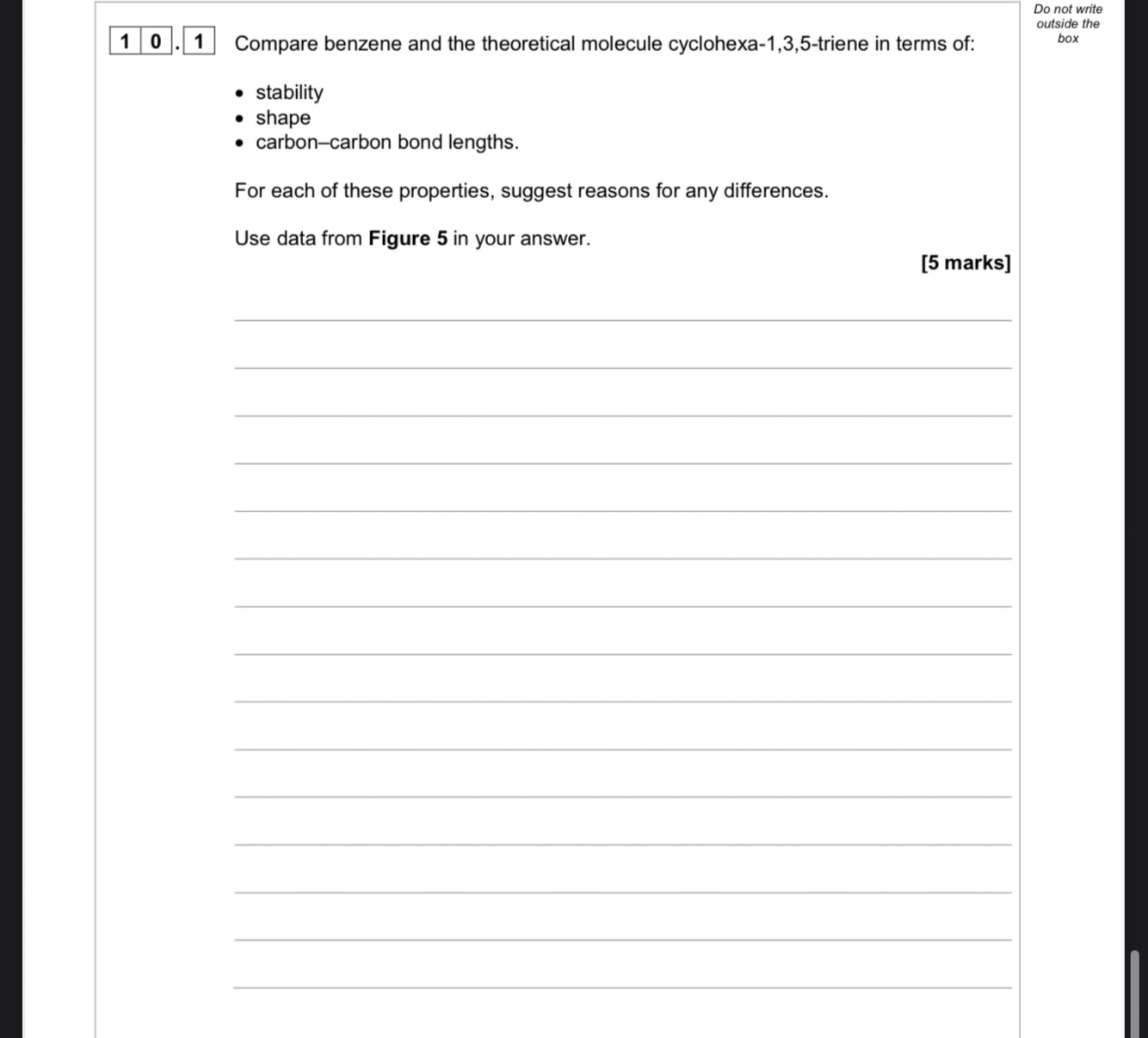
• Benzene is more stable than cyclohexatriene • The Enthalpy of hydrogenation of benzene is 152 kJ mol-1 less exothermic • Due to the delocalisation of electrons in benzene • Both are planar • Benzene has equal C-C bond lengths or regular bond lengths whereas cyclohexa-1,3,5-triene has bonds of varied length
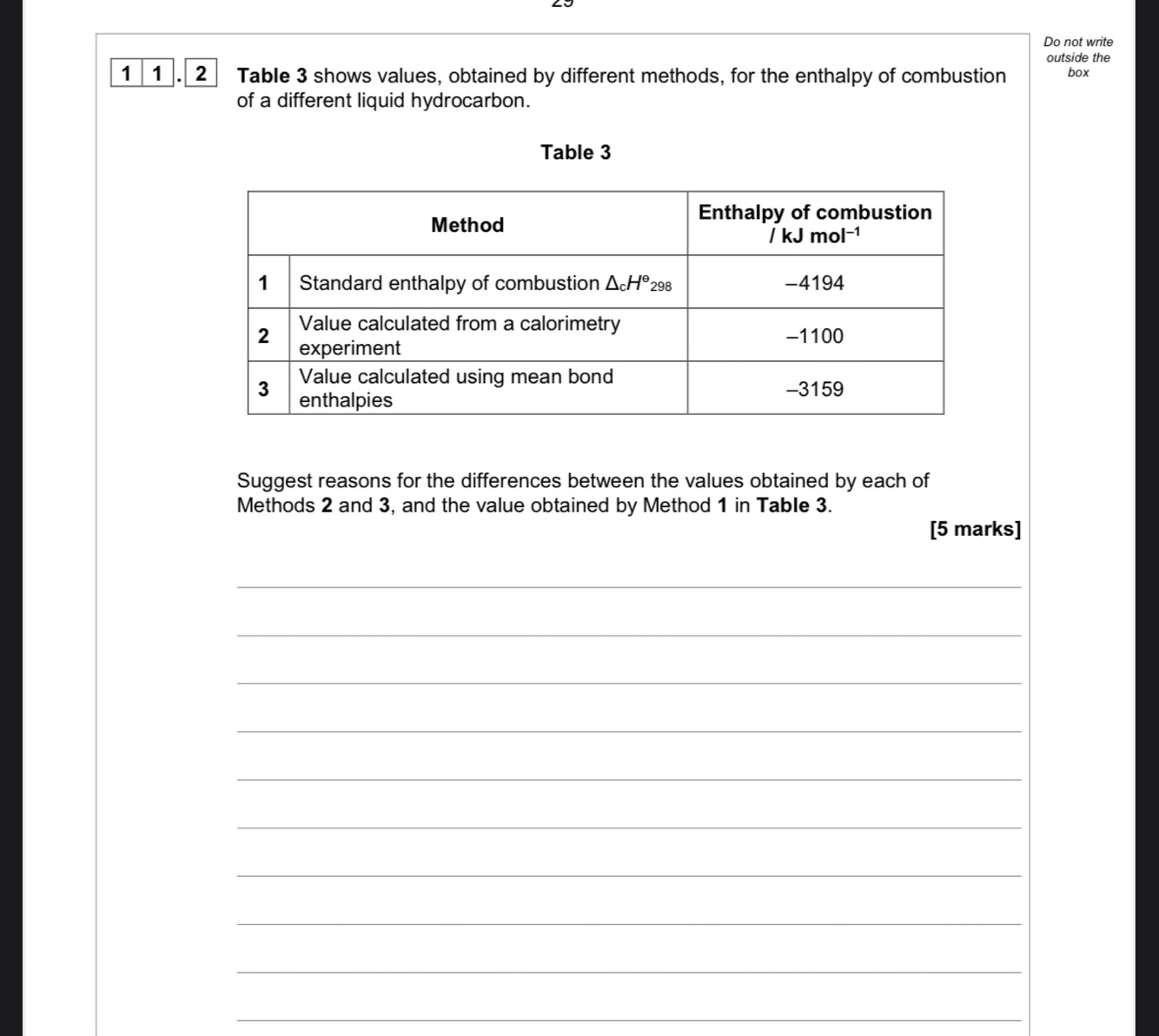
• Value from calorimetry less exothermic • Because of heat loss • Because of incomplete combustion • Because some liquid hydrocarbon could have evaporated • Mean bond enthalpies values use enthalpies taken across a range of compounds • Value from bond enthalpy data ignores energy changes in vaporisation of the fuel or condensing the water
• When investigating rates of hydrolysis what other variables should be kept constant?
• Start timer at the same point of addition • View the cross from the same distance • Light level • Same swirling / agitation • Same person observing disappearance of cross
• Why are polyesters and polyamides biodegradable?
• They can be hydrolysed • Hydrolysis is possible because the partially positive carbon in the C=O group is susceptible to attack by a nucleophile • Addition polymers are non polar and therefore not susceptible to attack