LO 5.4 - Controlled & Slow release fertilisers
No description yet. This curated deck is ready for daily study.
Card preview (4)
Question What are Slow release fertilisers? Slow release and Controlled fertilisers
Slow release fertilisers * Contain elements that are not immediately available to plants. or • Contain additive that inhibits the rate of nutrient release. Phosphate must be dissolved by acids to become water soluble. Slow release and Controlled fertilisers
Question Where are Slow release fertilisers (SRFs) commonly used? Slow release and Controlled fertilisers
Slow release fertilisers SRFs often used in field veg production. Difficult to predict rate of release - depends on temp, moisture, pH. Slow release and Controlled fertilisers
Question What are Controlled release fertilisers (CRFs)? Slow release and Controlled fertilisers
Controlled release fertilisers * Encased in a resin coating which allows them to release over a period of time. * Release over different timescales, 3-4 months, 8-9 months, 12-14 months. * Controlled by the thickness of the coating and the size/number of pores. Sometimes called ‘smart release’ fertilisers Slow release and Controlled fertilisers
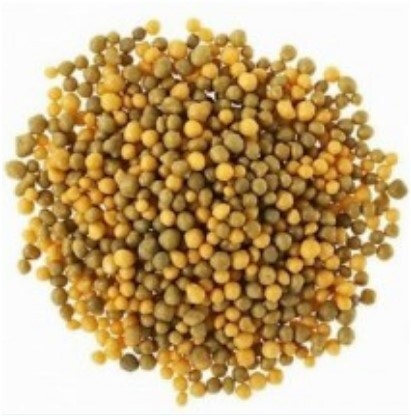
Question How do CRFs work? Slow release and Controlled fertilisers
Controlled release fertilisers * Temperature of growing medium, based on 21 degrees. * CRFs can be incorporated into the compost prior to potting, or plants can be ‘topdressed’. * CRFs also used in landscape maintenance and turfgrass. Examples include Osmocote, Multicote, Sierrablen. Slow release and Controlled fertilisers