P Block 3
No description yet. This curated deck is ready for daily study.
Card preview (24)
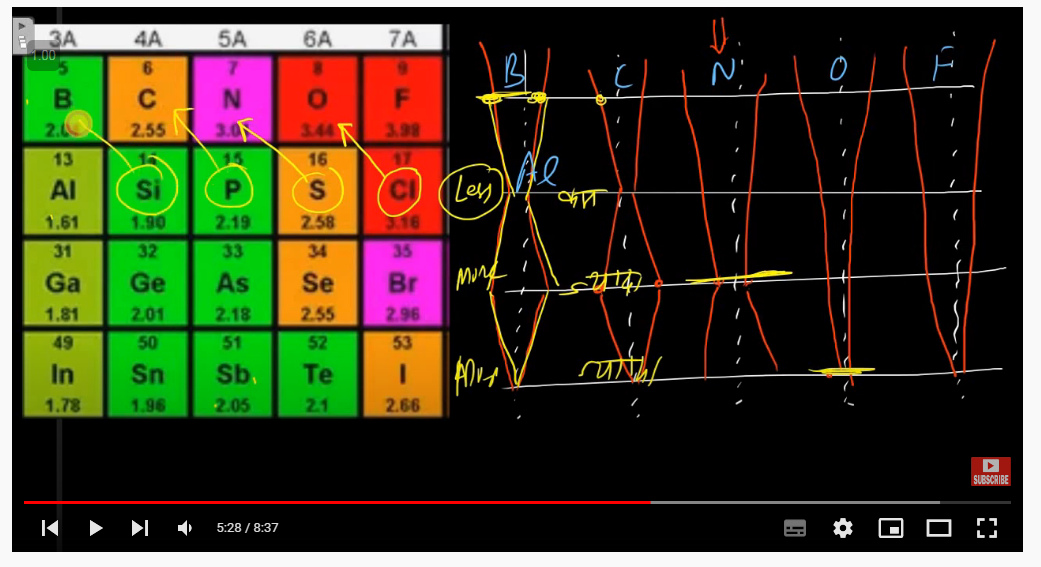
Electronegativity tricks of P block Elements
draw Bhalla in the first two groups of the P blocks and then a little variation with the Bhalla being pressed downwards and then the last two will be pointed downwards like a sword that would be the variations of elements from the 3rd line there would be less more more meaning the element will be Less/more compared to the diagonal in the upward period
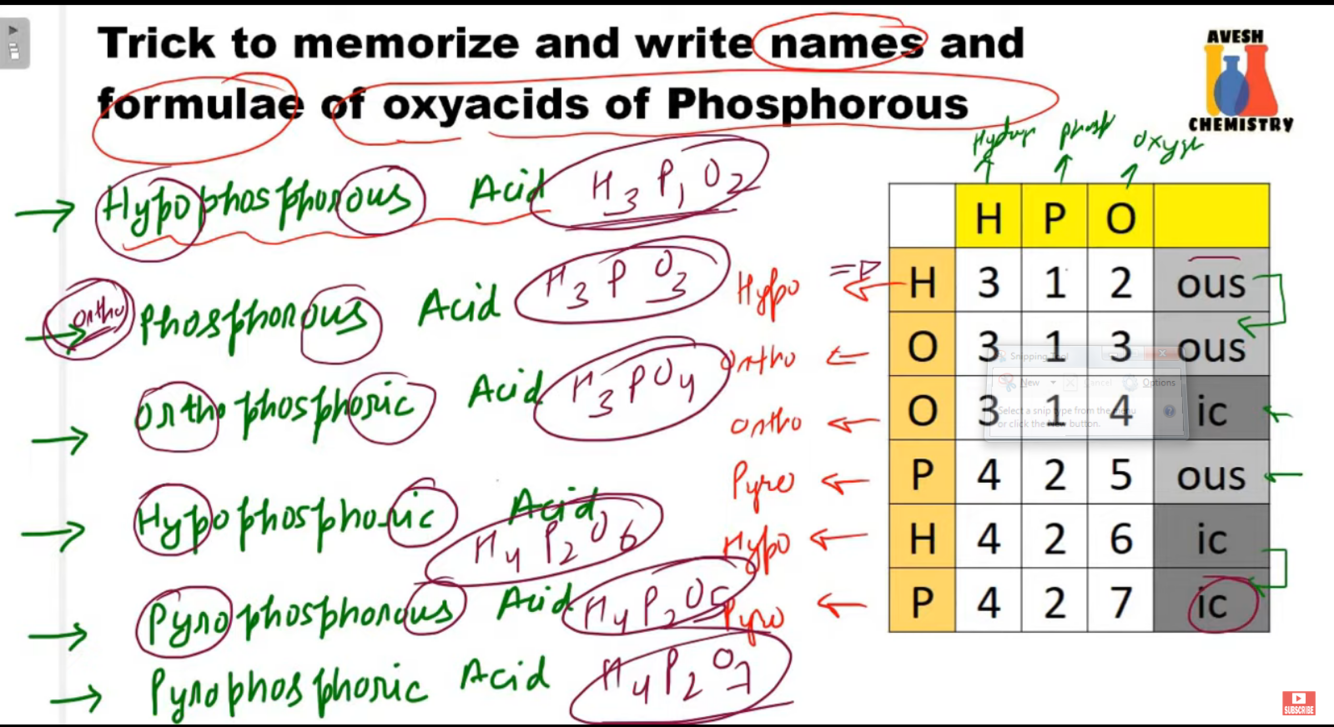
trick for memorizing the names of oxyacids of phosphorous
draw the table and then match the things thats asked
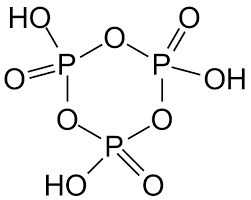
metaphosphoric acid structure
Zeolites in which form and what does it do to hard water
hydrated zeolites are used as ion exchangers in softening of hard water
The basic structural unit of silicates is
SiO4 4-
Except for what element in grp 15 all the others show allotropy
N
What P and As compounds act as ligands and what kind of bond does it forms?!
dπ-dπ

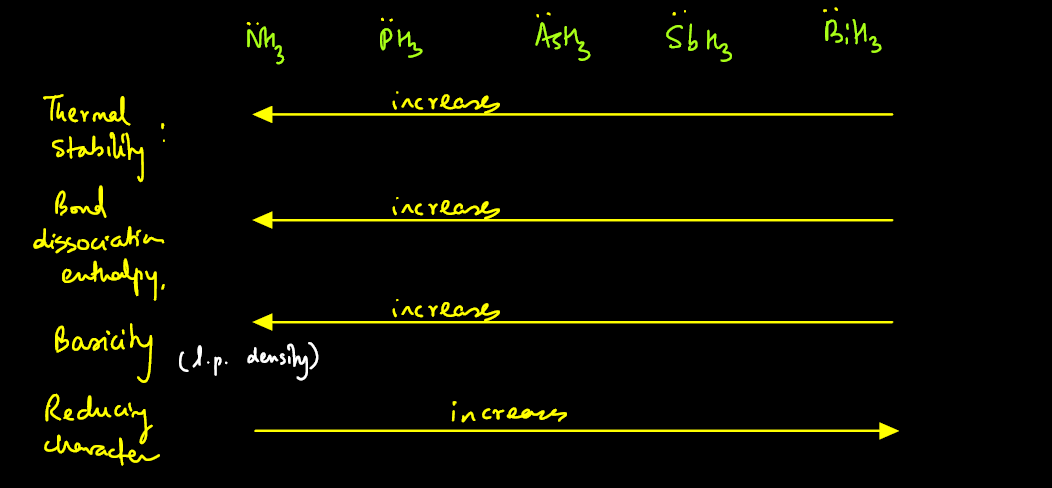
Hydrides of grp 15 thermal stability, bond dissociation, basicity, reducing character, bond angle order
What oxides in grp 15 are amphoteric
arsenic and antimony
Which halide is covalent? pentalhalide or trihalide and why
pentahalide is more covalent because it has the O.S of the elements as 5 where as trihalides have O.S 3
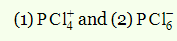
PCl5 exists in the solid-state as and why is it different than compared to PBr5
because Br is heavier and bigger and it would be difficult to accommodate Br around P as compared to Cl around P
Which only nitrogen halide is known stable
NF3
Very pure dinitrogen is obtained by

Dinitrogen is reactive/inert at room temperature and why?!
dinitrogen is inert at room temperature because of high enthalpy of the triple bond of N-N
N2 and O2 combines to form ___ at what condition
N2 and O2 combines to form NO at very high temperature*(2000K)
Urea formula
NH2CONH2
How forming ammonia with Urea

Catalyst used in habers process
K2O and Al2O3
What is used as an refrigent
liquid ammonia
Why does NH3 act as a lewis base
nitrogen atom in NH3 has one lone pair of electron which is available for donation
Cu2+ with Ammonia forms which complex and whats the color?
deep blue since Cu2+ has blue color
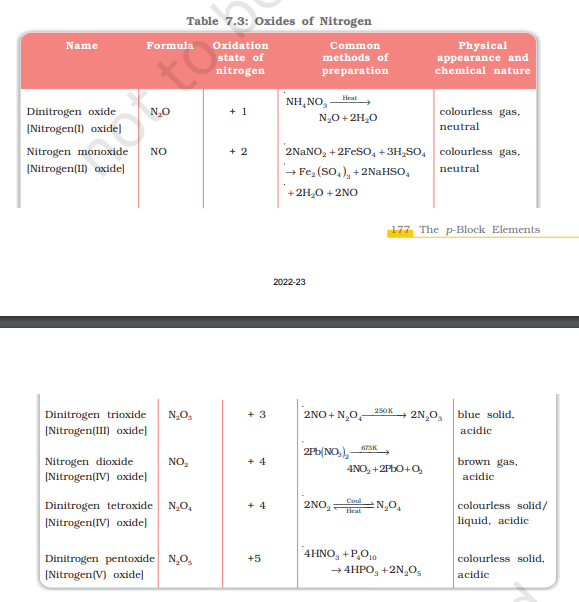
Nitrogen Oxides table
Nitrogen oxides structure
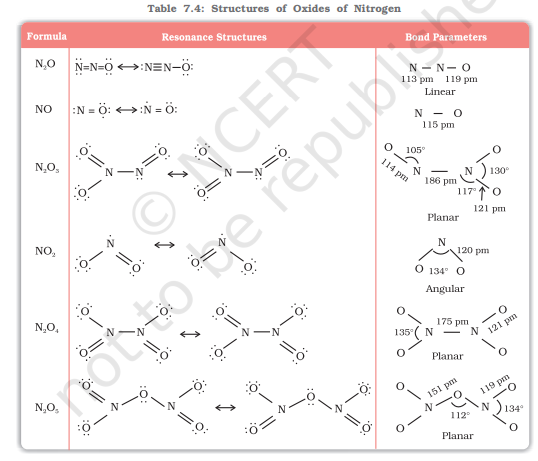
What kind of bonds does N2O5 has
covalent and coordinate covalent bonds