LO 3.5 - Air filled porosity, pore space and water content
No description yet. This curated deck is ready for daily study.
Card preview (17)
Question What is Bulk Density? Bulk Density
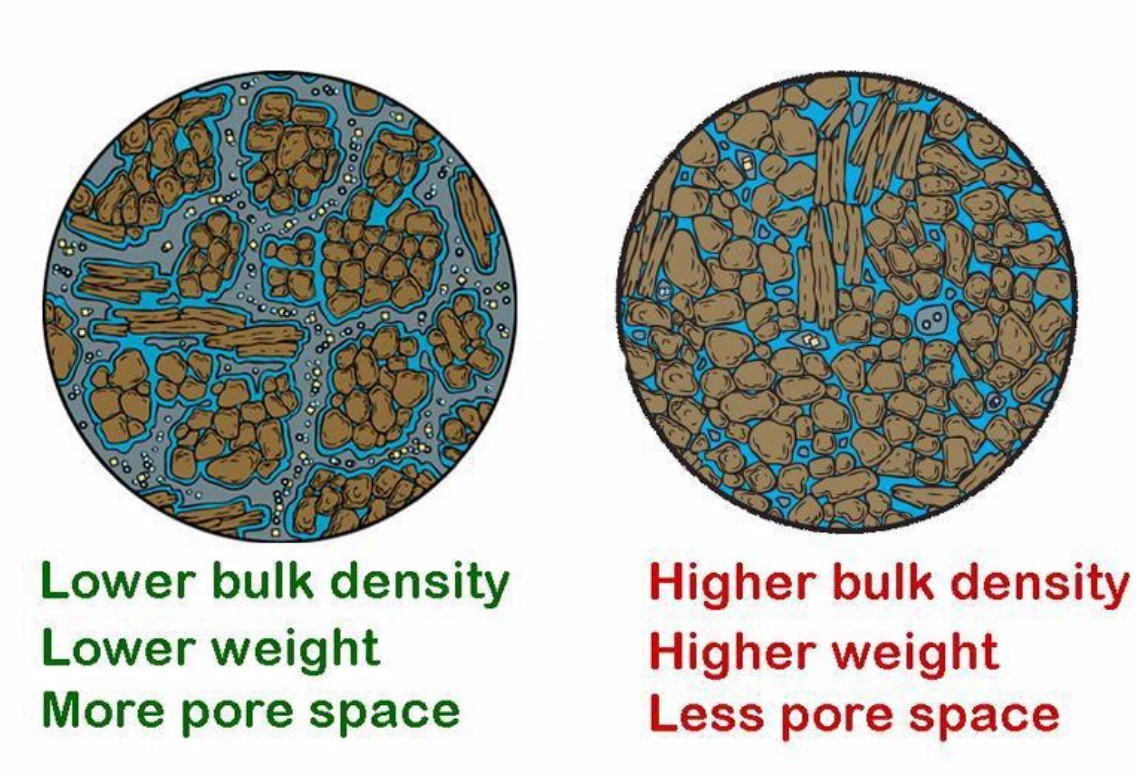
Bulk Density * A volume of soil consists of solid particles and the spaces between the particles – the spaces between the solid particles can contain air or water. * By weighing a known volume of dry soil, we can get an indication of how much of it is made up of solid particles and how much is air – this is known as bulk density. * The soil must be collected as an ‘undisturbed sample’ to avoid introducing air as it is collected. Bulk Density
Question How do you measure the Bulk Density of soil? Bulk Density
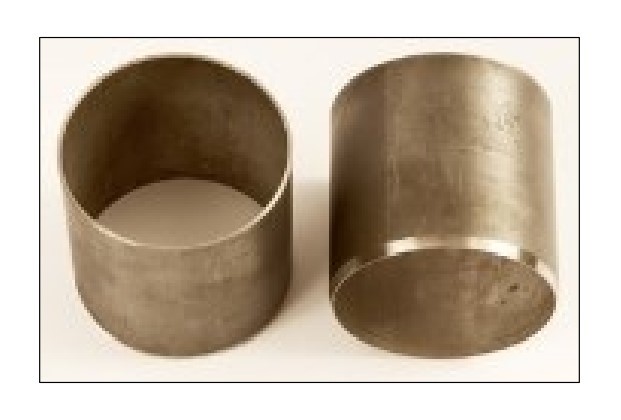
• Collect a known volume of soil (undisturbed). • Dry it in an oven. • Weigh it. • Result is expressed in g/cm3. The lower the bulk density, the more total air space in the soil. Bulk Density
Question How does OM effect Bulk Density? Bulk Density
Organic matter decreases bulk density because it encourages particles to stick together and promotes a good structure and less compaction in the soil. Bulk Density
Question Where in soils, is a Bulk density of 1.4g/cm3 or less found? Bulk Density
Soils with a bulk density of 1.4 g/cm3 or less are found in surface layers of forest and agricultural soils. Easily exploited by plant roots. Bulk Density
Question What are the effects of having a Bulk density or 1.6g/cm3 or more? Bulk Density
At bulk densities above around 1.6 g/cm3 soils are limiting to root penetration. Bulk Density
Question What is Consolidation in relation to Bulk Density? Bulk Density
Higher bulk density tends to occur at deeper levels in the soil profile due to 1. Weight of the soil above 2. Washing down of fine particles into the spaces in the deeper levels. This (natural) process is called consolidation, as opposed to compaction which is caused by human and animal activity. Bulk Density
Question What does Porosity in soil refer to? Porosity
Porosity: * Soil porosity refers to the small voids between particles of soil. * Plant roots and soil organisms live in the pores between the solid components of a soil. Porosity
Question What are Micropores? Porosity
Micropores: * The smallest pores (micropores) normally contain only water which rarely dries out and is unavailable to plants. Porosity
Question What are Mesopores? Porosity
Mesopores: * The middle-sized pores (mesopores) contain water that is available to plants. As this water is taken up, air moves into these pores. Porosity
Question What are Macropores? Porosity
Macropores: * The larger pores (macropores) – drain easily, so that within hours of saturation, the water has drained out of these pores and they contain air. Porosity
Question What is Compaction? Compaction
Compaction: * If a load is applied to soil, compaction occurs when particles are forced into closer contact – air is expelled and pore space is reduced. This reduction in pore space results in increased bulk density. Compaction can be intentional (for engineering purposes) or unintentional. * Common causes - passage of vehicles over soil surface, pedestrian traffic on unpaved paths, animals esp cattle, recreational activities in parks/sports grounds. On construction sites, storage of materials can cause compaction. * Much of the compaction happens with the first pass of machinery over the soil. Compaction
Question What are the effects of Compaction? 6 effects. Compaction
Effects of Compaction: * Increases bulk density. * Destroys the larger pores – waterlogging. * Makes it more difficult for rainwater to enter the soil – particularly if the soil surface is ‘crusted’. * Reduces air movement. * Restricts root penetration and seedling emergence. * Reduces the amount of oxygen. Compaction
Question What is meant by Air filled Porosity (AFP)? Porosity
Measuring porosity in growing media * In container production of plants, we often use a growing medium other than soil. * In this situation, rather than measuring bulk density, we normally use a measure called ‘air filled porosity’ (AFP) to give an indication of the amount of air space in the growing medium. Porosity
Question Air filled porosity (AFP), how is it measured? Porosity
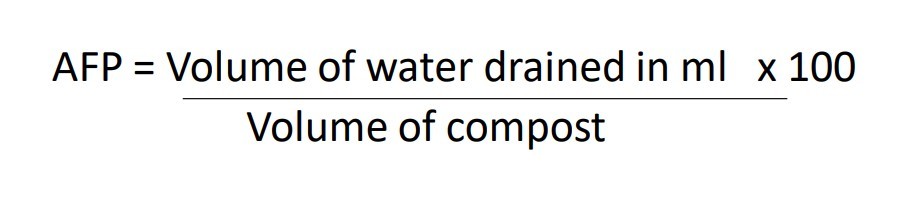
Air filled porosity (AFP) * It is measured by saturating a known volume of soil/compost, allowing it to drain, and measuring the volume of water that drains out of it. * AFP is expressed as a percentage. Eg., a container (with drainage holes) is loose-filled with compost and saturated. * The container is allowed to drain and the water is collected and measured. Porosity
Question How is Air filled porosity (AFP) graded? Porosity
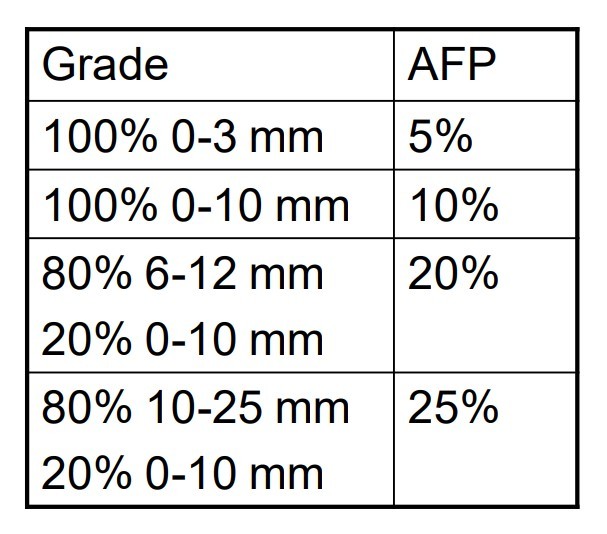
AFP is largely dependent on particle size. Peat is graded by particle size – the table gives an indication of AFP for some common grades. Porosity
Question What can you conclude if most of the pore spaces in a compost are small? Porosity
If most of the pore spaces in a compost are small, the AFP will be low. The small pore spaces will tend to hold onto water, and the compost will be prone to waterlogging and poor aeration. Porosity
Question What can you conclude if most of the pore spaces in a compost are large? Porosity
If the pore spaces are large, the AFP will be high. This compost will be prone to drying out and will need frequent watering. Most peat-based composts have an AFP of between 10 and 20%. Porosity