ChemPath: Porphyrias
No description yet. This curated deck is ready for daily study.
Card preview (24)
What is porphyria?
• Disorders caused by deficiencies in enzymes of the haem synthesis pathway • This leads to the accumulation of toxic haem precursors
What are the two ways in which porphyria can manifest?
• Acute neuro-visceral attacks • Acute or chronic cutaneous symptoms
List some key features of haem.
• Organic heterocyclic compound with Fe2+ in the centre • There is a terapyrrole ring around the iron
Where is haem found?
Erythroid cells Liver cytochrome
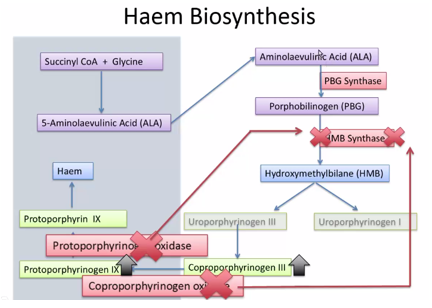
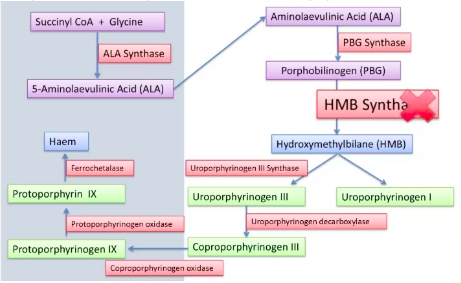
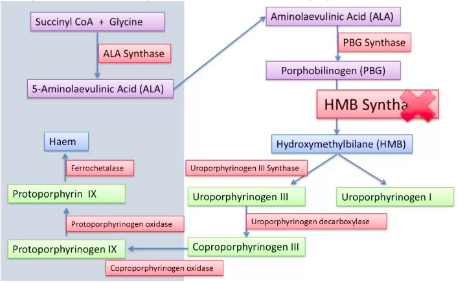
Draw the haem synthesis pathway.
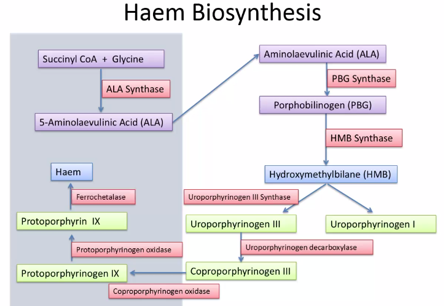
Which component of the haem biosynthesis pathway is neurotoxic?
5-ALA
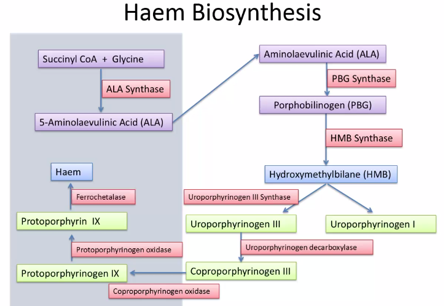
What types of porphyrin may be produced in the absence of iron?
• Metal-free protoporphyrins • Zinc protoporphyrin
How can porphyrias be classified?
Principle site of enzyme deficiency: • Erythroid • Hepatic Clinical presentation: • Acute or non-acute • Neurovisceral or skin lesions
Outline the relationships between UV light and skin lesions.
Porphyrinogens are oxidised and then activated by UV light into activated porphyrins. NOTE: porphyrinogens do NOT oxidise cells
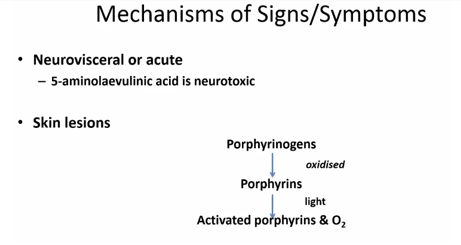
What is a key difference between porphyrinogens and porphyrins?
• Porphyrinogens - colourless, unstable and readily oxidised to porphyrin • Porphyrins - highly coloured
Which porphyrins appears in the urine and faeces?
• Urine - uroporphyrins are water soluble • Faeces - coproporphyrins are less soluble and near the end of the pathway NOTE: someone with porphyria will have colourless/yellow urine which turns red/dark red/purple as the porphyrinogens are oxidised and activated into porphyrins
List four types of acute porphyria and the enzymes involved.
• Plumboporphyria - PBG synthase • Acute intermittent porphyria - HMB synthase / PBG deaminase • Hereditary coproporphyria - coproporphyrinogen oxidase • Variegate porphyria - protoporphyrinogen oxidase
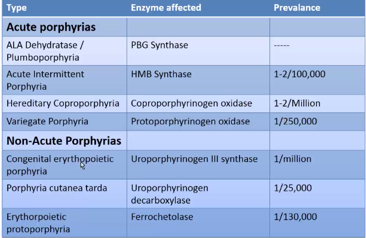
List three types of non-acute porphyria and the enzymes involved.
• Congenital erythropoietic porphyria - uroporphyrinogen III synthase • Porphyria cutanea tarda - uroporphyginogen decarboxylase • Erythropoietic protoporphyria - ferrochetolase
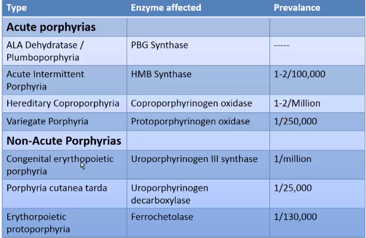
What is the most common type of porphyria?
Porphyria cutanea tarda
What is the most common type of porphyria in children?
Erythropoietic protoporphyria
What does ALA synthase deficiency cause?
X-linked sideroblastic anaemia
How can a mutation in ALA synthase lead to porphyria?
A gain-of-function mutation will results in increased throughput through the pathway leading to a build-up in protoporphyrin IX as it overwhelms the ability of ferrochetolase to convert it into haem.
What are the main features of PBG synthase deficiency?
• Causes acute porphyria • Leads to accumulation of ALA • Abdominal pain (most important feature) • Neurological symptoms (e.g. coma, bulbar palsy, motor neuropathy)
Which deficiency causes acute intermittent porphyria?
HMB synthase (aka PBG deaminase)
Outline the clinical features of acute intermittent porphyria.
• Rise in PBG and ALA • Autosomal dominant • Neurovisceral attacks • Abdominal pain • Tachycardia and hypertension • Constipation, urinary incontinence • Hyponatraemia and seizures • Sensory loss/muscle weakness • Arrythmias/cardiac arrest Important: there are NO skin symptoms (because no porphyrinogens are produced) NOTE: 90% will be asymptomatic
List some precipitating factors for acute intermittent porphyria.
• ALA synthase inhibitors (e.g. steroids, ethanol, anticonvulsants (CYP450 inducers)) • Stress (infection, surgery) • Reduced caloric intake • Endocrine factors
Describe how acute intermittent porphyria is diagnosed.
• increased urinary PBG (and ALA) • PBG gets oxidised to porphobilin • Decreased HMB synthase activity in erythrocytes
How is acute intermittent porphyria managed?
• Avoid attakcs (adequate nutrition, avoid precipitant drug, prompt treatment of other illnesses) • IV carbohydrate (inhibits ALA synthase) • IV haem arginate (switches off haem synthesis through negative feedback)
Name two acute porphyrias that have skin manifestations. State the enzymes affected.
• Hereditary coproporphyria - coproporphyrinogen oxidase • Variegate porphyria - protoporphyrinogen oxidase