Chapter 6 (shapes of molecules + intermolecular forces)
No description yet. This curated deck is ready for daily study.
Card preview (24)
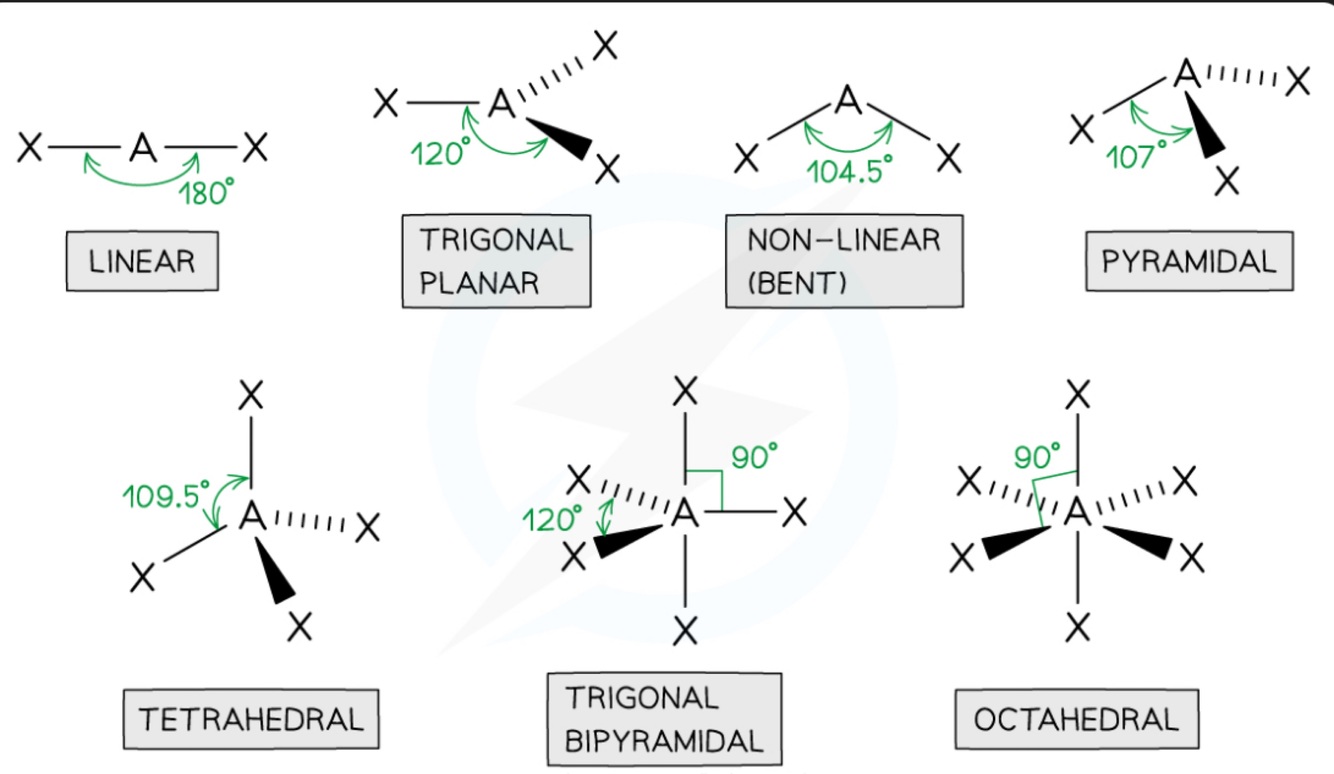
What are the shapes and bond angles for all molecules
• 0 lone pairs of electrons leads to a bond angle of 109.5 degrees (with exceptions) each lone pair of electrons decreases the bond angle by 2.5 degrees
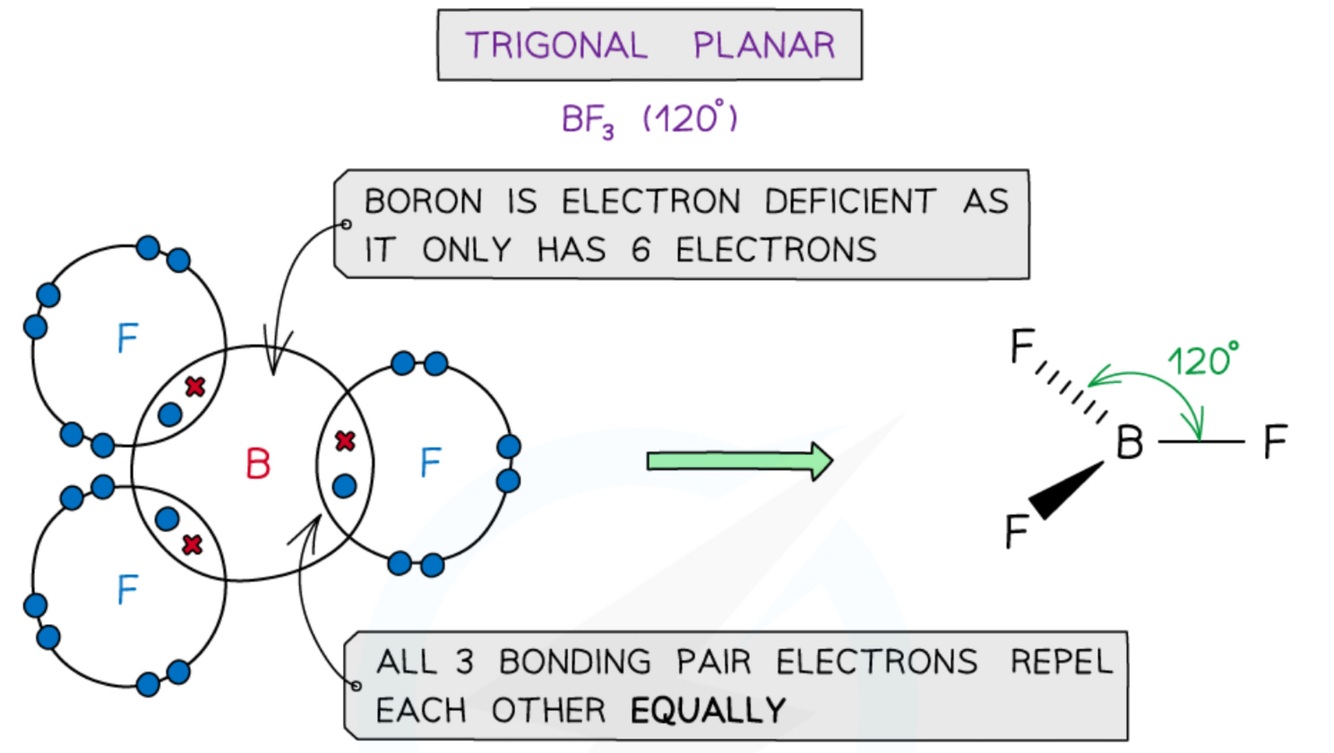
What is an example of trigonal planar molecule?
• BF3, 3 atoms surrounding the central atom, with a bond angle of 120 degrees
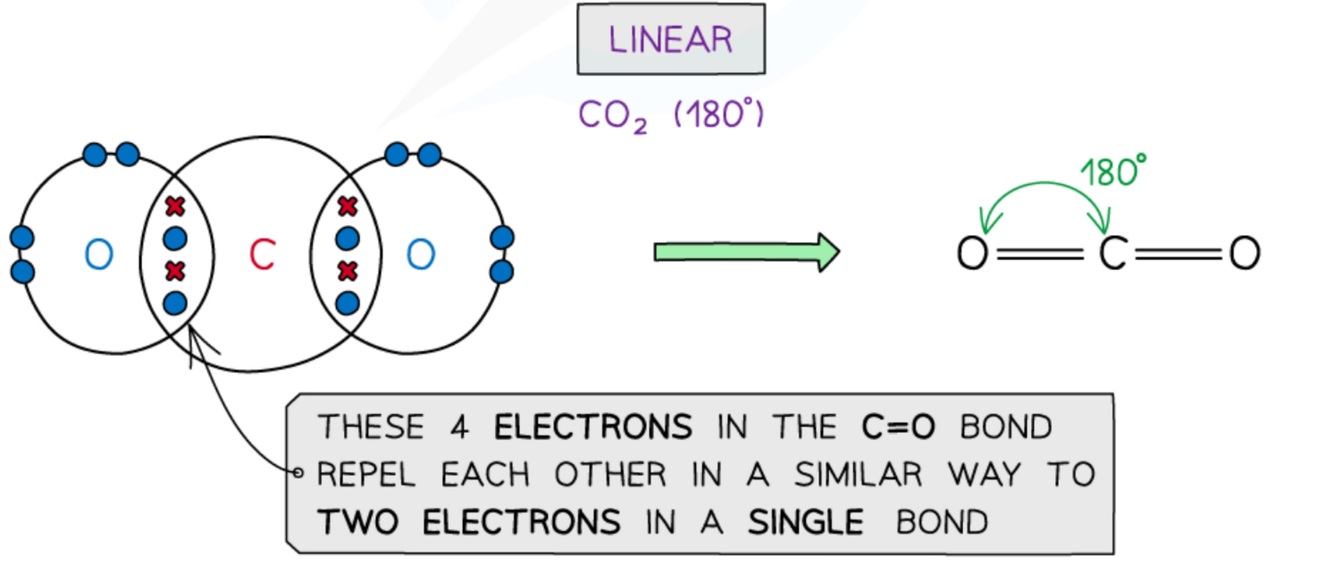
What is an example of a linear molecule ?
• CO2 since there are no lone pairs of electrons, the bond angle is 180 degrees
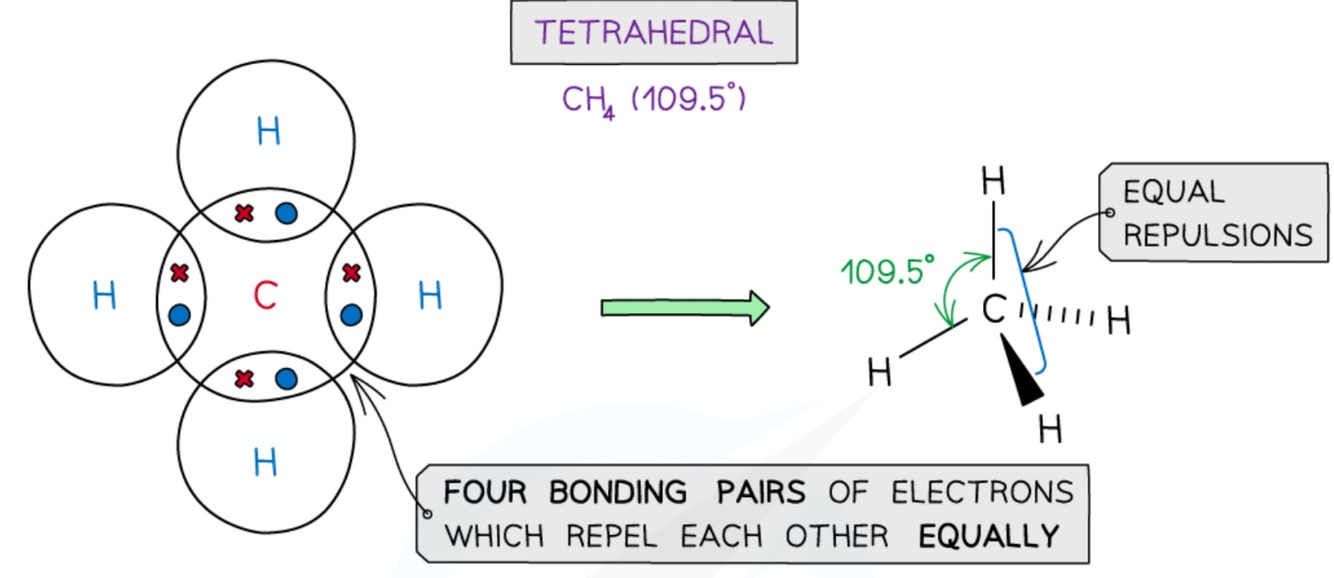
What is an example of a Tetrahedral molecule ?
• CH4, no lone pairs and 4 bonded atoms pairs, repel each other equally, resulting to a bond angle of 109.5 degrees
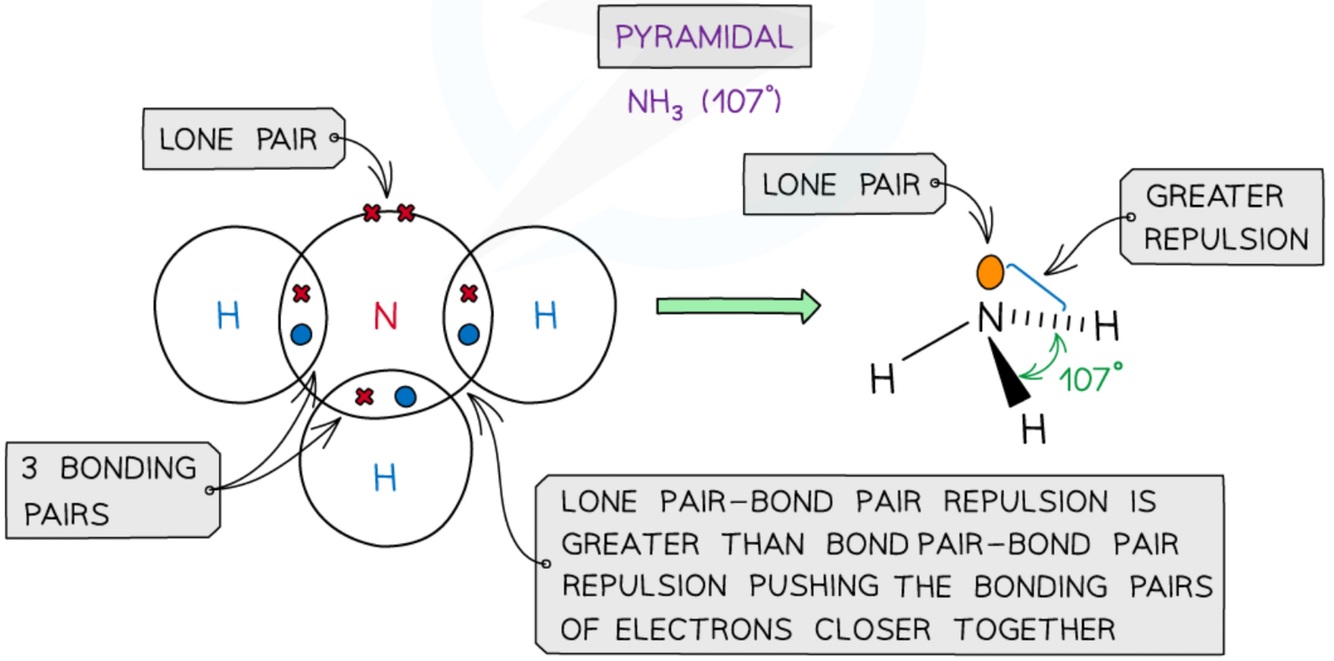
What is an example of a Pyramidal molecule ?
• NH3, 1 lone pair of electrons and 3 bonded atoms, therefore bond angle of 107 degrees
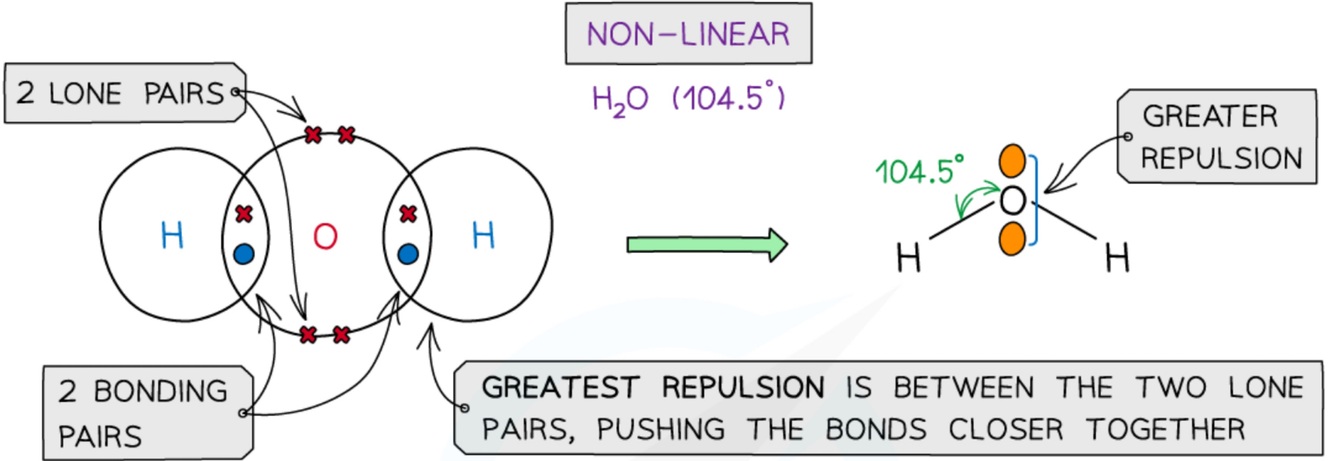
What is an example of a non-linear molecule ?
• H20, the central atom has 2 lone pairs of electrons, resulting in a bond angle of 104.5 degrees
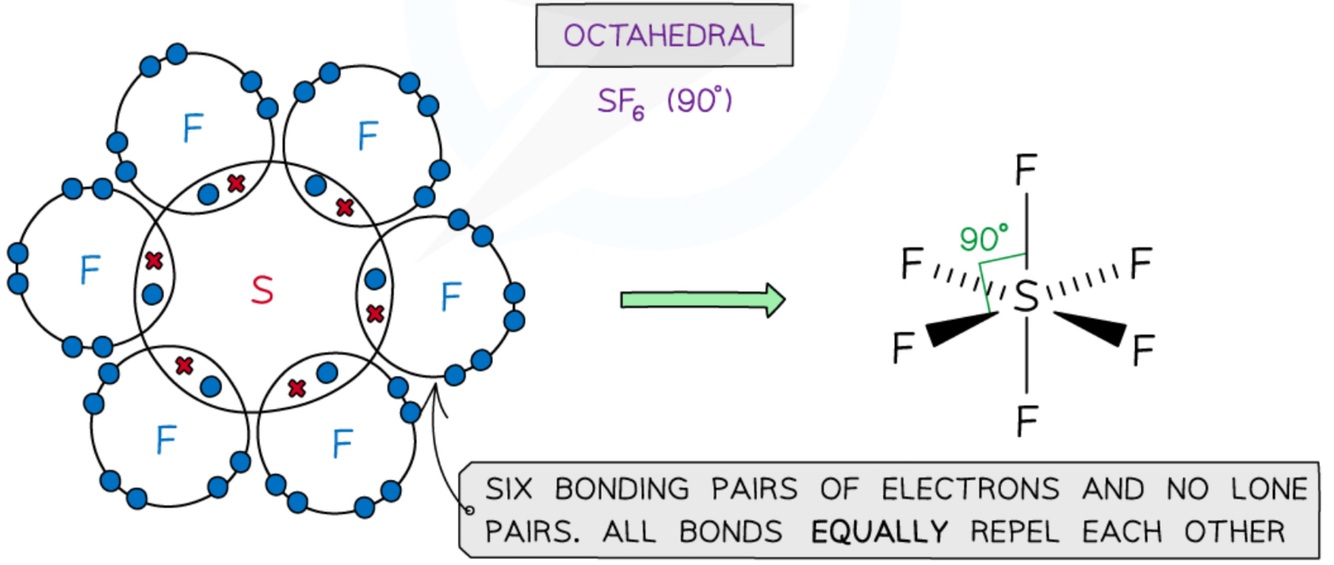
What is an example of a Octahedral molecule ?
• SF6, with 6 bonded atoms surrounding the central atom, with no lone pairs of electrons, resulting in a bond angle of 90 degrees
What is an example of a Trigonal Bipyramidal molecule ?
• PF5, 5 bonding pairs of electrons, no lone pairs, however this an exception where 3 atoms have a bond angle of 90 degrees and 2 atoms have a bond angle of 120 degrees
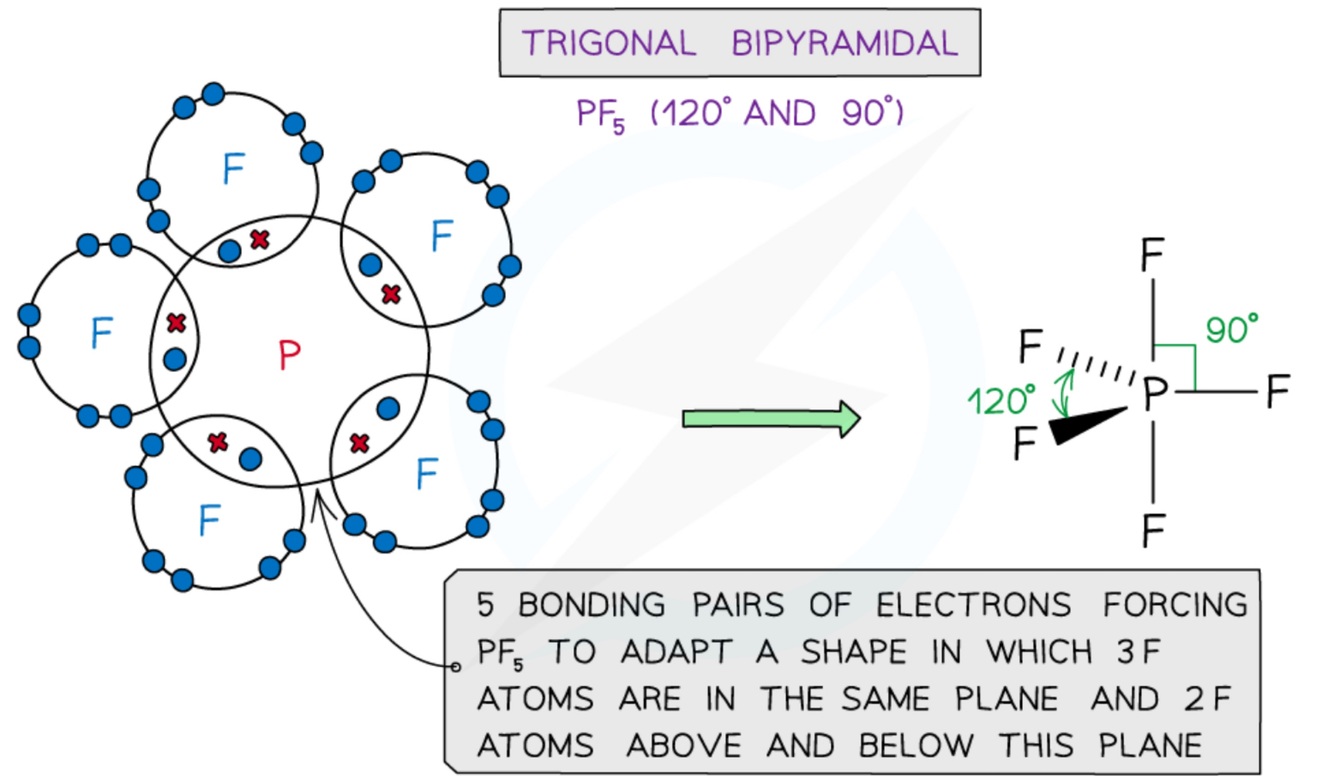
What is electron repulsion theory ?
• The valence shell electron pair repulsion theory (VSEPR) predicts the shape and bond angles of molecules • In a molecule, the bonding pairs of electrons will repel other electrons around the central atom forcing the molecule to adopt a shape in which these repulsive forces are minimised
What are the rules when determining the shape and bond angles of a molecule ?
• Electron pairs repel each other as they have the same charge • Lone pair electrons repel each other more than bonded pairs • Repulsion between multiple and single bonds is treated the same as for repulsion between single bonds • Repulsion between pairs of double bonds are greater • The most stable shape is adopted to minimize the repulsion forces
What is electronegativity ?
• electronegativity is the power of an atom to attract the pair of electrons in a covalent bond towards itself • this means that the electron distribution in a covalent bond between elements with different electronegativities will be unsymmetrical • This is because of the ability of the positive nucleus to attract negativity charged electrons, towards it • the Pauling scale is used to assign a value of electronegativity
What are the different factors which affect electronegativity ?
• Nuclear charge • Atomic radius • shielding
How does nuclear charge affect electronegativity ?
• Attraction exists between the positively charged protons in the nucleus and negatively charged electrons found in the energy levels of an atom • An increase in the number of protons leads to an increase in nuclear attraction for the electrons in the outer shells • Therefore, an increased nuclear charge results in an increased electronegativity
How does atomic radius affect electronegativity ?
• The atomic radius is the distance between the nucleus and electrons in the outermost shell • Electrons closer to the nucleus are more strongly attracted towards its positive nucleus • Those electrons further away from the nucleus are less strongly attracted towards the nucleus • Therefore, an increased atomic radius results in a decreased electronegativity
How does sheilding affect electronegativity ?
• Filled energy levels can shield (mask) the effect of the nuclear charge causing the outer electrons to be less attracted to the nucleus • Sodium (period 3, group 1) has higher electronegativity than caesium (period 6, group 1) as it has fewer shells and therefore the outer electrons experience less shielding than in caesium • Thus, an increased number of inner shells and subshells will result in a decreased electronegativity
What is the trend in electronegativity down a group ?
• there is a decrease in electronegativity going down the group • The nuclear charge increases as more protons are being added to the nucleus • However, each element has an extra filled electron shell, which increases shielding • The addition of the extra shells increases the distance between the nucleus and the outer electrons resulting in larger atomic radii • Overall, there is decrease in attraction between the nucleus and outer bonding electrons
What is the trend in electronegativity across a period ?
• Electronegativity increases across a period • The nuclear charge increases with the addition of protons to the nucleus • Shielding remains relatively constant across the period as no new shells are being added to the atoms • The nucleus has an increasingly strong attraction for the bonding pair of electrons of atoms across the period of the periodic table • This results in smaller atomic radii
What is bond polarity ?
• When 2 atoms in a covalent bond have the same electronegativity the covalent bond is nonpolar • When 2 atoms in a covalent bond have different electronegativity the covalent bond is polar and the electrons will be drawn towards the more electronegative atom
What happens as a result of polar bonds ?
• the electron distribution is asymmetric • the less electronegative atom gets a partial positive charge (delta positive) • the more electronegative atom gets a partial negative charge (delta negative) • the greater the difference in electronegativity the more polar the bond becomes
What is a dipole moment ?
• The dipole moment is a measure of how polar a bond is • The direction of the dipole moment is shown by the following sign in which the arrow points to the partially negatively charged end of the dipole

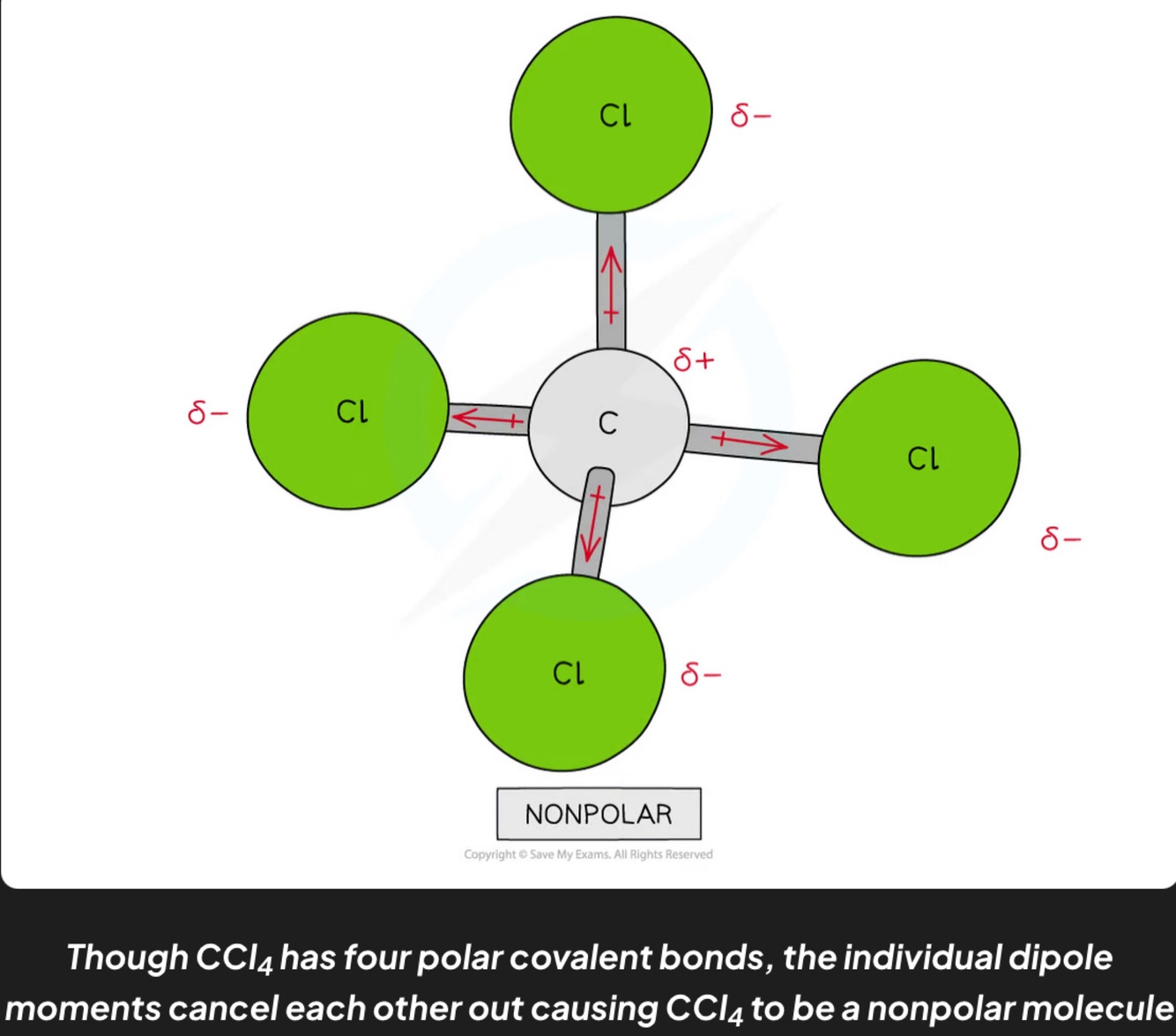
What is the difference between polar bonds and polar molecules ?
• some molecules have polar bonds but are overall not polar because the polar bonds in the molecule are arranged in such a way that the individual dipole moments cancel eachother out e.g CCl4
What are the 3 types of intermolecular forces ?
• Induced dipole – dipole forces are also called London dispersion forces or van der Waals’ forces • Permanent dipole – dipole forces (also called van der Waals’ forces) are the attractive forces between two neighbouring molecules with a permanent dipole • Hydrogen Bonding are a special type of permanent dipole - permanent dipole forces • Intramolecular forces are stronger than intermolecular forces For example, a hydrogen bond is about one tenth the strength of a covalent bond
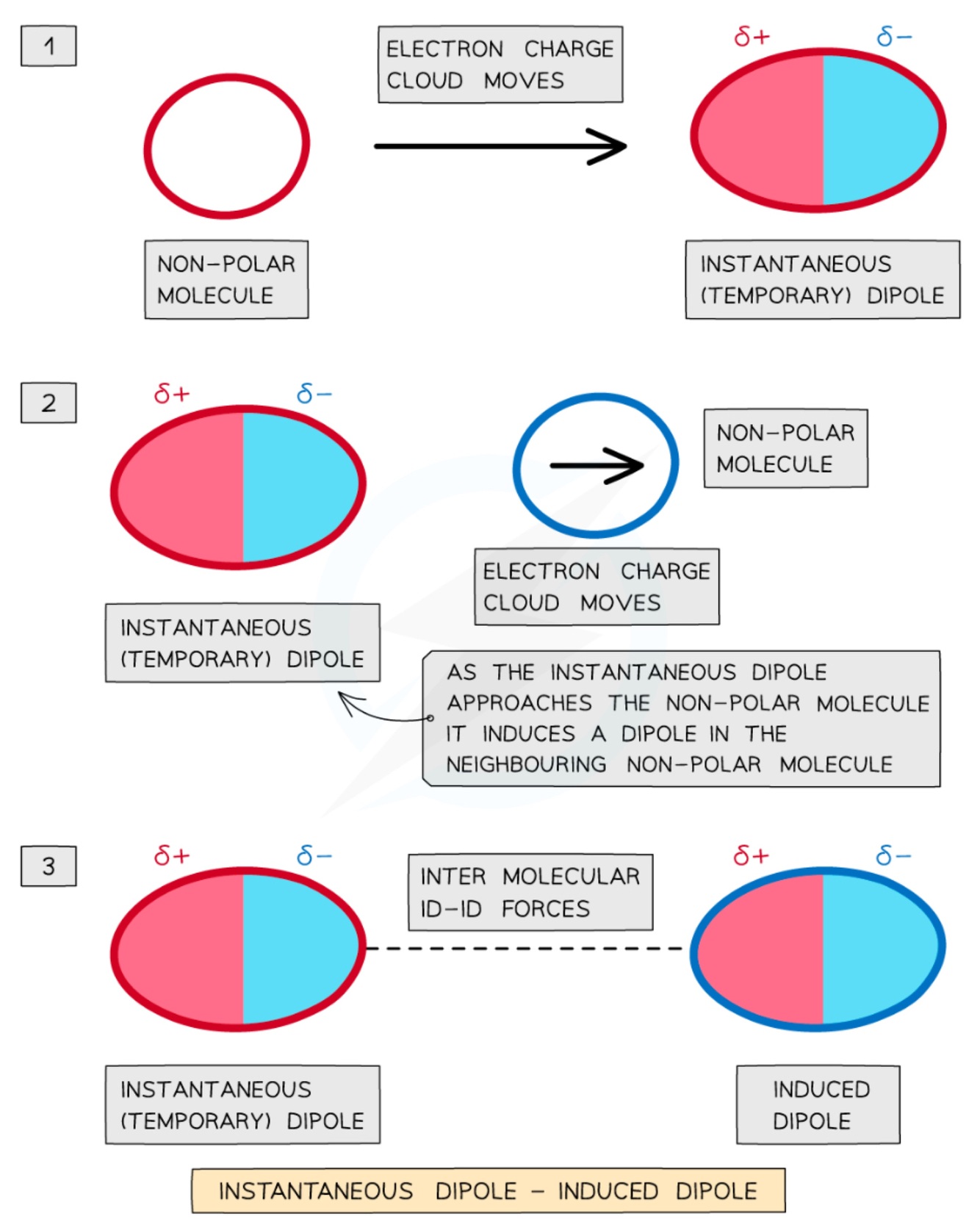
How do induced dipole-dipole forces (London forces) work ?
• The electron charge cloud in non-polar molecules or atoms are constantly moving • During this movement, the electron charge cloud can be more on one side of the atom or molecule than the other • Because the electron clouds are moving constantly, the dipoles are only temporary • Therefore the greater the number of electrons the molecule has, the stronger the induced dipole-dipole forces
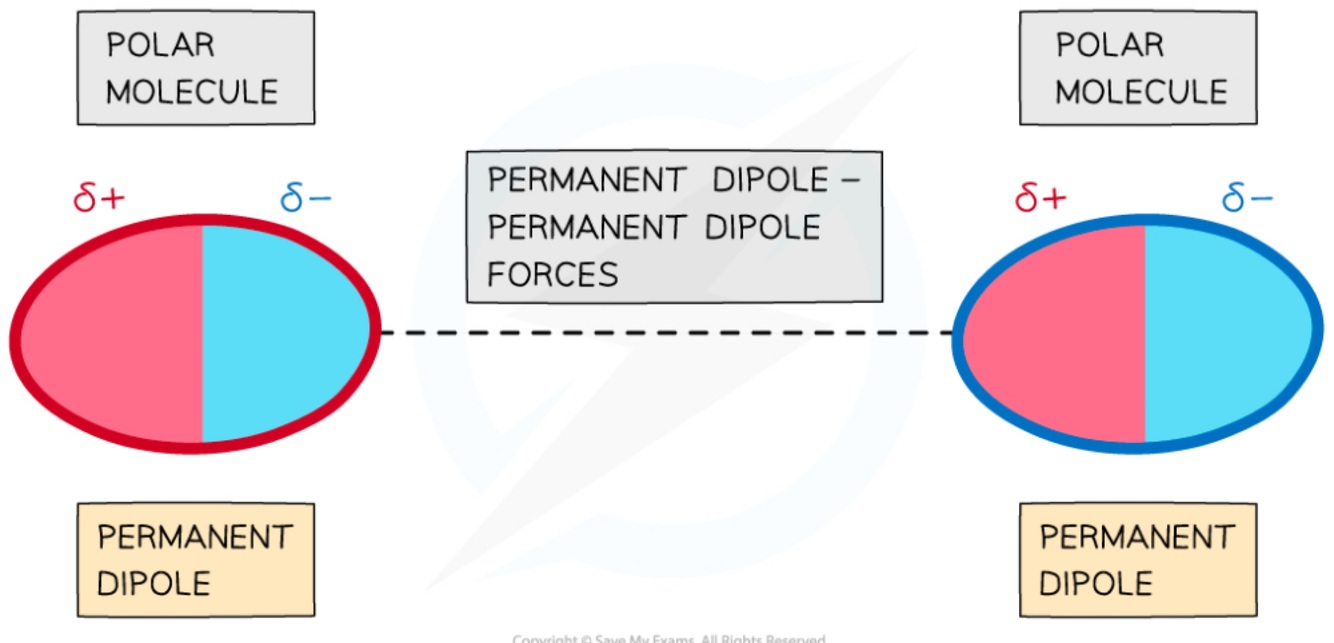
How do permanent dipole- permanent dipole forces work ?
• Polar molecules have permanent dipoles • The molecule will always have a negatively and positively charged end • permanent dipole forces are stronger than induced dipole forces