Lecture 20 Stem Cells in cancer
No description yet. This curated deck is ready for daily study.
Card preview (11)
What are the types of stem cells?
• Single cell into a multicellular organism - evolution • Single cell (egg) into a multicellular organism - development • On going life - maintenance
What do cells need to be able to do to enable development?
• To divide to make new cells. • To differentiate into functioning cell types (however, most cells can’t do this, but stem cells can)
What is the definition of a stem cell?
a cell that can self-renew while generating cells for differentiation and tissue function
What are the several types of tissue that stem cells can make?
• toti-potemt • pluri-potent • uni-potent
What are the types of stem cells?
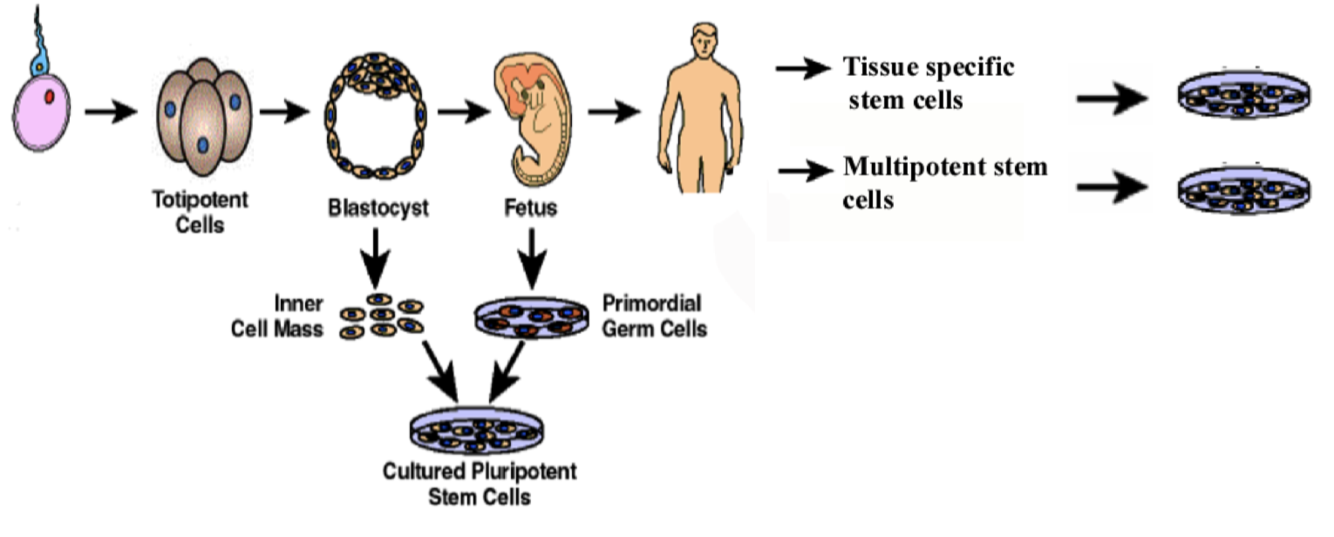
What is the developmental process of stem cells, specifically in an embryo? How is the body maintained after full growth?
Totipotent cells, within a blastocyst can be taken out (can make most cells in the body but not trophoblasts), and then cultured and grow large numbers of them. Our body needs to be maintains so most parts of the body have a small stem cell population within it (regenerative ability, incase of damage too)
What are some parts of the body with stem cells which are of interest clinically?
• cord blood • deciduous (developing) teeth
Do maligant tissues also have stem cells?
Yes, stem cells are the basis of generation and regeneration of all tissues.
What is the molecular technique that can make stem cells?
Induced pluripotecy – iPS cells
Stem cells, regardless of their type, differ from other cells because:
• they can divide to renew themselves indefinitely • they can generate specialized (differentiated) cell types