Biochemistry
No description yet. This curated deck is ready for daily study.
Card preview (24)
Hydropathy index
measure of polarity of amino acid residue; how hydrophobic vs how hydrophilic an amino acid is
higher the hydropathy value (kJ/mol) –> the more ______ the amino acid
hydrophobic
lower the hydropathy value (kJ/mol) –> the more ______ the amino acid
hydrophilic
hydropathy value of peptide chain
sum of individual hydropathy value of each residue
primary structure of protein
sequence of amino acids, held together by peptide bonds
secondary structure of protein
local folding, only relatively close residues interact, held together by backbone interaction (H-bonds between amine H and carbonyl O of the backbone)
tertiary structure of protein
global folding, held together by side group interaction (disulfide bonds, ionic bonds, H-bonds, hydrophobic interaction)
quaternary structure of protein
different peptides/proteins interacting, held together by side group interactions
forms of denaturation
heat, pH, salts, detergents
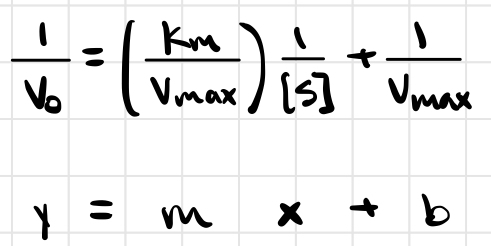
Lineweaver-Burke Plot: Equation
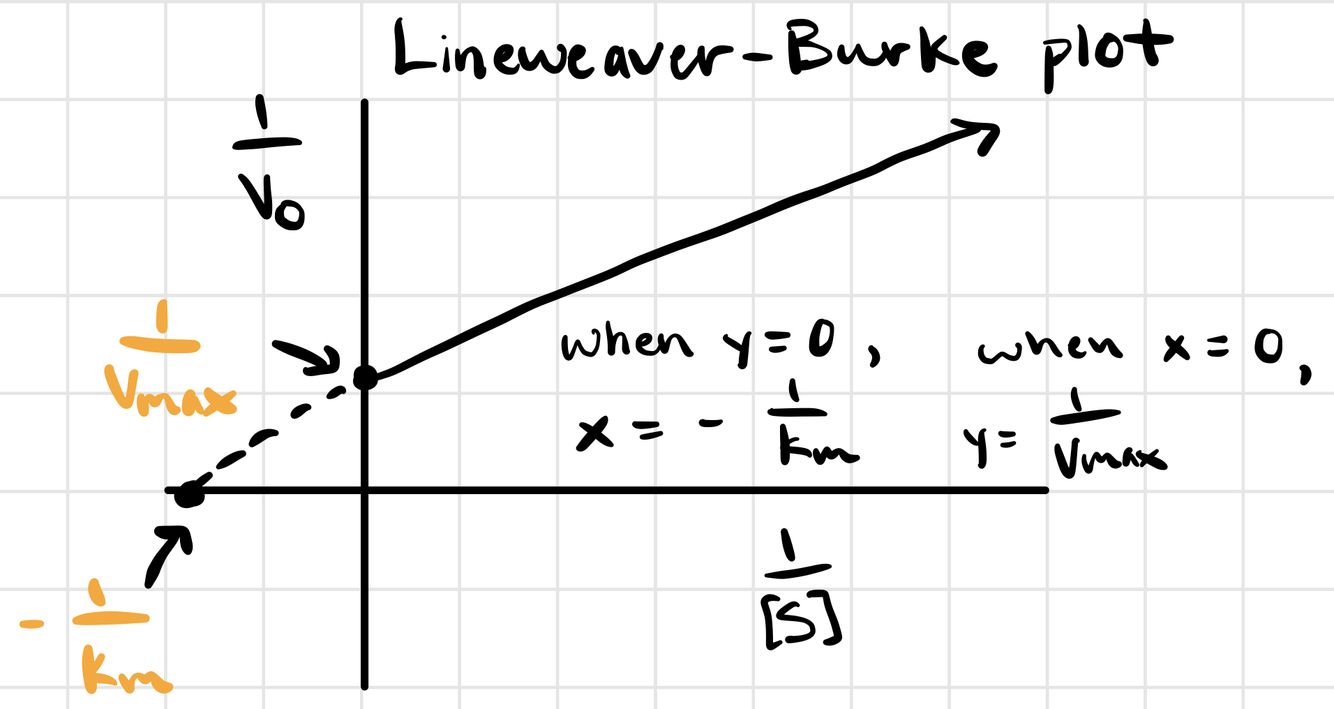
Lineweaver-Burke Plot: x-intercept
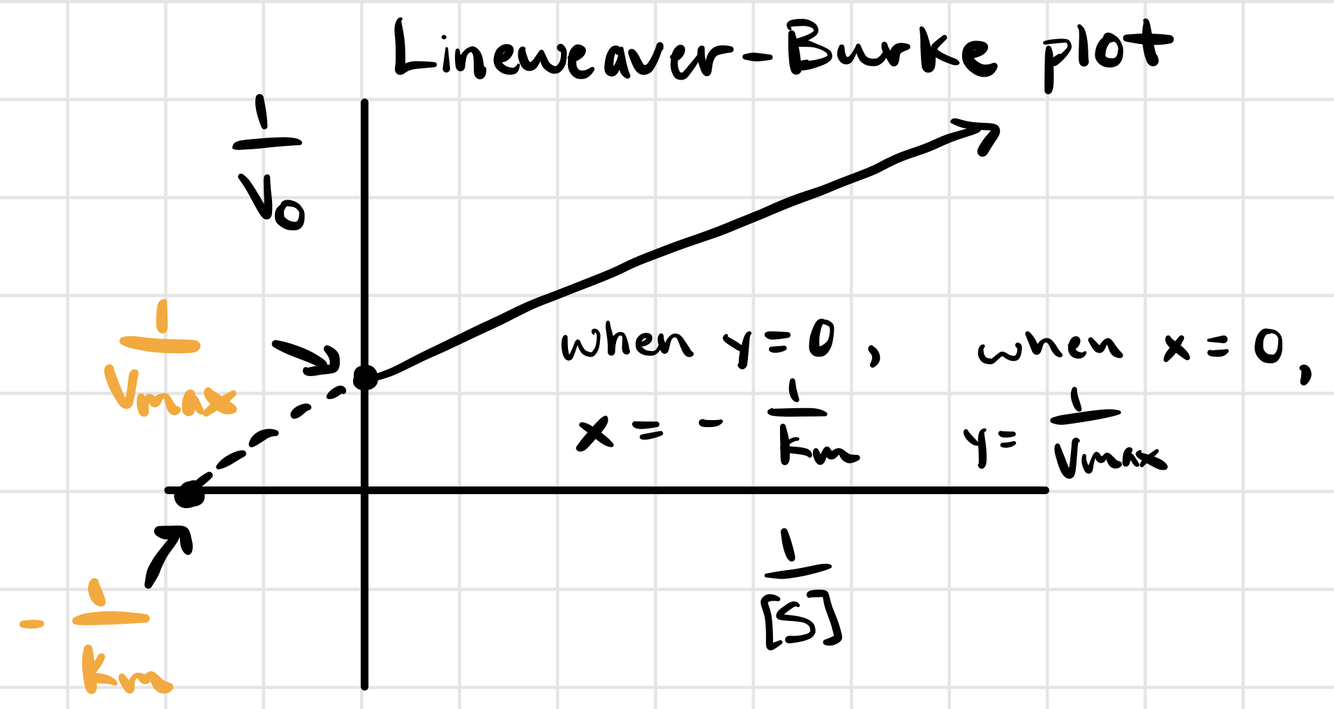
Lineweaver-Burke Plot: y-intercept
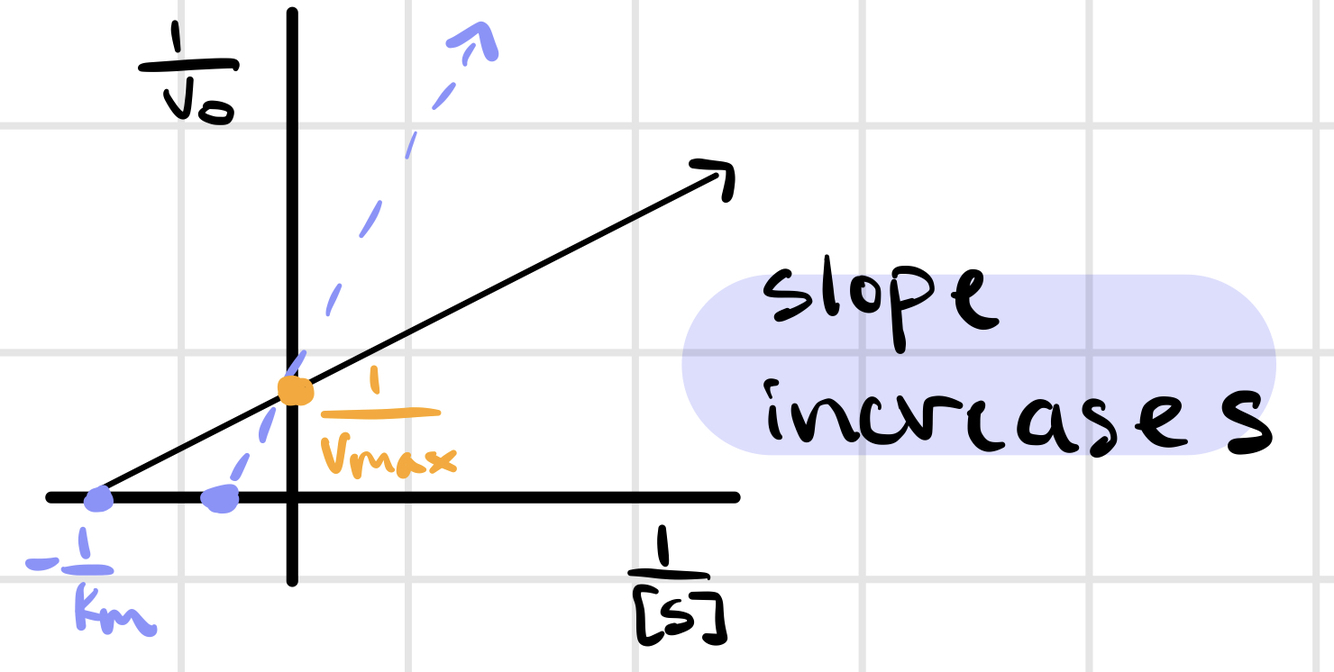
competitive inhibitor
binds E, Km increases, Vmax stays the same
uncompetitive inhibitor
binds ES, Km decreases (more ES formed), Vmax decreases
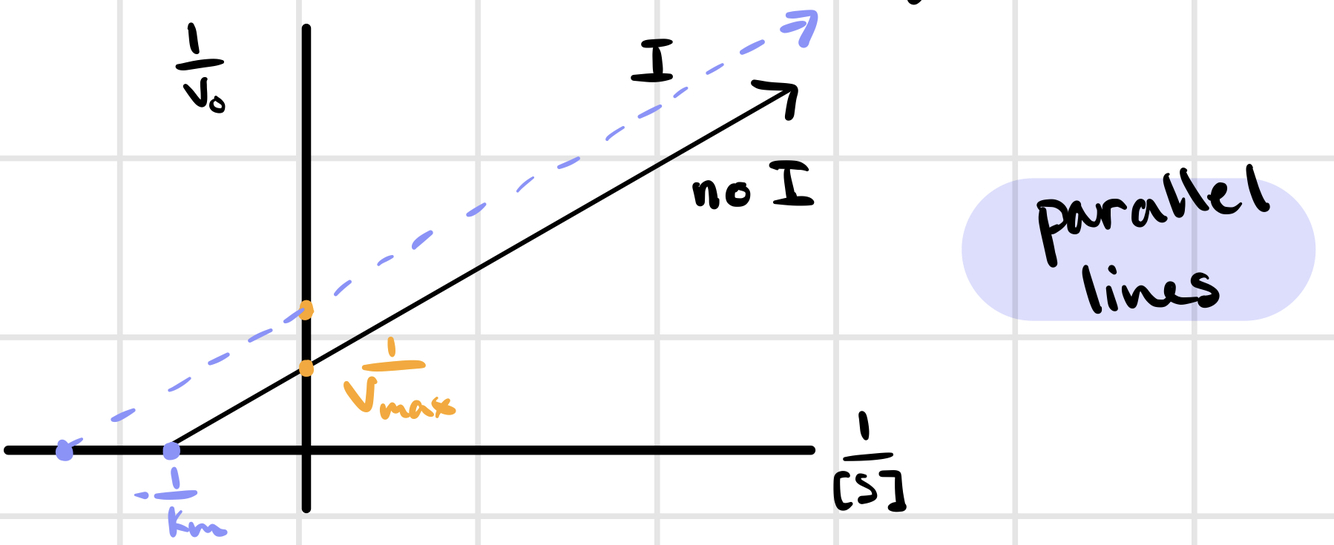
noncompetitive inhibitor
binds to E and ES, Km stays the same, Vmax decreases
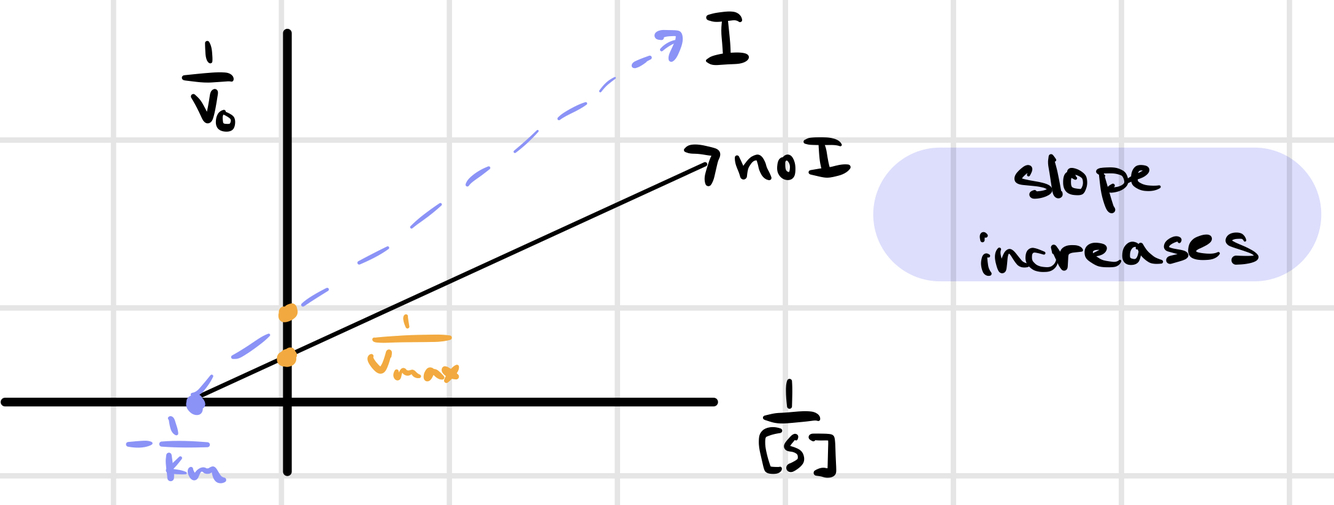
allosteric inhibitor
binds to a site other than the substrate binding site
bind to a specific amino acid in the active site
group specific reagents
similar size and shape as substrate, binds covalently in active site
affinity labels (substrate analogs)
very similar to substrate (in size, shape, and charge), bind in active site with noncovalent bonds, causes reaction to happen, product is made that covalently binds to active site (blocking it)
suicide inhibitors
amino acids found in active sites
catalytic residues
types of enzymes
OTHLIL: oxidoreductases, transferases, hydrolases, lyases, isomerases, ligases
optimal pH and temperature of enzymes
optimal pH varies greatly, temperature is 37 ºC
the non-protein component of an enzyme required for catalysis, some enzymes require them but not all; two types: essential ions and coenzymes
cofactor
type of cofactor: organic molecules that contribute to catalytic function of enzymes; include NAD+/NADH
coenzymes