Muscle Histology
No description yet. This curated deck is ready for daily study.
Card preview (16)
Types of Muscles
Striated (skeletal and cardiac) and Smooth (no striations, involuntary)
What is skeletal muscle
Striated muscle attached to bone, move the skeleton • Fibers = multinucleated cells • Voluntary contractions
What is cardiac muscle
Striated muscle in wall of heart, involuntary contractions
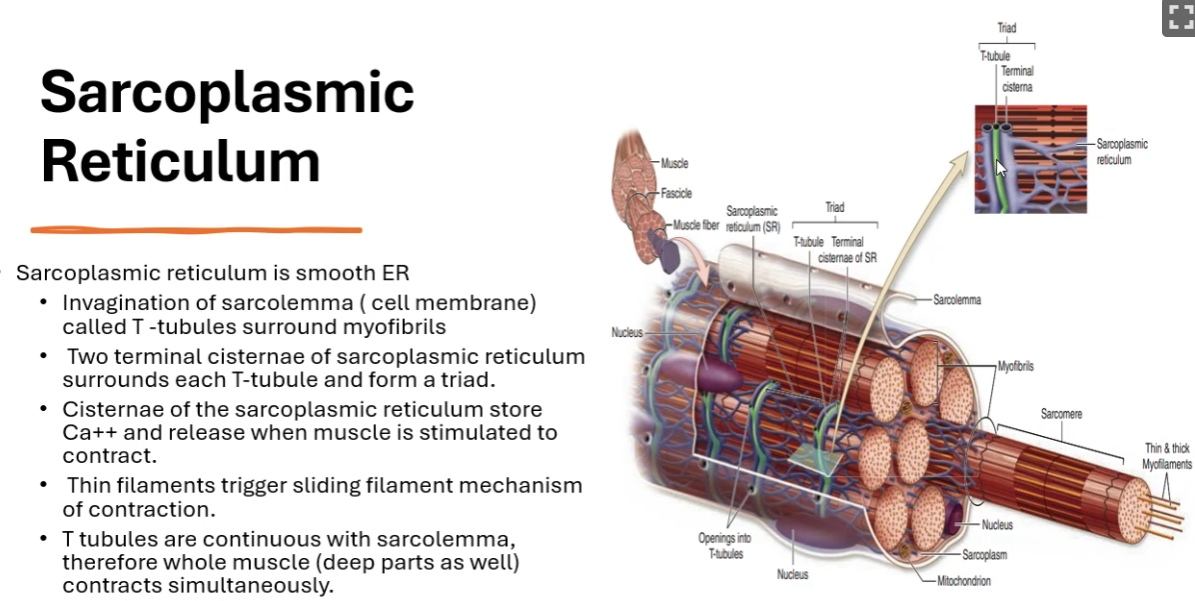
Skeletal Muscle
• Consists of long multinucleated muscle fibres • Contains myofibrils, containing thick actin and thin myosin filaments
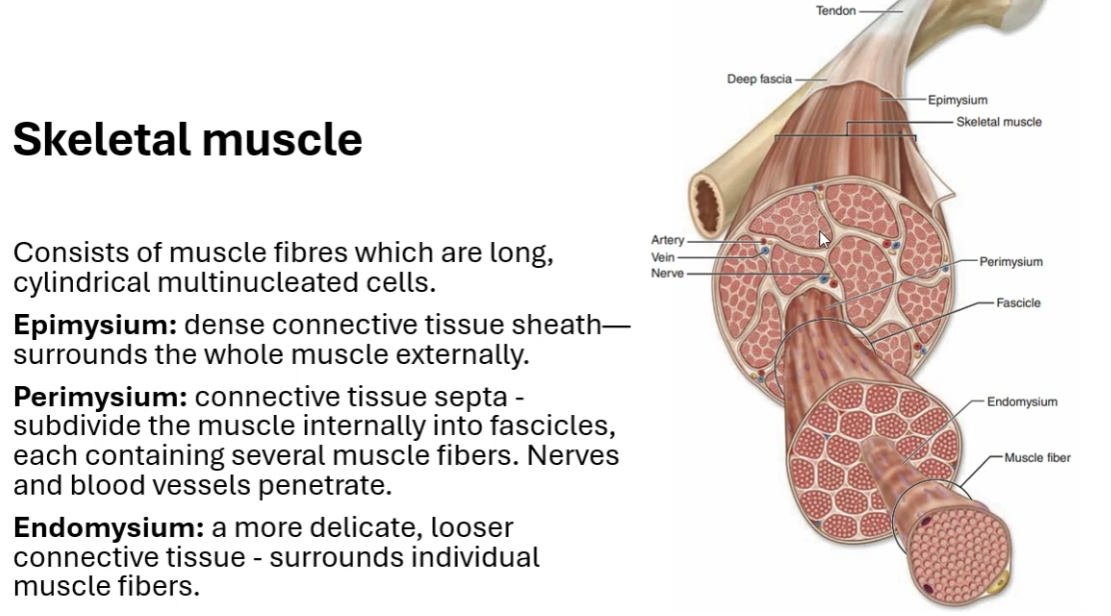
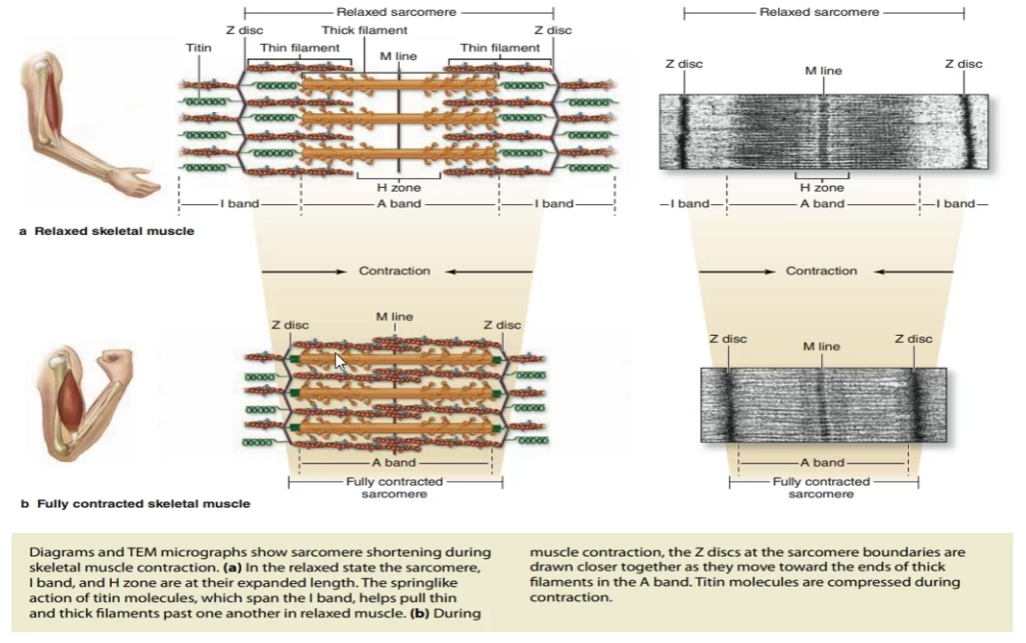
Sarcomeres
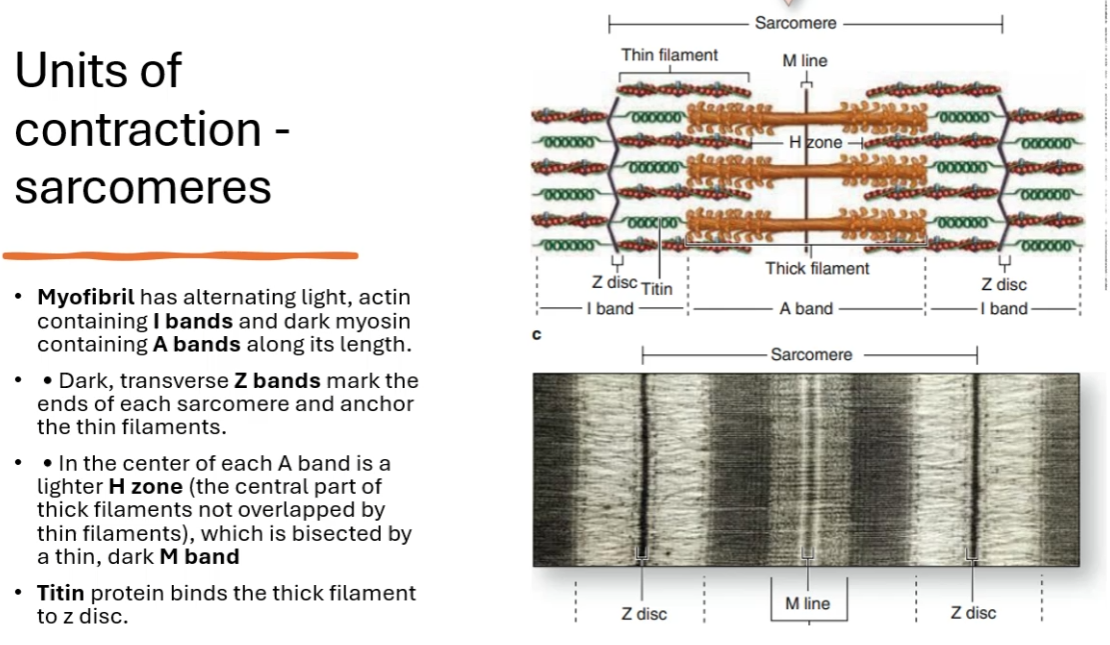
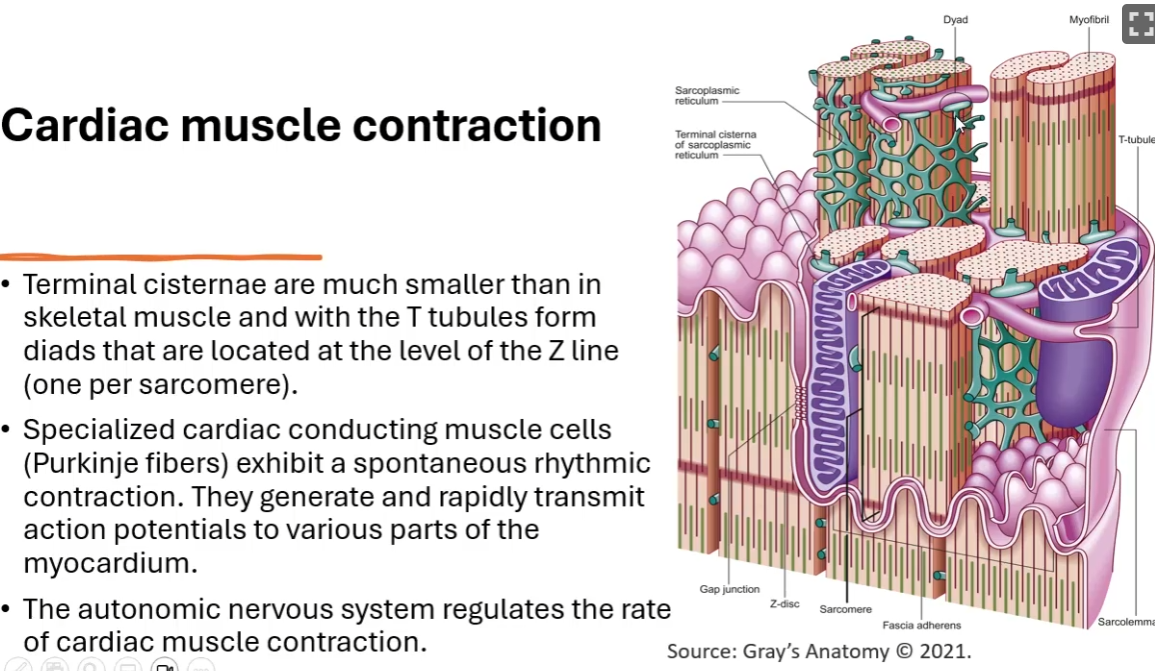
Sarcoplasmic reticulum
Depolarisation of T tubule membrane triggers Ca2+ to release, Ca2+ binds to troponin-tropomyosin complex to initiate muscle contraction Muscle relaxes when Ca2+ concentration in cytosol decreases
What does the neuromuscular junction have to do with this
• Where axon ends and joins to muscle fibre • Contains neurotransmitter ACh
Contraction visualisation
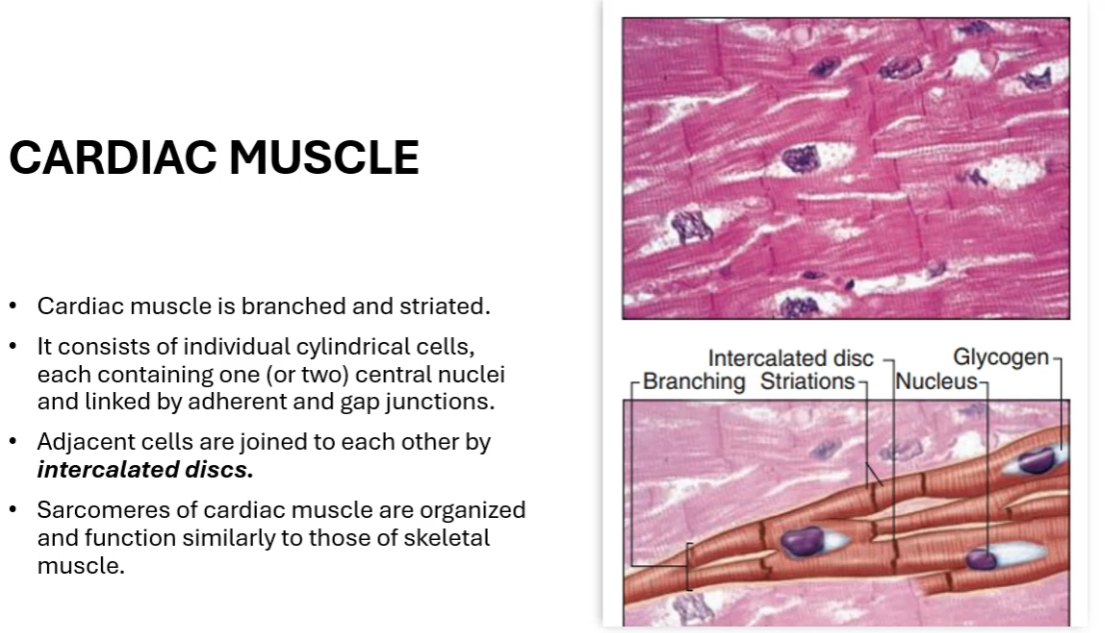
Cardiac Muscle
Contain intercalated disks
Cardiac Muscle Contraction
Smooth Muscle
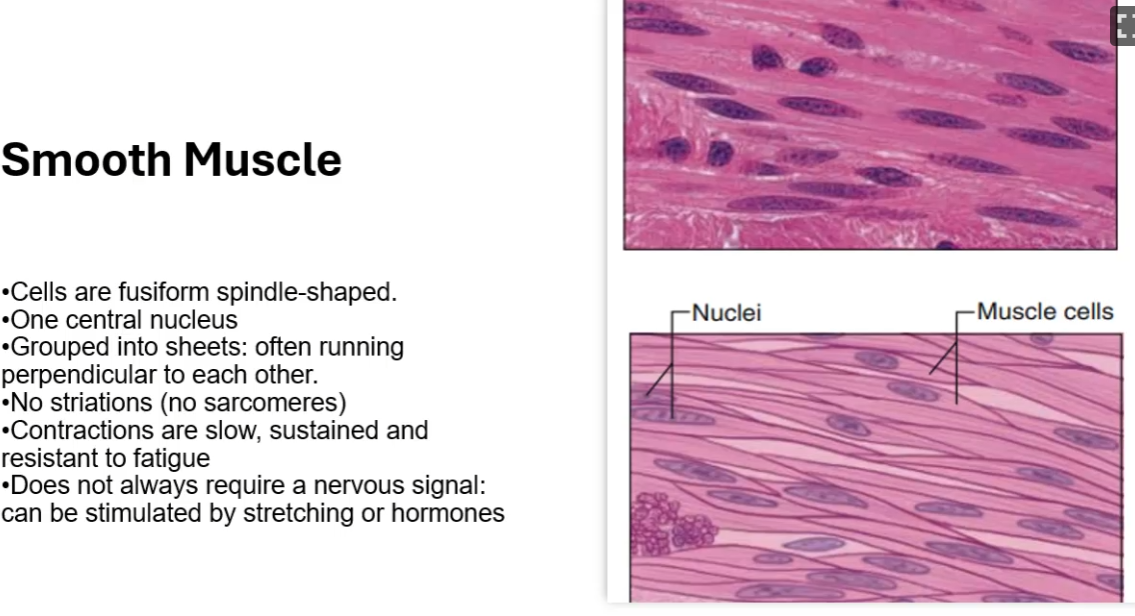
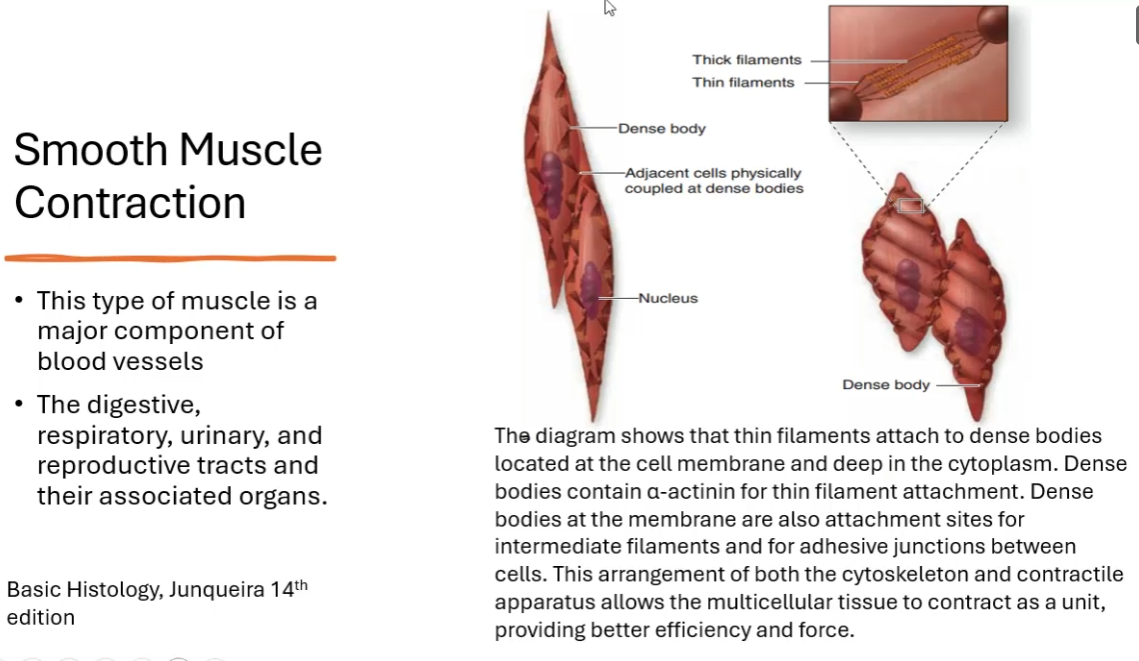
Smooth Muscle Contraction
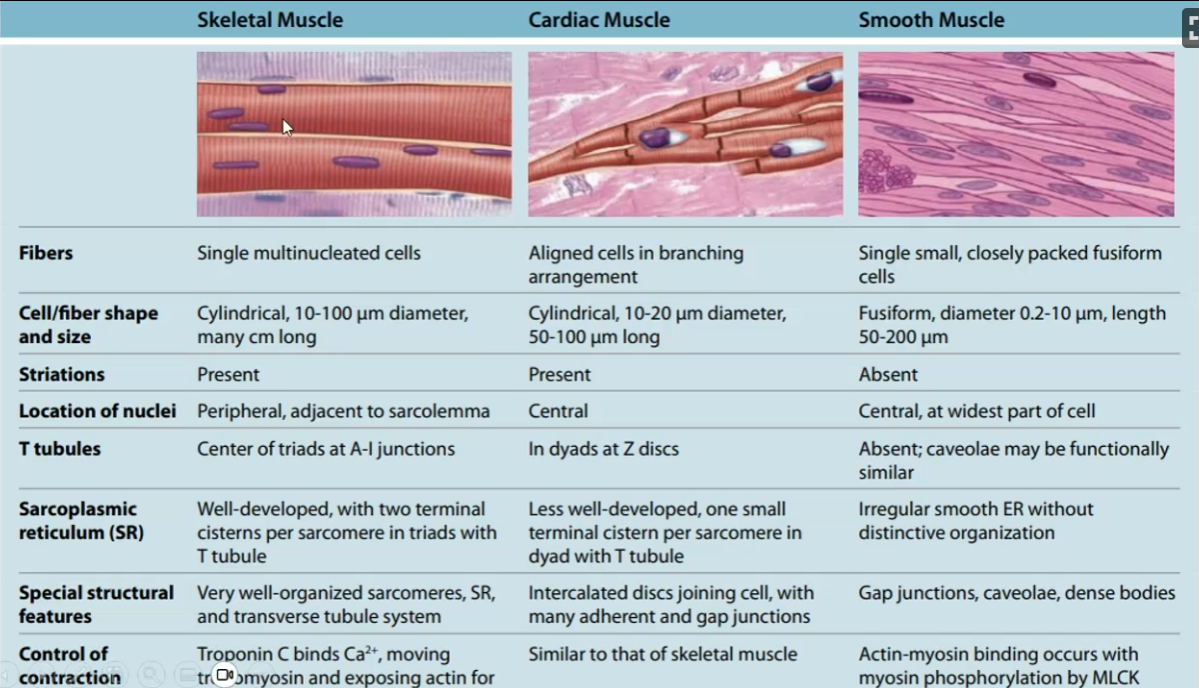
Comparison table 1
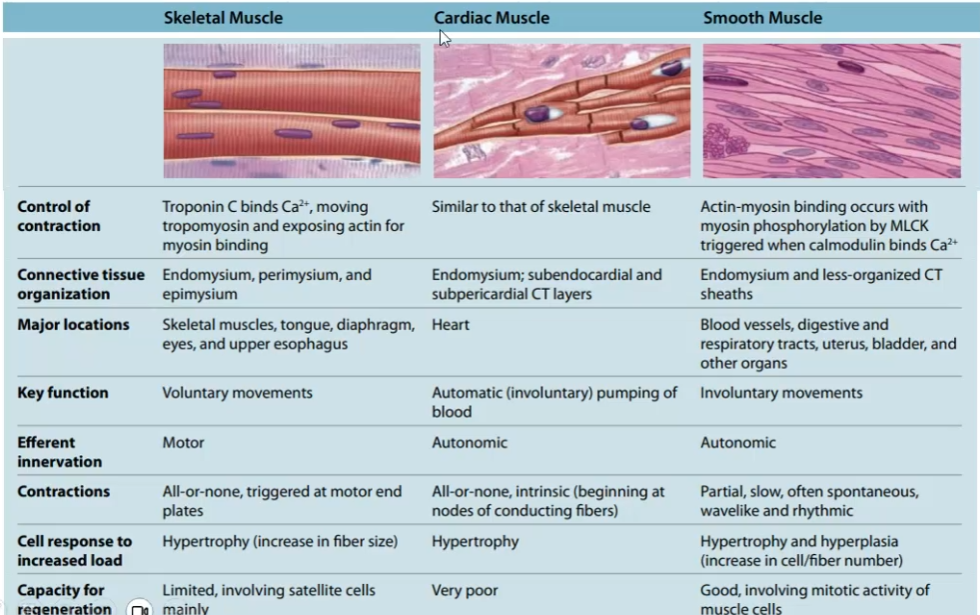
Comparison table 2
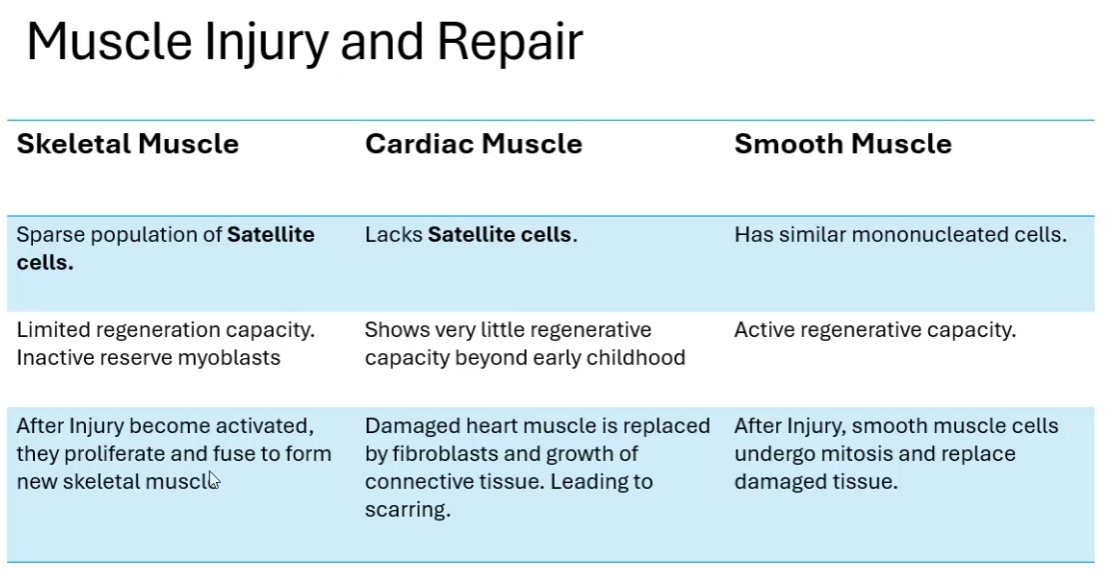
Muscle injury and repair comparisons
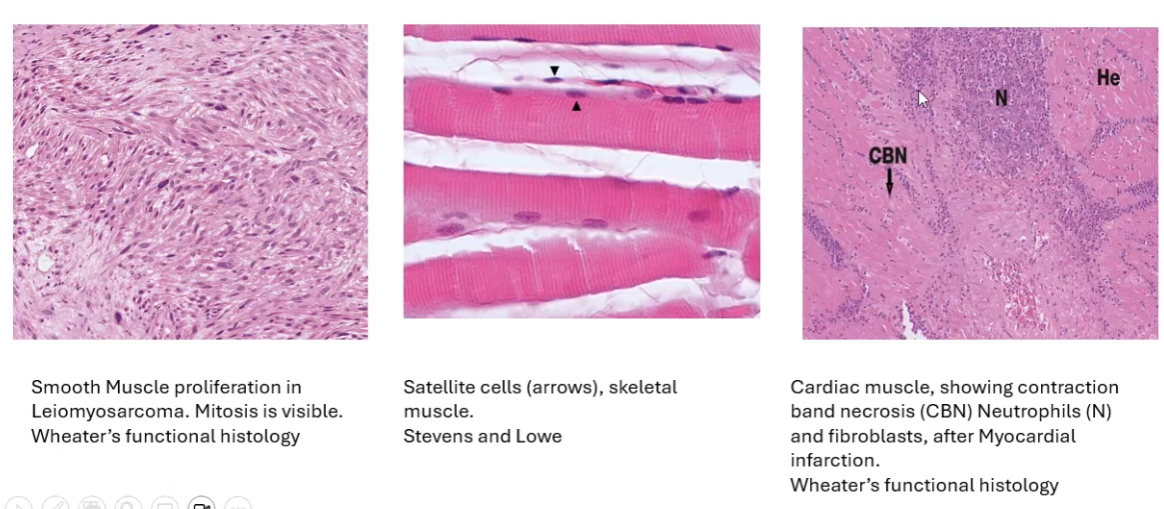
Microscopic comparisons