Chapter 1 Vocab
No description yet. This curated deck is ready for daily study.
Card preview (24)
curved-arrow formalism
A method of drawing curved arrows to keep track of an electron movement from nucleophile to electrophile (or within a molecule) during the course of a reaction
delocalized charge
A charge which is spread out over two or more atoms. We usually draw resonance forms to show how the charge can appear on each of the atoms sharing the charge.
nucleophile
an electron pair donor
resonance hybrid
A molecule or ion for which two or more valid Lewis structures can be drawn, differing only in the placement of the valence electrons.
major contributors
The more important (lower-energy) structures
minor contributors
The less important (higher-energy) structures)
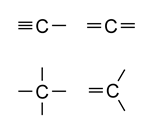
normal covalent bond patterns for carbon
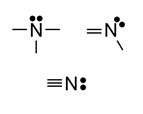
normal covalent bond patterns for nitrogen
normal covalent bond patterns for phosphorous

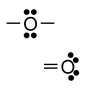
normal covalent bond patterns for oxygen
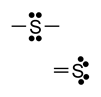
normal covalent bond patterns for sulfur
normal covalent bond patterns for halogens

Alkanes
Single bonds between all carbons.
Cycloalkanes
Single bonded carbons that form a ring.
Alkenes
Double bonded carbons are present in the molecule.
Cycloalkenes
Double bond in a ring.
Alkynes
Triple bonds are present in the molecule.
Aromatic
Contains a phenyl ring.
The ‘R’ Group
• Organic chemists use a capital ‘R’ as chemical shorthand to represent an undefined carbon-based structural fragment • Representing part of a compound as ‘R’ shifts our attention away from the unimportant portions of the molecule and focuses our attention on the functional groups
What atoms are involved in resonance?
Only atoms with lone pairs, multiple bonds, and incomplete octets are involved in resonance.
In the case of positive charges, how do you determine which structure is the major contributor?
With positive charges, the structure with complete octets is the major contributor
Conjugated Systems
alternating single + multiple bonds
Steps for drawing Line Angle Formulas
1) C atoms are implied wherever there is a change in angle 2) Hide H’s on C (keep them everywhere else) 3) Bonds to H are not shown (OH instead of O-H) 4) Hide non-bonded electrons (lone pairs)
What is the shortcut for finding molecular formulas of fully saturated, acyclic alkanes?
CnH(2n+2)