C4+C10 Acids and Bases
No description yet. This curated deck is ready for daily study.
Card preview (24)
what are ACIDS? what color do acids turn litmus paper to?
compounds that break into H+ ions turn litmus paper RED
what are BASES? what color do bases turn litmus paper to?
compounds that break into OH- ions turn litmus paper BLUE
what are ALKALIS?
soluble bases
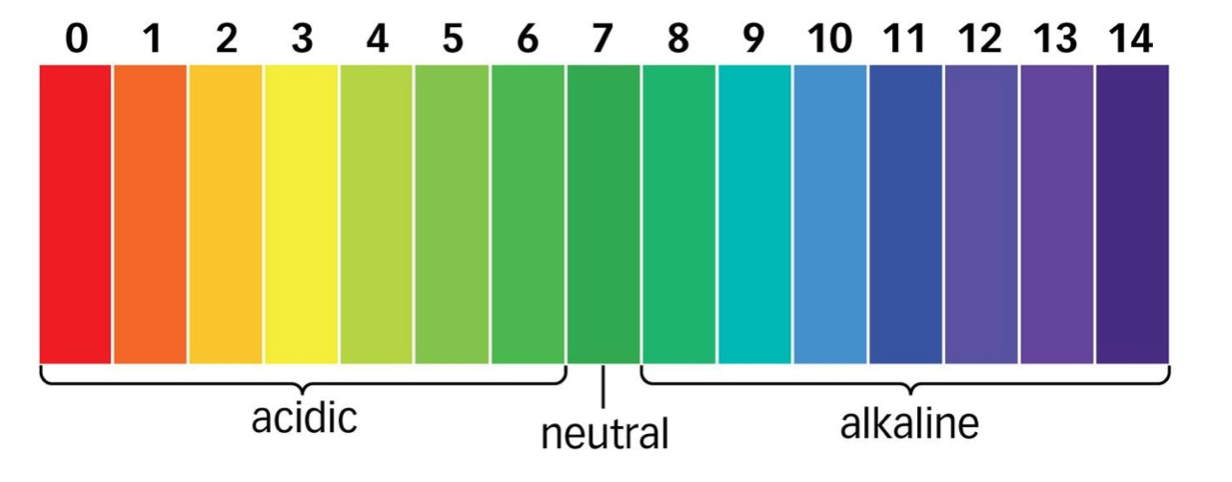
what is the pH scale?
a measure of the number of H+ ions in a solution • lots of H+ means low pH • lots of OH- means high pH
acid + metal = ?
salt + hydrogen
acid + metal oxide = ?
salt + water
acid + metal hydroxide = ?
salt + water
acid + metal carbonate = ?
salt + water + carbon dioxide
acid + alkali = ?
salt + water
how are salts formed?
when a base neutralizes an acid
what are the three methods of SALT PREPARATION? what are the REACTANTS and PRODUCTS of each?
EXCESS: insoluble base + acid = soluble salt + water TITRATION: soluble base + acid = soluble salt + water PRECIPITATION: soluble salt + soluble salt = insoluble salt + soluble salt
what are the steps of the EXCESS method? draw a diagram and explain step by step (6)
• warm acid • add EXCESS INSOLUBLE BASE • FILTER mixture • HEAT (evaporating dish over bunsen burner) to evaporate water → CRYSTALS form • leave to cool • FILTER to get crystal and dry the crystals
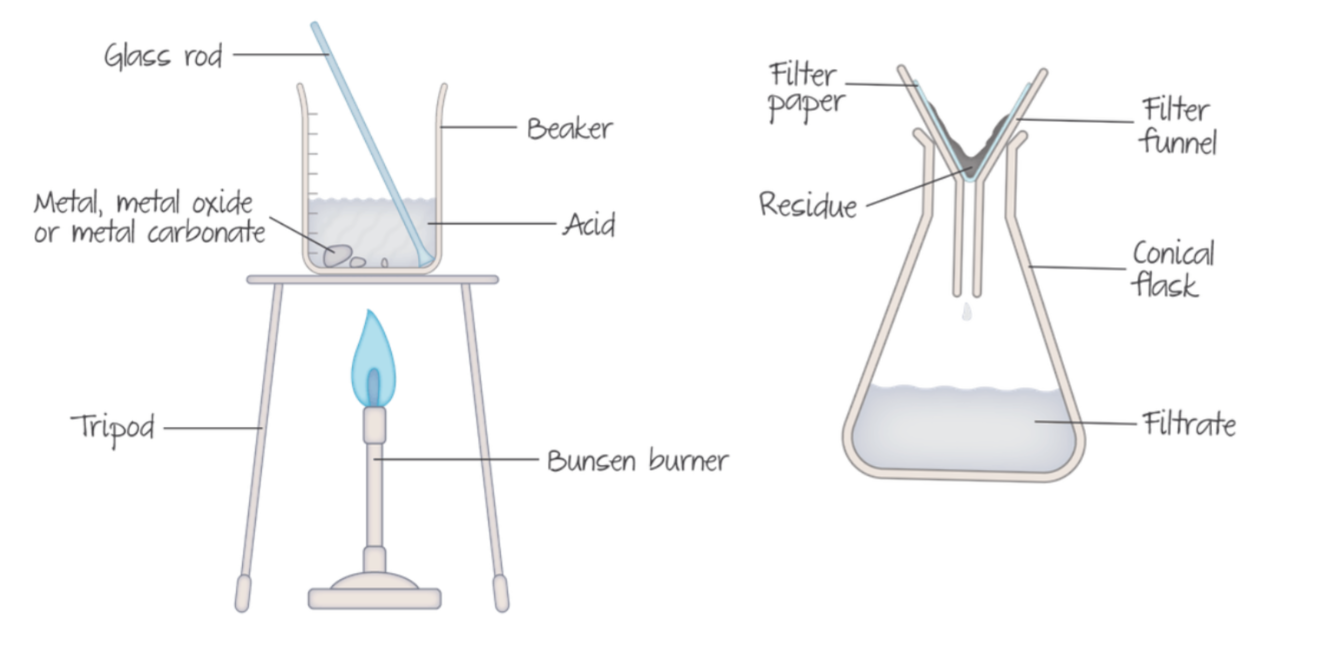
EXCESS METHOD: • why is acid warmed? • why is an excess of insoluble base used? • why do you filter the mixture?
• to speed up reaction • so all acid react • remove excess insoluble base
what are the steps of the TITRATION method? draw a diagram and explain step by step (6)
• ALKALI+INDICATOR in the conical flask • add ACID to alkali (using burette) • note the VOLUME OF ACID added —– repeat without indicator —– • HEAT (evaporating dish over bunsen burner) to evaporate water → CRYSTALS form • leave to cool • FILTER to get crystal and DRY the crystals
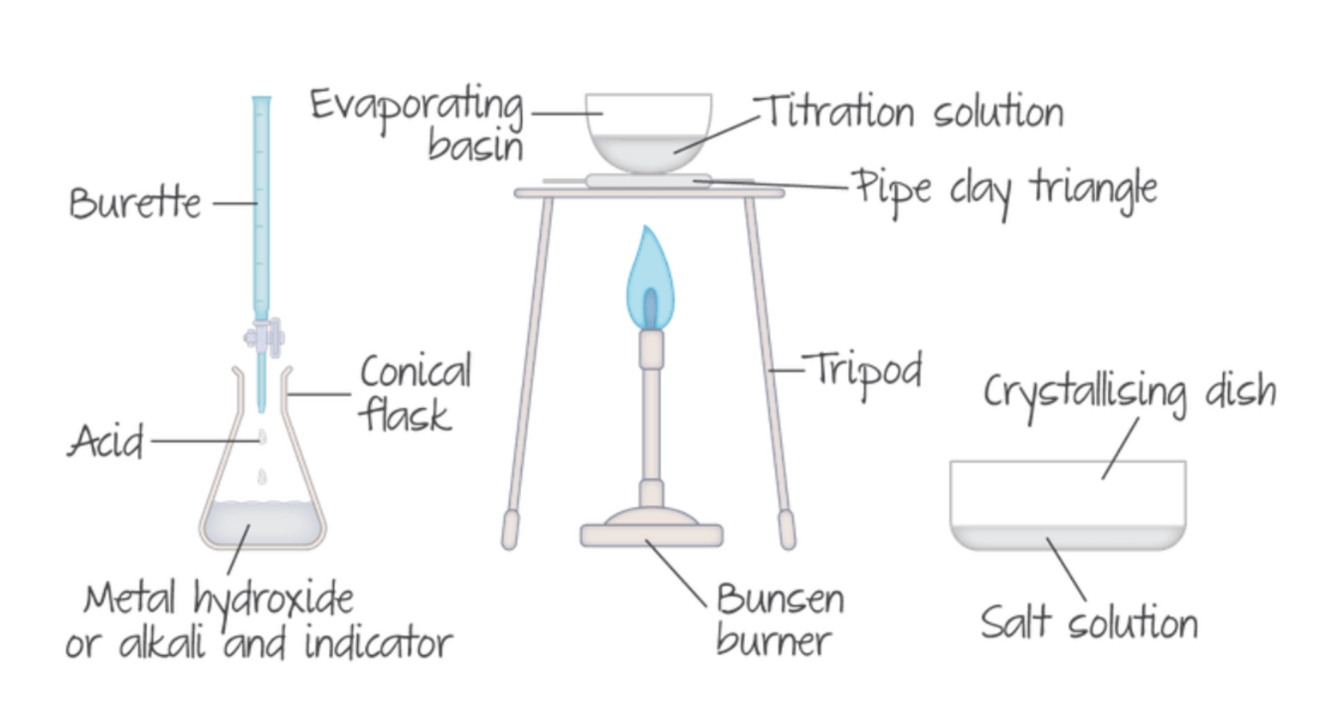
TITRATION METHOD: why do you use an indicator first, then repeated without the indicator?
to know the volume of acid needed to neutralize the solution
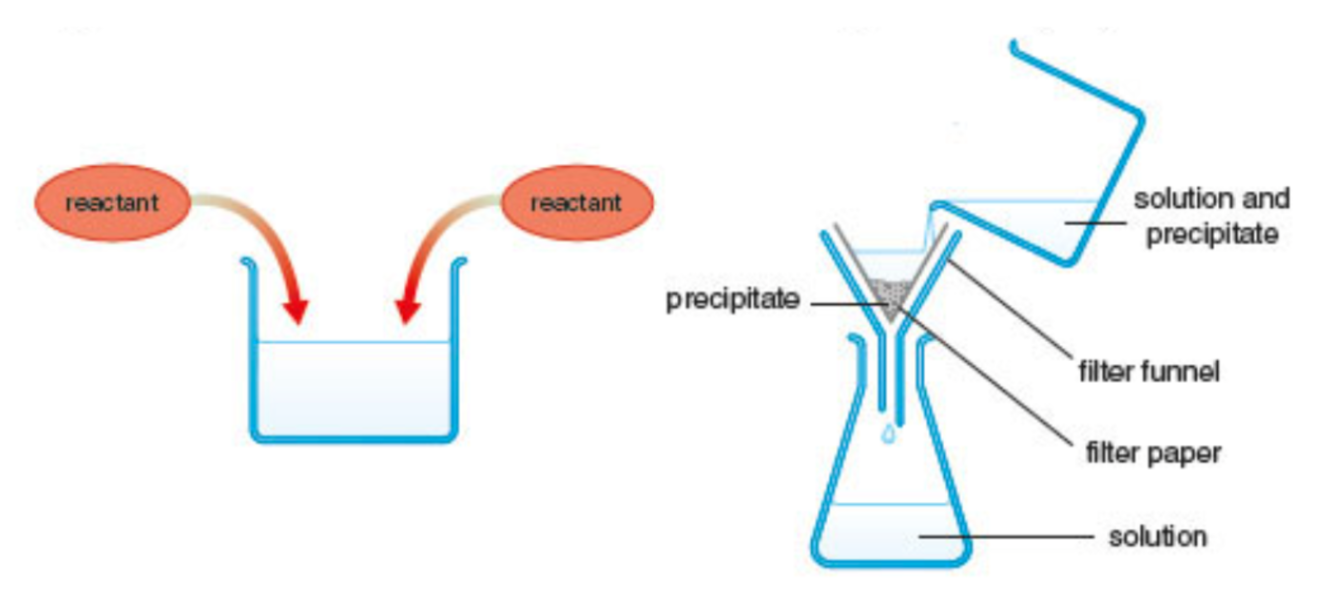
what are the steps of the PRECIPITATION method? (4)
• MIX the two soluble salts • FILTER to get precipitate • WASH the precipitate with distilled water • leave to DRY
define concentration of the solution
the number of moles per dm3
how to convert dm3 to cm3?
1 dm3 = 1000 cm3
how to convert moles into grams?
(mol/dm3) x (molar mass)
what are some SAFETY PRECAUTIONS during salt preparation?
safety goggles gloves to avoid contact (acid/alkali are irritating) long hair tied up (fire)
revise the DIAGRAM+APPARATUS of salt preparations in notes!!
check notes :)
what salts are ALWAYS SOLUBLE?
SPA - sodium, potassium, ammonium Nitrates
what salts are SOLUBLE most of the time? what are the exceptions?
Sulfates (except with Pb, Hg, Ag, Ca, Sr, Ba) Group 7 (except with Pb, Hg, Ag)
what salts are INSOLUBLE most of the time? what are the exceptions?
CO3 OH (except when with SPA)