Energy Option
No description yet. This curated deck is ready for daily study.
Card preview (24)
energy from the sun
comes from uncontrolled nuclear fusion reactions
photosynthesis
• reaction of carbon dioxide and water to form carbohydrates in the presence of chlorophyll • endothermic
give details of photosynthesis
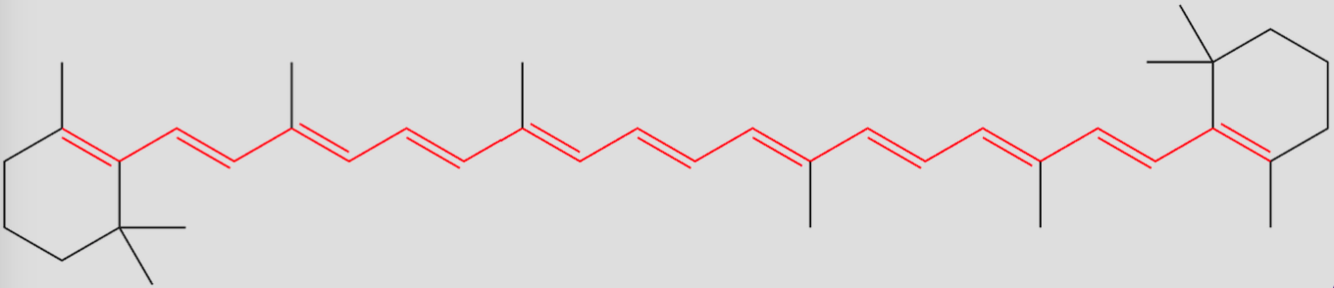
• green pigment chlorophyll contains an extended system of alternating single and multiple bonds (conjugation) • substances like chlorophyll contain extended conjugation and are able to absorb visible light by exciting an electron within this conjugated system • energy which is absorbed by chlorophyll when it interacts with light is able to drive photosynthesis
how can the energy stored in biomass by released?
• direct combustion of plant material • biogas: anaerobic decay of organic matter by bacteria produces a mixture of methane and carbon dioxide • fermentation to produce ethanol: carbohydrates can be fermented by enzymes in yeast
biofuel advantages
• renewable • readily available • relatively non-polluting • reduces amount of waste in landfill sites
biofuel disadvantages
• widely dispersed • take up land where crops can be grown • remove nutrients from soil
vegetable oils
• derived from glycerol and unsaturated fatty acids • contain considerable amount of energy • cannot be used in internal combustion because they are too viscous (because they have a high molar mass)
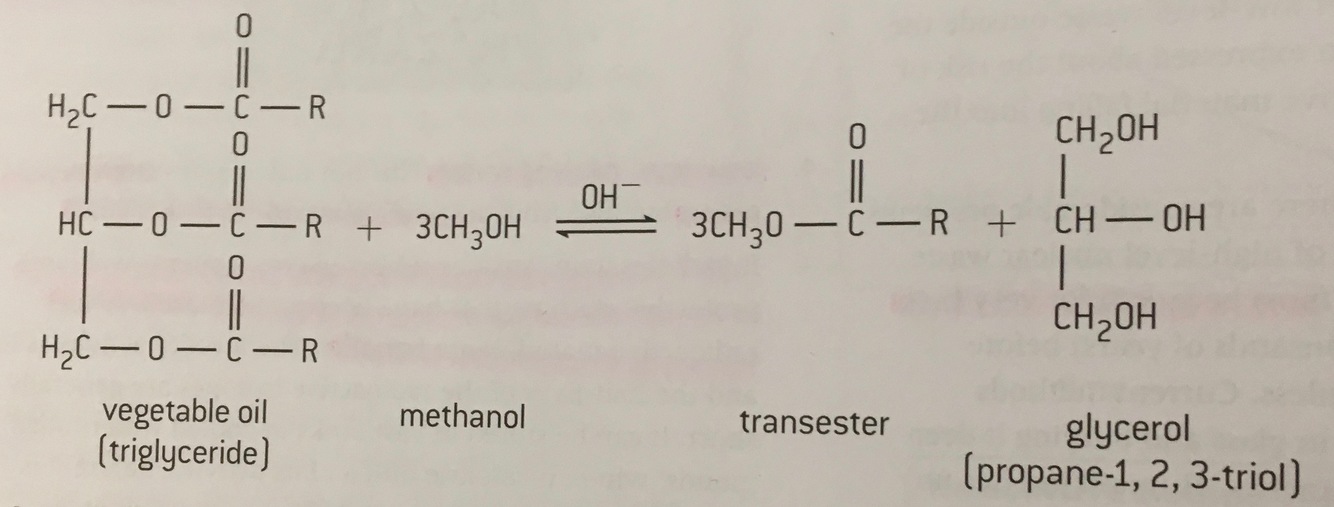
transesterification
• vegetable oils converted into usable fuel • ester can react with an alcohol to be converted into a different ester in the presence of strong acid or base
greenhouse effect
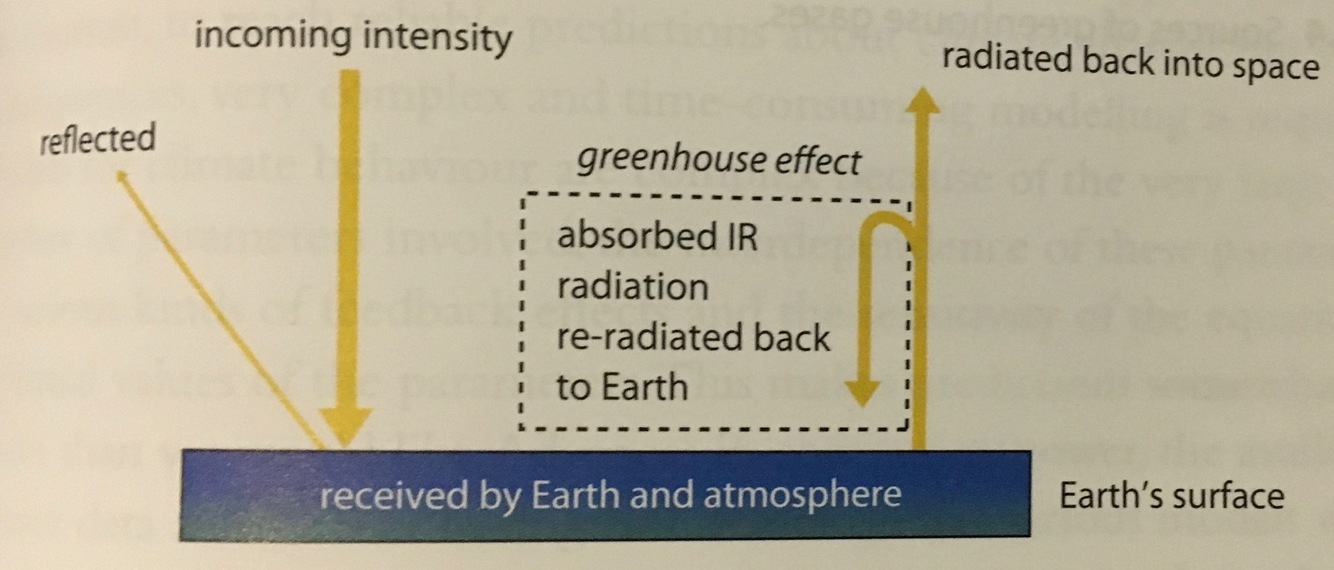
warming of the Earth caused by infrared radiation emitted by the Earth’s surface which is absorbed by various gases in the Earth’s atmosphere and then partly re-radiated towards the surface
greenhouse gases
• water vapor • carbon dioxide • methane • nitrous oxide
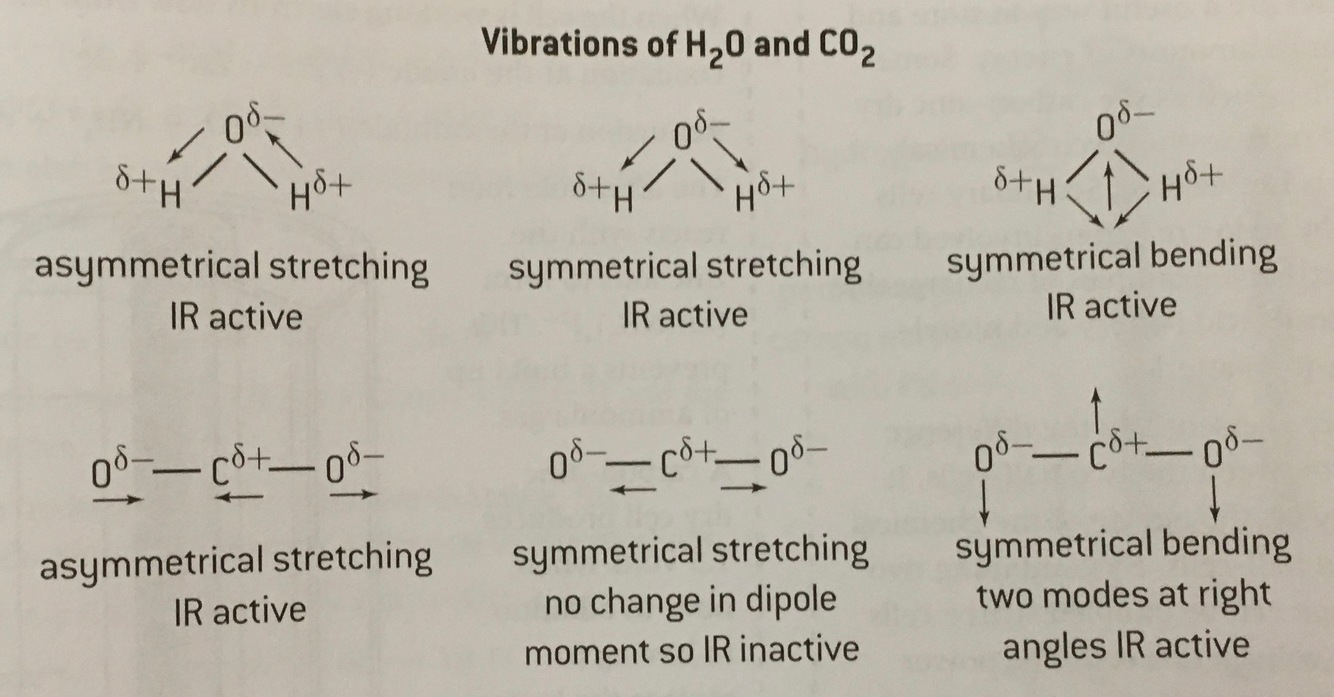
Why do greenhouse gases absorb infrared radiation?
• resonance • must be a change in dipole moment as bonds in the molecule stretch and bend
enhanced greenhouse effect
greenhouse effect caused by human activities
energy flow diagram of greenhouse effect
what are two consequences of global warming?
• changes in agriculture and biodistribution as climate changes • rising sea-levels due to thermal expansion and melting polar ice caps and glaciers
what influences the contribution a greenhouse gas makes to global warming?
• concentration in atmosphere • ability to absorb infrared radiation
ways to limit human-made emissions of carbon dioxide
• reducing dependency on fossil fuels • capturing gas chemically using sodium hydroxide or calcium oxide • stored in certain types of silicon-based rocks
why are coral reefs being destroyed?
• increase in concentration carbon dioxide in atmosphere leads to increase concentration of carbon dioxide dissolved in ocean • ocean more acidic
particulate
• e.g. soot and volcanic dust • cool the earth by scattering the shortwave radiation from the sun and reflecting it back into space
energy
ability to do work
first law of thermodynamics
energy within a closed system can neither be created nor destroyed
order for the main energy sources in terms of producing energy
crude oil > coal > natural gas > hydroelectric > nuclear fission > wind > biofuels > solar > geothermal
why is the production of energy not 100% efficient?
heat loss • to surroundings • by power lines
energy density equation
energy released from fuel / volume of fuel consumed
specific energy equation
energy released from fuel / mass of fuel consumed