B: Lipids
No description yet. This curated deck is ready for daily study.
Card preview (17)
Functions of Lipids
• energy storage • thermal insulation • structural components of cell membranes • protection of organs • storage and transport for hydrophobic vitamins • hormones • electrical insulation (protection of neurons - Myelin)
Energy of Fats vs Glucose
Fats • Oxidation C57H100O6 // C = -1.54 —> CO2 C = 4 • Oxidation no. increases more –> gives more energy • fats stored in cells and are hydrophobic –> do not affect the movement of H2O Glucose • Oxidation C6H12O6 // C = 0 —> CO2 C = 4 • oxidation number increases less than that of fat • water soluble –> easily transported around the body
Triglycerides
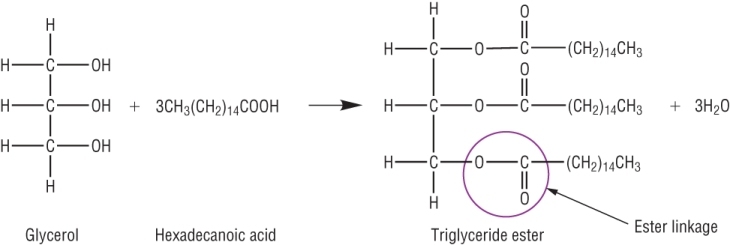
• most abundant class of lipids • most fats and oils in our diet contain triglycerides • viscous because of H bonds glycerol + fatty acids —> triglyceride + 3H2O condensation reaction
Unsaturated Fats
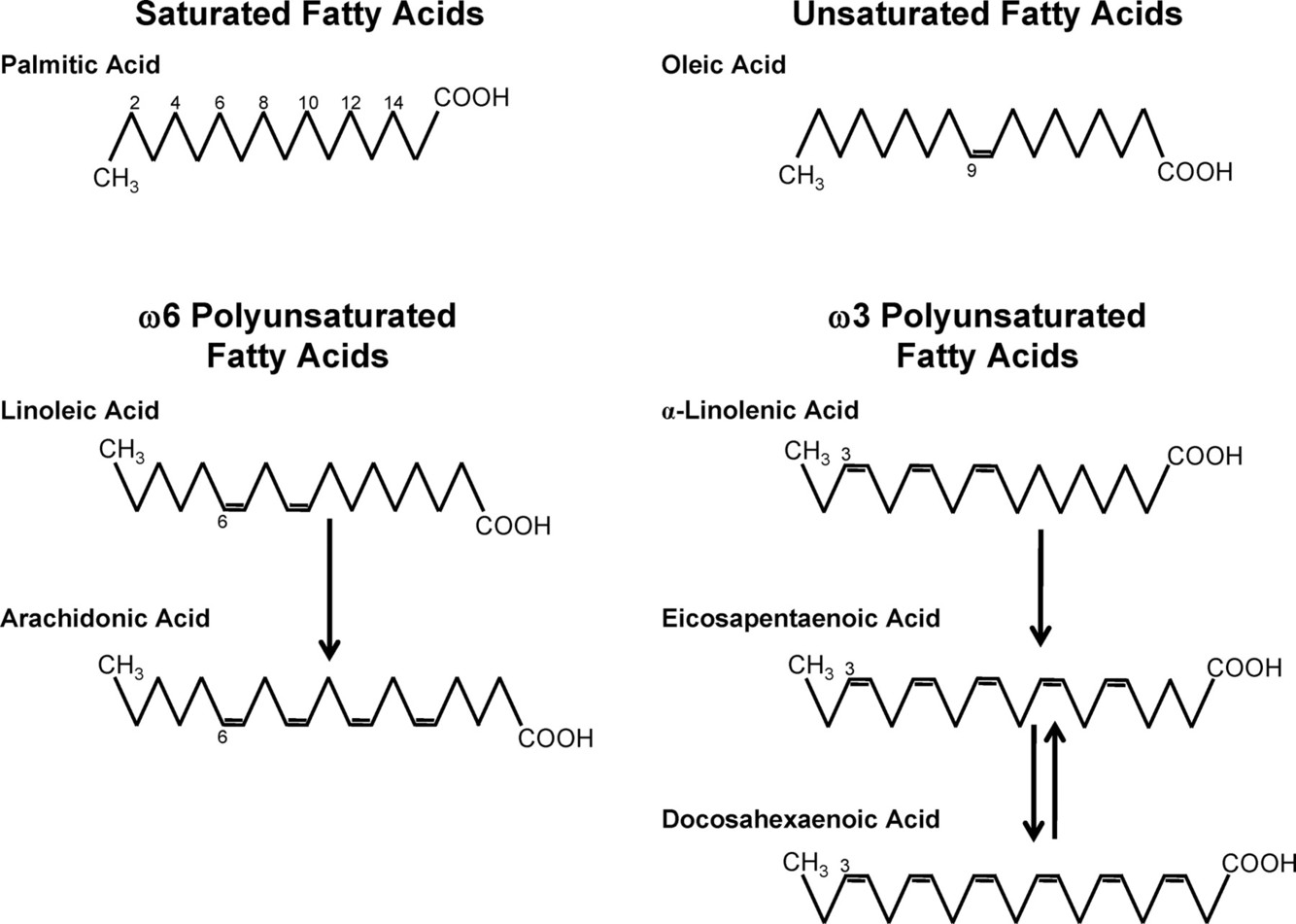
• Saturated fats: No C=C bond • Mono-saturated: 1 C=C bond • Polyunsaturated: many C=C bonds • difference of 2H atoms indicates the presence of C=C bonds C2H3 C2H5 unsaturated saturated • the arrangement of double bonds in fatty acids is almost always cis
Melting points of Lipids
Mr • Larger the Mr, the higher the melting / boiling point • more energy required for them to move faster and break free from their IMF Length of Carbon bonded Chain • Longer chain means greater degree of LDF –> will pack closer • shorter chain has a smaller surface area of contact Unsaturation • number of C=C bonds in the carbon –> kinked chains can’t pack as closely • the more unsaturation there is, the lower the melting point
Degree of Unsaturation - Iodine number
• Iodine molecules will add across a C=C Iodine number: number of grams of iodine that will react with 100g of fat / oil • completely saturated –> Iodine no. = 0 • High degree of unsaturation, high iodine number
Phospholipids
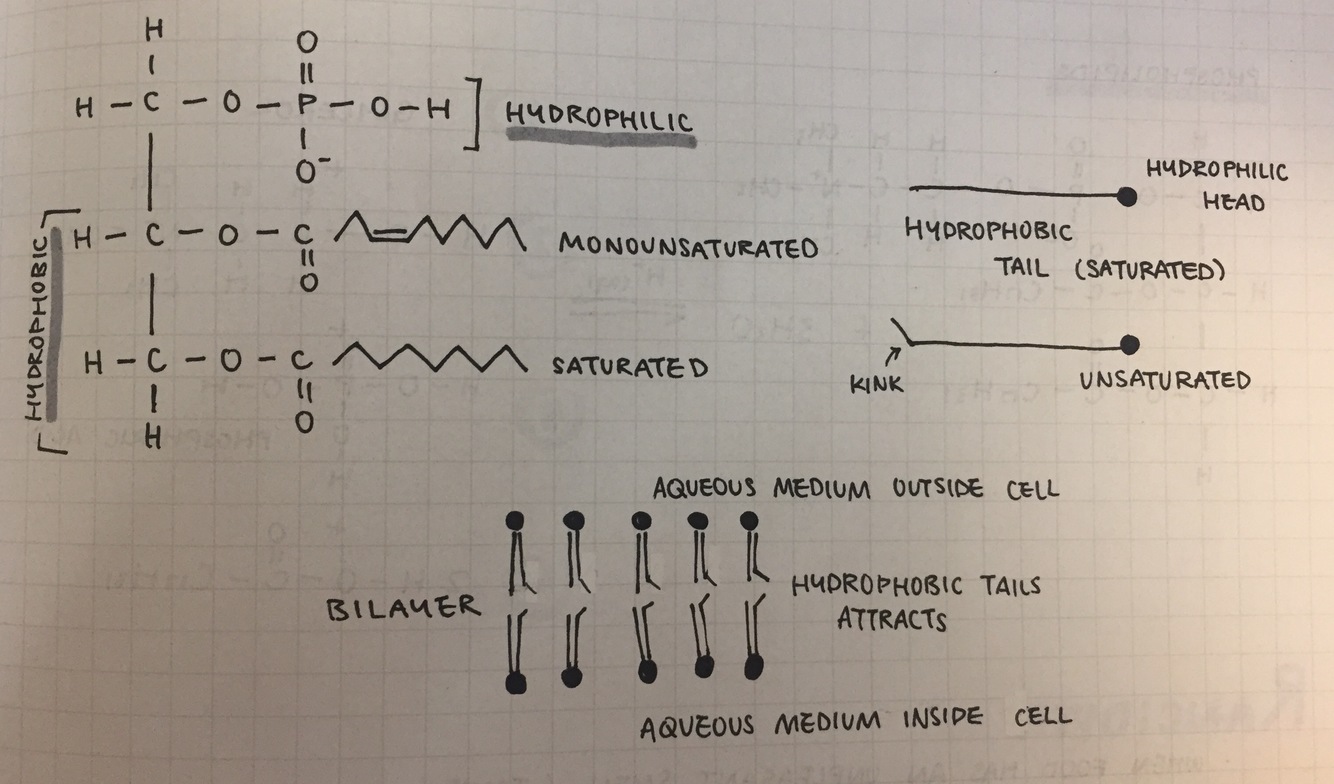
• main lipid found in cell membranes • a membrane is made up of a bilayer of phospholipids surrounding each cell and phospholipids also surround inner structures in the cell (organelles)
Hydrolytic Rancidity
• The process whereby fats and oils in foods are hydrolysed to give fatty acids and glycerol • process speeded up by • enzymes • high temps • excess moisture • high/low pHs
Oxidative Rancidity
• When presence of O2 breaks down the fats and oils in food • Occurs in unsaturated fats / oils where C=C bonds react with O2 in a free radical reaction —> aldehydes and ketones • Process speeded up by • high con. of oxygen • UV light • high temps • presence of metals
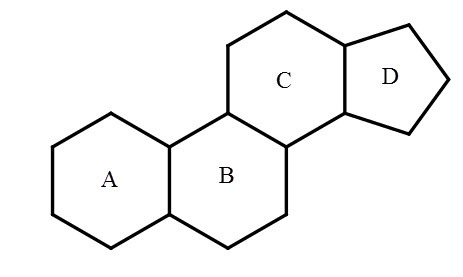
Hormones - Steroids
• chemical messengers • all share the same steroidal backbone • Uses - treatment for • Asthma • diabetes • contraception • skin conditions • bone/ blood disorders • muscle growth
Lipoproteins
Cholesterol is largely hydrophobic –> solubility in blood plasma is low –> normally transported throughout the body in Liporotein complexes
Low Density Lipoproteins
Bad cholesterol • less soluble in blood plasma and are more likely to deposit as a solid (plaque) in artery walls –> • blood clots –> • oxygen and glucose can’t get to heart muscle cells • can no longer respire –> • cells don’t receive energy and die –> heart attack
High Density Lipoproteins
Good cholesterol
Lipoproteins Density and Solubility
• density - long chains and kinks increases, density decreases • solubility - more lipids, more hydrophobic environment, solubility decreases • density and solubility of lipoproteins decreases with increasing lipid content
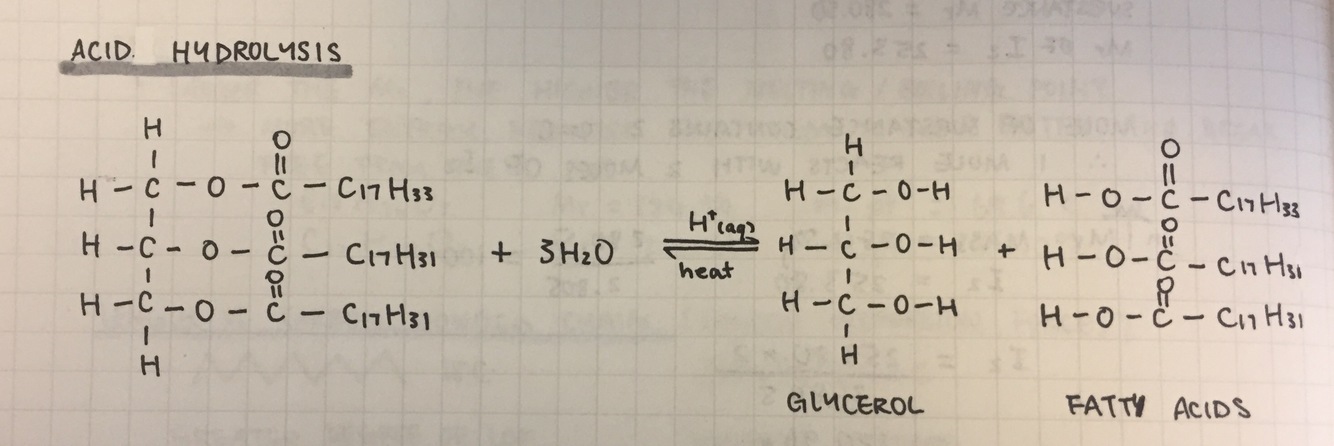
Acid Hydrolysis of Fats
—–> glycerol + fatty acids
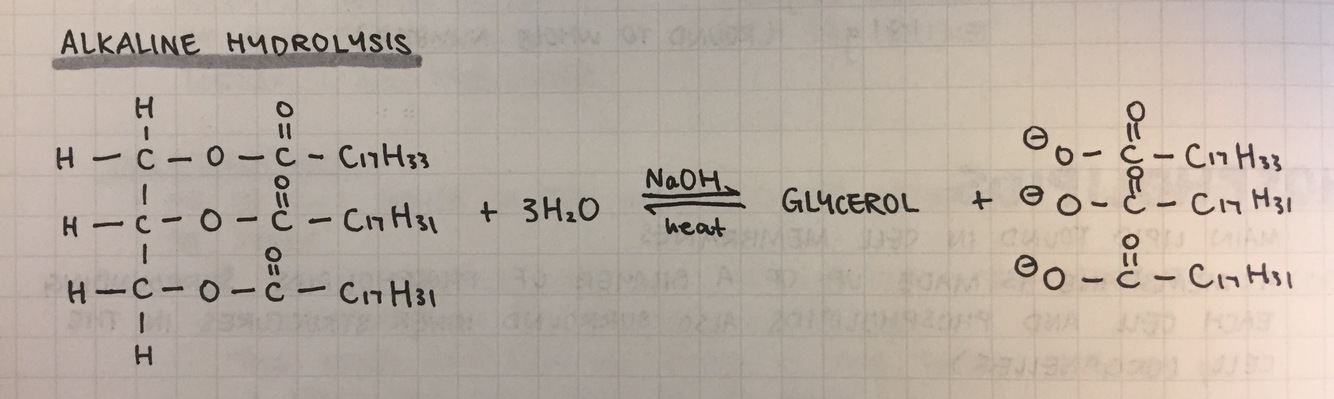
Alkaline Hydrolysis of Fats
—> glycerol + anion fatty acids
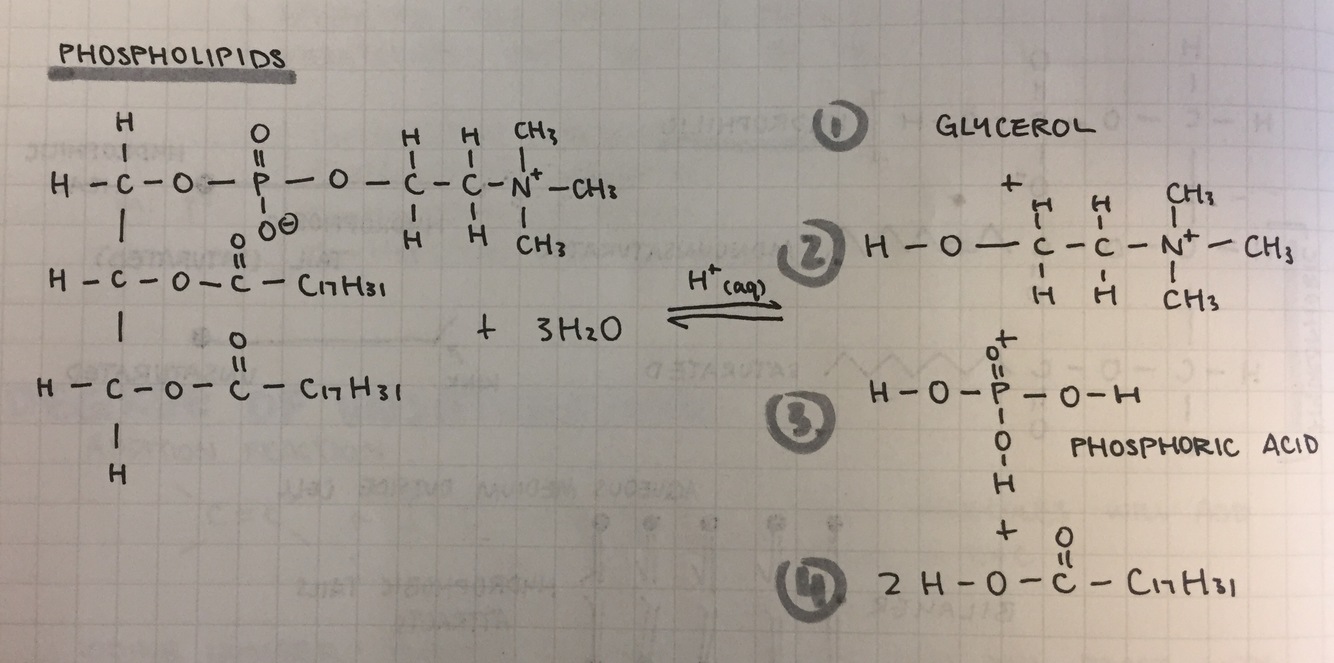
Phospholipids Hydrolysis of Fats
—-> Glycerol + Phosphoric acid + 2 Fatty acids +