Clinical amalgam
暂无描述。系统推荐的高质量记忆内容,适合每天坚持背诵学习。
卡片预览 (24 张)
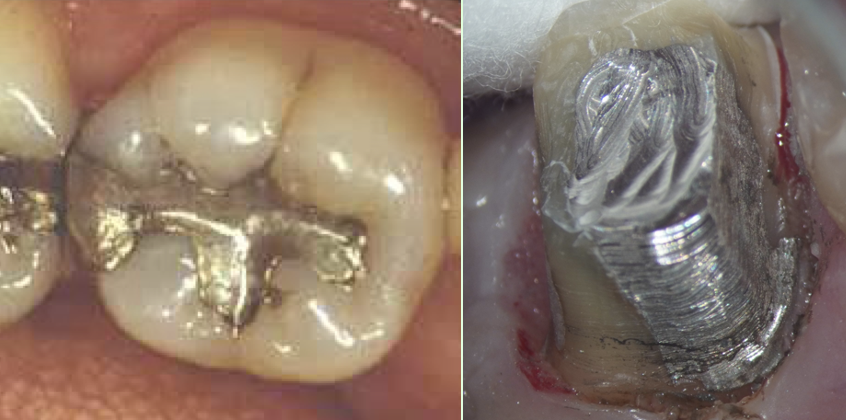
what are possible indications for amalgam use?
• direct restorations in moderate and large cavities in posterior teeth • core build ups for an indirect cast restoration e.g. crown
what are possible contra-indications for amalgam use?
• if aesthetics are important to a pt • if the pt has a history of sensitivity to mercury or other components • if loss of tooth substance is substantial so a retentive cavity cannot be produced • where excessive removal of sound tooth tissue would be required to produce a retentive cavity
what are the advantages of amalgam?
• durable • good long term clinical performance • long lasting • long-term resistance to surface corrosion • shorter placement time than composite • corrosion products may seal the tooth restoration • radiopaque • colour contrast • economical
what are the disadvantages of amalgam?
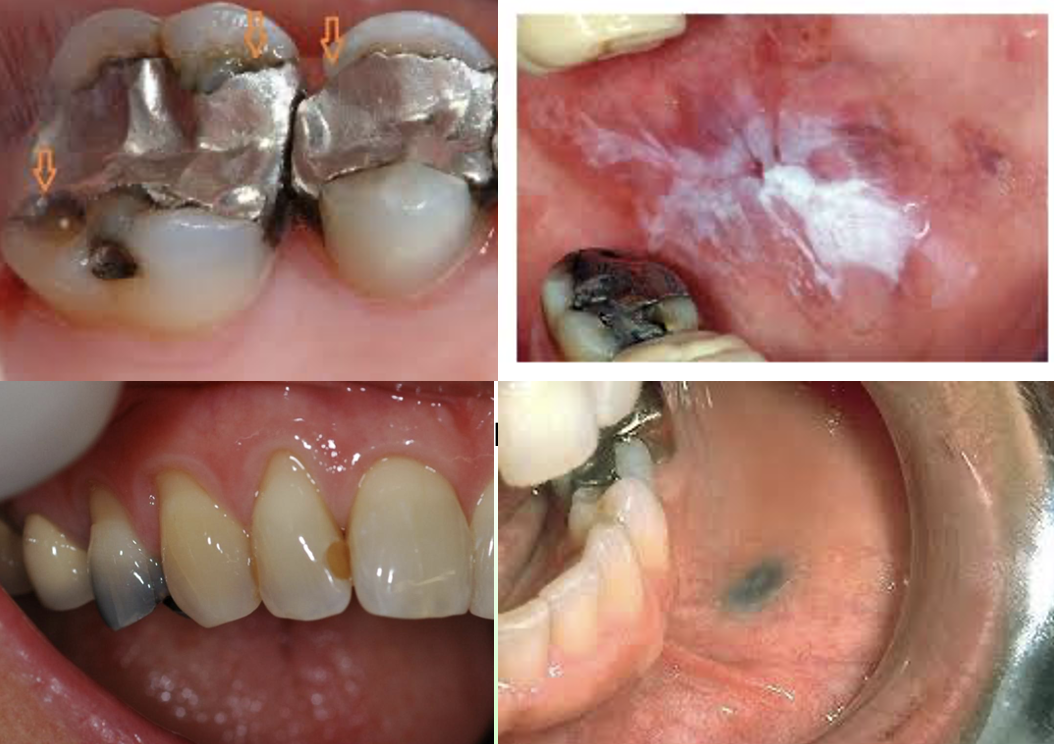
• poor aesthetic properties • does not bond easily to tooth • high thermal diffusivity (can damage pulp) • cavity prep can cause destruction of sound tooth tissue • marginal breakdown • long-term corrosion can lead to ditching around margins • local sensitivity reactions • lichenoid reactions • galvanic response (battery response from two diff amalgams) • possible mercury toxicity • tooth discolouration (corrosion products migrate into tooth surfaces) • amalgam tattoo (amalgam particles migrate into soft tissues)
why do dentists use amalgam?
• quick and easy • self-hardening • can be used at load-bearing areas of mouth • good bulk strength and wear resistance • usually placed at one visit • economical
what is the restoration sequence when placing amalgam?
• caries risk, assessment and diagnosis • likely material choice • informed consent • caries access and removal • cavity design • removal of deep caries • restoration process
what is retention form in cavity design for amalgam restorations?
• features that** prevent the loss** of the restoration in any direction • in an occlusal direction, significant undercut is not required and a parallel or minimal undercut is necessary
what is resistance form in cavity design for amalgam restorations?
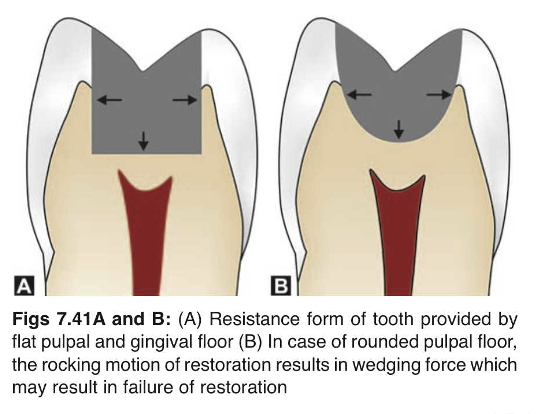
• features that prevent loss of the material due to distortion or fracture by masticatory forces • ideally the cavity floor should be parallel to the occlusal surface with sufficient depth (1.5-2mm) • the gingival floor of an interproximal box should be approx. 90 degrees to the axial wall
what are the two cavity designs for occlusal caries in amalgam restorations?
• self-retentive box preparations (minimal preparation box) • proximo-occlusal preparations
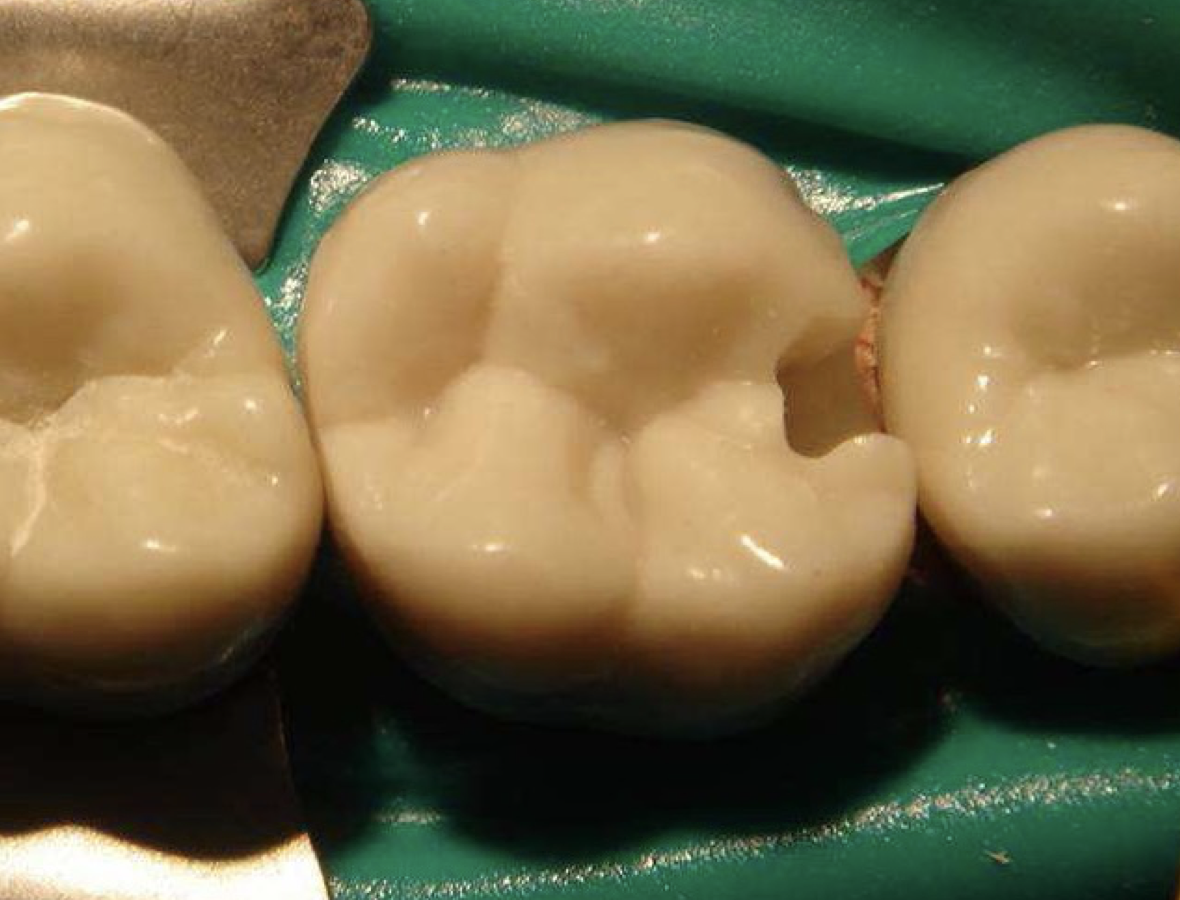
what are the advantages of a self-retentive box preparation (minimal preparation box)? 3
• less tooth tissue removed than with proximo-occlusal preparation • reduced amount of amalgam placed • sound tooth tissue retained between proximal box and occlusal cavity
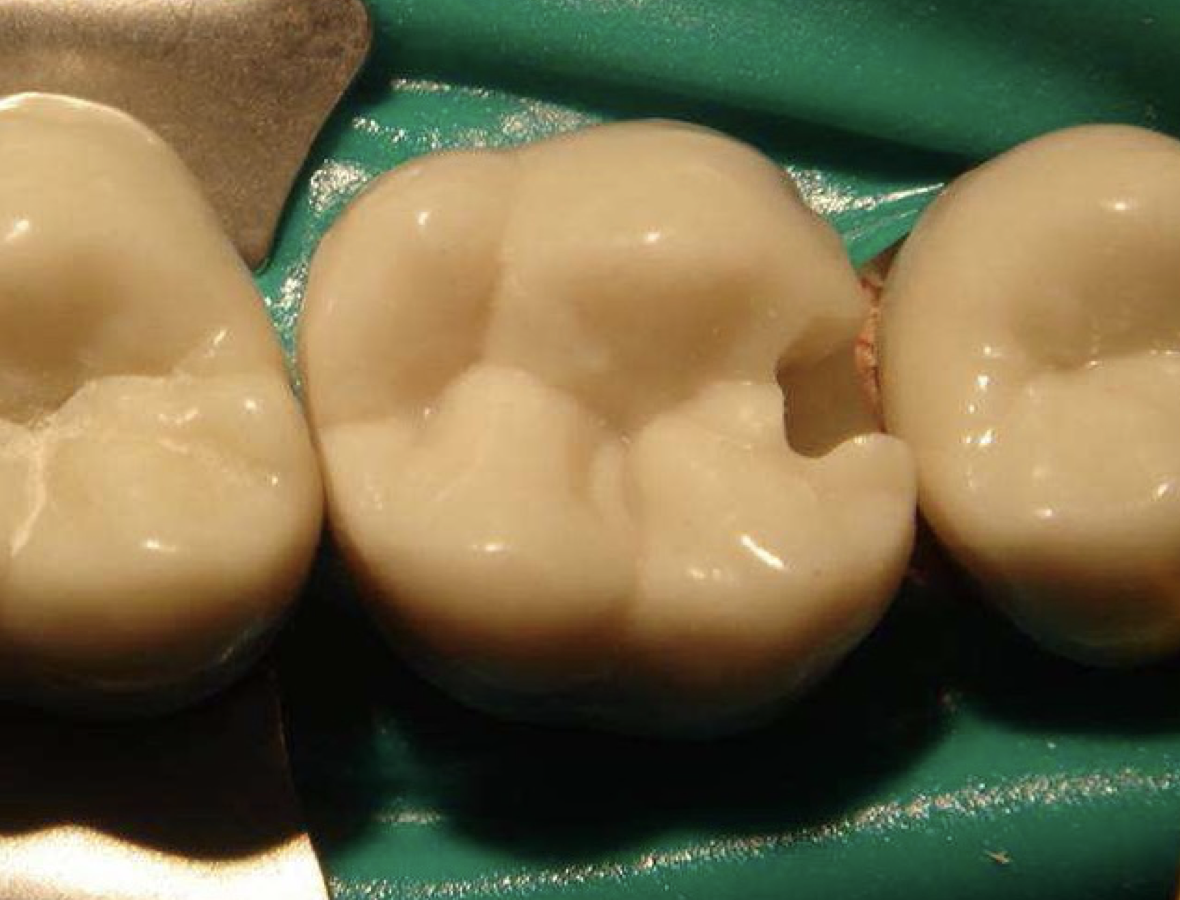
what are the disadvantages of a self-retentive box preparation (minimal preparation box)? 2
• can be more technically demanding than proximo-occlusal preparations • further treatment of pit and fissure caries may be required
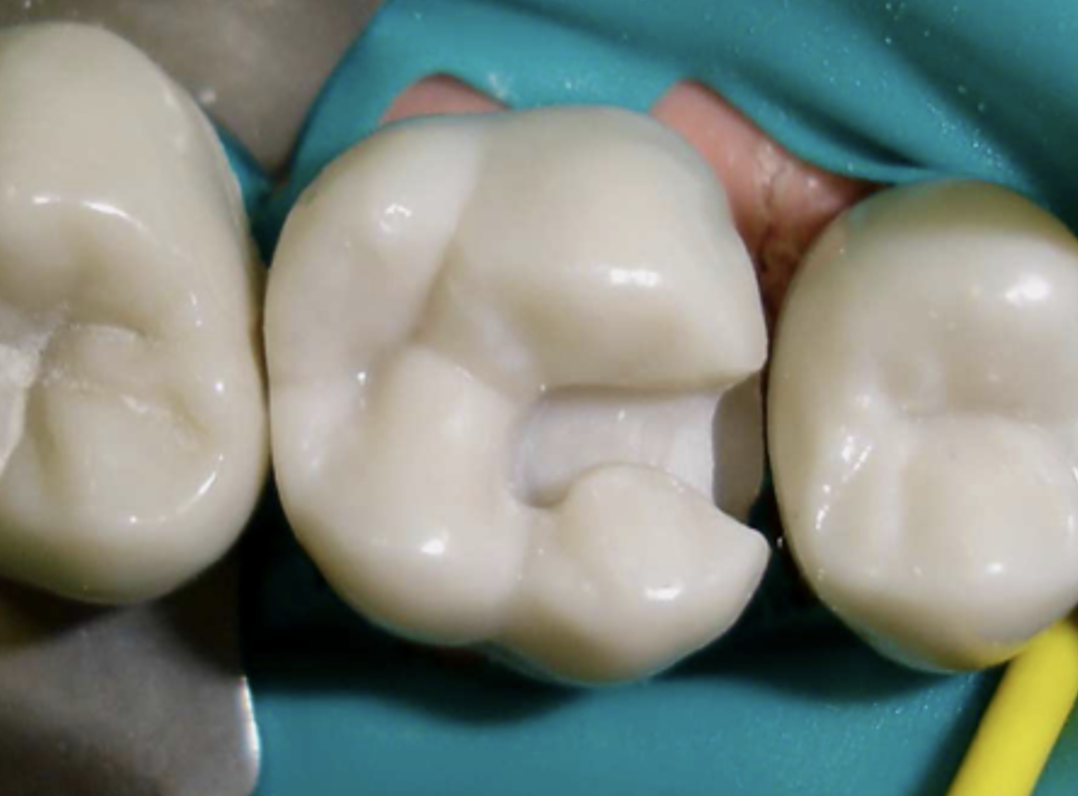
what are the advantages of proximo-occlusal preparations? 3
• very retentive • treats caries in pits and fissures • less or no opportunity for future caries in pits and fissures
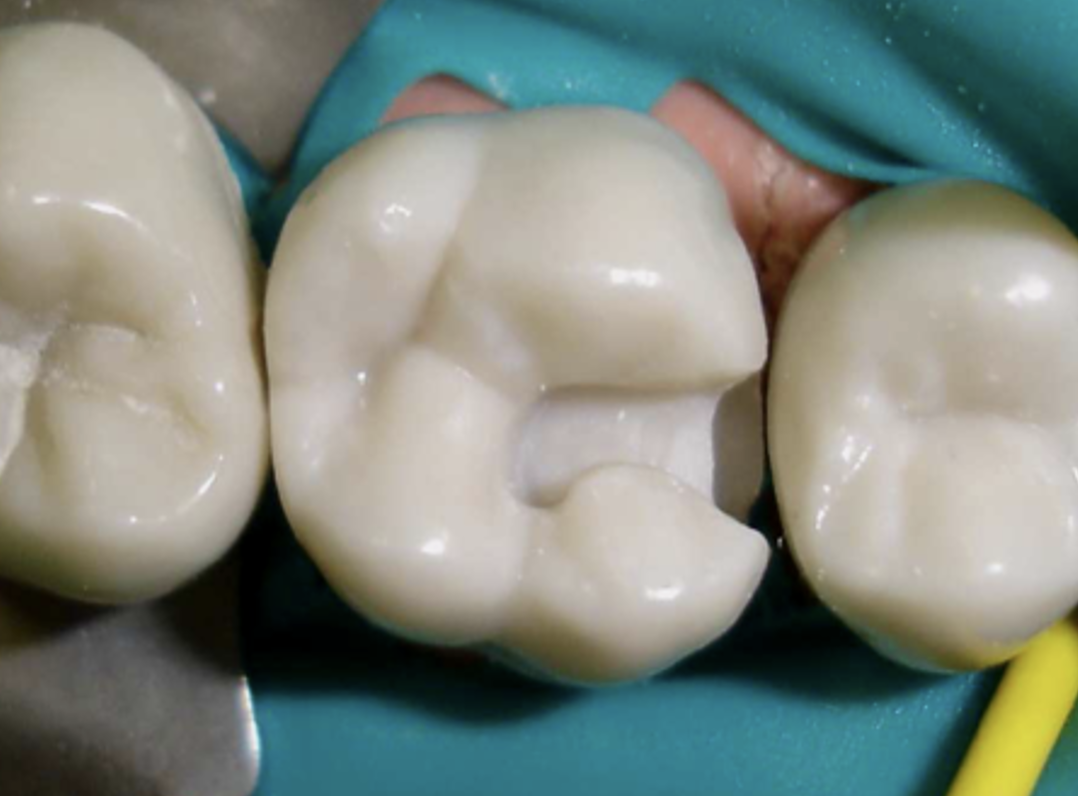
what are the disadvantages of proximo-oclusal preparations? 2
• destruction of tooth tissue for retention • increased risk of weakening the tooth
what are some mechanical ways to increase retention in cavity design for amalgam restorations?
• include grooves or dimples within the design • pin placement to increase retention in large non-retentive cavities
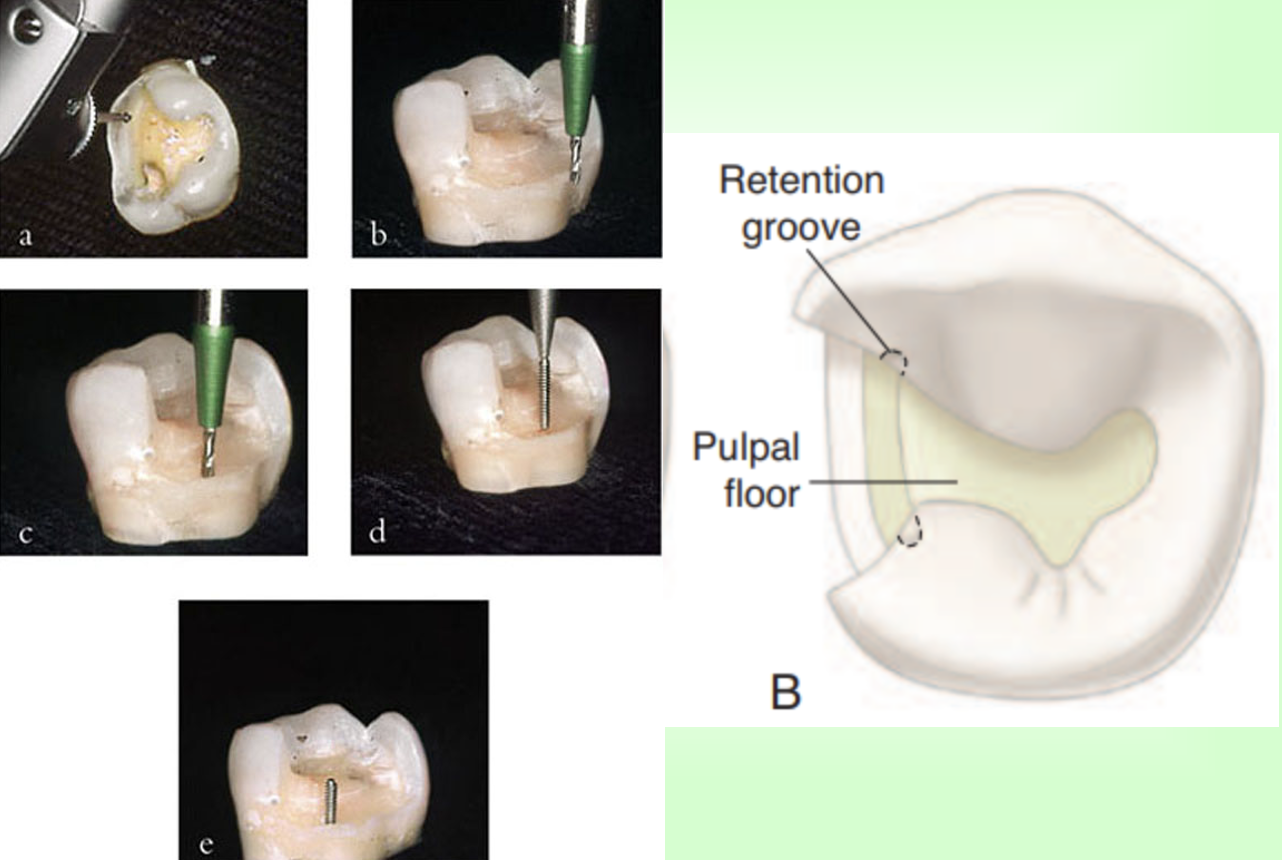
what are the problems with pins?
• causes stress around the pin • can crack the dentine • can cause sensitivity to tooth due to temperature transferrance • can cause long term leaking but restoration does not fall out so secondary caries progresses because of pin
how do you finish the amalgam cavity preparation?
• ensure all caries is removed • smooth and round internal line angles • check and finish cavo-surface line angles • smooth cavity margins
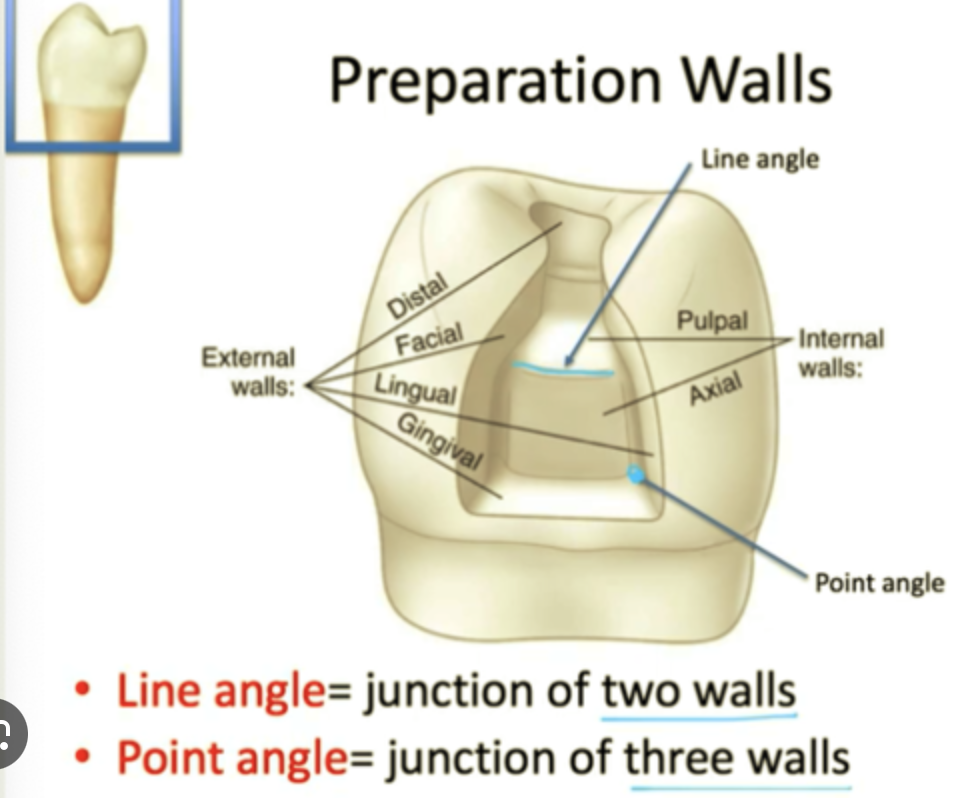
how does moisture contamination affect amalgam restorations?
• reduces strength • increases creep and secondary caries • increases corrosion • increases porosity
what is the use of matrices during restoration?
• essential for restoration of proximal areas • recreate walls of the cavity • allows adequate condensation • confines amalgam to the cavity • allows close adaption especially to cervical margin • allows good contact with adjacent tooth (<0.05mm thick)
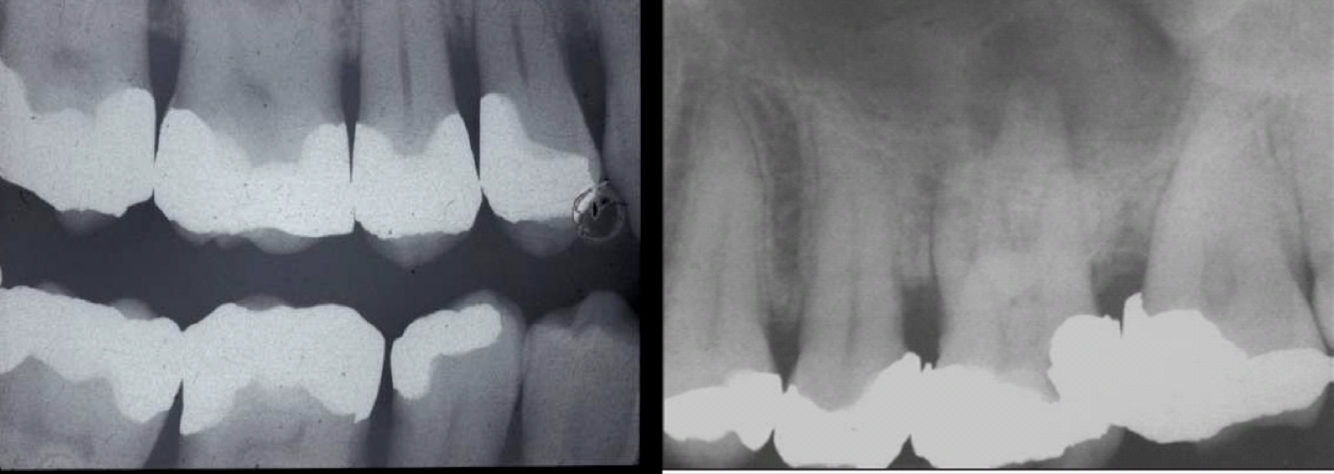
how does the mixing time affect amalgam restorations?
• handling characteristics • working time • amalgam microstructure • restoration longevity
how do you condense amalgam? why does it need to be done?
• vertical and lateral pressure needed • expels excess mercury and brings it to the surface so it can be removed • adapts material to cavity walls • reduces layering so restoration is homogenous • eliminates voids
what does inadequate condensation of amalgam restorations lead to?
• lack of adaption to cavity • poor bonding between layers • inadequate mercury expression and removal during carving • inferior mechanical properties
how can you remove excess material from amalgam restorations?
• carving • burnishing (polish) use high volume aspiration - airborne mercury
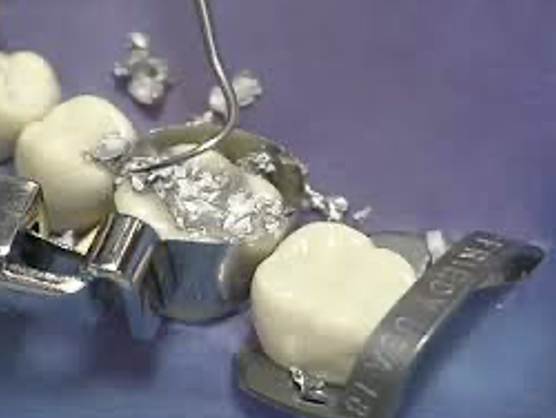
what do you need to recreate when carving an amalgam restoration?
• marginal ridge • inter-proximal contact areas • fissure pattern • cusps and cuspal inclines • re-establishes occlusal contacts
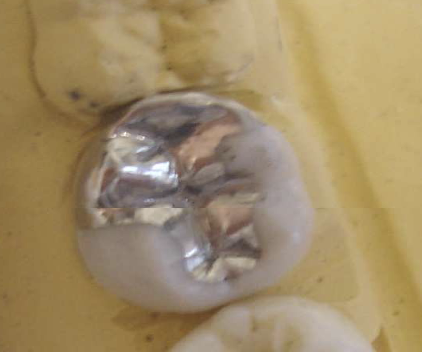
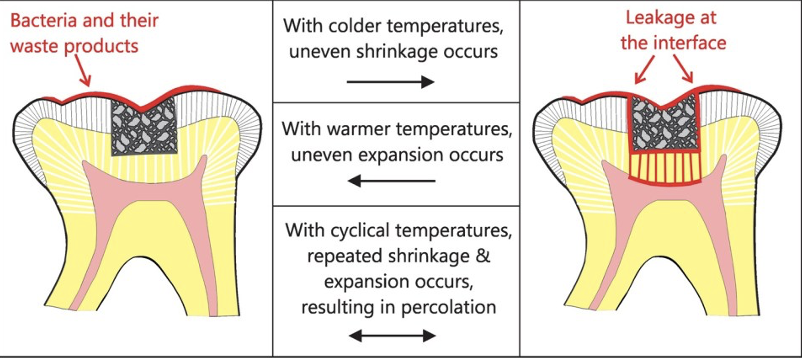
what is microleakage? what can cause it? what can it cause?
passage of fluid and bacteria in micro-gaps (10um) between the restoration and tooth caused by mechanical loading, thermal stresses or iatrogenic damage * pulpal irritation and infection * discolouration * secondary caries