Organic chemistry
No description yet. This curated deck is ready for daily study.
Card preview (24)
Constitutional isomerism
• aka Structural isomerism • Molecules that contain the same atoms but connected in different ways -They have different physical and chemical properites.
Conformational isomerism
• aka. stereoisomer • Conformational isomerism arises because rotation is possible about sigma bonds. • Allowing molecules to adopt a variety of shape.
Aliphatic
An organic compound whose structure does not contain benzene or similar structure
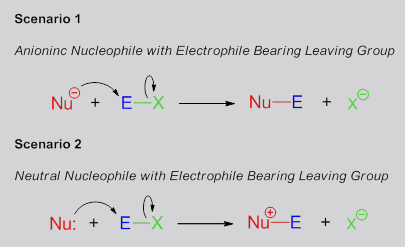
The NuE Method analysis
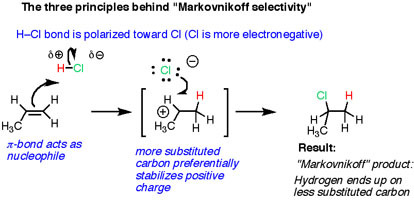
Markonikoff rule
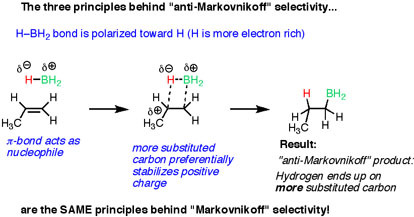
Anti-markonikoff rule
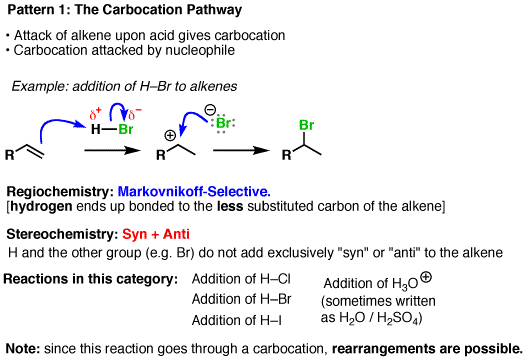
Alkene Reaction Pathway 1: Carbocation Pathway overview
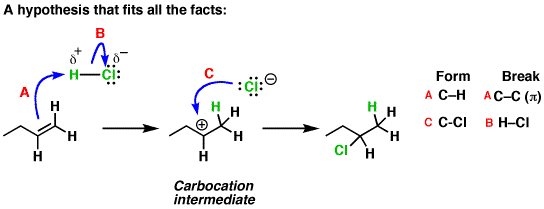
Alkene Reaction Pathway 1: Carbocation Pathway full explanation
Describe SN2 reaction
• (substitution, nucleophilic, bimolecular) is one where a collision between the two reacting species is involved in the rate determining step. Nu: + Sub-LG —> Nu-Sub + LG¨ • the SN2 reaction is favored in the order 1° > 2° > 3°
Good nucleophilic
• weak bases • I¨, Br¨, RS¨, HS¨, N3¨, RNH2, CN¨ and PPh3.
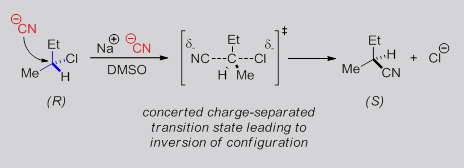
SN2 reaction pathway mechanism
concerted mechanism- all the bond making and bond breaking occur simultaneously. • The transition state has a planar arrangement about the Me, Et and H groups. There are partial negative charges on CN and Cl. Because of the backside attack of the nucleophile, there is a stereochemical (Walden) inversion at carbon in the product.
Carbocation stabilitation
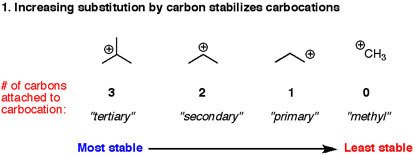
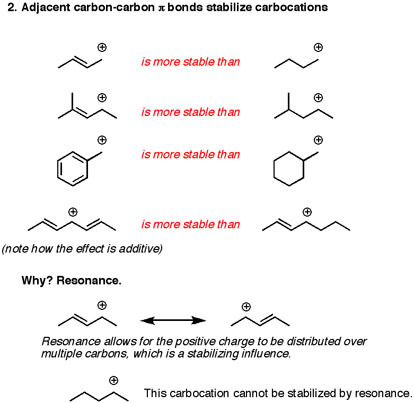
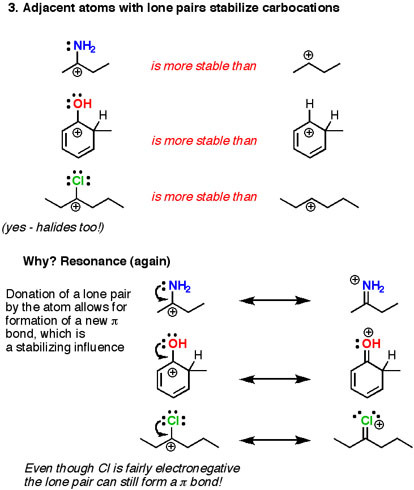
• Neighboring carbon atoms. • Neighboring carbon-carbon multiple bonds • Neighboring atoms with lone pairs.
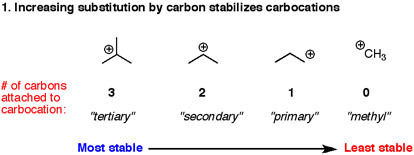
Carbocations are stabilized by neighboring carbon atoms
Carbocations are stabilized by neighboring carbon-carbon multiple bonds
Carbocations are stabilized by adjacent lone pairs
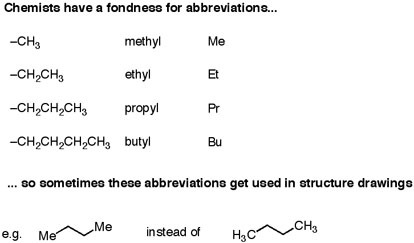
Abbrevations for alkyl group
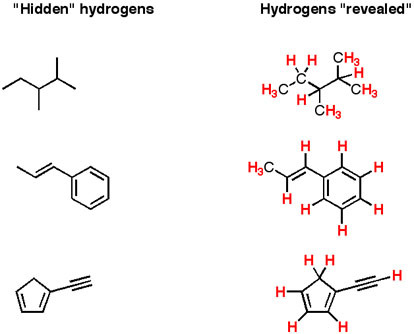
Hidden hydrogen
The key thing in recognizing hidden hydrogens is that wherever you see less than 4 bonds to carbon, that carbon is going to have hydrogens attached such that there’s a full octet.
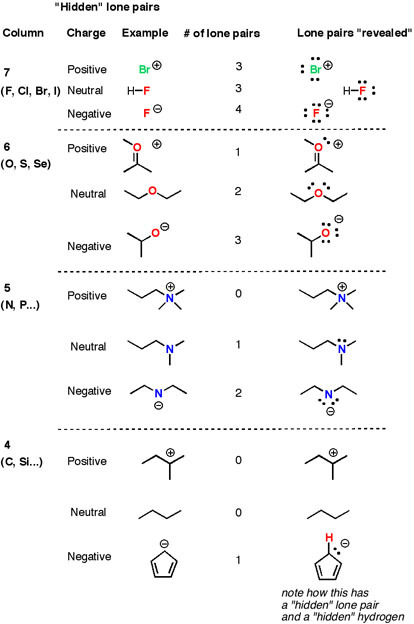
Hidden lone pair
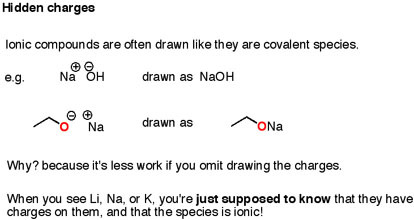
Hidden charges
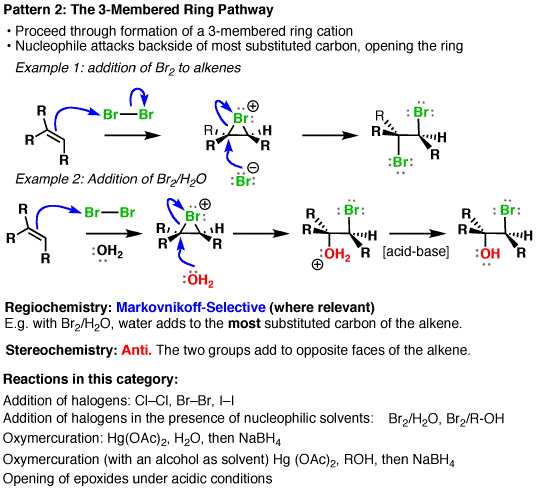
Alkene mechanism pathway reaction 2 Formation of a 3-membered ring
Alkene reaction pathway mechanism 3 The concerted pathway
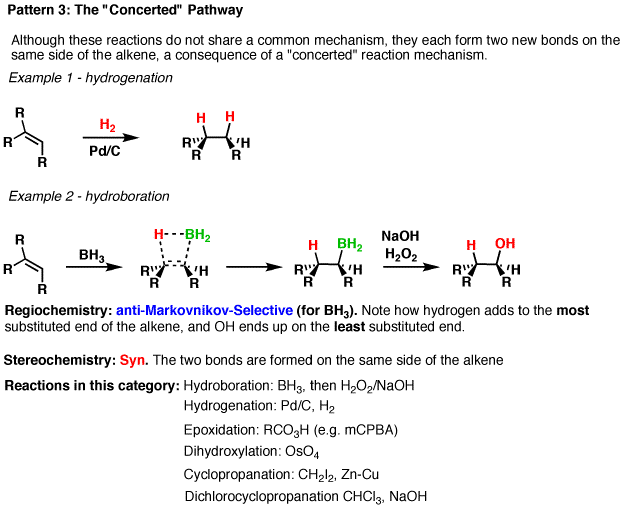
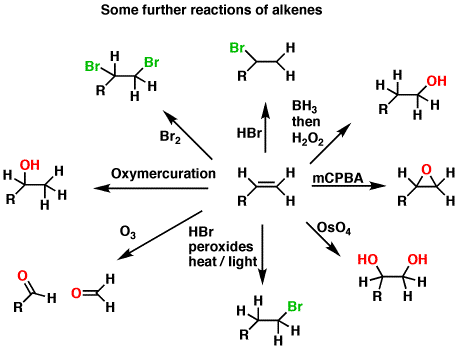
Summary of alkene reaction
Acyl group

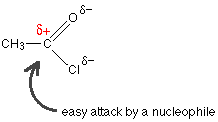
Why are acyl chloride easily attacked by nucleophile?