Chapter 29 chrom + spec
No description yet. This curated deck is ready for daily study.
Card preview (24)
What is chromatography ?
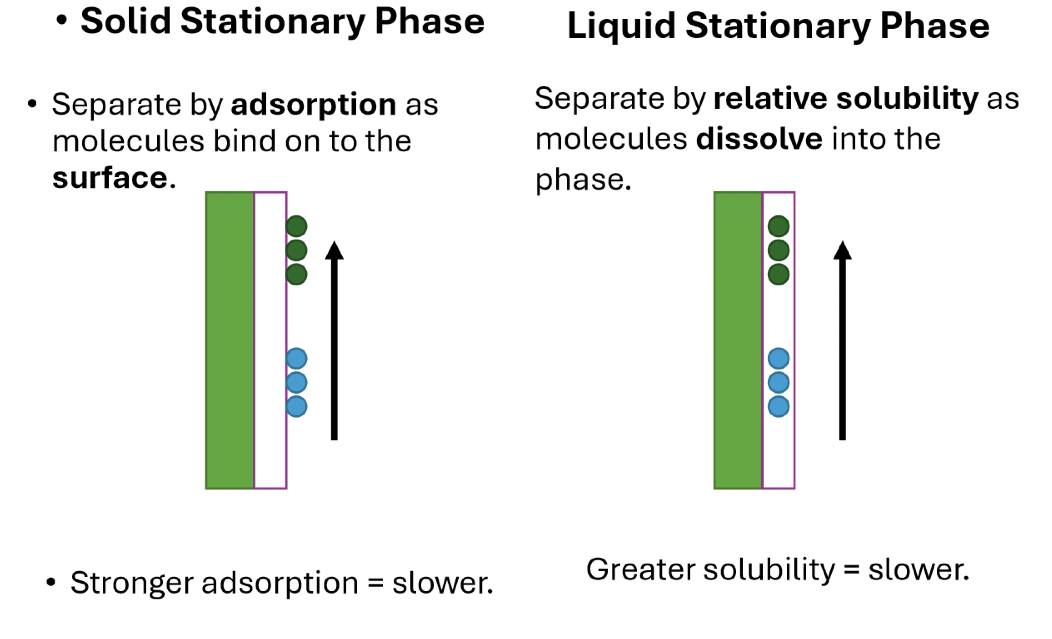
• a mobile phase is passed over a stationary phase and each compound has a different affinity for each phase • this allows compounds to move at different rates
What are the 2 types of stationary phase ?
What is thin layer chromatography ?
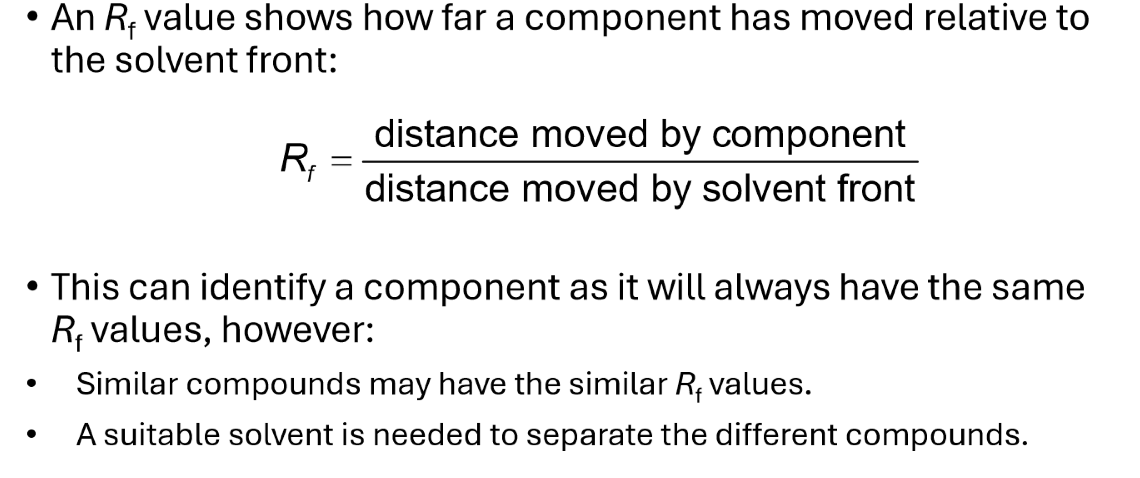
• stationary phase of silica gel (SiO2) or alumina (Al2O3) • a sample is added to starting point on the plate, placed in liquid solvent which will get drawn up • the height of the solvent front is marked the solvent front
What are Rf values ?
What is gas chromatography ?
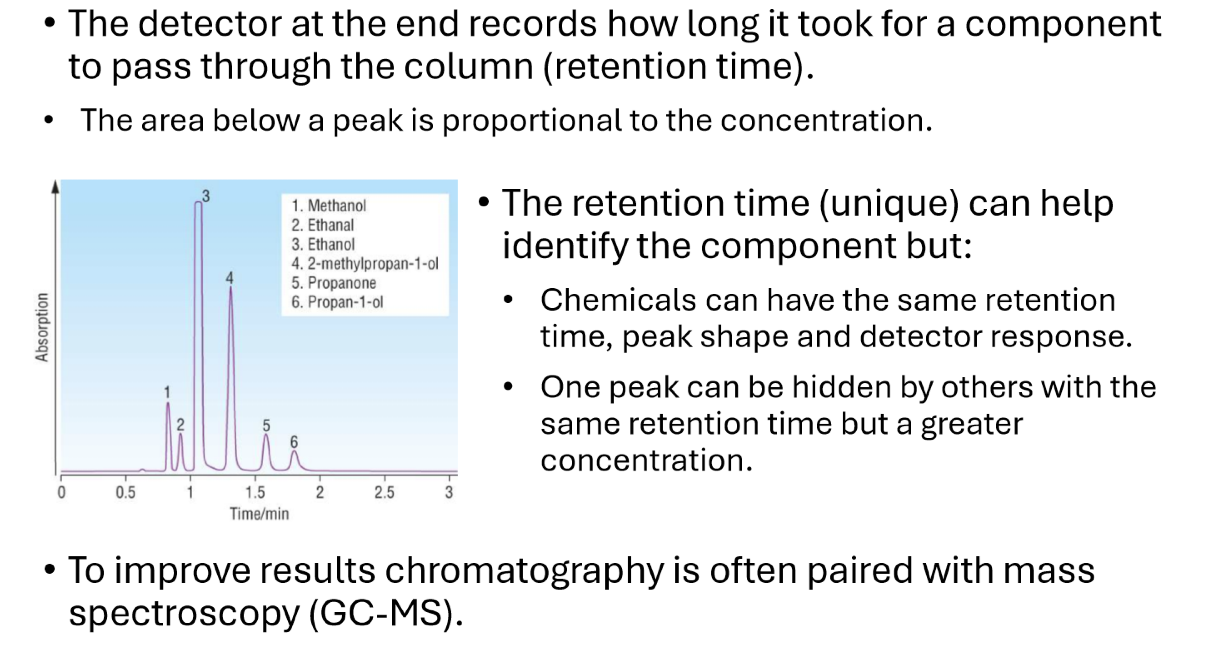
• a stationary phase of solid silicone polymers or a liquid long chain alkane coated inside capillary tube • a sample is injected and vaporised and pushed through by inert gas e.g He or N2
What does the graph for gas chromatography look like ?
What is the test for alkene ?

What is the test for a haloalkane ?

What is the test for carbonyls ?

What is the test for a haloalkane ?

What is the test for aldehydes ?

How to test for primary/secondary alcohols and aldehydes ?

What is the test for aldehydes ?

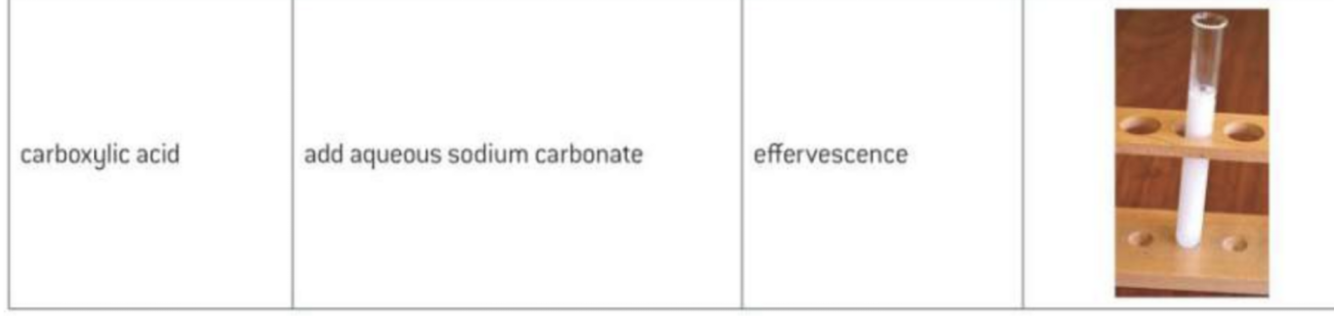
What is the test for carboxylic acid ?
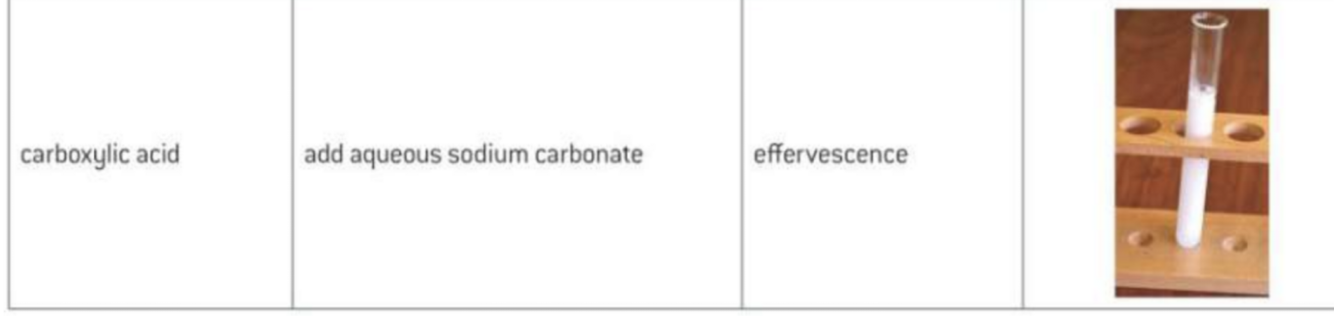
What is the test for carboxylic acid ?
Why is TMS used as a reference signal ?
• chemical shift is relative to TMS • each TMS molecule has 12 equivalent protons which give it a distinct NMR signal which is given the value delta = 0 ppm • TMS is very unreactive so can be removed from the sample at the end • Chemical formula: Si(CH₃)₄
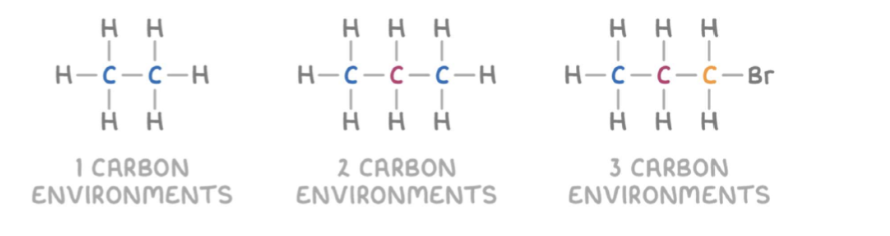
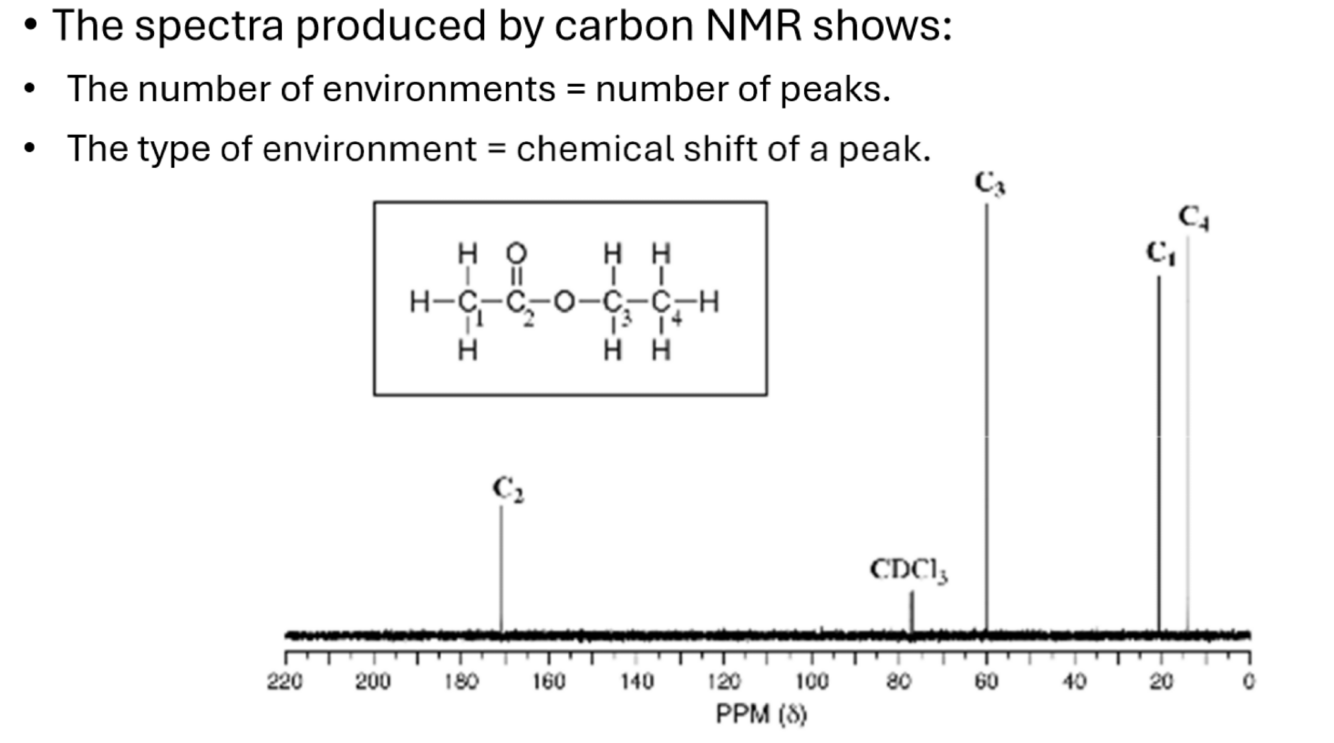
What are carbon environments ?
• depending on the environment - NMR requires a different a different energy and frequency • this producers different absorption peaks at chemical shift
What are NMR solvents ?
• NMR is usually carried out in solution and to avoid unwanted signals • a common hydrogen is CHCl3 (where the hydrogen is deuterium) this peak is removed from the spectrum
What is carbon-13 NMR ?
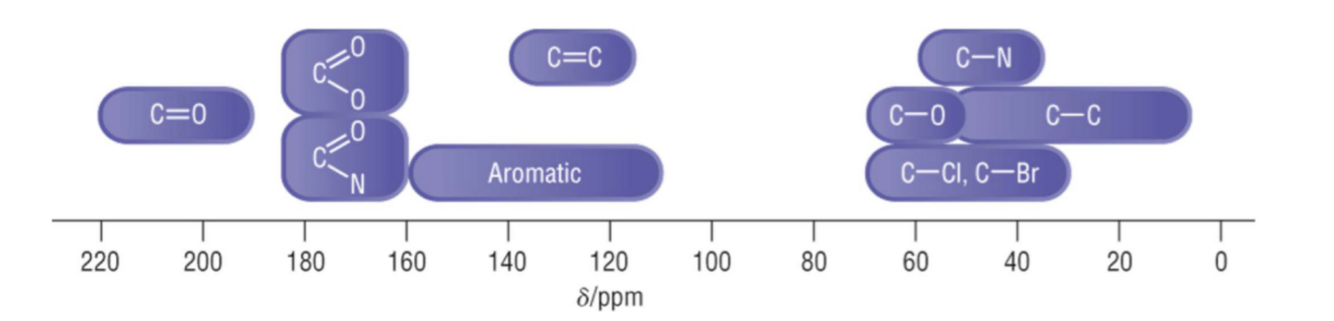
What is a carbon -13 NMR spectra ?
what are equivalent protons
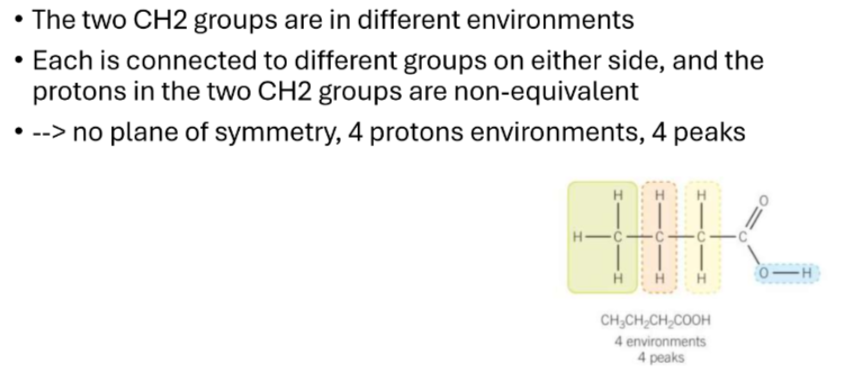
• if 2 or more protons are equivilant (same proton environment) they will absorb at the same chemical shift increasing the size of the peak
example of proton environments ?
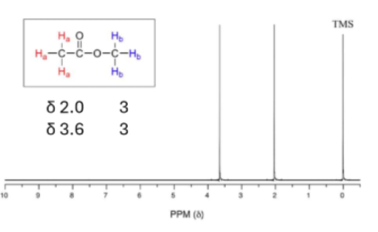
what is an integration trace ?
• tells how many protons in that environment
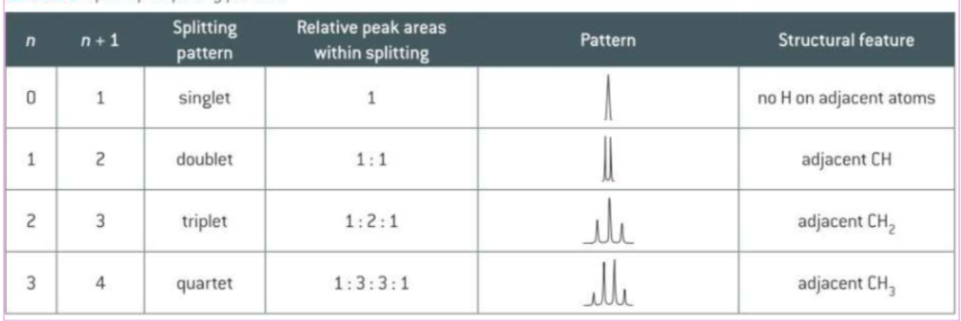
what are the different splitting patterns ?