Enzymes
暂无描述。系统推荐的高质量记忆内容,适合每天坚持背诵学习。
卡片预览 (10 张)
Enzymes are biological catalysts. State how a catalyst affects the rate of a reaction.
A catalyst increases the rate of a reaction
What is a substrate?
The molecule changed in a reaction
Name the part of an enzyme where substrate molecules bind.
Active site
Enzymes have a ‘high specificity’ for their substrate. Describe what this means.
Only one type of substrate will have a shape that is complementary to the shape of a specific enzyme’s active site
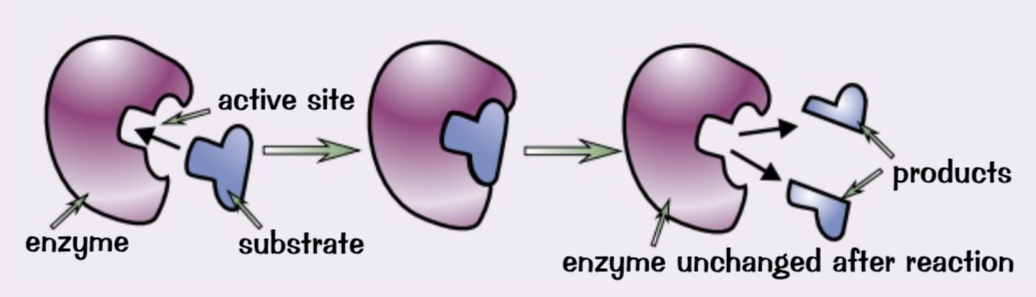
Describe the ‘lock and key’ mechanism of enzymes.
• The substrate is the key • The active site is the keyhole • The enzyme is the lock
Explain what happens when an enzyme begins to denature.
The shape of the enzyme’s active site changes, so a substrate will no longer fit
List some factors that affect enzyme activity.
• Temperature • pH • Substrate concentration
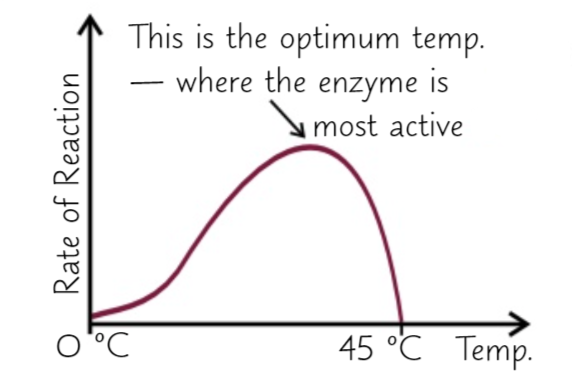
Explain the effect of temperature on enzyme activity.
• Increasing the temperature increases the rate at first • If temperature gets too high, some of the bonds holding enzyme together break • Enzyme begins to denature as active site changes shape
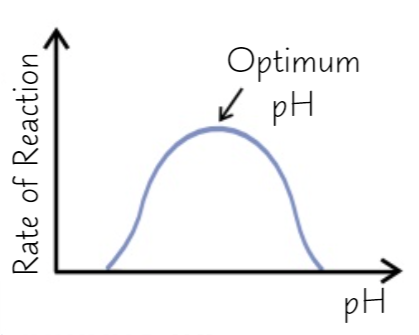
(Exam-style question)

• If pH is too high or low, some of the bonds holding enzyme together break • Enzyme begins to denature as active site changes shape
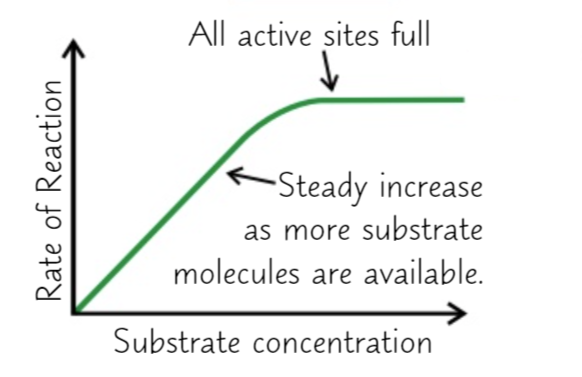
(Exam-style question) Explain why increasing the substrate concentration fails to affect the rate of an enzyme-controlled reaction after a certain point.
• After a certain point, all active sites on enzymes are full • Increasing substrate concentration would not result in more substrate molecules entering active sites of enzymes • Therefore, the rate of reaction is not affected