3.2.1 Periodicity
No description yet. This curated deck is ready for daily study.
Card preview (17)
The periodic table is arranged by ____ _____
Atomic number
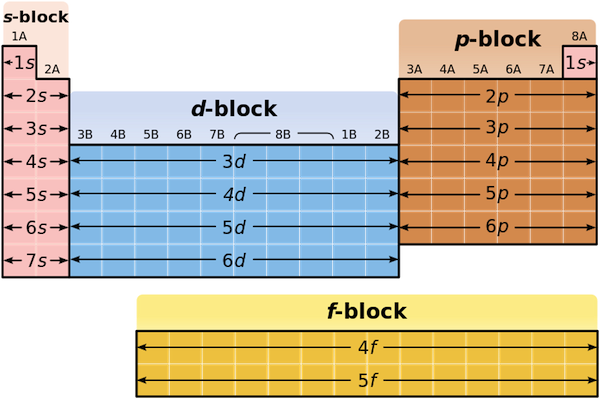
Name the blocks
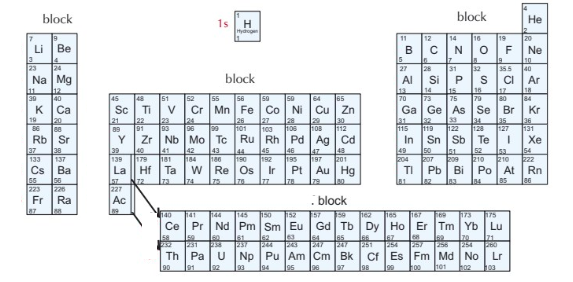
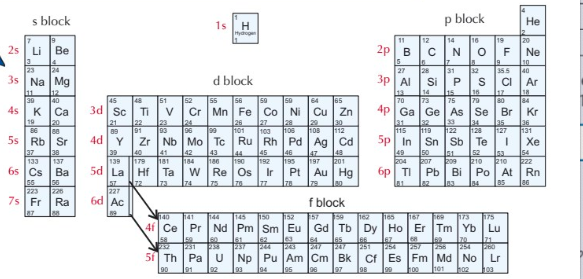
Elements within a period have same number of _____ ___
electron shells
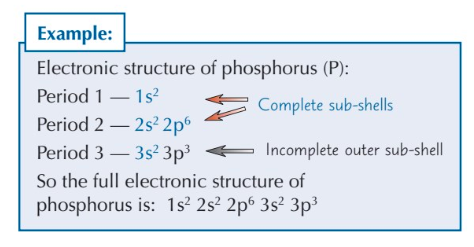
Using the periodic table, write the electron configuration for phosphorus
Using the periodic table, write the electron configuration for cobalt
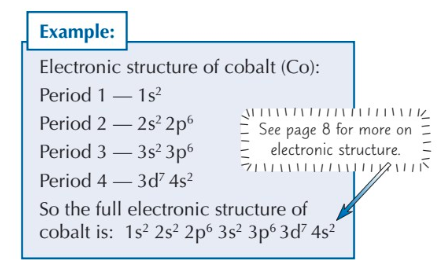
Atomic Radius _____ across a Period
decreases
Why does atomic radius decreases across a period?
• As number of proton increases, positive charge of nucleus increases • Increased attraction between nucleus and electrons • Similar shielding in each period • As electrons added to same outer shell
Why don’t the extra electrons that element gains across period provide extra shielding?
• Extra electrons are added to outer energy level • (Shielding is mainly provided by electrons in inner shells)
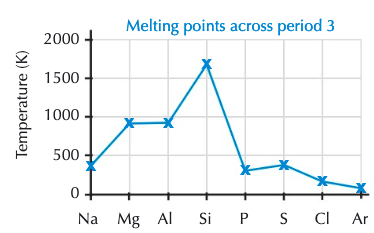
As you go across period 3, from sodium to magnesium to aluminium, why does melting and boiling points increase?
• ∵ metal-metal bonds get stronger • Get stronger ∵ metal ions have increasing positive charge = increasing number of delocalised electrons and decreasing radius
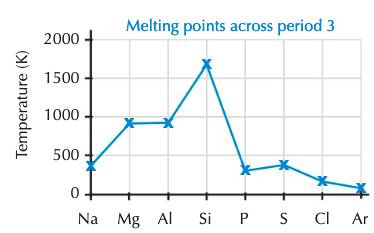
Why does silicon have such a high melting point?
• Silicon is macromolecular (tetrahedral structure) = many strong covalent bonds • Lot of energy needed to break these bonds
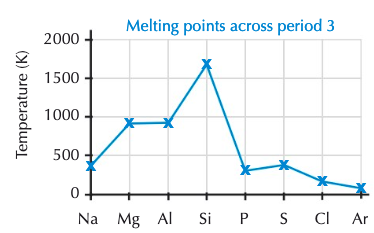
Why does phosphorus, sulfur and chlorine have low melting points?
• They’re molecular substances so melting points depend upon strength of van der Waals forces between molecules • Van der Waals forces are weak and easily overcome
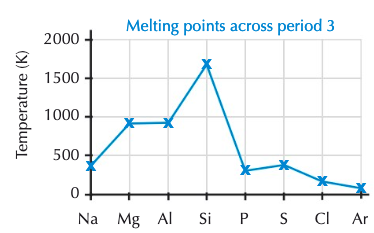
Why does sulfur have a higher melting point than phosphorus or chlorine? (2)
• Sulfur is the biggest molecule (largest Mr) • Stronger van der Waals forces between molecules (they’re stronger with larger Mr)
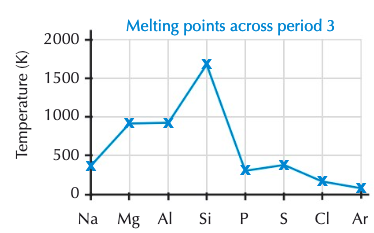
Why does argon have a very low melting point?
∵ exists as individual atoms = weak van der Waals forces
Ionisation energy generally ______ across a period
increases
Why does ionisation energy generally increases across a period (4)
• As number of proton increases, positive charge of nucleus increases • Increased attraction between nucleus and electrons • Similar shielding in each period • As electrons added to same outer shell • More energy needed to remove electron
Predict the element in Period 3 that has the highest second ionisation energy. Give a reason for your answer. (2)
• Sodium / Na • Electron (removed) from the 2nd shell / 2p (orbital)
Explain why the ionisation energy of every element is endothermic (1)
Energy needed to overcome attraction between nucleus and electron