B: Biological Pigments HL
No description yet. This curated deck is ready for daily study.
Card preview (15)
Reasons for colored compounds
-C=C-C=C-C=C-C=C-C=C-C=C-C=C- In conjugated systems overlap of P2 orbitals result in electron delocalization • Short conjugated chains like C=C absorb in the UV part of the spectrum • Longer chains result in greater delocalization and longer wavelength
Chromophores
Groups such as C=C and C=O that absorb in the UV-vis part of the spectrum eg Chlorophyll - green light being transmitted as red light absorbed
Porphyrin Rings
Chelates (tetradentate ligands) of metals with large nitrogen-containing macrocyclic ligands Fe2+ in Heme Mg2+ in Chlorophyll
The Binding of Oxygen to Hemoglobin
• Hemoglobin consists of 4 hemegroup with Fe2+ at the center • Each Heme unit can transport 1 molecule of O2 • each unit of hemoglobin can transport 4 molecules of O2 • Myoglobin stores oxygen in the muscles; hemoglobic carries oxygen in the blood • they bind oxygen with Fe2+ ions, which forms a weak bond with the Fe2+ in heme • the oxydation number of Fe2+ does not change
Oxyhemoglobin Dissociation Curve
• Binding of O2 to hemoglobin is a cooperative process • At lower partial pressure the hemoglobin releases some of the oxygen it is carrying
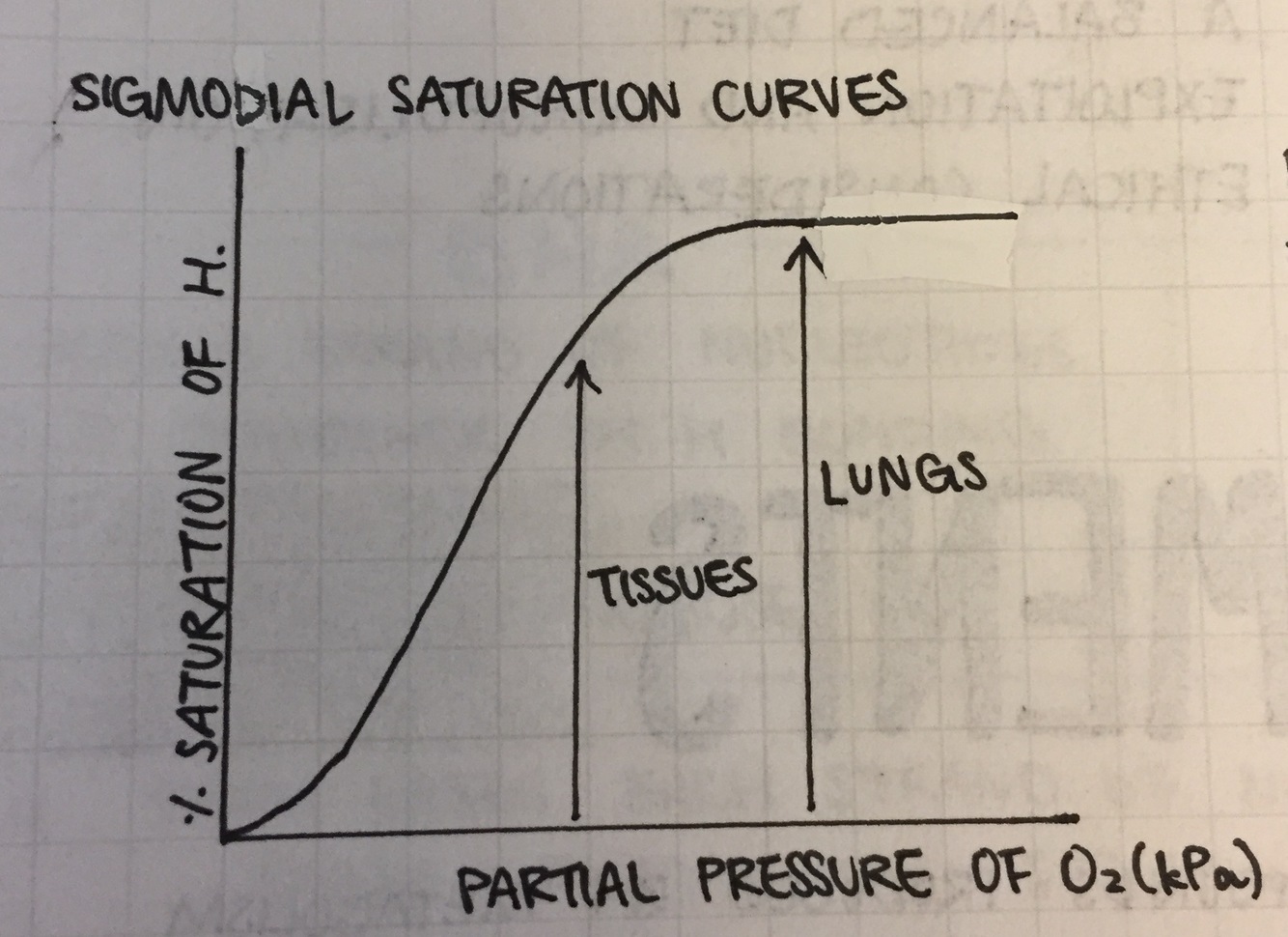
Temperature and Hemoglobin
• An increase in temp decreases the affinity of hemoglobin for O2 • At higher temps in the cells more O2 will be released
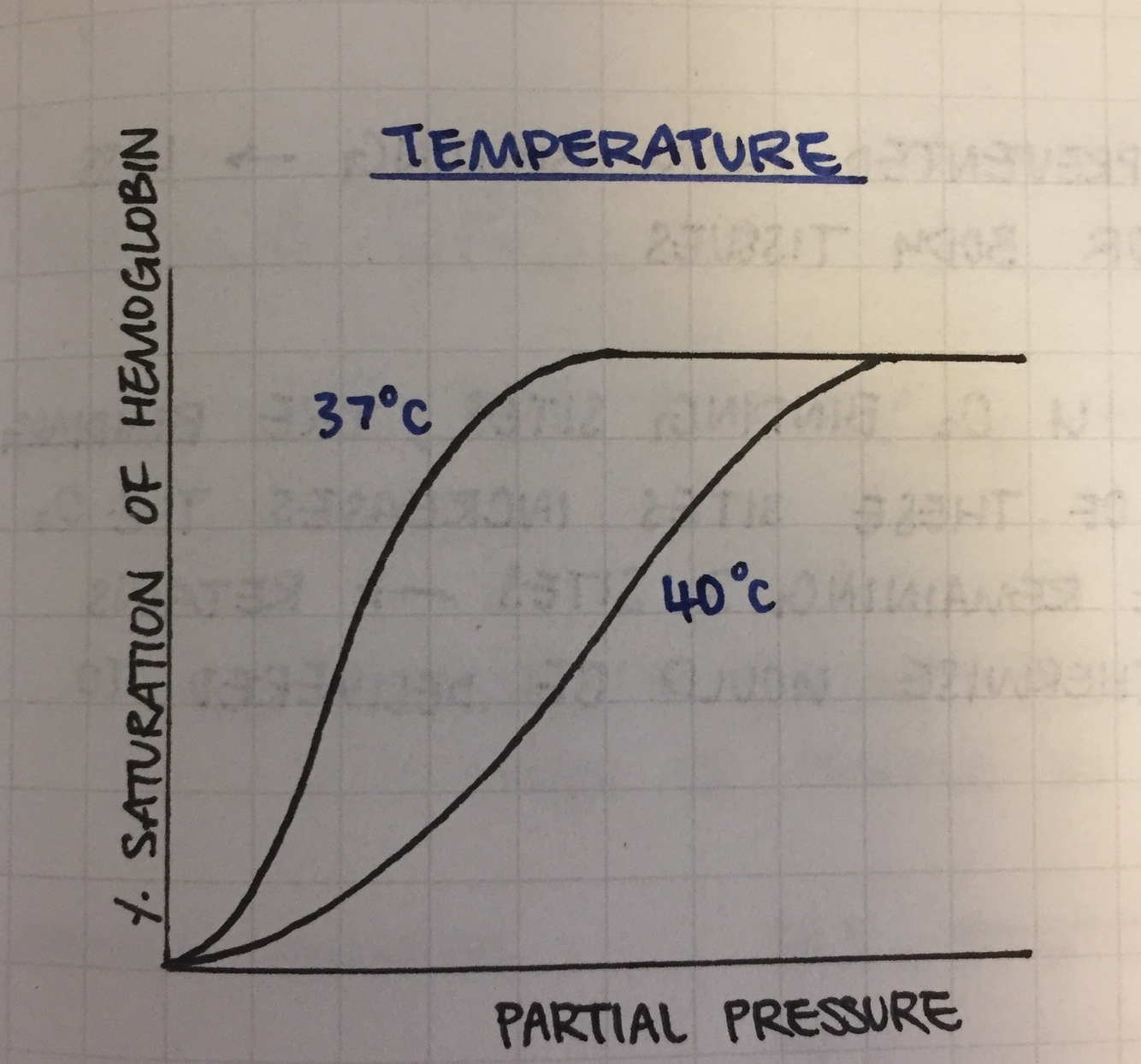
pH and Hemoglobin
• A decrease in pH reduces the affinity of hemoglobin for oxygen • increasing the [CO2] has the same effect as CO2 dissolving to form carbonic acid H2CO3 • during increased exercise the conc of CO2 increases –> pH decreases and hemoglobin releases oxygen
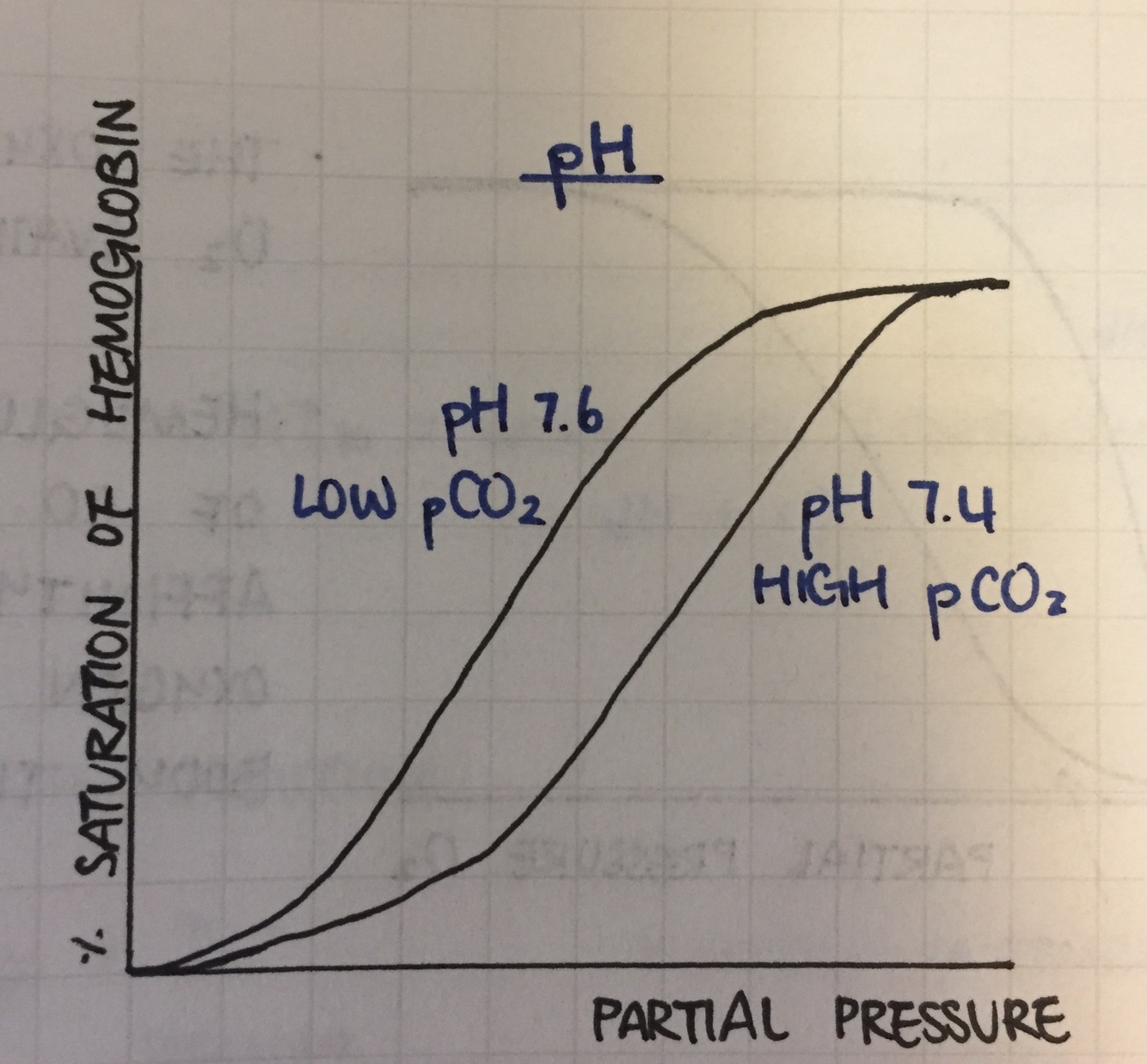
Fetal Hemoglobin
• Hemoglobin exists as a different form in fetal blood • It has a greater affinity for O2 than normal hemoglobin • allows fetal blood in the placenta to take up oxygen from the mother’s blood
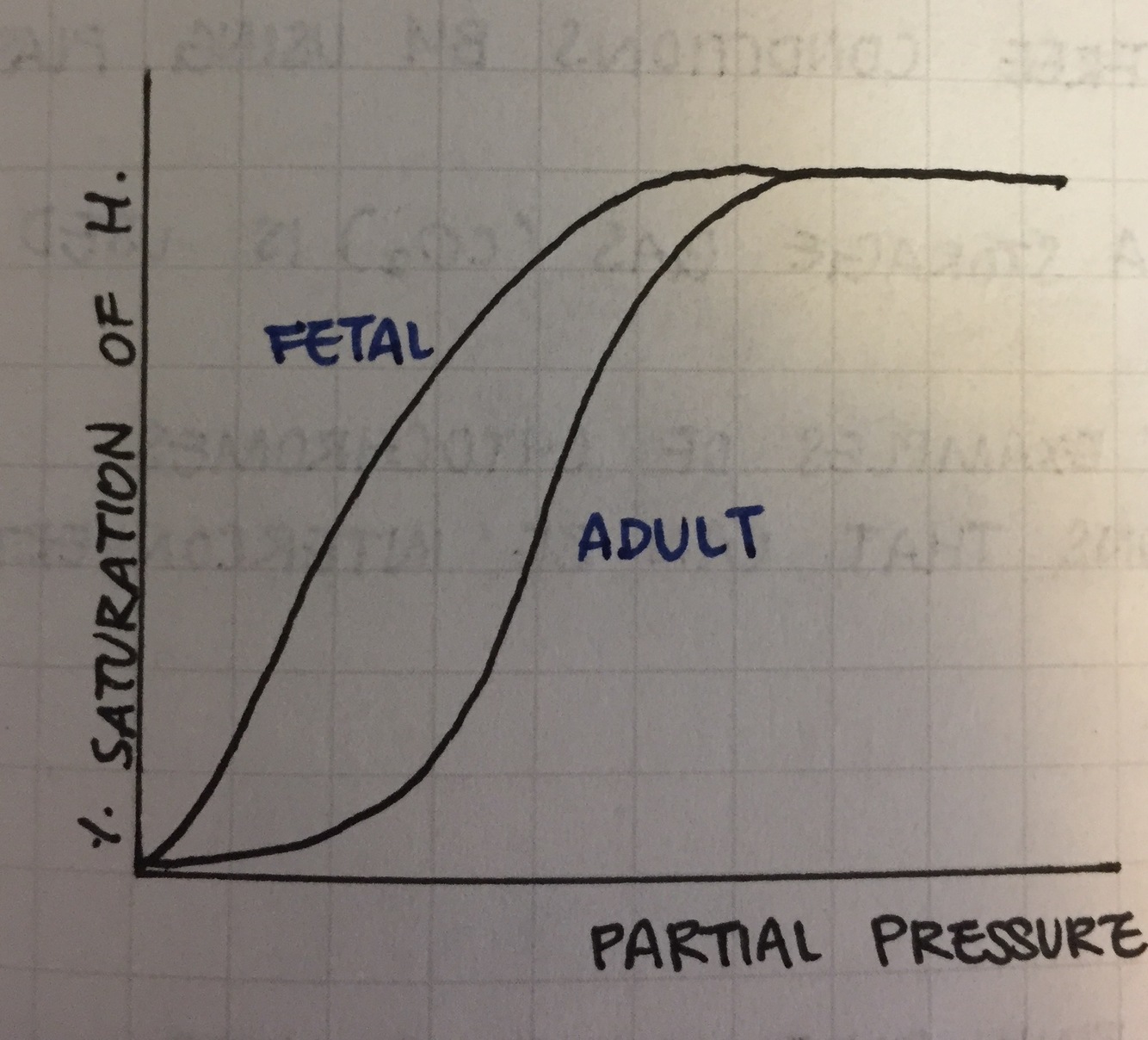
Carbon Monoxide and Hemoglobin
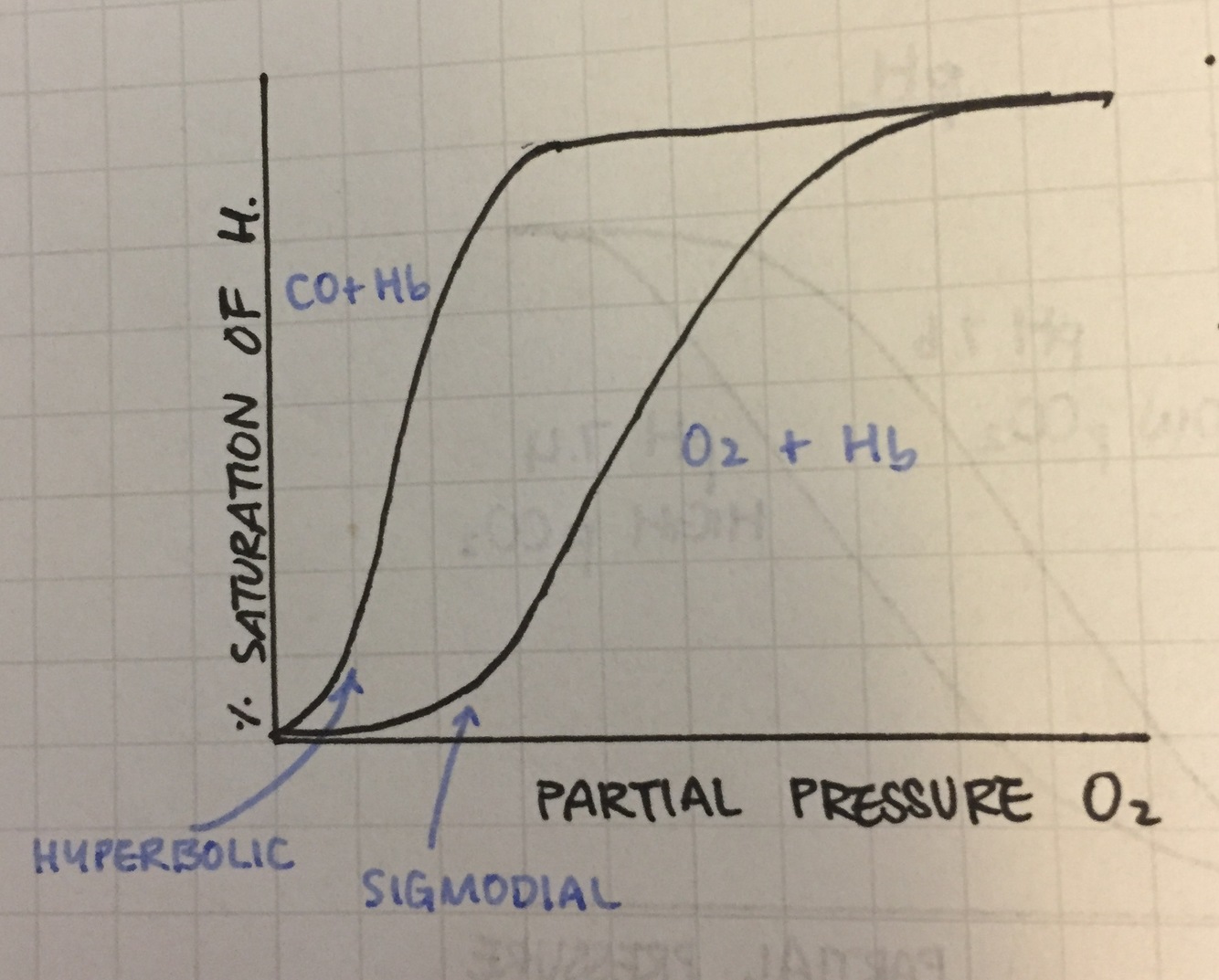
• CO has a much higher affinity for hemoglobin than oxygen, because it is a competitive ligand • acts as a ligand because it will donate a pair of e- to a central metal • Acts as a competitive inhibitor and therefore prevents oxygen binding to hemoglobin Hb + CO —> Hb-(CO) carboxyhemoglobin • reaction is irreversible and goes to completion
Carbon monoxide vs Oxygen graph
• the oxygen is prevents from binding –> less O2 available for body tissues • Hemoglobin has 4 O2 binding sites, the binding of CO at one of these sites increases the O2 affinity of the remaining 3 sites –> retains oxygen that otherwise would be delivered to body tissues
Cytochromes
Myoglobin and Hemoglobin are examples of cytochromes because their heme groups contain Fe2+ ions that can be interconverted to Fe3+ ions –> redox
Color Stability of Heme
• The purplish-red color of meat is caused by myoglobin • in myoglobin, iron is oxidized Fe2+ –> Fe3+ • The stability of color and the rate of brown metamyglobin formation can be minimized if the meat is stored in oxygen gree conditions by using plastic film with low permeability • air is removed from the package and a storage gas (CO2) is used
Anthocyanins
• Common pigments in plants –> responsible for pink, blue and purple hues • Many OH groups which will form H bonds with water –> soluble • Large degree of conjugation –> Indicates delocalisation of Pz electrons and they absorb in the visible part of the spectrum • metal ions disrupts delocalisation of electrons —> affects color
Carotenoids
• Most widespread pigment found in nature (abundance in algae) • they generally absorb in the visible region of the spectrum and so have colors in the yellow-red region • susceptible to oxidation, catalysed by light • involved in light-harvesting in plants during photosynthesis • a photon of light is absorbed to promote the electron to an excited state –> energy absorbed is transferred to chlorophyll • lipid soluble
Indicators
HIn <—-> H+(aq) + In-(aq) HIn = weak acid • at neutrality: • [HIn] = [In-] • KIn = [H+] • pKIn = pH