B: Proteins
No description yet. This curated deck is ready for daily study.
Card preview (24)
Catabolic Reactions
Breakdown reactions
Anabolic reactions
Synthesis reactions
Hydrolysis
Where molecules are broken down by the reaction of dilute acid/ alkali in high temps (reflux) • enzyme reactions 37C • Proteins –> amino acids • Starch –> simple sugars
Condensation Polymerization
Anabolism monomers combine together to form polymers and water is eliminated
Functions of Proteins
• Enzymes - biological catalysts • Transport proteins - haemoglobin • Immunoproteins - antibodies • Hormones - chemical messengers • structural proteins - collagen • Energy source - when fats and carbohydrates become scarce
Amino Acids Functional Groups and chemical properties
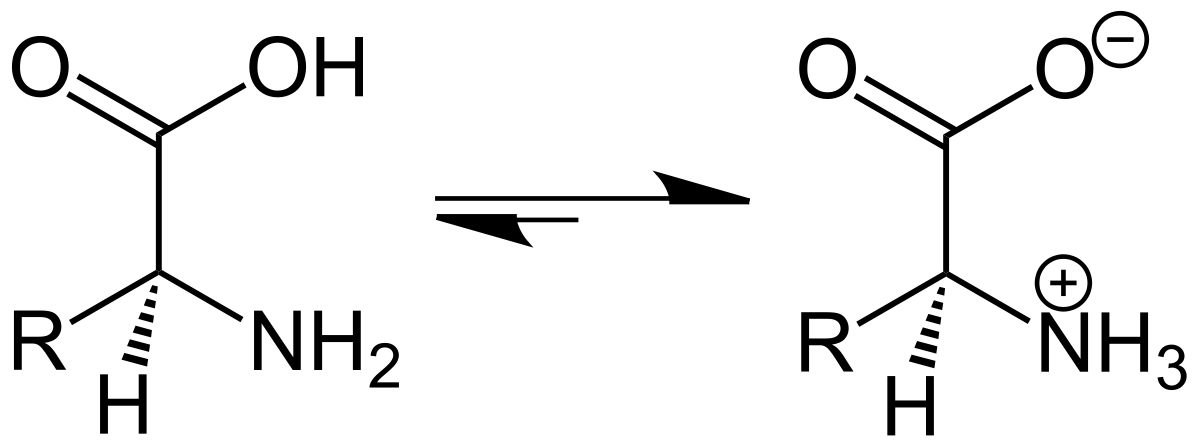
• COOH carboxy • can be considered as weak acids as they are partially dissociated aqueous solution • NH2 Amine • behaves as base because they accept protons
Amino Acids Zwitterions
• Amino acids exist as zwitterions in solid or aqueous solution • Isoelectric point - pH wehre Amino acid becomes zwitterion
Dipeptide
2-Aminoacids will combine together in a condensation reaction to form a dipeptide –> anabolic reaction, energy required compounds will have an amide/ peptide link
Thin Layer Chromatography
Alumina Al2O3 + Silica SiO2 Retardation factor x/y –> used to identitfy the components as long as external conditions remain the same
Gel Electrophoresis
Buffer solution - zwitter ion used to control the degree of ionization • Polyacylamide gel (PAGE) • locating agent: Ninhydrin
Gel electrophoresis - Amino Acid separation
Amino Acids will separate according to • their Mr • The overall charge on the molecule • potential difference applied
Primary Structure
• Sequence of Amino Acids in the polypeptide chain • bond responsible: peptide bond/ amide link
Secondary Structure
The folding of the polypeptide chain as a result of hydrogen bonding
Proteins
Polymers composed of amino acids (monomers)
Secondary Structure alpha-helix
alpha-helix H bond between the C=O of 1 peptide bond and the NH of the peptide bond 4 amino acids down
Secondary Structure Beta-pleated Sheets
ß-pleated sheet consists of 2 or more stretches of amino acids in which the polypeptide chain is almost fully extended H bonds form between a C=O on one strand and an NH on an adjacent strand
Tertiary Structure
The twisting and folding of the Secondary structure to form a specific 3D shape Bonds involved • LDF - between nonpolar side chains • Hydrogen - between polar side chains • Ionic - between polar side chains • Disulfide bridges (covalent) - between the side chains of cysteine which contain CH2-SH
Quaternary Structure
• Interactions between polypeptide chains (sub-units) • sub-units held together by various intermolecular forces • Dimers - 2 sub-units • Trimers - 3 sub-units • Tetramers - 4 sub-units • (sub units may be identical or different)
Biological catalysts - Enzymes
• increases rate of reaction by lowering the activation energy of the forward and backward reactions equally • remains unchanged in mass and composition
Enzymes
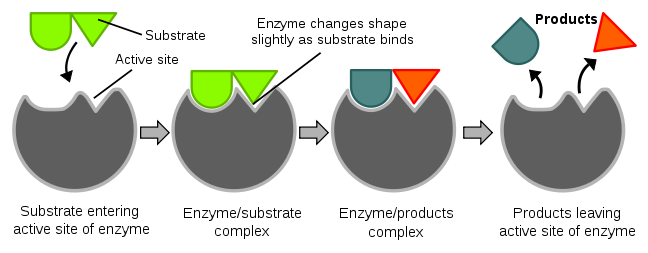
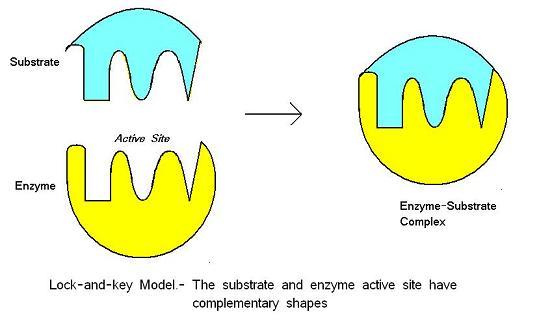
E + S <—> ES —> E + P • Enzyme binds to substrate @ active side • hydrophobic pocket, nonpolar • Active complex • E –> unchanged in mass and composition ; P –> products
Induced Fit theory
Lock and Key theory
Enzyme Kinetics
• Molecules must have Ea and a certain orientation to react successfully • As conc. of substrate increases, rate of reaction increases proportionally • because of sufficient active sites to bind to • As the reaction progresses, the active sites are becoming occupied –> fewer are available and rate of reaction decreases • Eventually, a maximum value is reached, after which the rate no longer increases
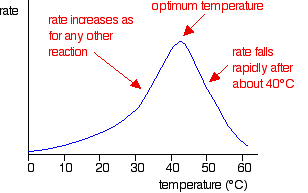
Enzymes - Effect of Temperature
• collisions with E > Ea, orientation allows for the ES activated complex to form, frequency of collisions is high • optimum temperature at which the rate is a maximum • due to increased vibration of the molecule, the active site’s shape changes and hence fewer substrate molecules can bind –> denature