Inflammatory bowel disease
No description yet. This curated deck is ready for daily study.
Card preview (24)
What is inflammatory bowel disease?
Refers to 2 chronic diseases that cause inflammation of the intestine: Ulcerative Colitis + Crohn’s disease
What is Crohn’s disease?
Chronic inflammatory bowel disease (IBD) that can affect any area of the gastrointestinal tract, from the mouth to the anus Cause is unknown Periods of exacerbations (inflammation) + remissions Inflammation is across the whole wall of GI tract Fissuring ulcers form (contents can leak out) Damage caused by inflammation leads to submucosal fibrosis (body trying to repair) Dense infiltration of lymphocytes + macrophages
What is Ulcerative Colitis?
Inflammation affects mucosal (inner) layer of the colon + rectum Cause ulcers Loss of goblet cells (secretes mucus) Infiltration of inflammatory cells into mucosa Unknown cause
What are the symptoms of Crohn’s?
Diarrhoea - impaired absorption Pain Narrowing of the gut lumen leading to strictures + bowel obstruction Abscess formation Fistulization to skin + internal organs
What are strictures?
Inflammation leads to scar tissue formation Narrowing of lumen + obstruction Risk of rupture Pain, cramping, bloating
What are fistulae?
Inflammation leads to ulcers Ulcers develop into tunnels Between areas of GIT or between organs or to skin (anal fistulae)
Whata are the consequences of Crohn’s disease?
Weight loss Macronutrient deficiencies Micronutrient deficiencies (minerals, calcium, iron) Fatigue Protein-energy malnutrition in 20-80% of patients
What are the symptoms of ulcerative colitis?
Severe diarrhoea - changes in electrolytes Blood loss Loss of peristaltic function leading to rigid colonic tube Toxic megacolon, perforation + sepsis
Where can extra-intestinal inflammation occur?
Joints, eyes, skin, mouth + liver Forms of IBD (inflammatory bowel disease) Risk of colon cancer (especially in u.colitis)
Treatment of Ulcerative Colitis
Drugs to reduce inflammatory response 5-aminosalicylate Steroids (corticocosteroids) Immunosuppressants
Function of 5-aminosalicylate
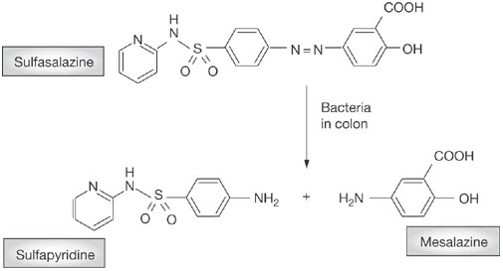
Inhibits leukotriene + prostanoid synthesis Scavenge free radicals (prevent them damaging cells) + decrease neutrophil chemotaxis (movement of neutrophil to site of infection) - effects on PPARy receptor Sulfasalazine metabolised to mesalazine Absorbed in small intestine but doesn’t reach colon
Function of Corticosteroids
Anti-inflammatory, immunosuppressive actions e. g. oral prednisolone e. g. budesonide - poorly absorbed so fewer systemic side effects Used to induce remission Enemas used for more distal/rectal inflammation e.g. predfoam
Function of Immunosuppressants
Aazathioprine + methotrexate inhibit purine synthesis + DNA synthesis Reduce inflammatory cell proliferation Azathioprine is converted to mercaptopurine (purine derivative) - inhibits purine synthesis Cyclosporine inhibits InterLeukin-2 induced gene expression • used in refractory disease
Describe TPMT activity
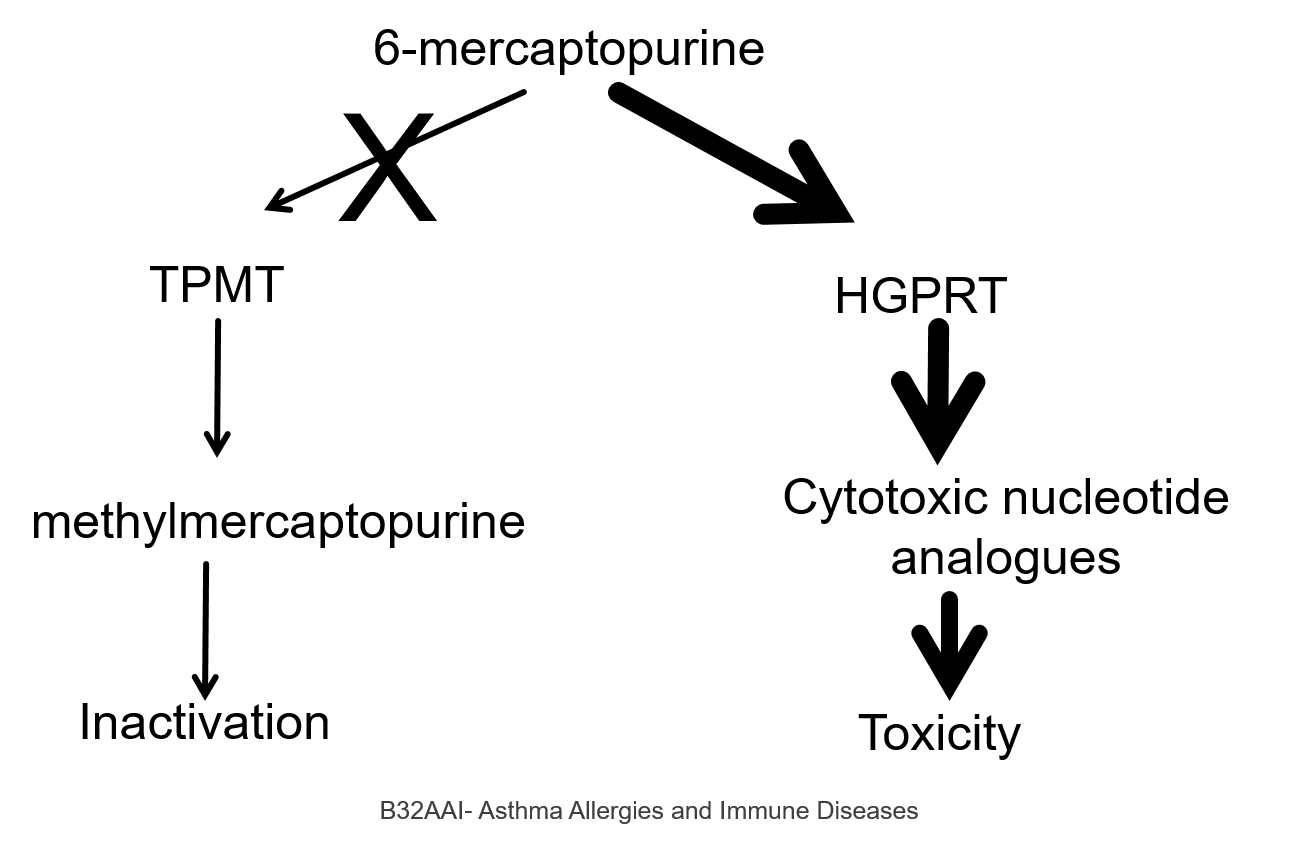
One way merceptopurine is metabolised is by Thiopurine methyltransferase Some patients have low TPMT Some patients have no TPMT (risk of drug-induced bone marrow toxicity) Some patients have high TPMT (risk of mercaptopurine resistance)
What is TNF-alpha
Tumour necrosis factor alpha or TNFα is a cytokine. Cytokines are substances released by the body during inflammation.
Function of anti-TNFalpha therapy
‘manufactured’ monoclonal antibody binds to TNFalpha + prevent from causing inflammation Neutralises inflammatory cytokine TNF-alpha • associated w/ TB risk (antibodies are peptides which will be broken down if given orally) Infliximab = infusion Adalimumab = injection
What is the nutrition therapy in Crohn’s?
Basic (elemental feeds) nutrition - can induce remission Reduce steroid use in severe Crohn’s Use parenteral support Small bowel removal - shortened bowel • reduce absorption • require nutritional support
Probiotics
Ulcerative colitis is caused by the upset of colonic bacteria
Treatment options to induce remission in Crohn’s
Monotherapy Add-on treatment Biological therapy/in severe active Crohn’s
Drugs used in monotherapy in Crohn’s
Using a conventional glucocorticosteroid • prednisolone • methylprednisolone • intravenous hydrocortisone Alternative = budesonide/5-ASA
Drugs used in add-on therapy in Crohn’s
First line = azathioprine or mercaptopurine to a conventional glucocorticosteroid or budesonide to induce remission of Crohn’s disease Second line = Methotrexate
Drugs used in biological therapy in Crohn’s
Infliximab/adalimumab
Counselling points on oral steroids
Taken once a day in the morning after food Avoid contact w/ people that have shingles, chickenpox or measles Carry steroid treatment card if taking oral corticosteroids for > 3 weeks Could have mood/behavioural changes Cannot stop abruptly Lifestyle recommendations to minimise side effects include: • adequate dietary intake • good nutrition • maintain normal body weight • smoking cessation • moderate alcohol consumption • physical exercise
Counselling points on 5-ASA
Long-term effects of turnover of cells Increased risk of bleeding, bruising, sore throat, fever, malaise (should be reported) Enteric-coated tablets should be swallowed whole Laxatives must be taken at least 2 hours before or after taking EC tablets Sulfasalazine may colour tears yellow + urine orange + contact lenses to change colour