HL Chapter 13 Exercise and Immunity
No description yet. This curated deck is ready for daily study.
Card preview (8)
overview of the immune system -3
• Protects the body from infectious disease. • Involved in tissue repair • Protection against potential pathogens (something that can cause you to get sick)
Physical components and their mechanisms the body uses in response to damage or infectious agent: (2)
• Skin / epithelial Protects external structures when intact (outer body areas) * Contains biochemical defense agents * chemicals and enzymes which block microbial growth on skin * Skin pH is roughly ~ 5.6 – 6.4 - kills pathogens • Mucus protects internal structures by trapping pathogens before they can get in –> the trachea, esophagus * Surface cells that release fluids to wash away pathogens –> mucus, saliva, tears, etc * May have cilia to aid in the removal of pathogens -> along with physical actions such as coughing / sneezing
soulable components and their mechanisms the body uses in response to damage or infectious agent: (8)
Soluble Factors (things dissolved in blood stream) • pH of blood / stomach –> Stomach acid kills many bacteria that enter through food –> The pH is too low for the pathogen to survive • Hormones • Inflammation –> Inflammation = Swelling due to an increase of fluid in and decrease of fluid out • Increase in temp of the area - can kills some pathogens –> protects the area (more cushion) –> isolates pathogen (can’t get out to rest of body) –> allows immune cells to reach the site of damage • Platelets –> Platelets allow for clots to form. These clots close cuts in the skin. Cuts are holes that pathogens can enter through. • Macrophages • Leukocytes • Lymphocytes / antibodies
Effects of intense and long term training on the immune system: (3)
• Prolonged exercise leads to muscle degradation –> Muscle tears • Cortisol is released as a response to exercise stress • Adrenaline is released as a response to exercise stress
how single intense workout impact immune system
improves the immune system and while triggering an immune response in muscles –> increase in leukocytes and swelling as a response to muscle damage
how prolonged intense training program impact the immune system - 6
• decrease in innate and adaptive immune functions • cortisol and adrenaline suppress the immune system • reason is a drop in leukocyte numbers compared to sedentary • drop in lymphocyte numbers (sub-type of leukocyte) Summary: * Multiple intense bouts of training decreases the immune system. * Moderate intensity training improves the immune system compared to sedentary.
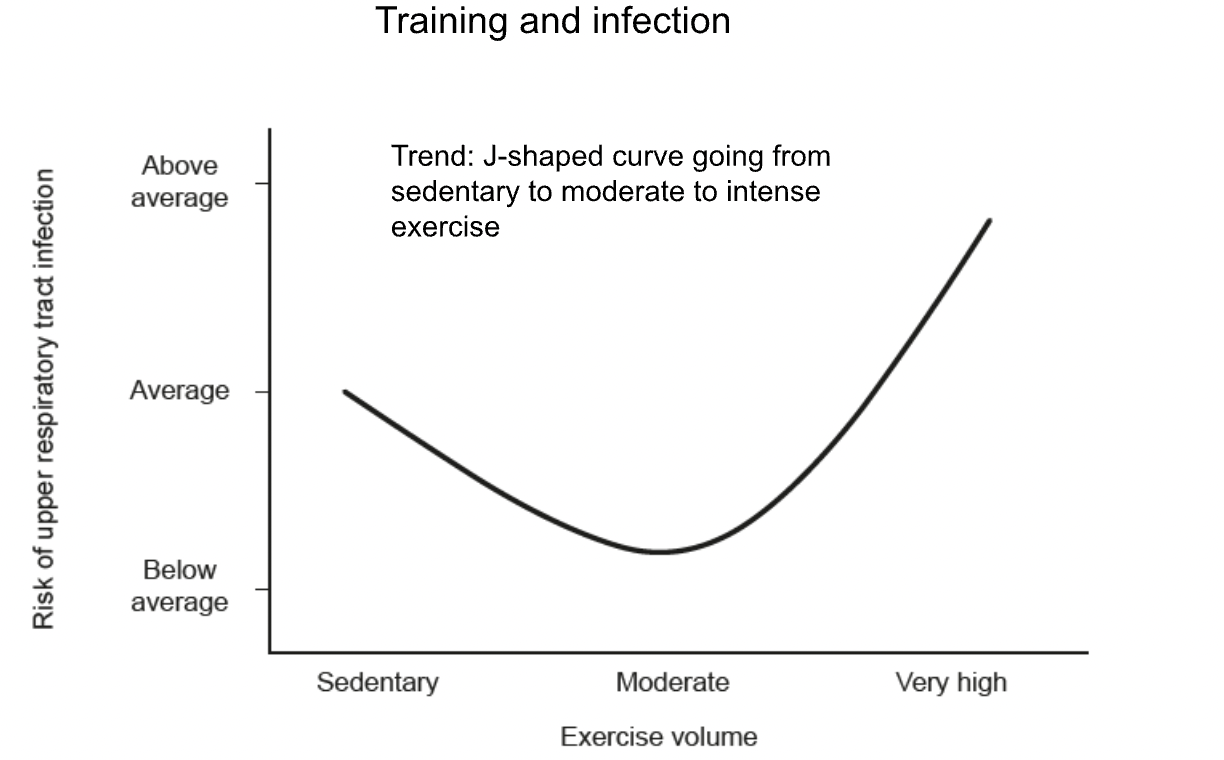
training and infection chart trend (4)
a j-shaped curve going from sedentary to moderate to intense exercise why: * Intense exercise inhibits the functioning of the immune system–> Less ability to fight off a disease * Moderate exercise improves the functioning of the immune system–> Better ability to fight off a disease * High intensity causes more frequent and larger breathes → higher chance of inhaling an airborne pathogen
strategies for minimizing risk from infection among athletes
(how to stop/reduce pathogens from getting in) * Incorporation of sufficient recovery time into training programmes. * Avoid close contact with people with infections. * Maintain oral hygiene. * Maintain hydration status. * Ensure water is pathogen-free. * Maintain good personal hygiene (for example, washing hands, avoiding hand-to mouth contact). * Maintain a suitable and varied diet. * Ensure sufficient sleep