Breathing regulation
No description yet. This curated deck is ready for daily study.
Card preview (9)
Regulation of breathing rate
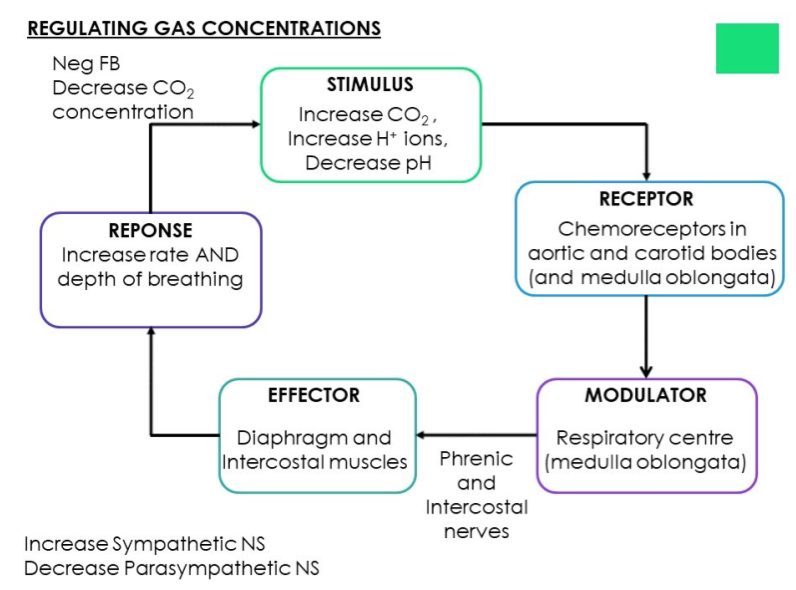
Respiratory centre in medulla oblongata control nerve impulses. Phrenic nerves stimulate diagphram. Intercostal nerves stimulate Intercostal muscles.
Controll of breathing
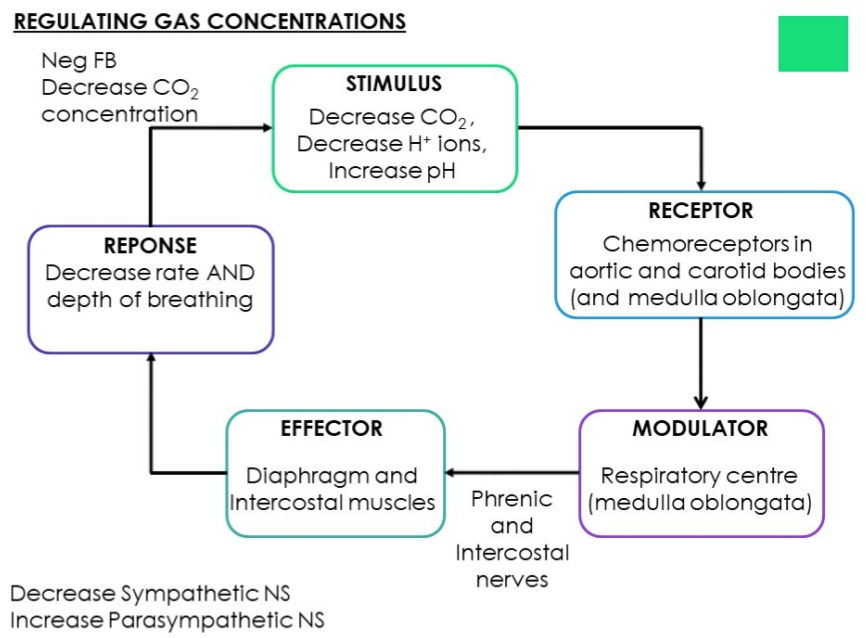
Breathing rate affected by O2, CO2 and H+ concentrations. CO2 concentrations directly affect H+ ion concentration. CO2 dissolves in water, forming carbonic acid (H2CO3) which breaks down to form H+ ions.
Chemorecpetors
Peripheral – Located in aorta and carotid arteries. Known as aortic and carotid bodies. Central – Located in medulla oblongata.
Concentration of oxygen
• O2 concentration falls, breathing rate increases. • Chemoreceptors transmit nerve impulses to respiratory centre when O2 decreases. Diaphragm and intercostal muscles are stimulated to contract -> Increase breathing rate. • CO2 concentration increasing significantly increases breathing rate. • Faster response from peripheral chemoreceptors when H+ ion concentration increases, due to faster stimulation of aorta and carotid bodies. Response from central chemoreceptors in medulla oblongata are slower.
Concentration of hydorgen ions
H+ ion concentration increases, pH decreases. Decrease in pH stimulates peripheral chemoreceptors in aortic and carotid bodies, then stimulates central chemoreceptors in respiratory centre to increase breathing rate.
Voluntry controll of breathing
Unconscious control of breathing rate. Connections from cerebral cortex to ascending tracts in S.C allows bypass of respiratory centre in medulla oblongata. Protective reflex (prevents irritating gases and water from entering lungs). Holding breath causes CO2 to build up and stimulate inspiratory centre (medulla) to stimulate inspiratory muscles to take a breath.
Hyperventilation
Rapid, deep breathing provides more oxygen than needed and remove more carbon dioxide. Can be voluntary or stimulated by physical or emotional stress. Usually corrects itself - low CO2 concentration means chemoreceptors are not stimulated, no urge to breathe in (until CO2 returns to normal levels).
Regulating gas concentration 1
Regulating gas concentration 2