Chapter 23 Redox And Electrodes Potentials
No description yet. This curated deck is ready for daily study.
Card preview (24)
how do manganate (VII) titrations work ?
• KMnO4 is an oxidising agent under acid conditions, reduced to Mn2+ - H+ is required to reduce the MnO4- • no indicator needed - MnO4- is purple and Mn2+ is colourless, the end point is the first pink colour • reading are taken from top of minuscus due to dark colour of KMnO4
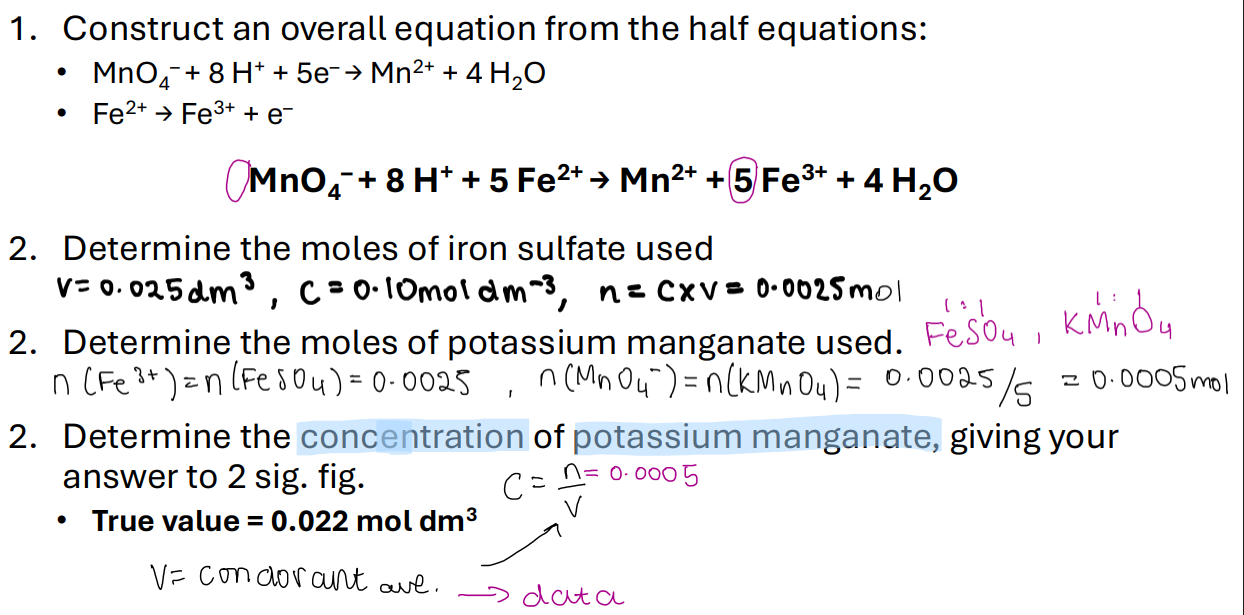
how to determine percentage purity of iron (II) in compound ? MnO4 titration
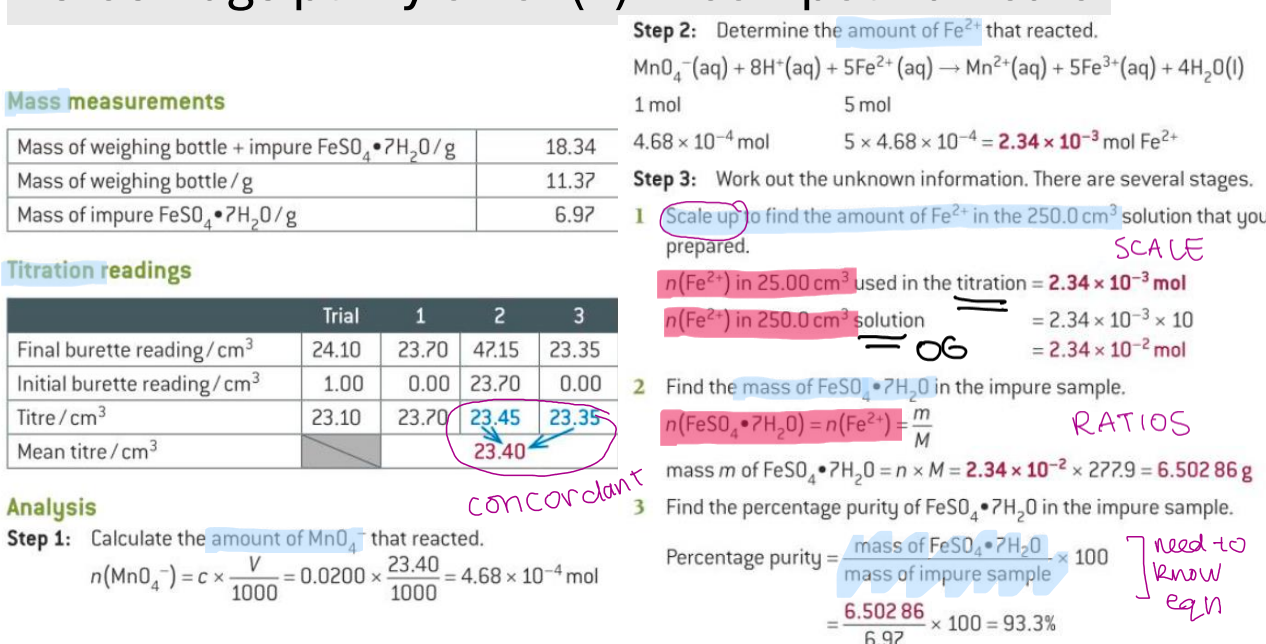
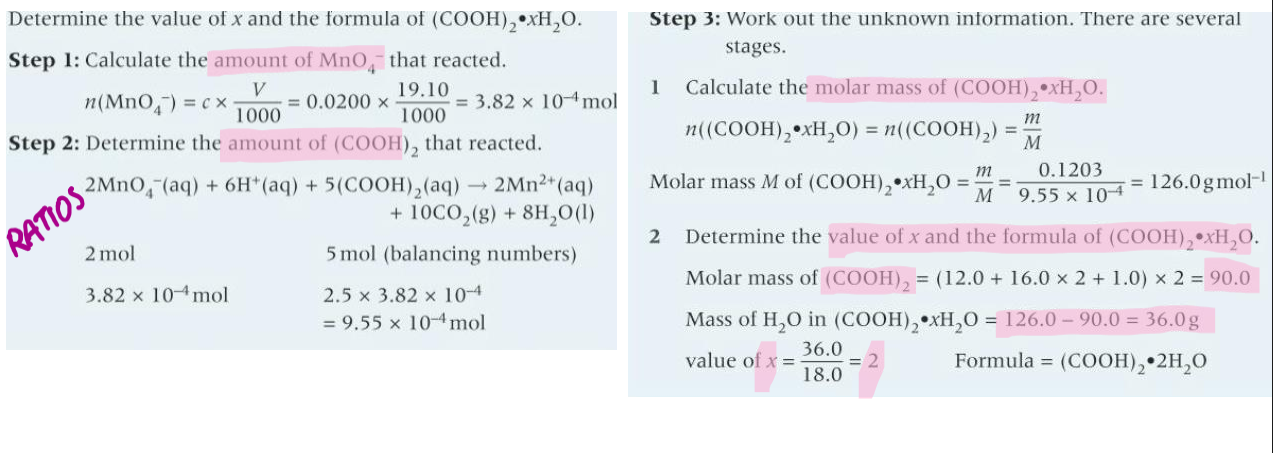
how to determine the formula of compound ? MnO4 titration
what are iodine/thiosulfate titrations used for ?
• used to determine the content of different oxidising agent: 1. ClO- in bleaches 2. Cu2+ compounds 3. Cu in alloys • iodine is reduced and thiosulfate is oxidised
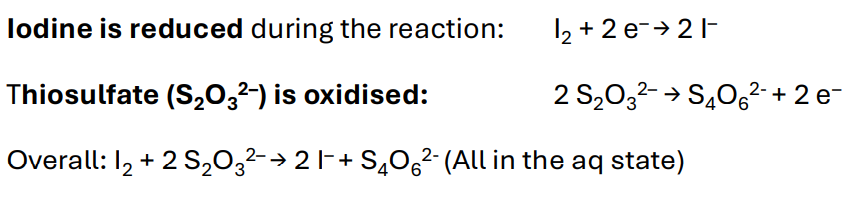
what is an iodine - thiosulfate reaction example ?
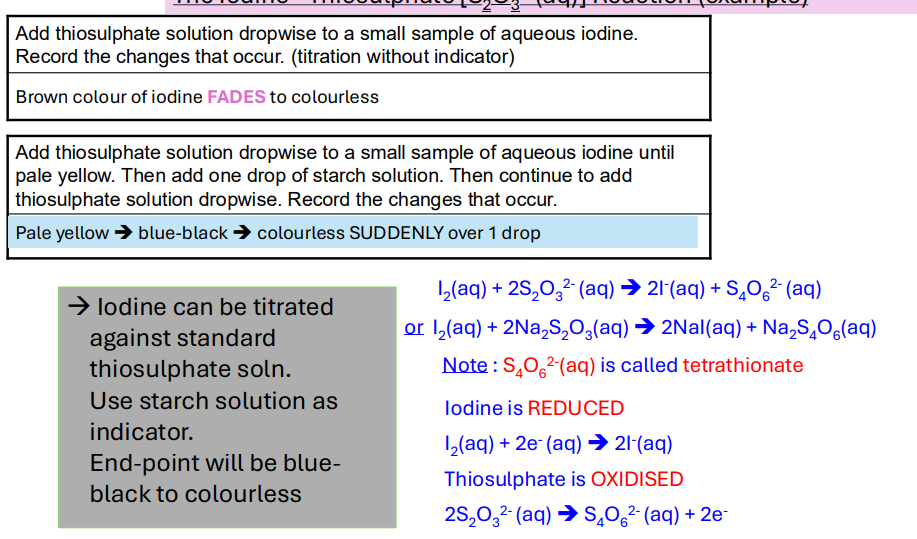
what is an iodine - thiosulfate titration example with chlorine ?
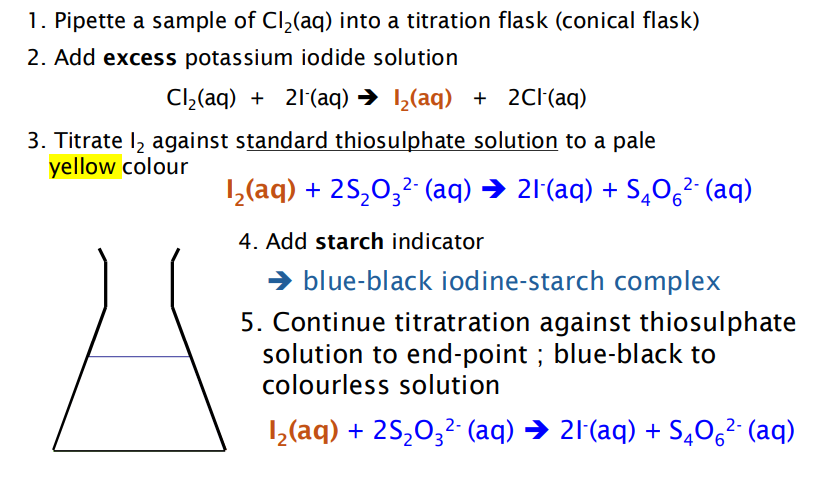
example of calculation with iodine thiosulfate reaction ?
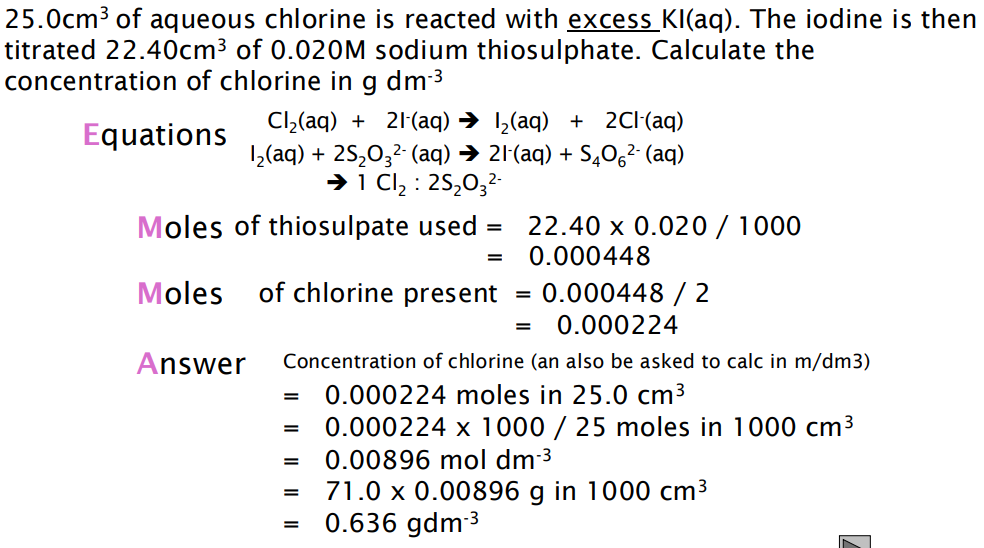
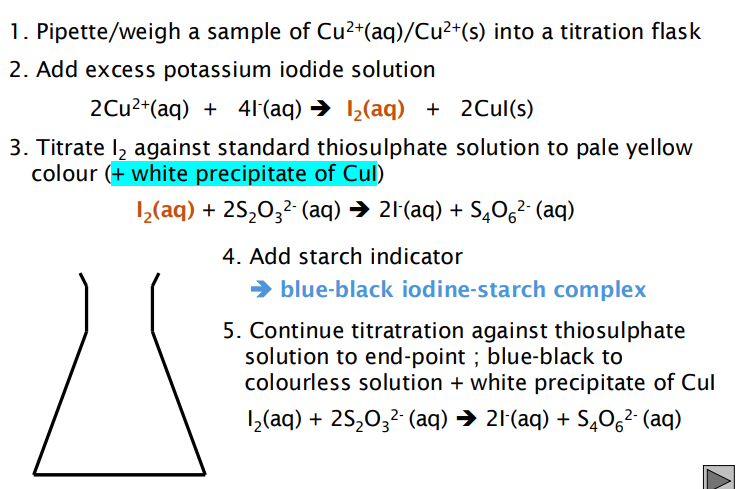
what is an iodine - thiosulfate titration example with Cu2+ ?
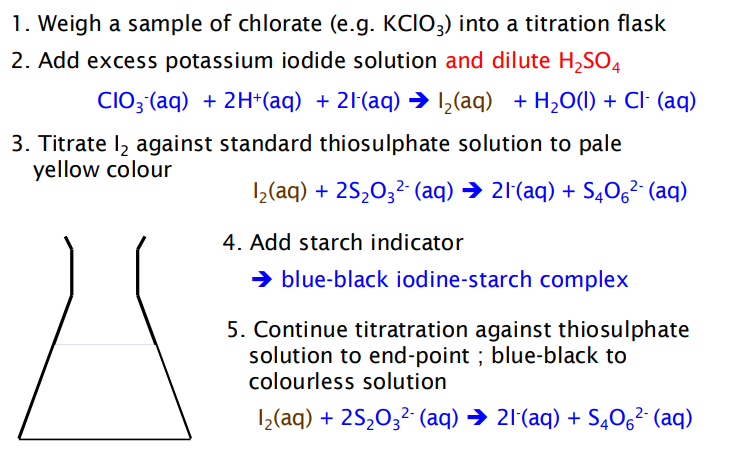
what is an iodine - thiosulfate titration example with chlorate ClO- ?
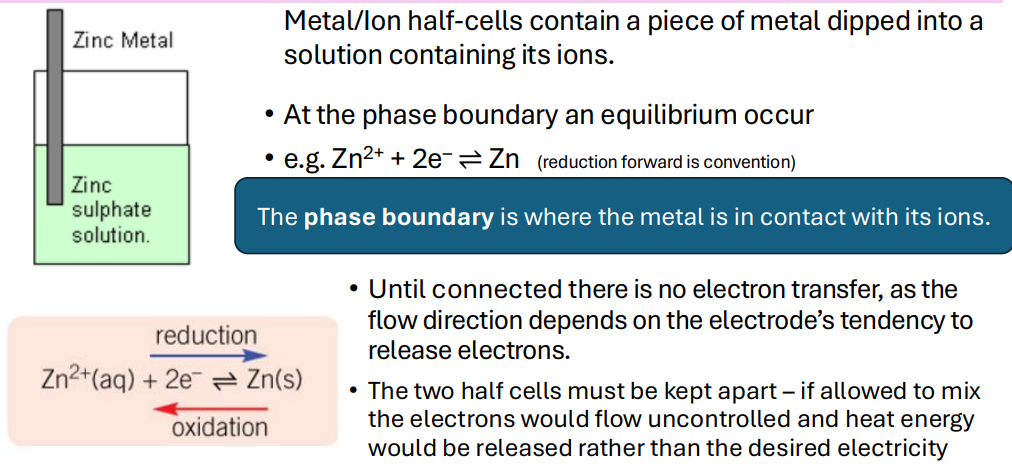
what is a metal/metal ion half-cell ?
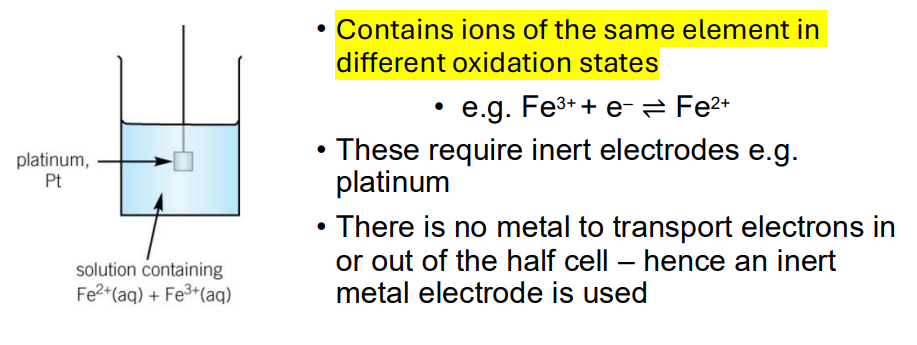
what is a ion/ion half-cell ?
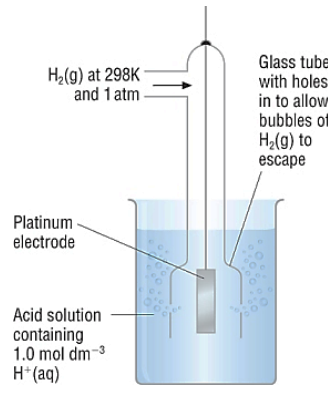
what is the standard electrode potential ?
• the standard electrode potential is the voltage of a half-cell connected to a standard hydrogen halfcell under standard conditions - 298k, 1 M and 100KPa
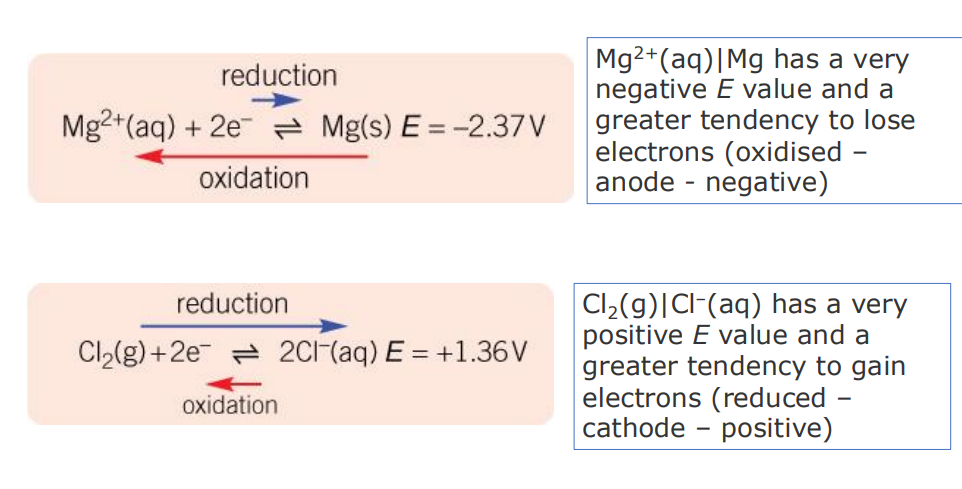
what do different E values show ?
• more negative values **tend to lose electrons (oxidation) ** • more positive values tend to gain electrons (reduction)
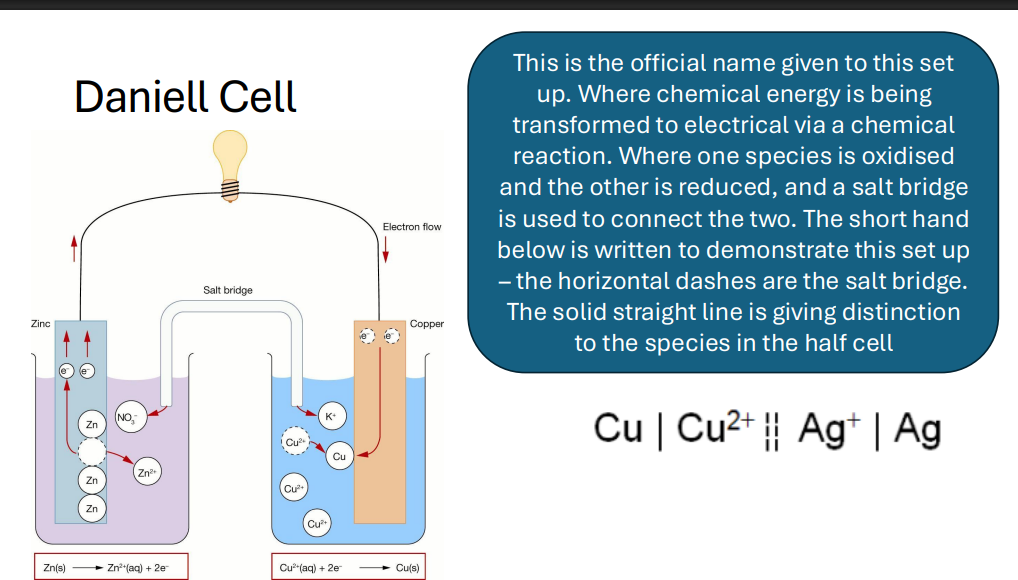
what is a Daniell cell ?
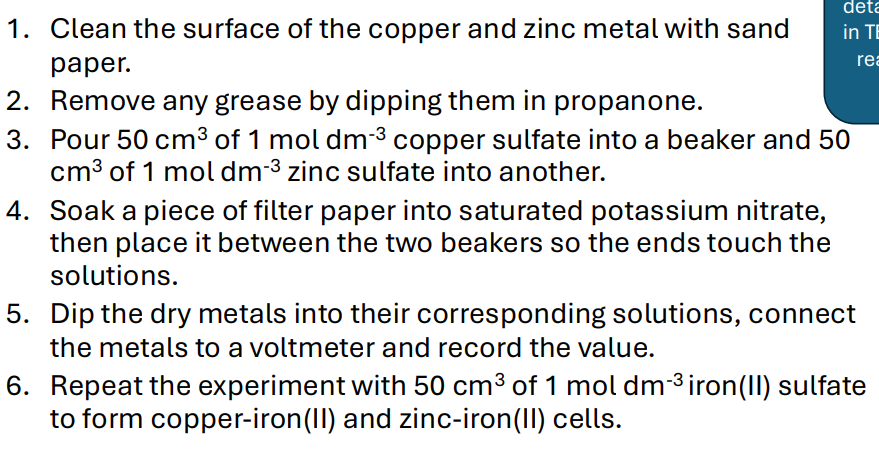
how to measure cell potentials ?
what are cell potentials ?
• cell-potential can be calculated fromm half-cell potentials:

how to tell if a reaction is feasible ?
• a reaction will occur if oxidising agent has a more positive E value than the redox system of the reducing agent • reducing agents react with all oxidising agents below them (more positive) • oxidising agents react will all reducing agents above them (less positive)
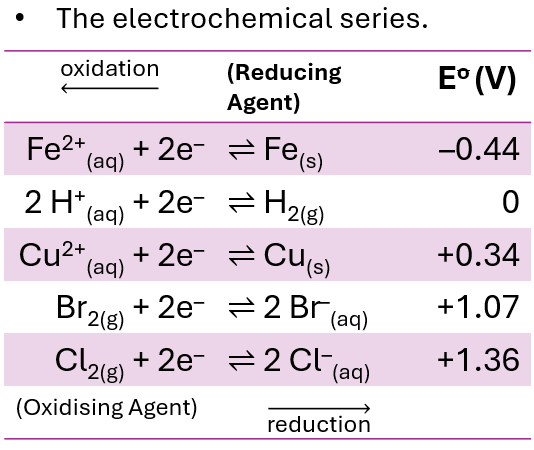
what is the electrochemical series convention ?
• the strongest reducing agent is at the top right • the strongest oxidising agent is at the bottom left
what are the limitations when making predictions with E values ?
• reactions will take place is the difference between E values is large - but if les than 0.4V it is unlikely • non-standard conditions will alter E values • Half-equations are equilibria so changes in concentration will shift position and alter electron transfer • reaction rate may be slow, EP may indicate thermodynamic feasablity but no indication of rate • not all reactions are in aqueous solutions
what are the 2 types of cells ?
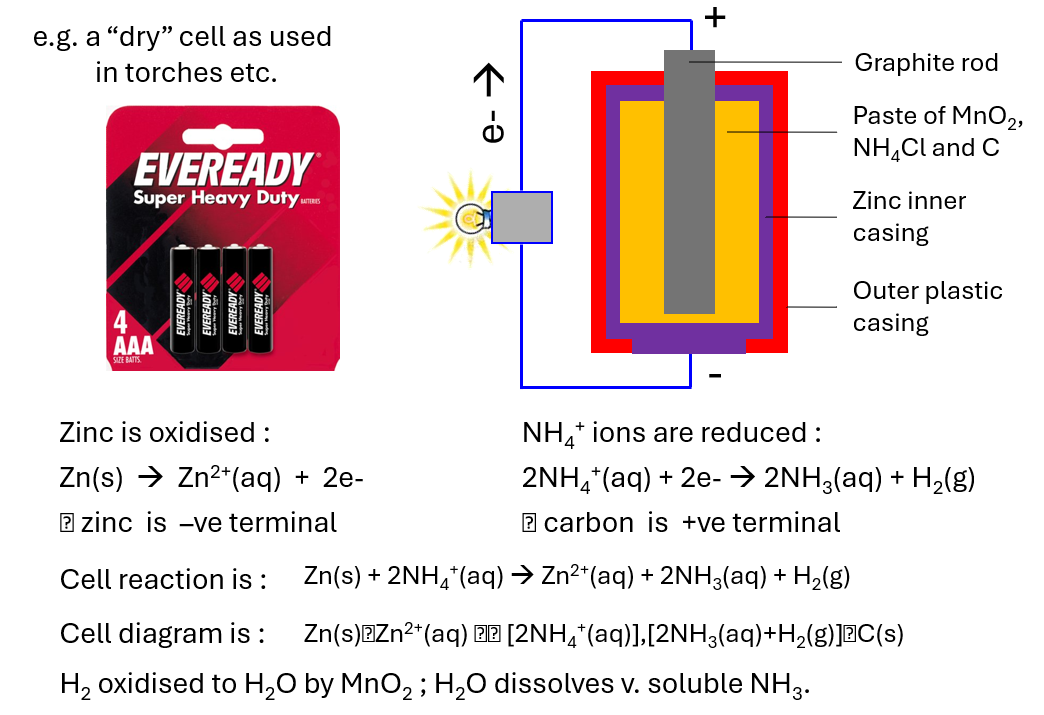
• primary cells - which cannot be recharged - the dry cell • secondary cells - which can be recharged - the lead acid accumulator
how do primary cells work ?
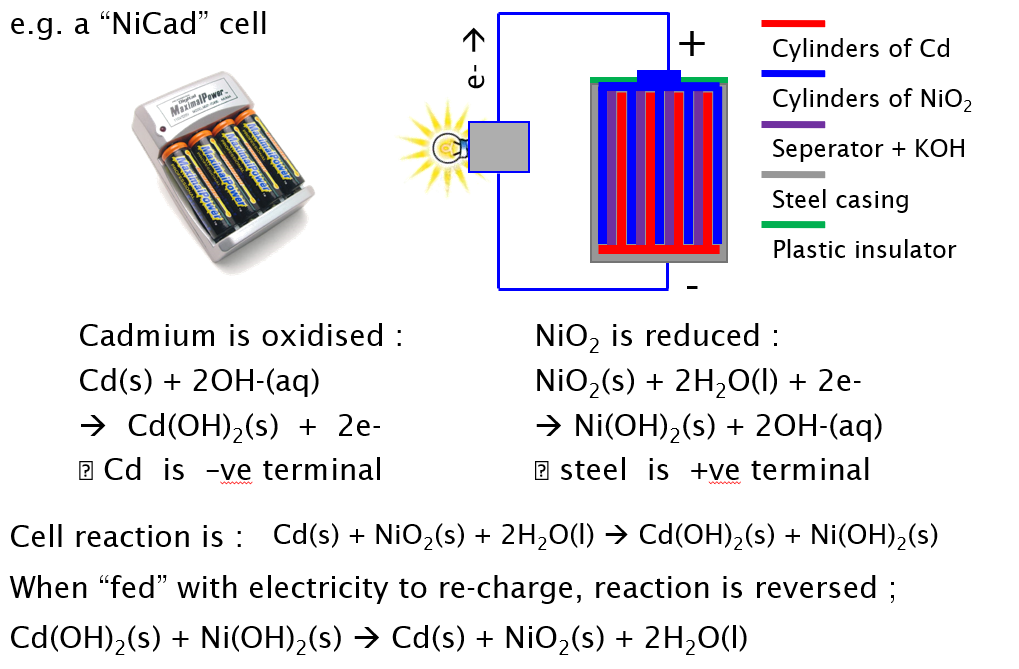
how do secondary cells work ?
• originally contain the products of a spontaneous redox reaction • electrecity is used to convert these products to reactants which react back to original products to produce electricity on demand • this process will eventually detoriate
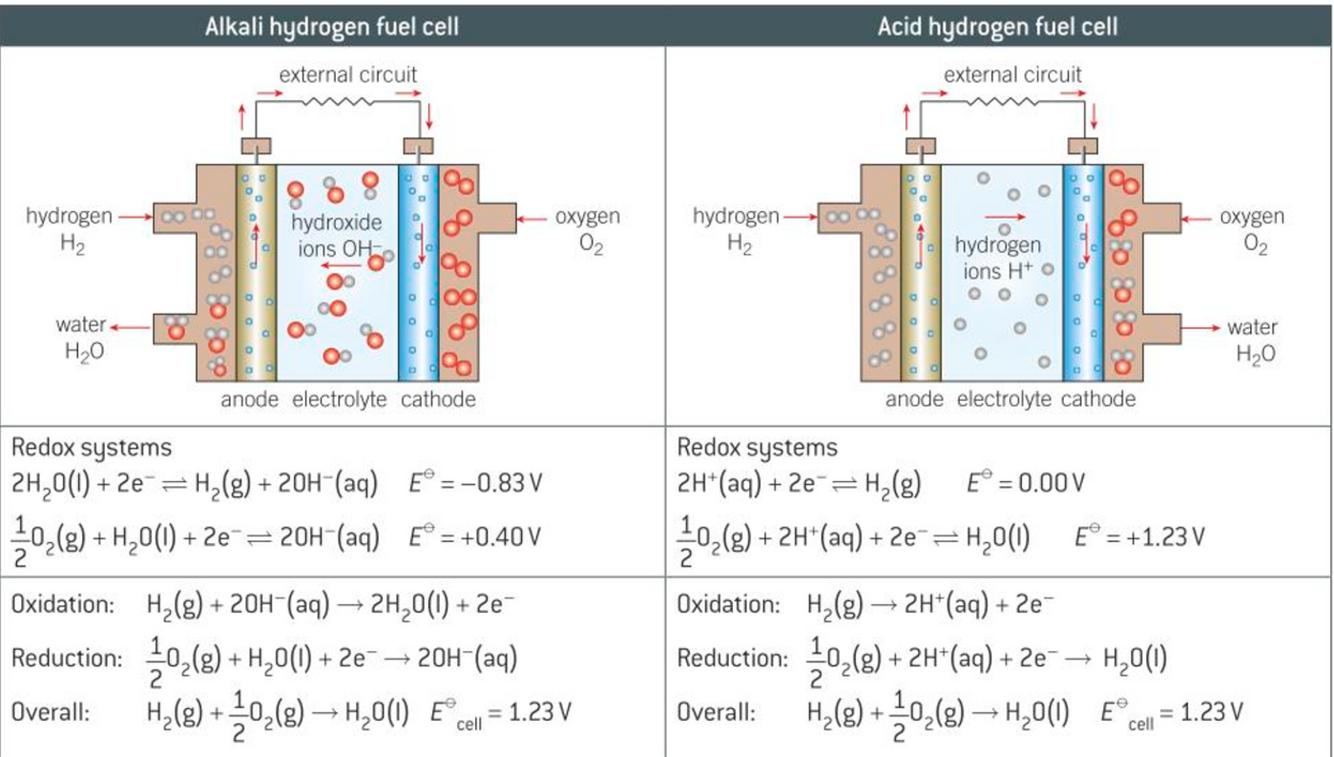
what are fuel cells ?
• fuel cells - cells in which the reactants are continously supplied and the products are continously removed • they produce a voltage directly from reaction of a fuel with oxygen • e.g Hydrogen-oxygen fuel cell • these are much more efficient than burning the fuel, using the heat to generate steam and then using that to turn a generator
hydrogen - oxygen fuel cell diagram