Bio Quiz: Respiratory, pH, and buffers
No description yet. This curated deck is ready for daily study.
Card preview (24)
Buffer
• weak acids or bases that can resist sudden changes in pH and keep it close to neutral.
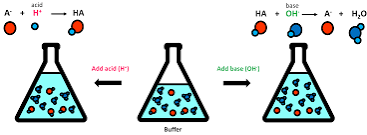
Another picture to help understand buffers
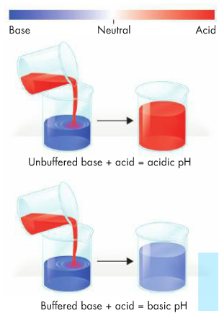
pH
a measure of how acidic or basic a solution is.
regular pH level?
7
if pH is higher than 7?
basic
pH is lower than 7?
acidic
logarithmic
as you move up or down the pH scale, the solution becomes 10X stronger or weaker.
how does water contribute to the pH of a substance?
it dissociates into hydrogen and hydroxide ions.
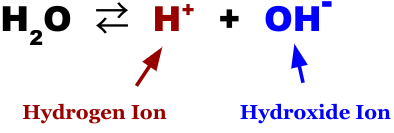
what type of ions are in acidic solutions?
higher concentration of H+ ions than OH- ions
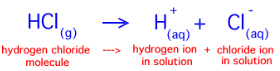
in basic solutions, which type of ions is at a higher concentration? (which does it have more of?)
there’s a higher concentration of OH- ions than there is H+ ions
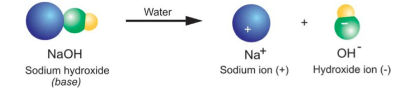
what is the equation when the solution is neutral?
H2O → H+ + OH- (H+= OH-)
what is the ratio of ion types in neutral solutions?
it is equal. There is an equal amount of H+ ions and OH- ions.
when will cellular reactions NOT occur?
when the cell is too acidic or too basic
what do buffers help do?
buffers help prevent cellular reactions from NOT occuring. basically helps it happen when an acid or base is introduced
ok this is sm help, this is my CER, so don’t copy me, but idk if we r supposed to know this. I’m just gonna add it cuz its the respiratory system and maintaining homeostasis and all that stuff. feel free to add ur CER
Changes in breathing and heart rate during exercise demonstrate our body maintaining homeostasis because heart rate controls the flow of blood, which is where oxygen and carbon dioxide are carried throughout the body.
how does co2 and o2 help when excersizing? why do we need it to maintain homeostasis?
• cells need oxygen • we inhale oxygen • carbon dioxide is waste from cells • we exhale carbon dioxide • when we pick up out breathing rate, we also pick up our heart rate, so the two working at a fast pace is maintain homeostasis in itself • we need a faster breathing rate when exercising because cells need oxygen more and faster because it helps in cellular respiration and cells creating more energy, which is what we need when exercising
the path of air from the nose to the alveoli:
nose → pharynx → larynx → trachea → bronchi → lungs → alveoli → diaphragm
function of Nose
warms, moistens, and filters air as it comes into the body
the function of the Pharynx
passageway for air and food
Larynx function
contains vocal cords that vibrate when air moves through them, which allows us to speak
Trachea function
tube that connects the larynx and the bronchi or the lungs. It also brings air in and out of the lungs for respiration
Bronchi function
deliver air to lungs, regulate air passageways by contractingBronchi function and relaxing
Lungs
serves to protect the heart, provides a space for oxygen and carbon dioxide gas exchange
Alveoli function
gas exchange happens here because they are touching the capillaries, oxygen diffuses through their walls into the red blood cells