3.1 Introduction To Organic Chemistry
No description yet. This curated deck is ready for daily study.
Card preview (23)
Functional Group, Prefix / Suffix, and Example of Alkenes:

Functional Group, Prefix / Suffix, and Example of Alcohols:

Functional Group, Prefix / Suffix, and Example of Haloalkanes:

Functional Group, Prefix / Suffix, and Example of Aldehydes:

Functional Group, Prefix / Suffix, and Example of Ketones:

Functional Group, Prefix / Suffix, and Example of Carboxylic Acids:

Functional Group, Prefix / Suffix, and Example of Nitriles:

Functional Group, Prefix / Suffix, and Example of Amines:

Functional Group, Prefix / Suffix, and Example of Esters:

What is A Skeletal Formula?
• Shows the simplified organic formula, shown by removing hydrogen atoms from alkyl chains • leaving just a carbon skeleton and associated functional groups.

What are Straight-Chain Organic Molecules?
Straight-chain organic molecules are those in which the carbon atoms are connected to each other in one continuous chain Pentane is a straight-chain organic molecule as the carbon atoms are connected in one continuous chain
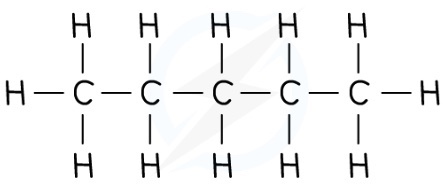
What are Branched Organic Molecules?
Branched organic molecules have side groups attached to the main chain of carbon atoms 2-methylbutane is a branched organic molecule as the main chain (consisting of 4 carbon atoms) has a methyl branch
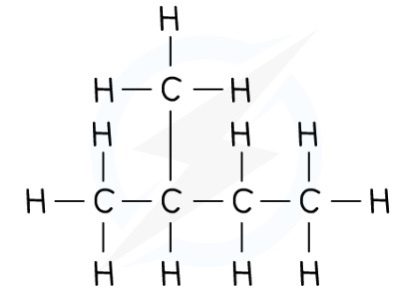
What are Cyclic Organic Molecules?
Cyclic organic molecules are those in which the carbon atoms are connected to each other in a ring shape Cyclopentane is a cyclic organic molecule as the carbons are attached to each other in a ring structure
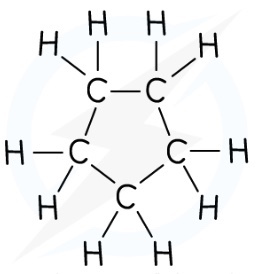
What are Structural Isomers?
Structural isomers are compounds that have the same molecular formula but different structural formulae E.g. propene and cyclopropane
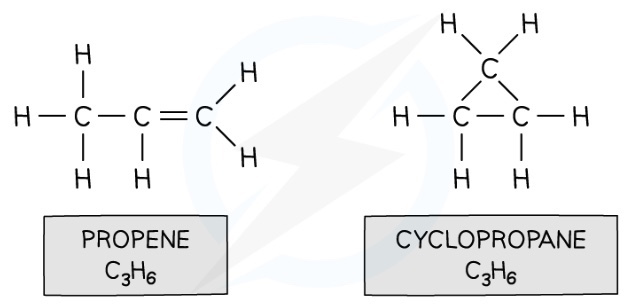
What are the the three different types of Structural Isomers
• Chain isomerism • Positional isomerism • Functional group isomerism
What is Chain Isomerism?
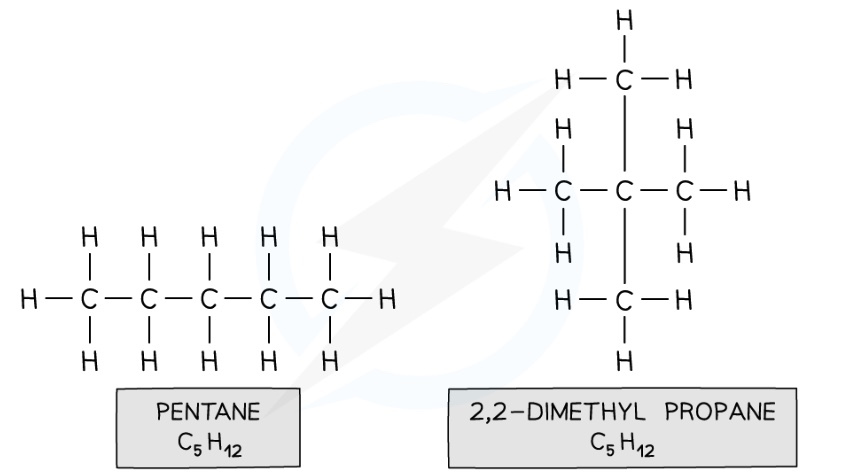
• Chain isomerism is when compounds have the same molecular formula, but their longest hydrocarbon chain is not the same • This is caused by branching E.g. pentane and 2,2-dimethylpropane Both compounds are made up of the same atoms, however the longest carbon chain in pentane is 5 and in 2,2-dimethylpropane it is 3 (with two methyl branches)
What is Positional Isomerism?
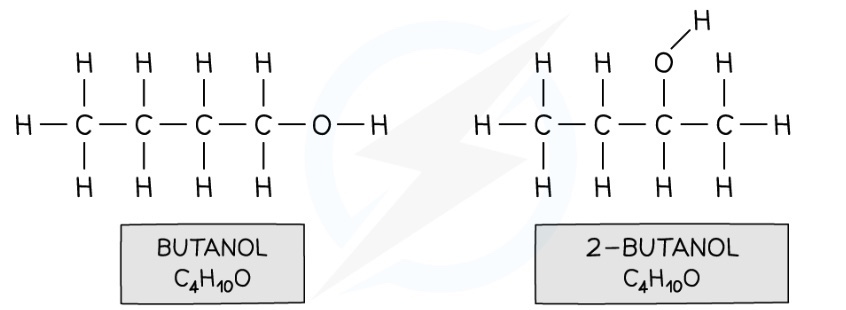
• Positional isomers arise from differences in the position of a functional group in each isomer • The functional group can be located on different carbons • For example, butan-1-ol and butan-2-ol Both compounds have an alcohol group and are made up of 4 carbons, 10 hydrogens and one oxygen, however in butanol the functional group is located on the first carbon and in 2-butanol on the second carbon
What is Functional Group Isomerism?
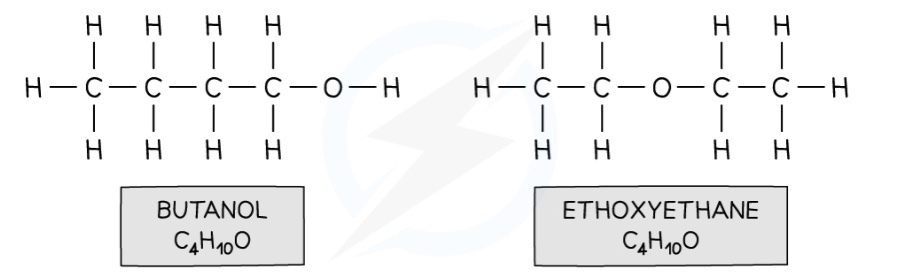
• When different functional groups result in the same molecular formula, functional group isomers arise • The isomers have very different chemical properties as they have different functional groups • For example, butanol and ethoxyethane Both compounds have the same molecular formula however butanol contains an alcohol functional group and ethoxyethane an ether functional group
How can we deduce all possible isomers for organic compounds knowing their molecular formula?
• Step 1: Draw the structural formula of the compound • Step 2: Determine whether it is a stereo or structural isomer • Step 3: Determine whether it is a functional group, chain or positional isomerism
What are Sterioisomers?
Stereoisomers are compounds that have the same atoms connected to each other, however the atoms are differently arranged in space • Molecules with the same structural formula • But the atoms are arranged differently in space
What is E/Z Isomerism?
• E/Z nomenclature is used to distinguish between the isomers • Z isomers have functional groups on the same side of the double bond/carbon ring • E isomers have functional groups on opposite sides of the double bond/carbon ring • To discuss E / Z isomers, we will use an alkene of the general formula C2R4: • You may see this type of isomerism referred to in other sources as cis/trans isomerism • This is a special case of E/Z isomerism • A “cis” isomer would essentially be the same as a “Z” isomer and a “trans” isomer would also essentially be the same as an “E” isomer
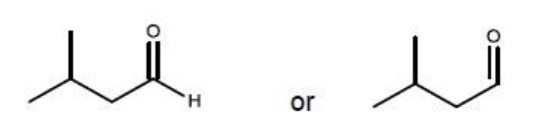
Draw the skeletal formula of 3-methylbutanal (1)
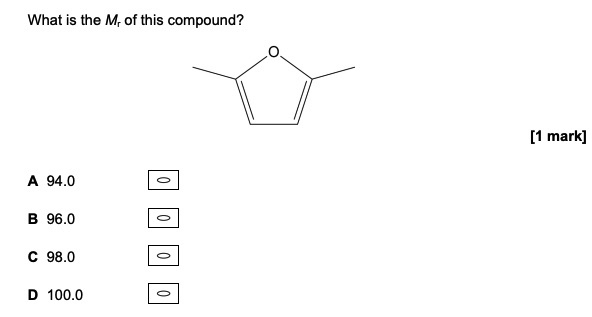
B - 96