Ch6- Shapes of Molecules
No description yet. This curated deck is ready for daily study.
Card preview (23)
Explain the Electron Pair Repulsion Theory:
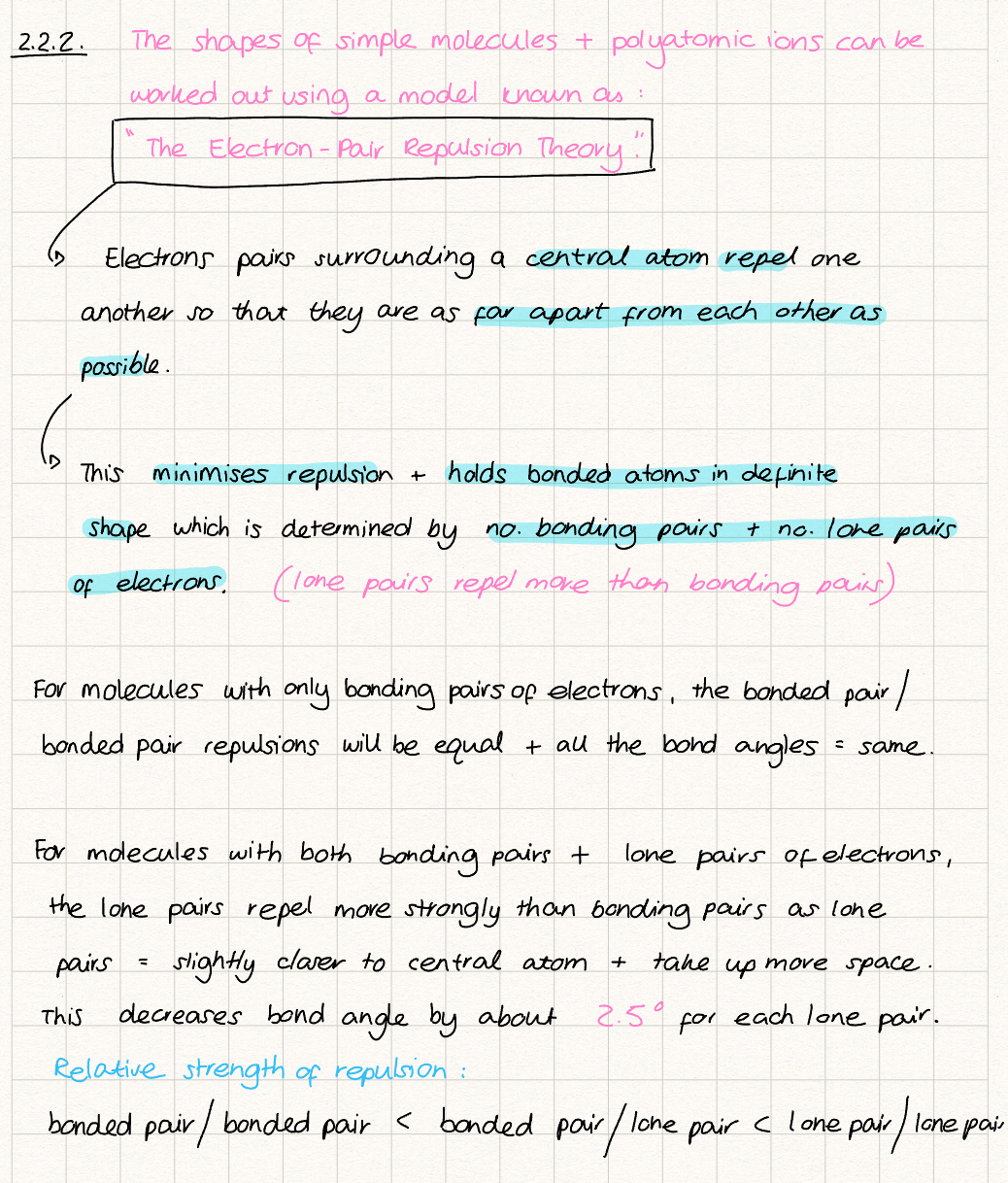
What is the bond angle and shape for a molecule with: 2 bonding pairs, and 0 lone pairs?
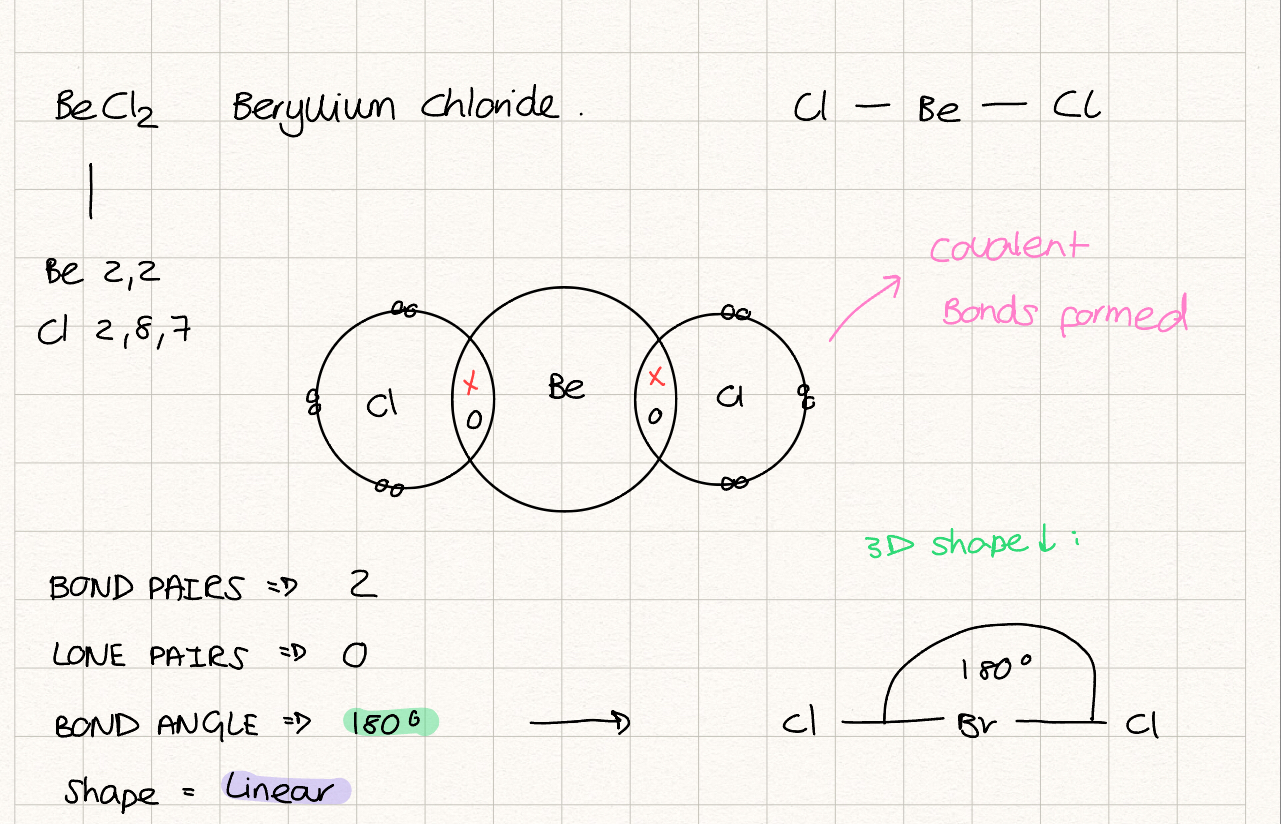
What is the bond angle and shape for a molecule with: 3 bonding pairs, and 0 lone pairs?
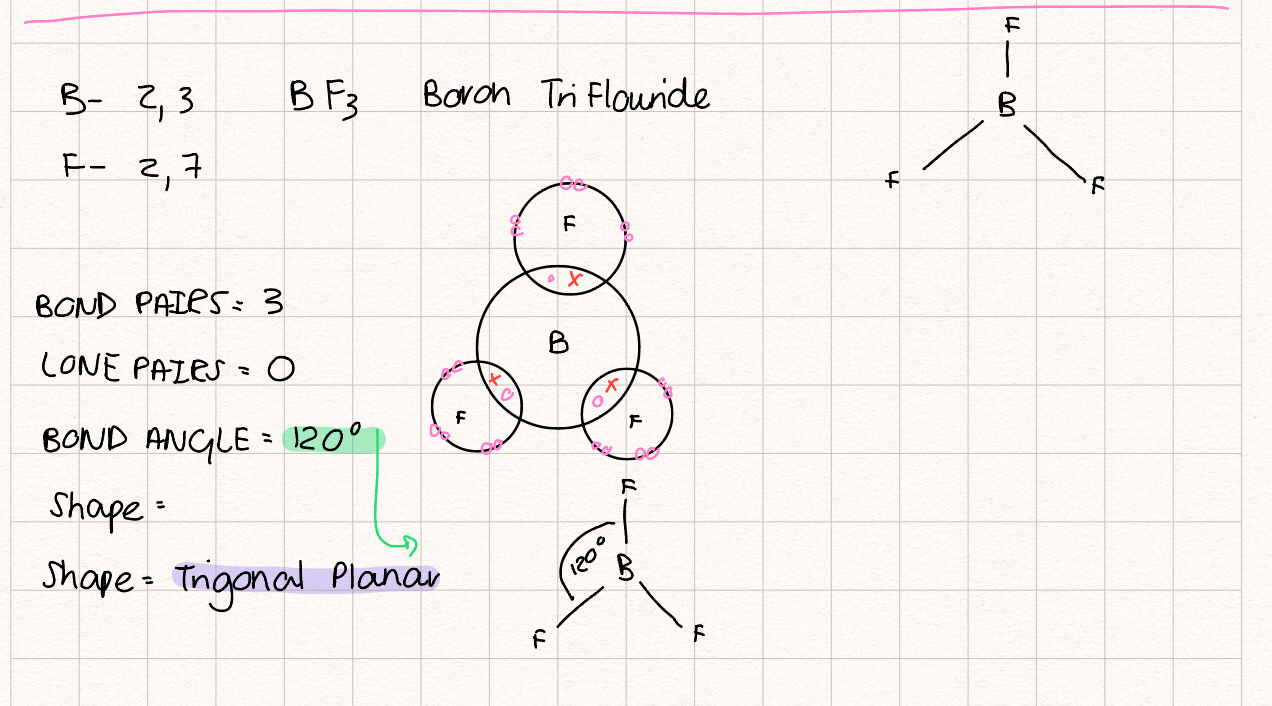
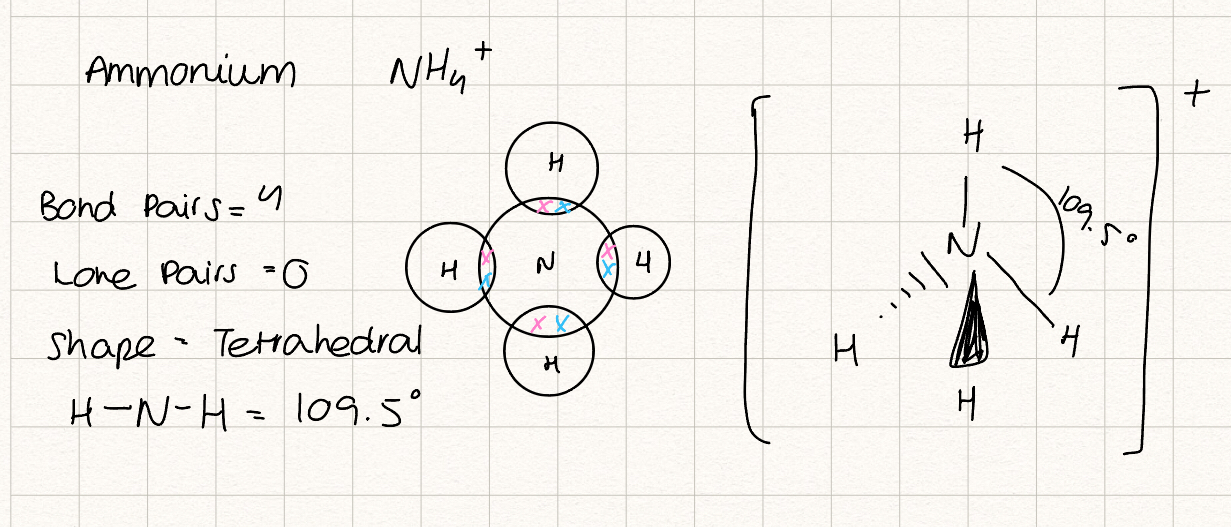
What is the bond angle and shape for a molecule with: 4 bonding pairs, and 0 lone pairs?
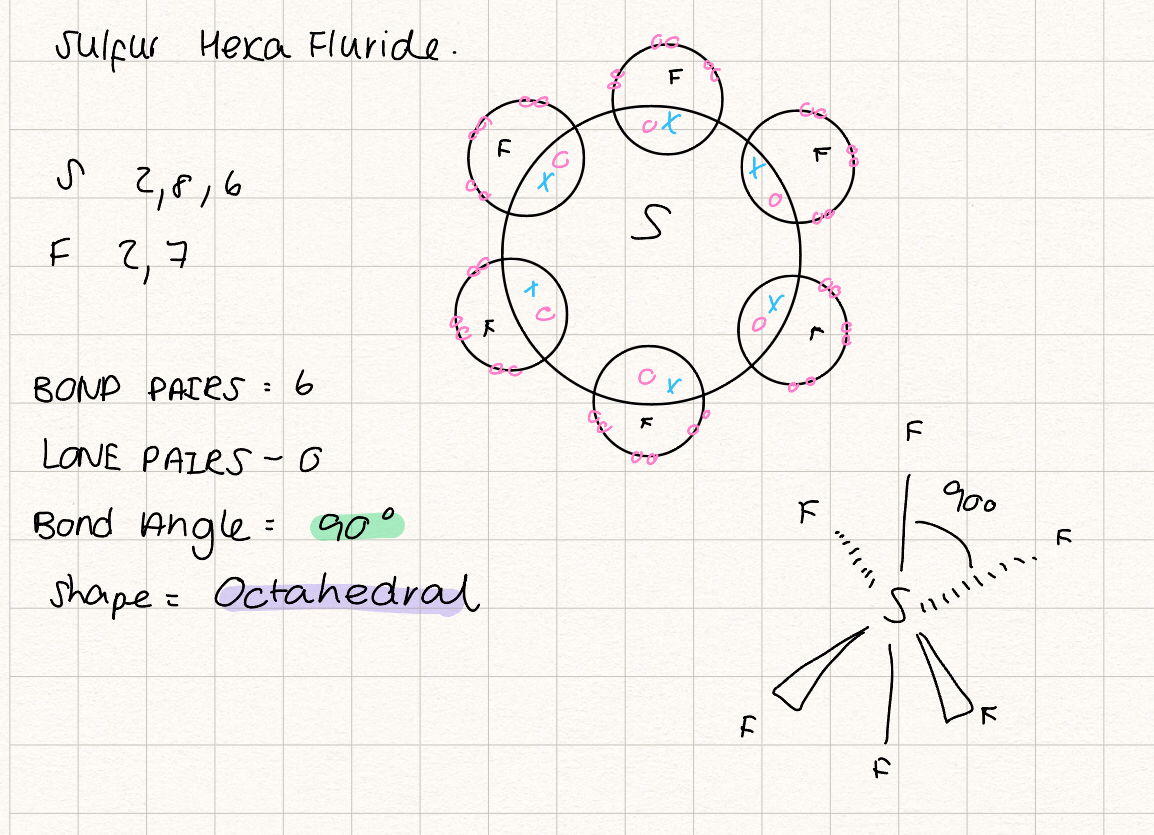
What is the bond angle and shape for a molecule with: 6 bonding pairs, and 0 lone pairs?
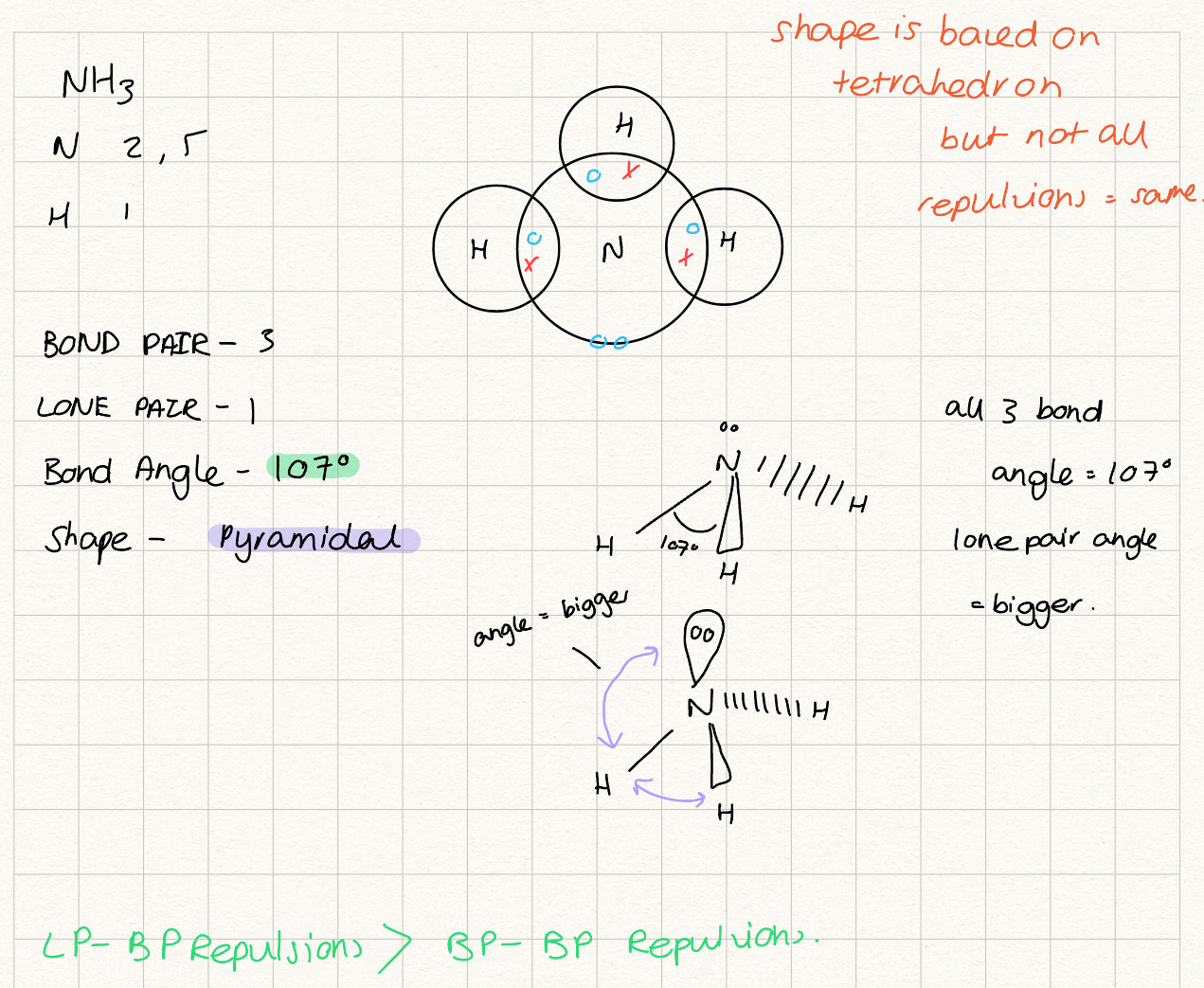
What is the bond angle and shape for a molecule with: 3 bonding pairs, and 1 lone pairs?
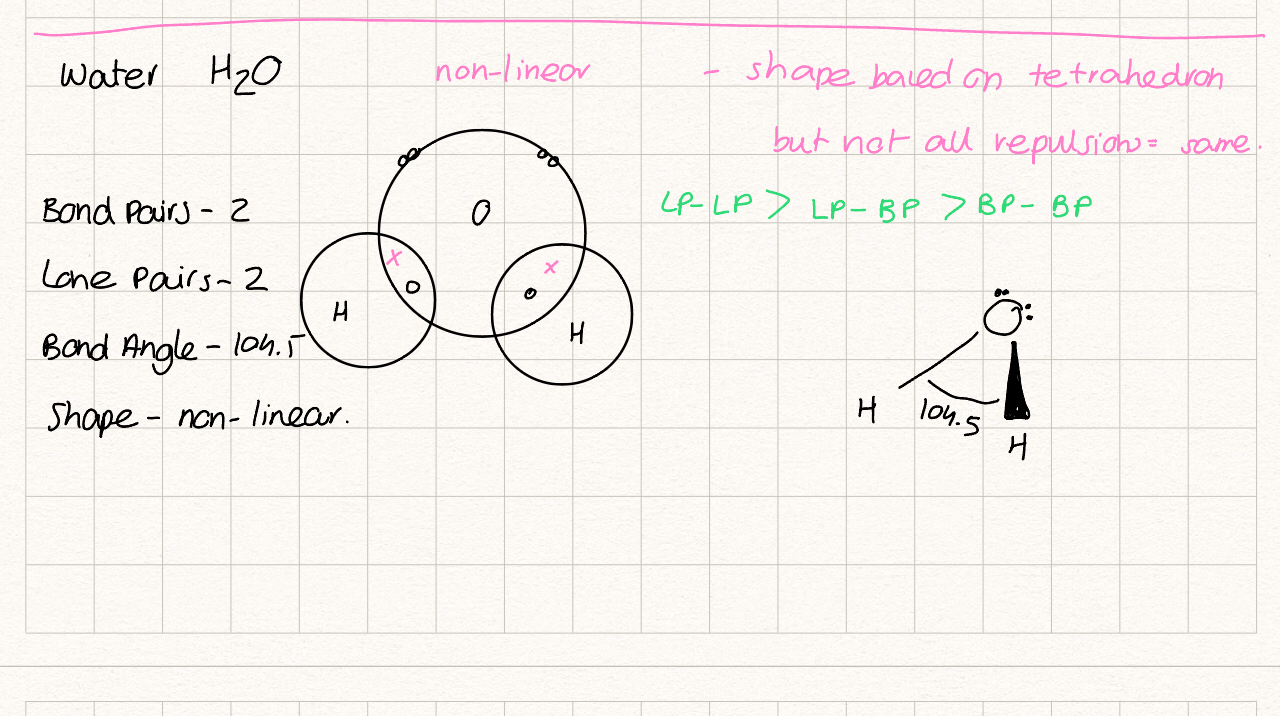
What is the bond angle and shape for a molecule with: 2 bonding pairs, and 2 lone pairs?
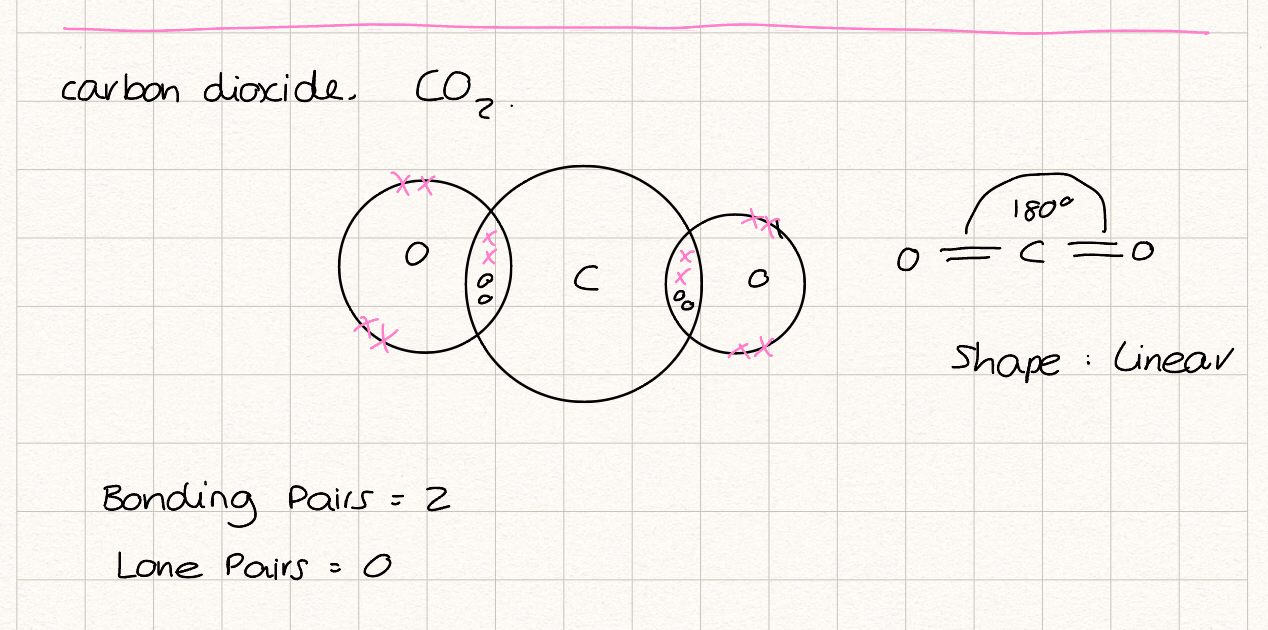
What is the bond angle and shape for a molecule with: 2 bonding pairs, and 0 lone pairs?
What is the bond angle and shape for a molecule with: 4 bonding pairs, and 0 lone pairs?
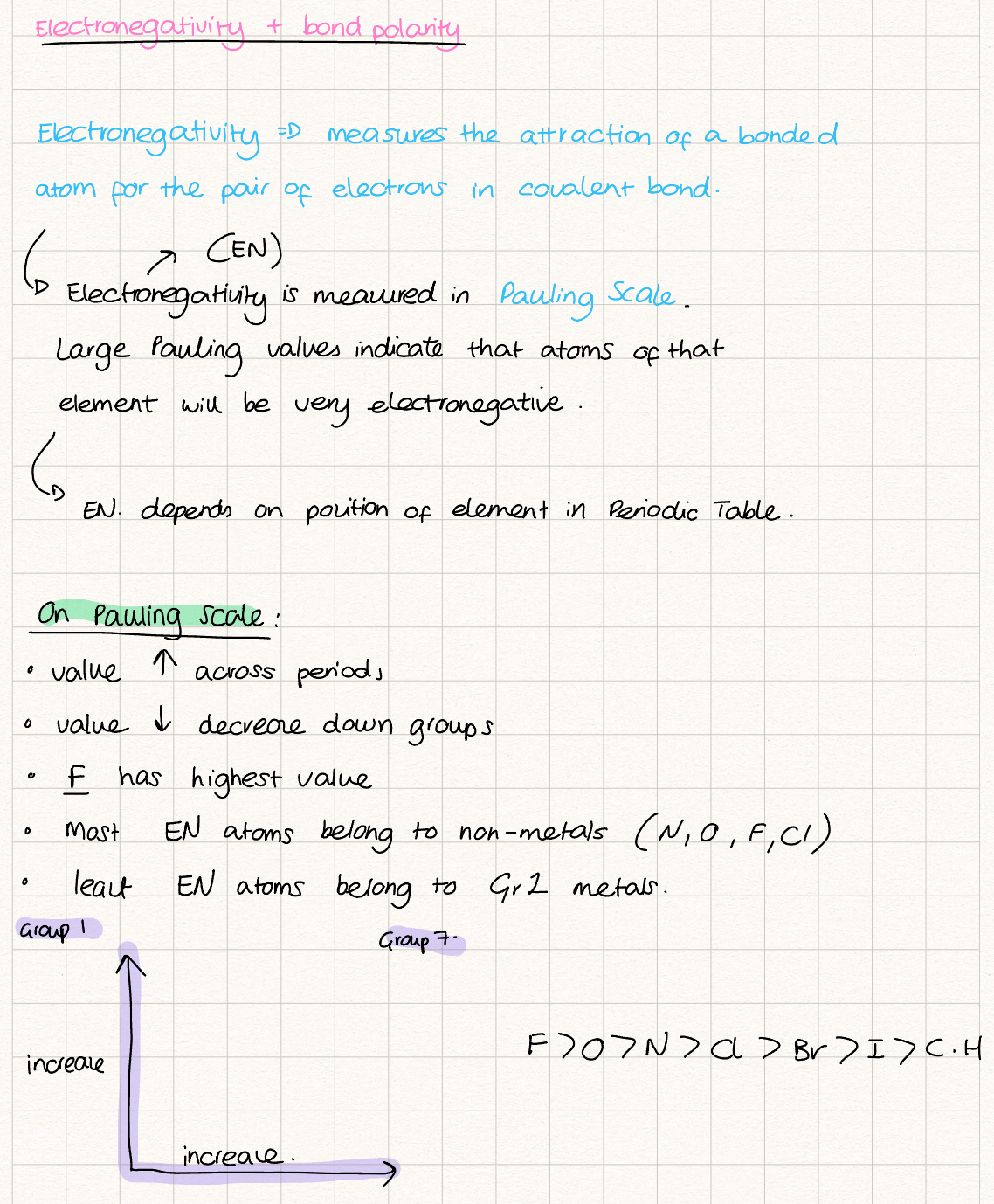
What is electronegativity?
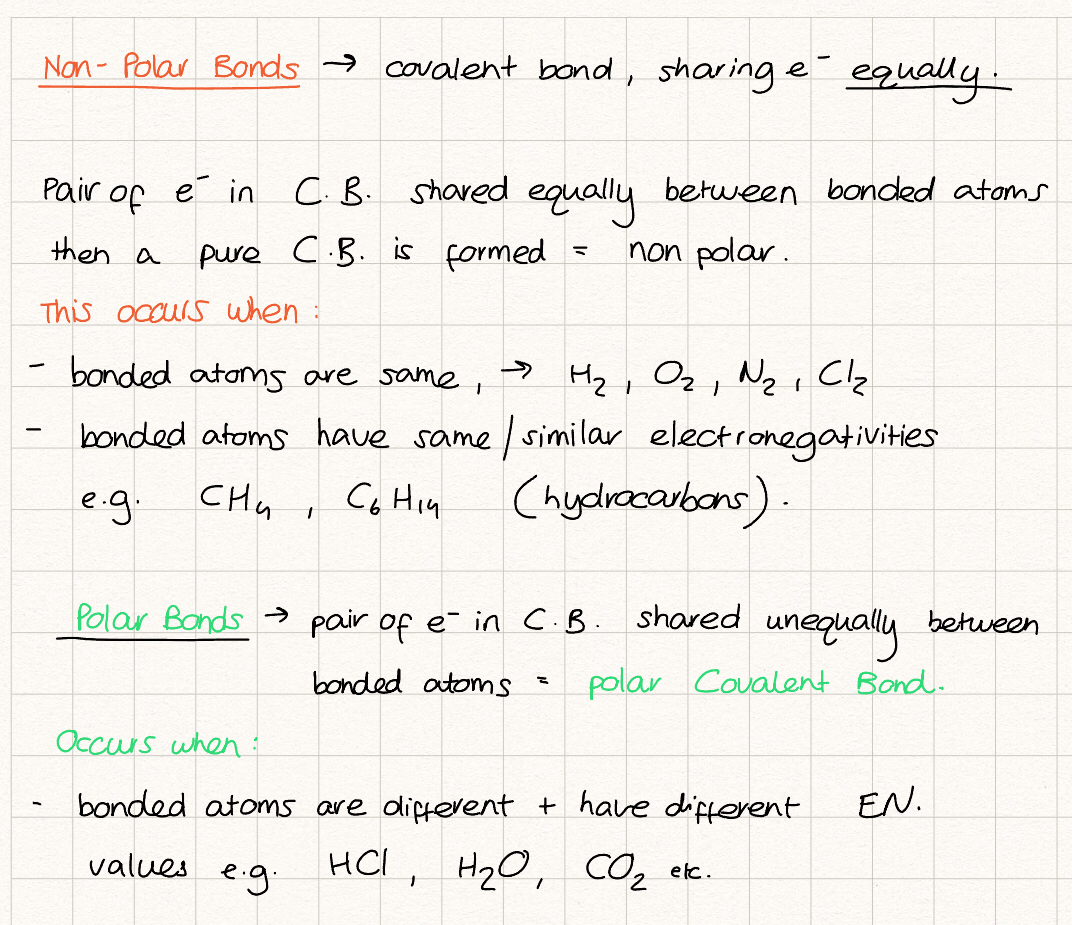
In terms of electronegativities, what is the difference non-polar bonds and polar bonds?
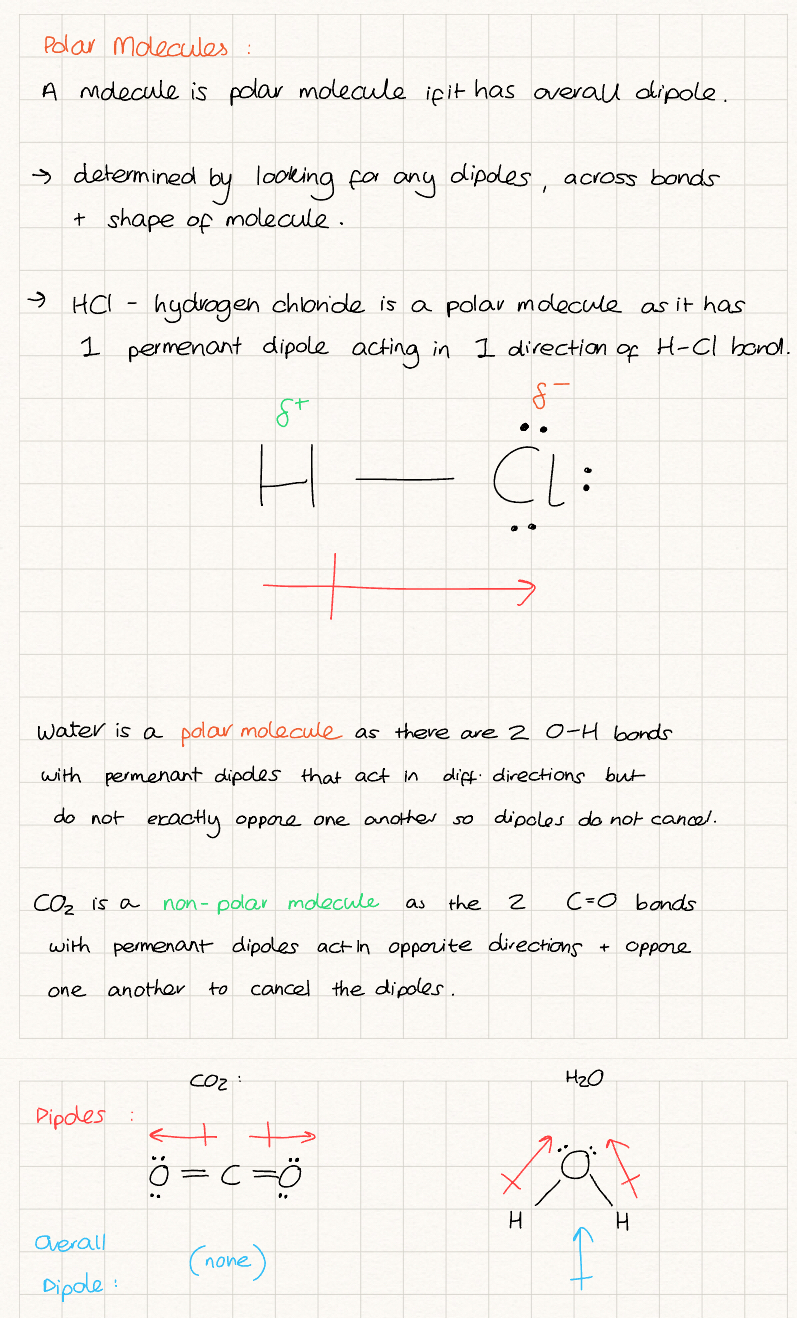
Dipoles:
What are Intermolecular forces?
Intermolecular forces are weak attractive forces between dipoles of different molecules
What are London Forces also known as?
Van der Waal’s forces.
What are the three different types of intermolecular forces?
• Induced dipole-dipole interactions (London Forces) • Permanent dipole-dipole interactions • H-bonding
What are induced dipole-dipole interactions (LF)?
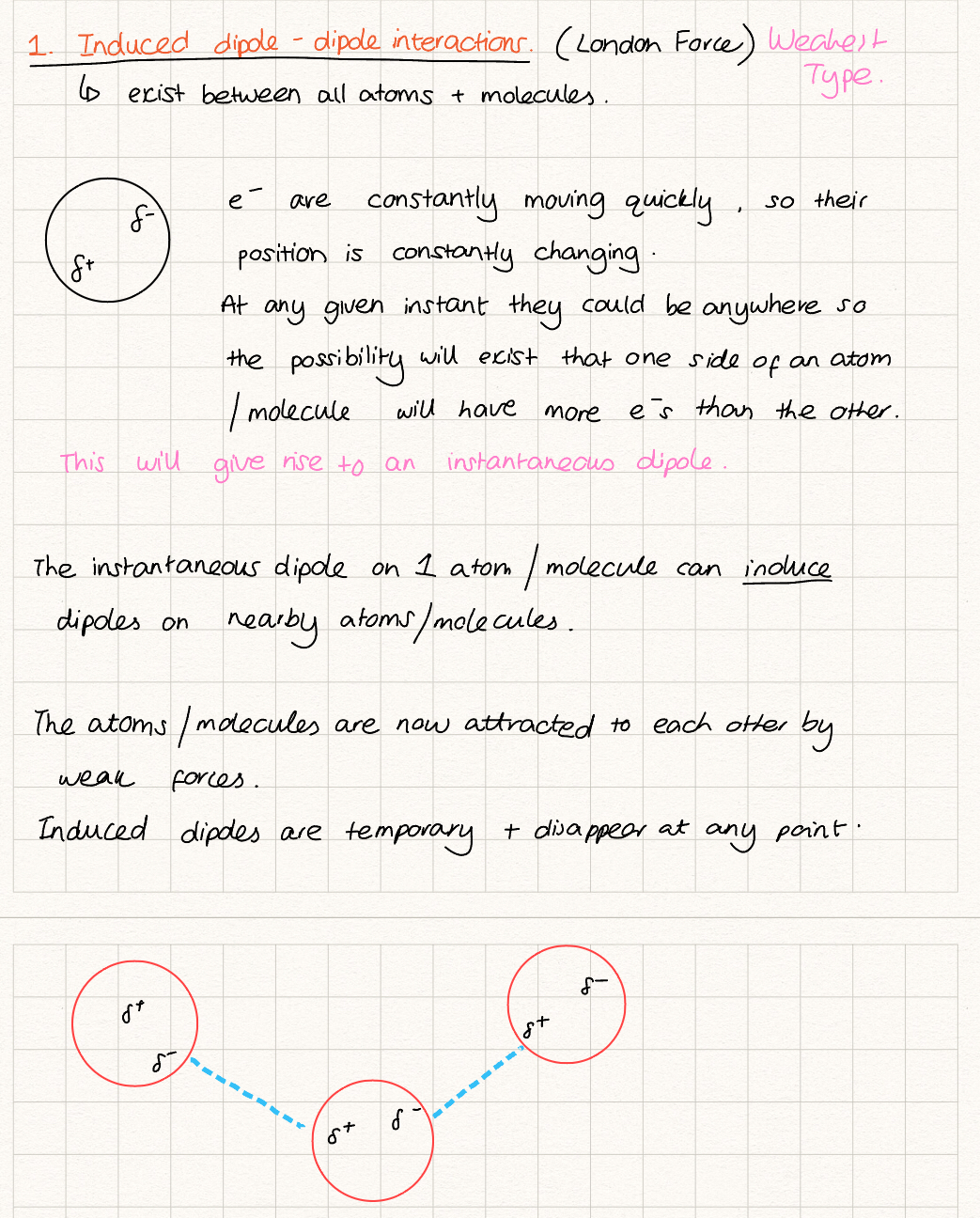
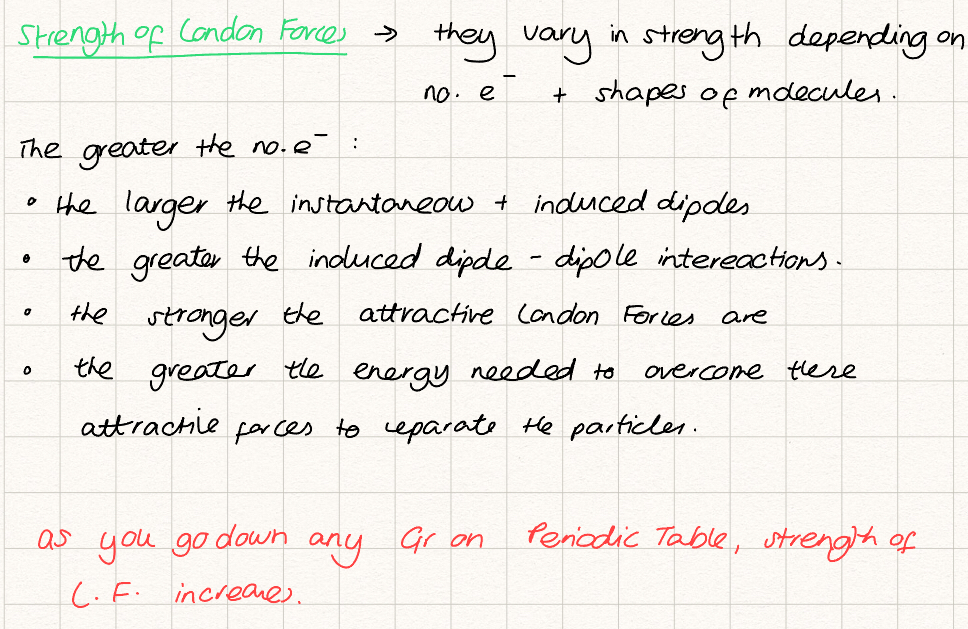
What factors affect the strength of London Forces?
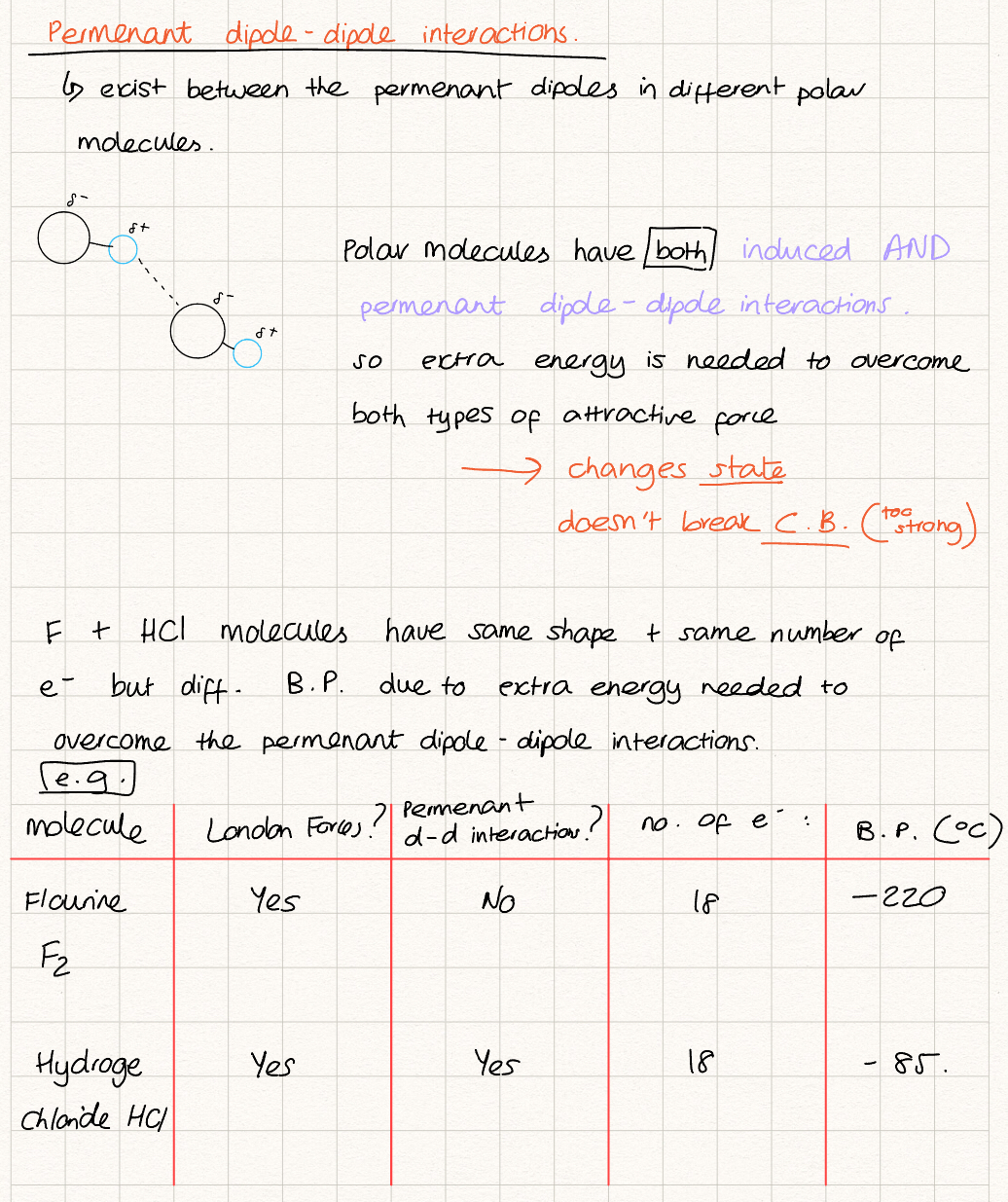
What are permanent dipole-dipole interactions?
What are hydrogen bonds?
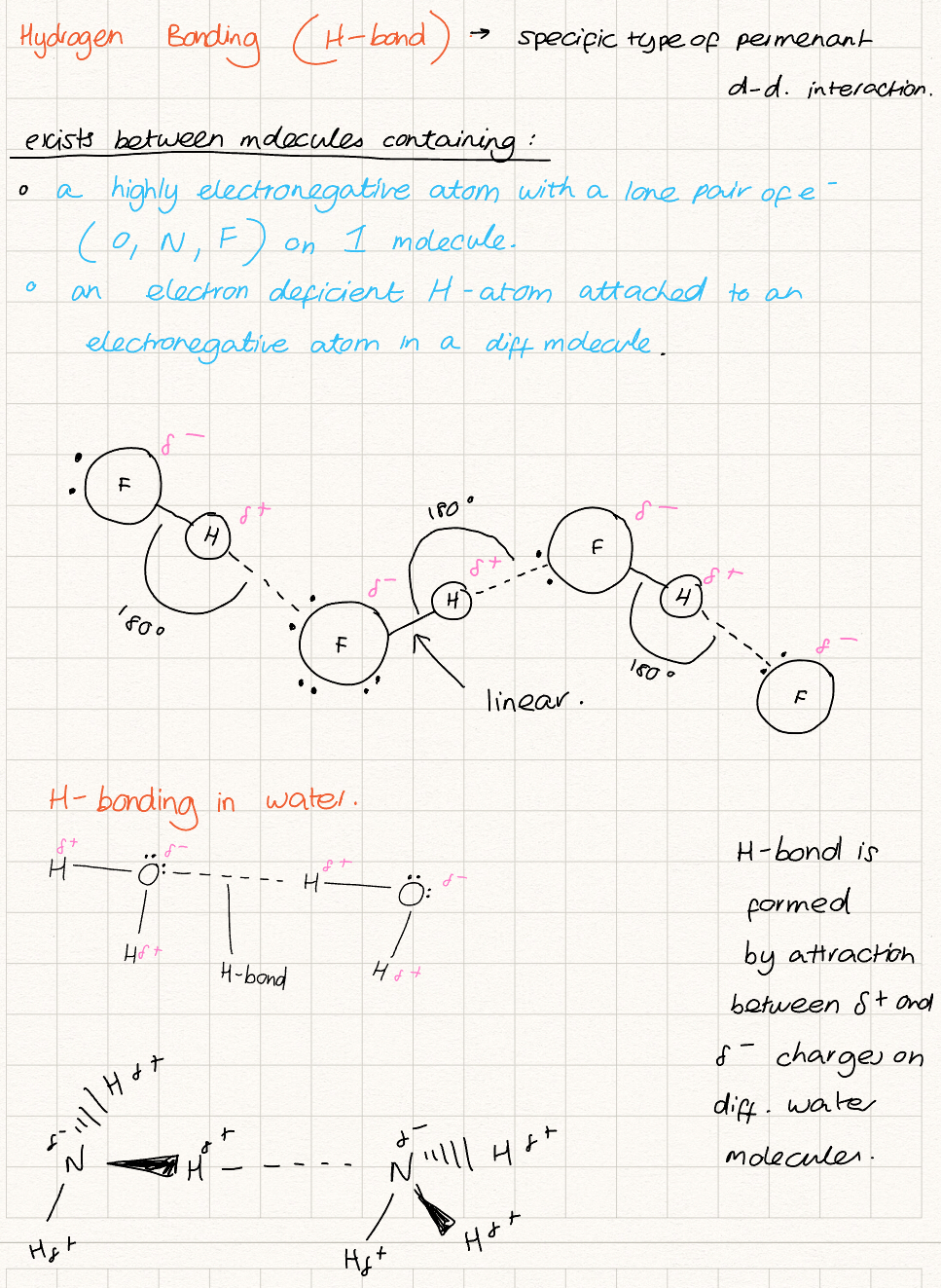
What is H-bonding like in ice?
Each water molecules is H-bonded to 4 others in tetrahedral formation. Ice has a diamond like structure. Its volume is larger than the liquid making it.
What are anomalous properties of water?
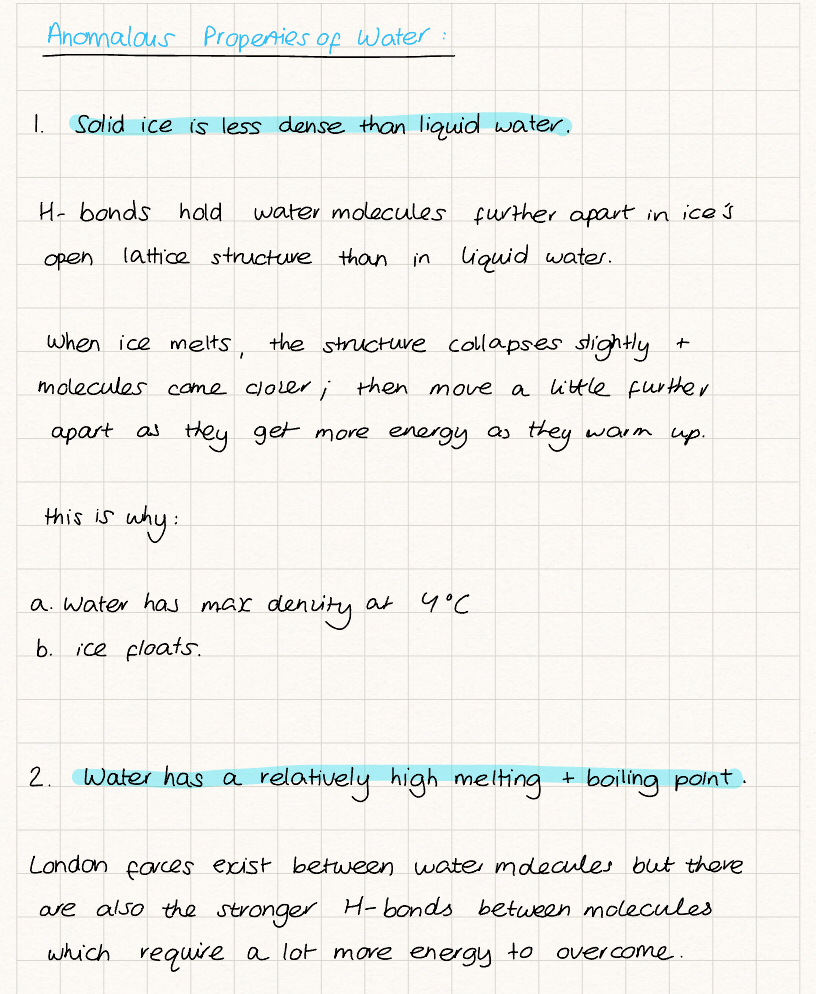
How does melting and boiling affect the H-bonds in water?
Melting breaks the rigid lattice arrangement of H-bonds Boiling completely breaks H-bonds
What are properties of Simple Molecules?
• Low MP + BP: small amount of energy needed to overcome weak intermolecular forces of attraction holding the molecules together in simple molecular lattice. The strong covalent bonds between atoms in molecules don’t break / change state. • Non-conductivity of electricity: no mobile charged particles • Solubility: non-polar substances are soluble in non-polar solvents. The formation of weak intermolecular forces between non-polar solvent + molecules in lattice helps to break down + substance dissolves. Non-polar substances tend to be insoluble in polar solvents. There is little attraction between polar solvent and molecules in lattice as intermolecular forces within polar solvent are too strong to overcome. Polar substances may dissolve in polar solvents depending on strength of dipole. The attraction between molecules in lattice and polar solvent has to be strong enough to break down simple molecular lattice if substance is to dissolve.