Oedema
No description yet. This curated deck is ready for daily study.
Card preview (24)
What is Haemtocrit?
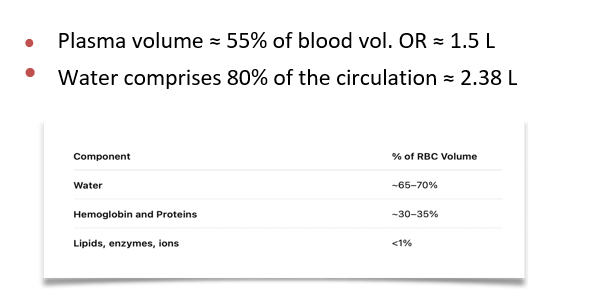
Haematocrit (Hct) measures the percentage of red blood cells (RBCs) in your total blood volume, (usually 36%-45%), indicating its oxygen-carrying capacity and thickness (of the blood). • There is a 2%-4% measurement error. • 0.88L of the blood’s water is in RBCs Membrane deformability is the crucial ability of red blood cells to change shape, allowing them to squeeze through narrow capillaries and deliver oxygen efficiently. • Red blood cell (RBC) deformability is critically dependent on its water content, which in turn determines the intracellular viscosity (cytoplasmic viscosity) and the surface area-to-volume ratio. Optimal deformability occurs when RBC water content is within the normal physiological range and hence it can trasnport gas efficiency. Clinical derivations: High Hematocrit (Polycythemia) Causes: Dehydration, lung disease, kidney disease, bone marrow disorders, smoking, living at high altitudes. Indicates: Blood is thicker, potentially slowing flow. Low Hematocrit (Anemia) Causes: Blood loss (menstruation, injury), nutritional deficiencies (iron, B12), chronic diseases, increased RBC destruction, or decreased production. Indicates: Less oxygen is being delivered to tissues.
What is the Van’t Hoff factor
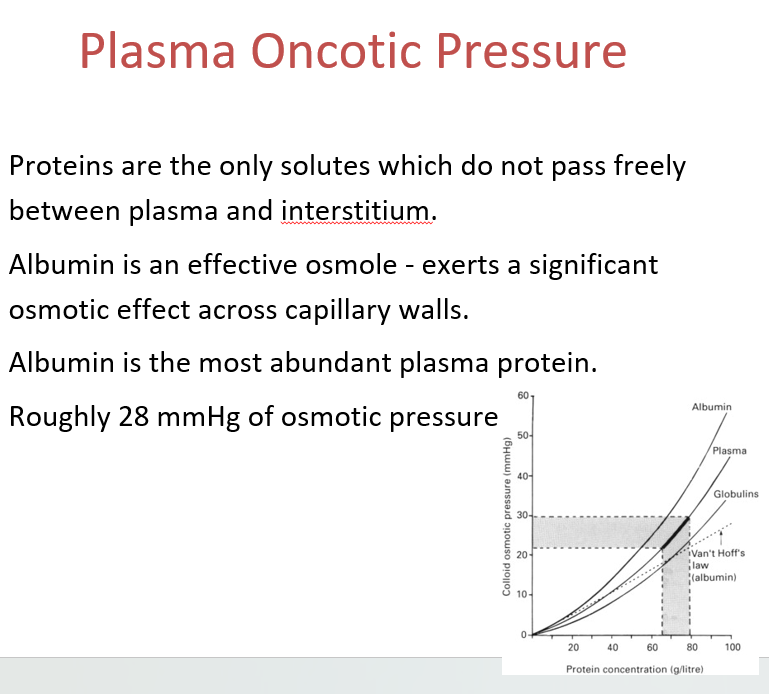
The Van’t Hoff factor is a ratio that quantifies how a solute’s presence affects colligative properties (like freezing/boiling points, osmotic pressure) by comparing actual particle concentration to expected, accounting for dissociation (more particles, i > 1) or association (fewer particles, i < 1) in a solution, with non-electrolytes (effective osmoles) having i = 1 The Van’t Hoff factor is a ratio between the the colligative conc (real conc in solution) : chemical-structure based conc. (expected/theroretical) Eg. NaCl and CaCl2 are similar structurally but distinct colligatively - NaCl has 2 ions while CaCl2 has 3 ions.

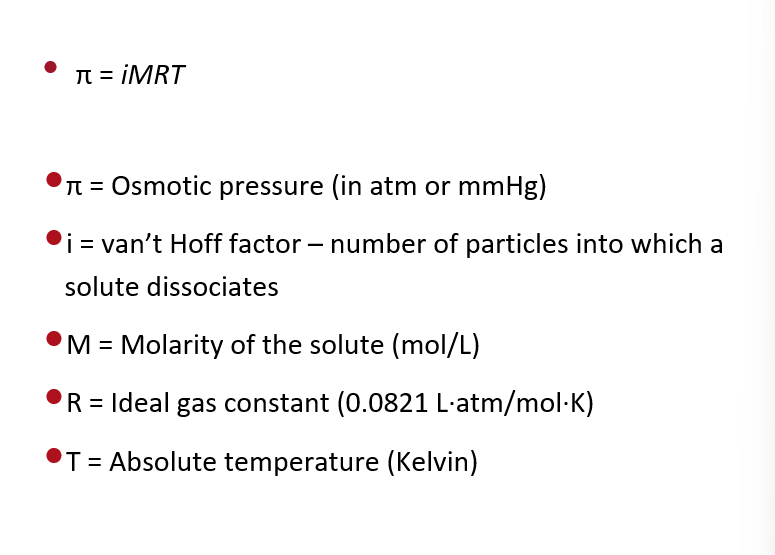
What is the Van’t Hoff Equation for Osmotic Pressure in Dilute Solutions
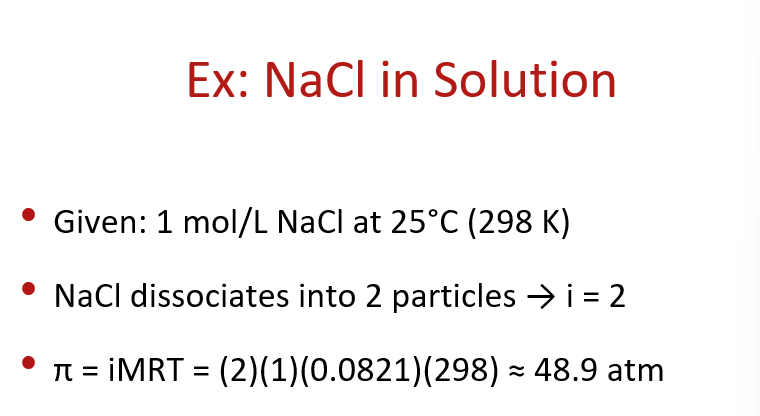
Example of the Van’t Hoff Equation with NaCl in Solution
Why is the Van’t Hoff Equation Important?
Physilogical: * analyse delivery of pharmaceutical agents into cells * describe osmotically active cell volumes (refers to how a cell’s size changes due to water movement across its membrane, driven by differences in solute concentration (osmolarity) between the inside and outside). Clinical: * Calc how varying IV conc. affect osmotic pressure. * Forecast how drug association/dissociation impact efficacy + osmolality. Oedema formation - - drop in π (e.g., hypoalbuminaemia) → reduced reabsorption → interstitial oedema - high π - hyperglycaemia, polyuria (high urine volume) and cerebral oedema • When substances like glucose (in uncontrolled diabetes mellitus), urea, or certain medications (like mannitol) are present in high concentrations in the fluid filtered by the kidneys (to remove excess), they are not fully reabsorbed back into the bloodstream and due to their osmolality, they pull water with them into the urine -> polyuria.
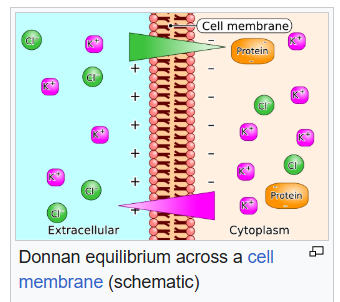
What is the Donnan Effect?
When an ion on one side of a membrane cannot diffuse through the membrane, the distribution of other ions to which the membrane is permeable is affected in a predictable way. For example, the negative charge of a nondiffusible anion hinders diffusion of the diffusible cations and favors diffusion of the diffusible anions. The Gibbs-Donnan effect refers to the unequal distribution of ions across a semipermeable membrane due to the presence of a nondiffusible charged molecule, which prevents certain ions from equilibrating, resulting in an asymmetric concentration of diffusible ions despite their ability to cross the membrane. The presence of impermeant molecules within a cell can lead to an increase in cell volume through the influx of water driven by osmosis.
What are the 4 Starling’s forces?
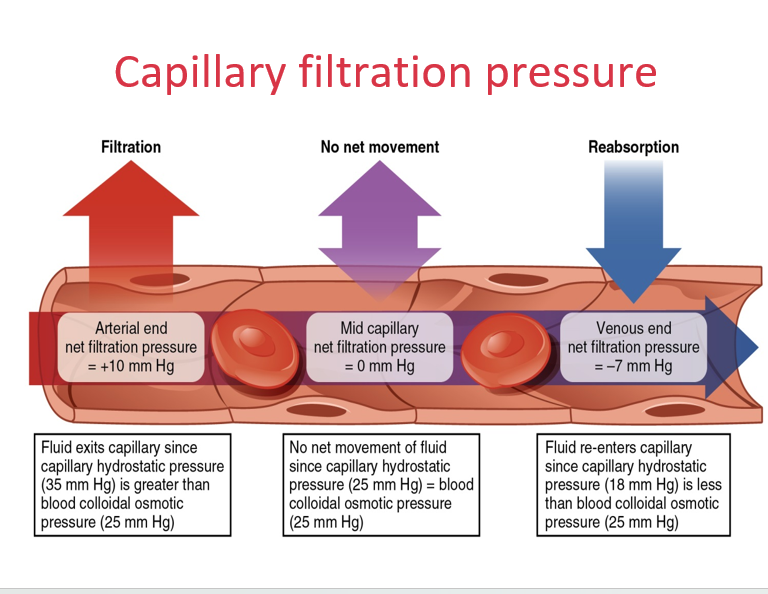
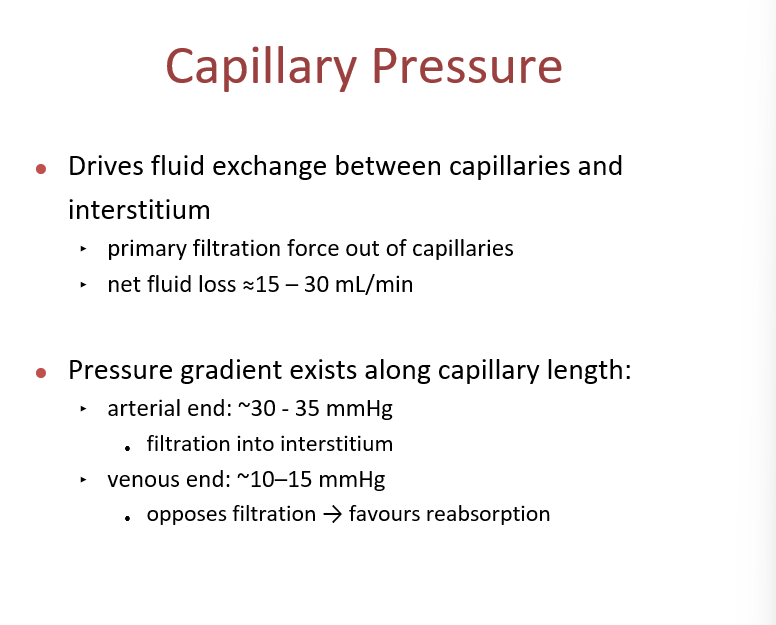
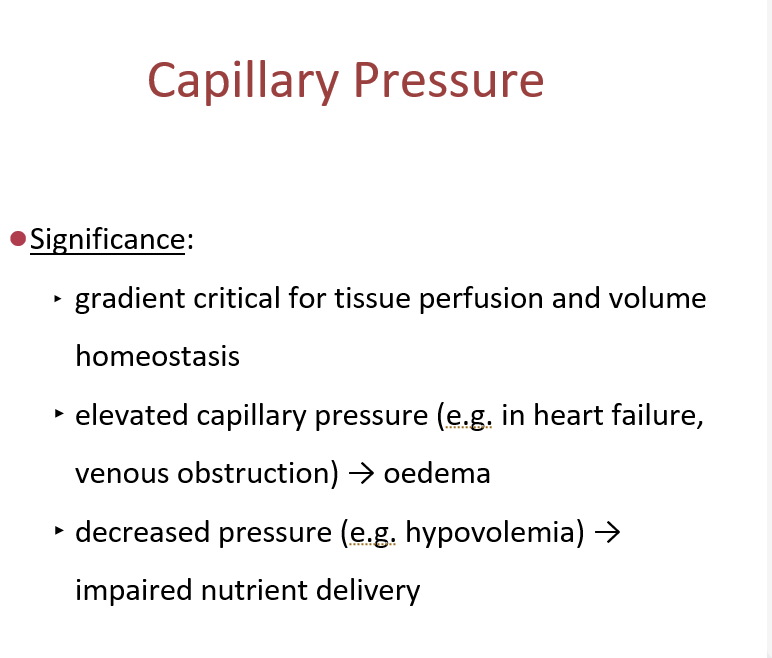
• Capillary (hydrostatic) pressure • Interstitial fluid (hydrostatic) pressure • Plasma oncotic pressure • Interstitial fluid oncotic pressure (colloid pressure) Significance: 1. Increased Capillary Hydrostatic Pressure (Pc): Conditions like heart failure or deep vein thrombosis (DVT) increase pressure, forcing more fluid out of the capillaries and causing filtration oedema. • Reduced Oncotic Pressure: Low protein levels in the blood, seen in nephrotic syndrome or cirrhosis, impair the reabsorption of fluid back into the capillaries, leading to oedema. • Lymphatic Obstruction: Blockages caused by issues such as filariasis (parasitic infection) or tumors prevent the drainage of interstitial fluid, resulting in its accumulation. • Inflammation: This process increases capillary permeability, allowing protein leakage, which disrupts the oncotic gradient and causes exudate formation
Starling’s Forces Equations

Capillary Pressure
What is the significance of Capillary Pressure?
Plasma Oncotic Pressure
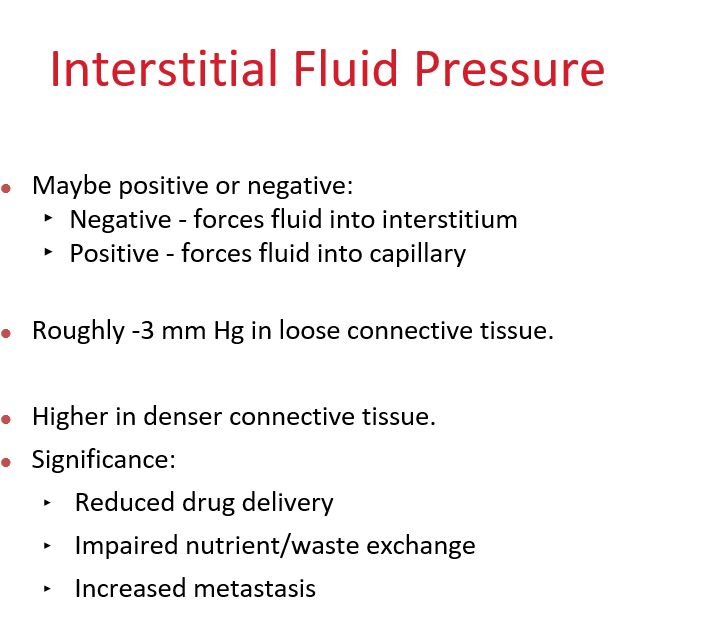
Interstitial Fluid Pressure
Clinical Significance: - Generalised Oedema - Hypovolemia
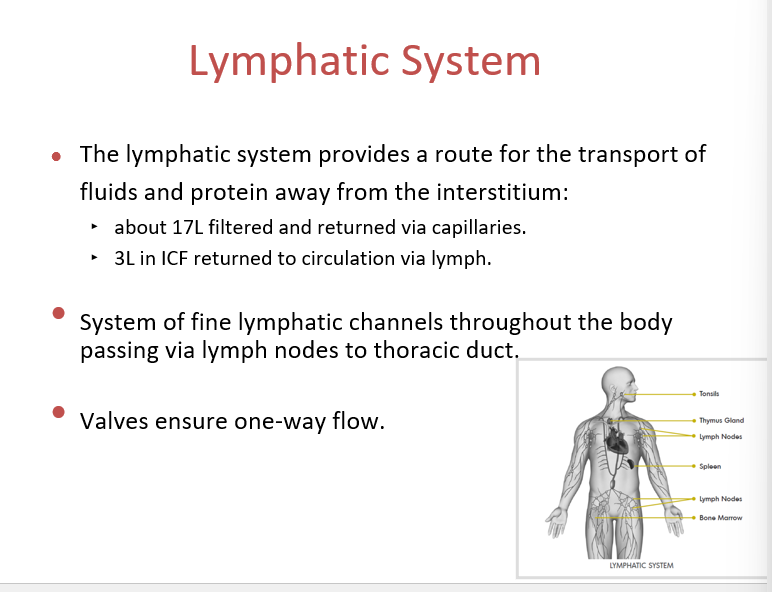
The lymphatic system
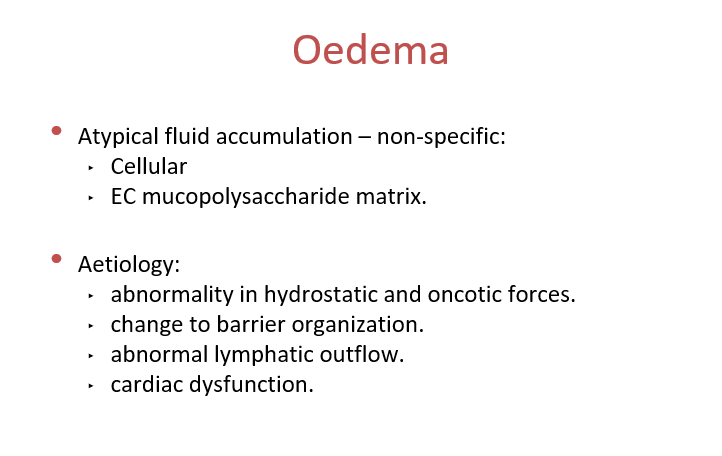
Oedema
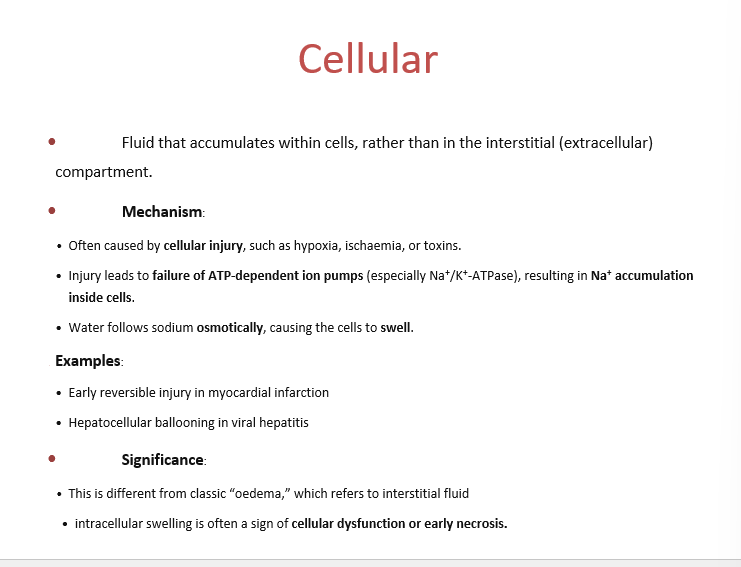
Cellular Oedema
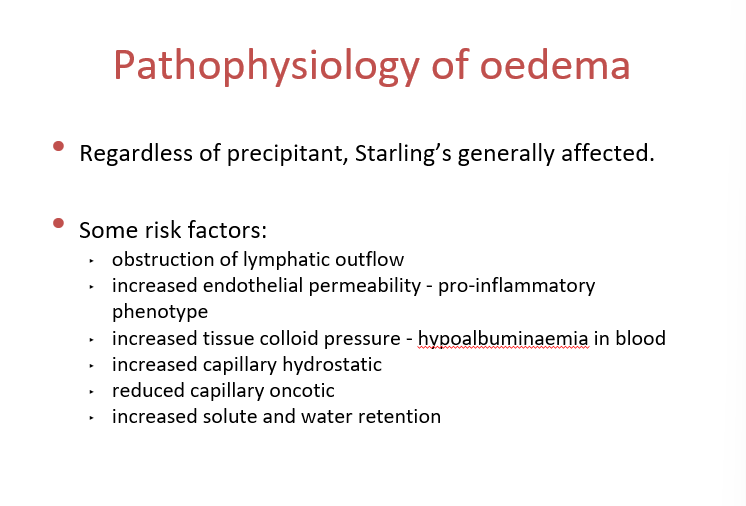
Extracellular Mucopolysaccharide Matrix Oedema
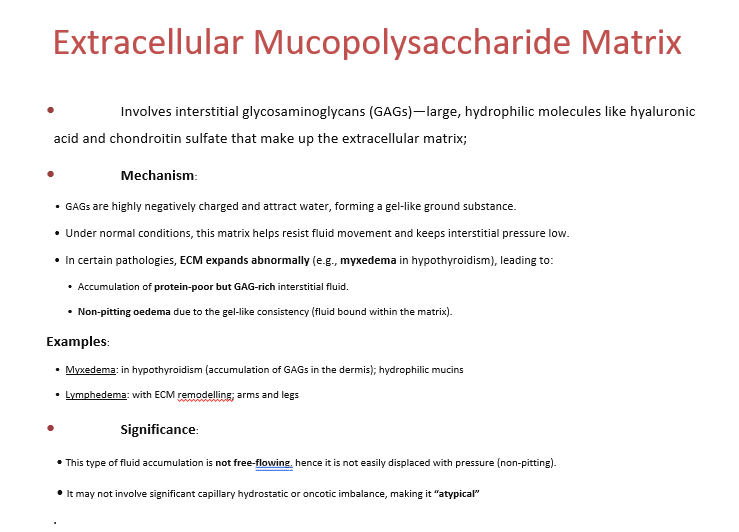
Two broad categories of Oedema
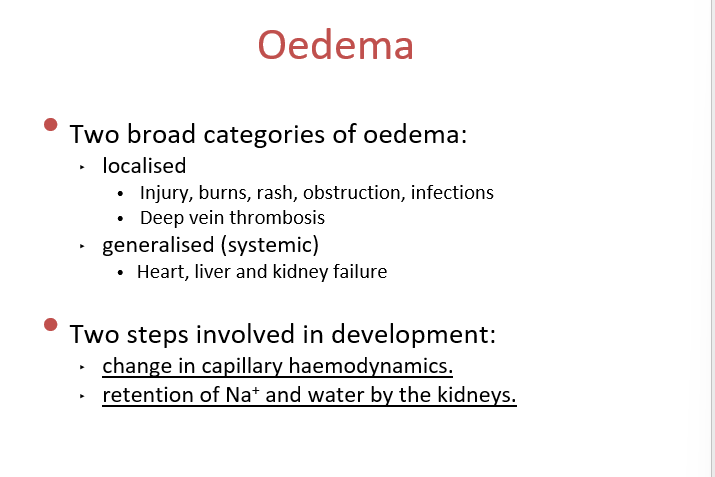
Pitting vs Non-Pitting Oedema
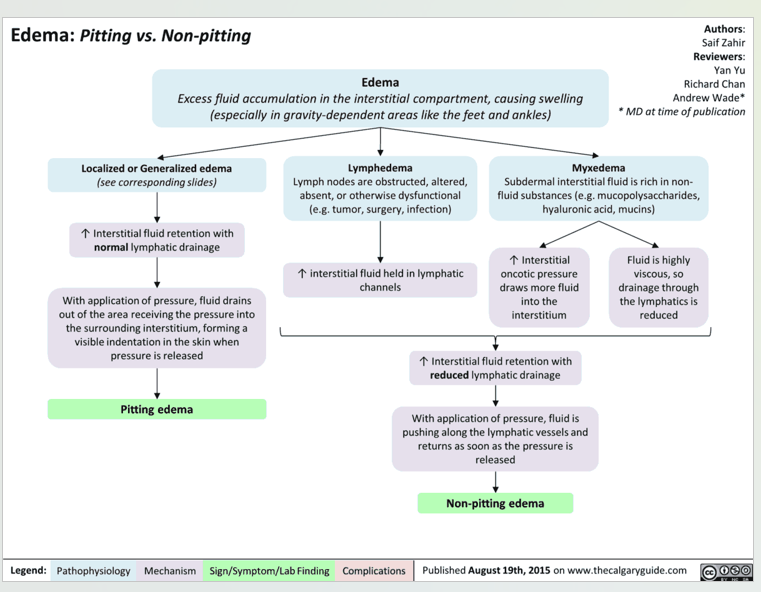
Pathophysiology of oedema
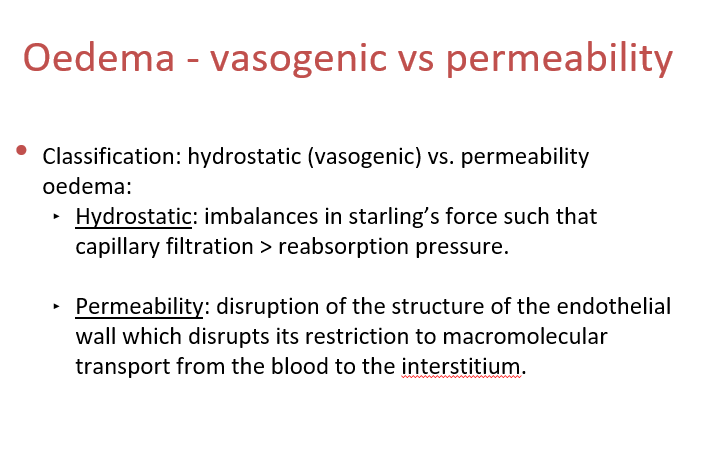
Vasogenic vs Permeability Oedema
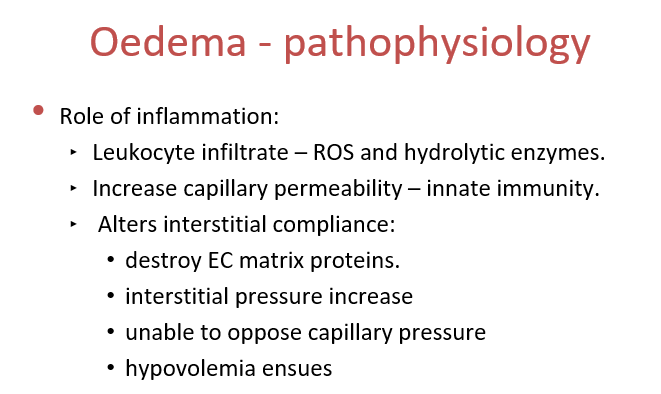
Role of Inflammation in Oedema
Causes of Raised Vascular Pressure
• Cardiac failure: right ventricular failure - systemic oedema (blood backed up in the right atrium) left ventricular failure - pulmonary oedema (blood backed up in left atrium) congestive cardiac failure – both. • Local Venous Obstruction: DVT (e.g. femoral). - accumulation distal to (below) blockage - inflammatory - warm and tender - filtration > lymphatic clearance - pitting • External venous compression - tumors - pregnancy - immobility
Causes of Reduced Oncotic Pressure
Renal disease: loss of albumin across glomerulus Hepatic disease: inadequate albumin synthesis Malnutrition: inadequate albumin synthesis
Causes of Lymphatic Obstruction
Tumours Fibrosis Inflammation Surgery Congenital abnormalities