The Lipid Sea: Open Ocean?
No description yet. This curated deck is ready for daily study.
Card preview (24)
Describe the fluid mosaic model by Singer and Nicolson.
A membrane is two fluid layers of phospholipids, with proteins localized within and on the bilayers. The model is described first as fluid because the lipids and proteins can easily move laterally in the membrane and also as a mosaic because of the presence of proteins within the membrane. Within this model, proteins bob along like bottles in the ocean, moving freely.
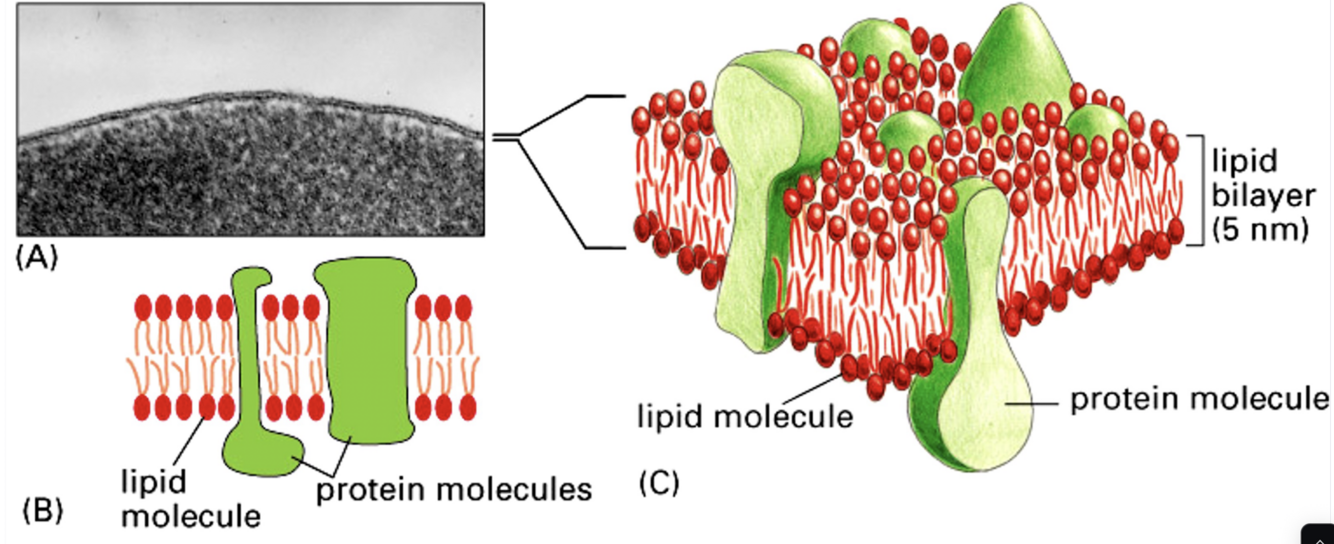
What are the five physical properties of biomembranes?
• Stable, yet flexible • Barrier to hydrophilic molecules • Transverse asymmetry (Within a membrane and among organelles) • Fluid • Lateral asymmetry
Describe the relationship between structure and function of biomembranes.
Biomembranes are functionally asymmetric because they are also structurally asymmetric.
Where does lipid flipping often occur?
smooth ER
What are the five functions of the smooth ER?
• Site of synthesis of many phospholipids and sterols. • Involved in detoxification of lipid-soluble drugs and compounds. • Carbohydrate metabolism. • Calcium storage. • Site of lipid droplet formation.
Why does the smooth ER appear smooth (compared to the rough ER)?
The smooth ER doesn’t have ribosomes and the rough ER does.
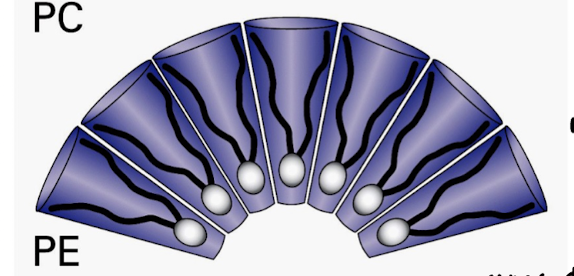
Where are the cones positioned in the bilayer?
the inner leaflet, cytosolic
Where are the cylinders positioned in the bilayer?
the outer leaflet, exoplasmic
Are lipids randomly distributed to either leaflet?
No, active cellular mechanisms determine how lipids are distributed to either leaflet.
Why are cones placed in the cytosolic leaflet?
Cones can pack more tightly together, which is useful for membranes that require a tight curve.
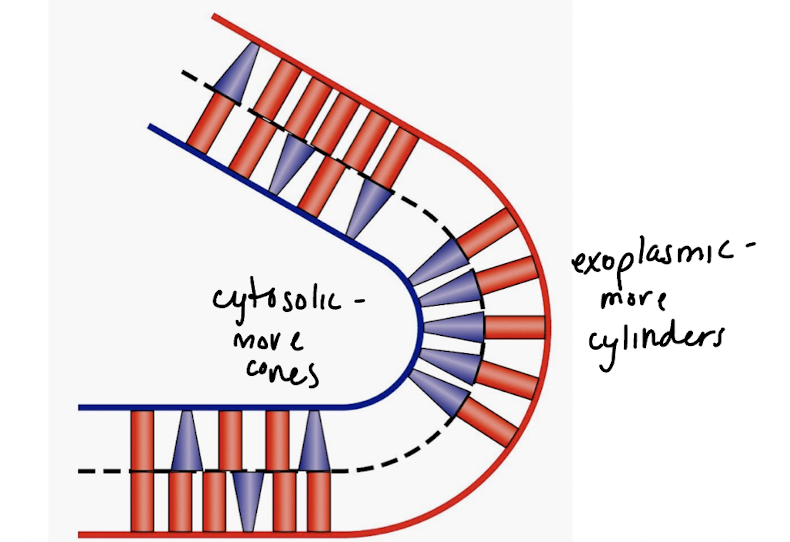
What determines the shape and function of a membrane?
Shape and location of the lipids
Are proteins randomly distributed within a bilayer?
No, different proteins associated with different lipids. Proteins cannot be randomly replaced, nor can their directions be changed without consequence.
What does functional asymmetry mean in regards to bilayers?
Different functions occur on either side of a membrane
What does structural asymmetry mean in regards to bilayers?
This refers to the asymmetric distribution of proteins.
What does transverse asymmetry refer to in regards to bilayers?
This refers to the different proportion of different types of phospholipids inside and outside of the cell.
Does phosphatidylcholine fill the volume of a cylinder or a cone?
cylinder
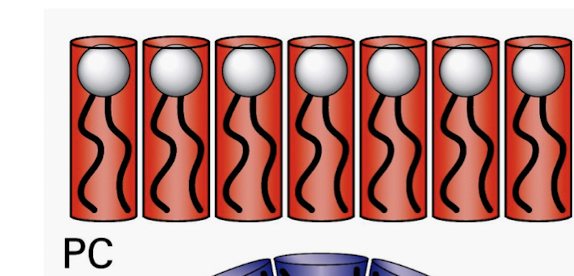
Does phosphatidylethanolamine fill the volume of a cylinder or a cone?
cone
Describe the structure of the smooth ER.
network of interconnected tubules
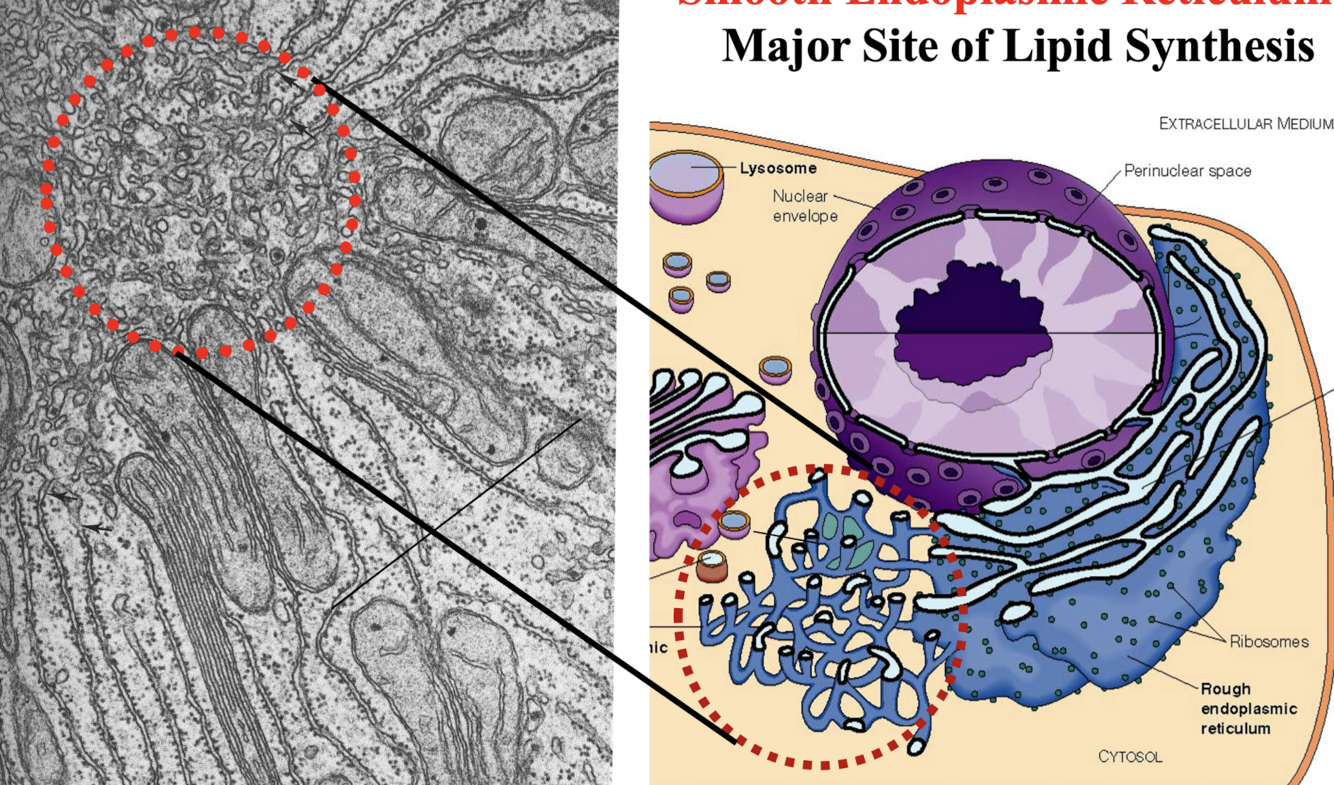
Where does lipid synthesis begin?
at the cytosolic face of the smooth ER
What is required for lipid synthesis?
fatty acids and glycerol
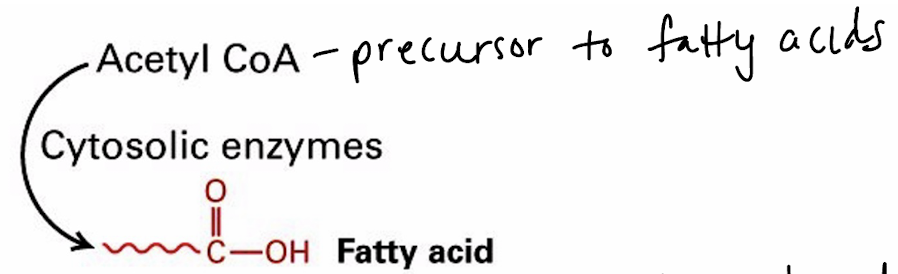
What is the precursor to fatty acids?
Acetyl CoA
How does Acetyl CoA transition into fatty acids?
via cytosolic enzymes
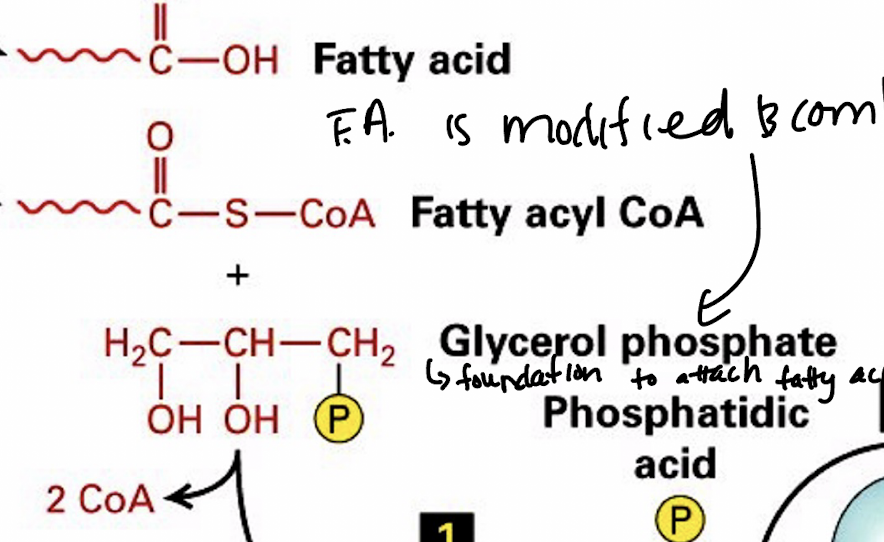
How are fatty acids modified during lipid synthesis?
The OH group is replaced with an S-CoA group to create fatty acyl CoA.
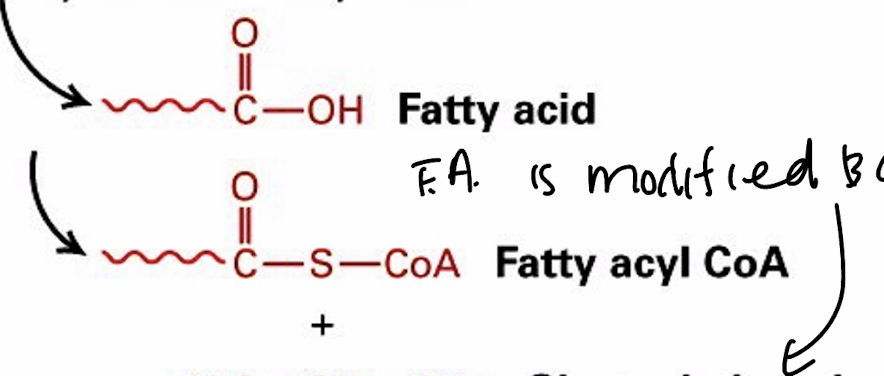
How is fatty acyl CoA modified during lipid synthesis?
Glycerol is added, to create glycerol phosphate, the foundation to attach fatty acids.