Organic 12: Polymers
No description yet. This curated deck is ready for daily study.
Card preview (21)
Define polymer.
Long chain molecule made from lots of smaller molecules joined together
Define monomer.
Small molecules that join together to make polymers
What is addition polymerisation?
The formation of long chain molecules from lots of small molecules joining together with no other products
What is condensation polymerisation?
The formation of long chain molecules from lots of small molecules joining together with another small molecule (e.g. water) produced as well
What monomers are used in addition polymerisation?
Alkenes (molecules with C=C bonds)
Are addition polymers biodegradable and why?
No, because there are no polar bonds in the main chain (all bonds are C-C)
Give two examples of addition polymers.
Poly(ethene) Poly(propene) Polychloroethene (PVC)
What monomers are used in condensation polymerisation?
Dicarboxylic acids + diols Dicarboxylic acids + diamines Amino acids
Give two examples of condensation polymers.
Polyesters (e.g. terylene) Polyamides (e.g. nylon, Kevlar) Polypeptides
Are condensation polymers biodegradable and why?
Yes, because there are polar C-N or C-O bonds in the main chain, so they can interact with water (i.e. be hydrolysed)
Why are addition polymers chemically inert?
Because all of the molecules are saturated (no double bonds)
What are the three ways of disposing of polymers?
Landfill Incineration Recycling
Describe each of the three ways of disposing of polymers giving advantages and disadvantages.
Landfill: Burying polymers in the ground Advantages: cheap, quick, simple Disadvantages: Stays in the ground for a long time (takes too long to biodegrade), plastic becomes brittle, could break up and be washed away into water sources Incineration: Burning polymers Advantages: No land pollution Heat generated can be used for electricity Disadvantages: Addition polymers produce CO (toxic) and CO2 (greenhouse gas) Condensation polymers can also produce toxic gases when incinerated Recycling: Collecting, washing, and sorting polymers, then cutting them into small parts to be reused Advantages: Not in landfill or being incinerated, so less land pollution and toxic gases Less energy needed to produce an item from recycled plastics than from new plastics Disadvantages: Logistics - relying on the public to recycle, can take a long time to collect it all
What type of plastic can’t be recycled?
Thermosetting plastics - they are heated once and they stay in that shape permanently
What do diols and dicarboxylic acids look like?
Diols have two hydroxyl (alcohol) groups Dicarboxylic acids have two COOH groups at either end
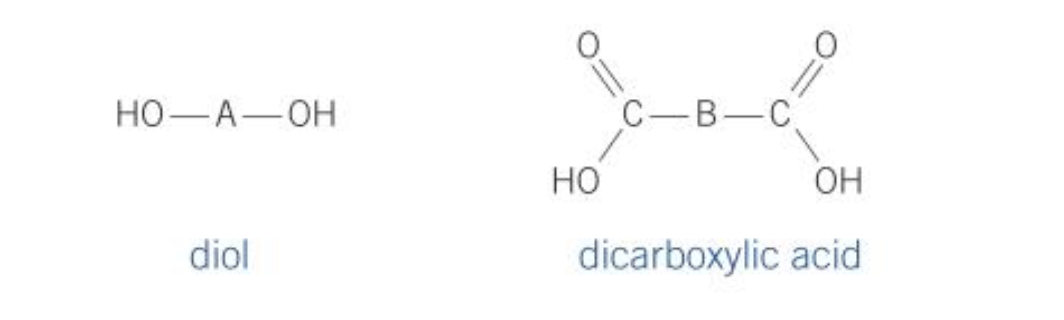
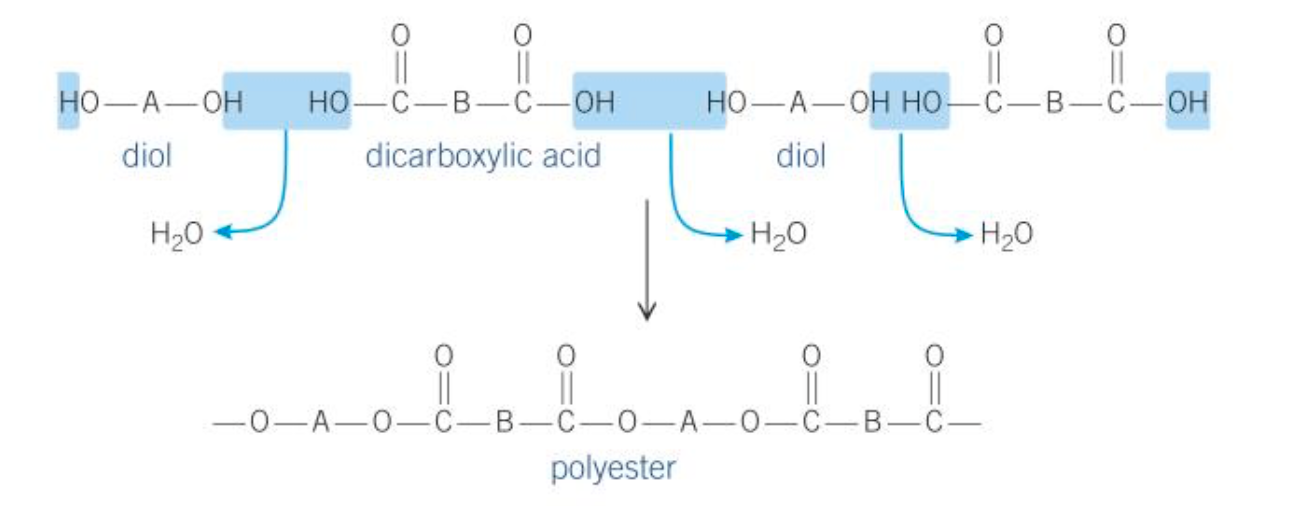
Where do the condensation reactions happen between a dicarboxylic acid and a diol?
With the OH from the carboxylic acid and the H from the alcohol group
What type of polymer forms in a condensation reaction between a dicarboxylic acid and a diol?
Polyester (has repeated ester linkages)
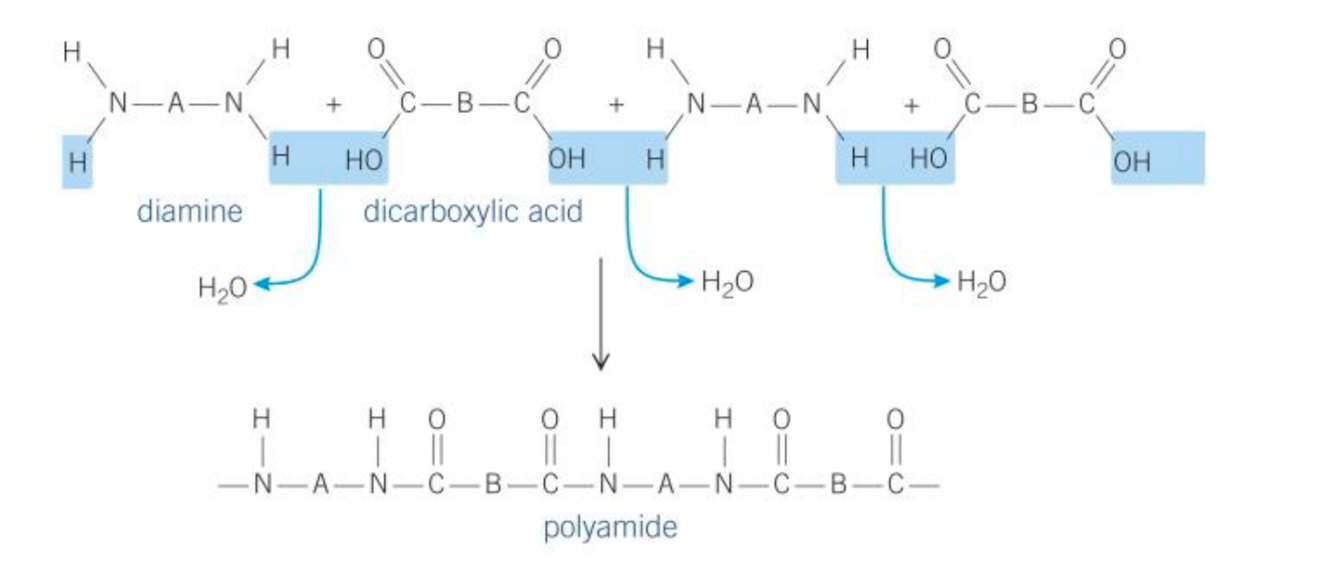
What type of polymer forms in a condensation reaction between a carboxylic acid and an amine?
Polyamide (has repeated amide linkages)
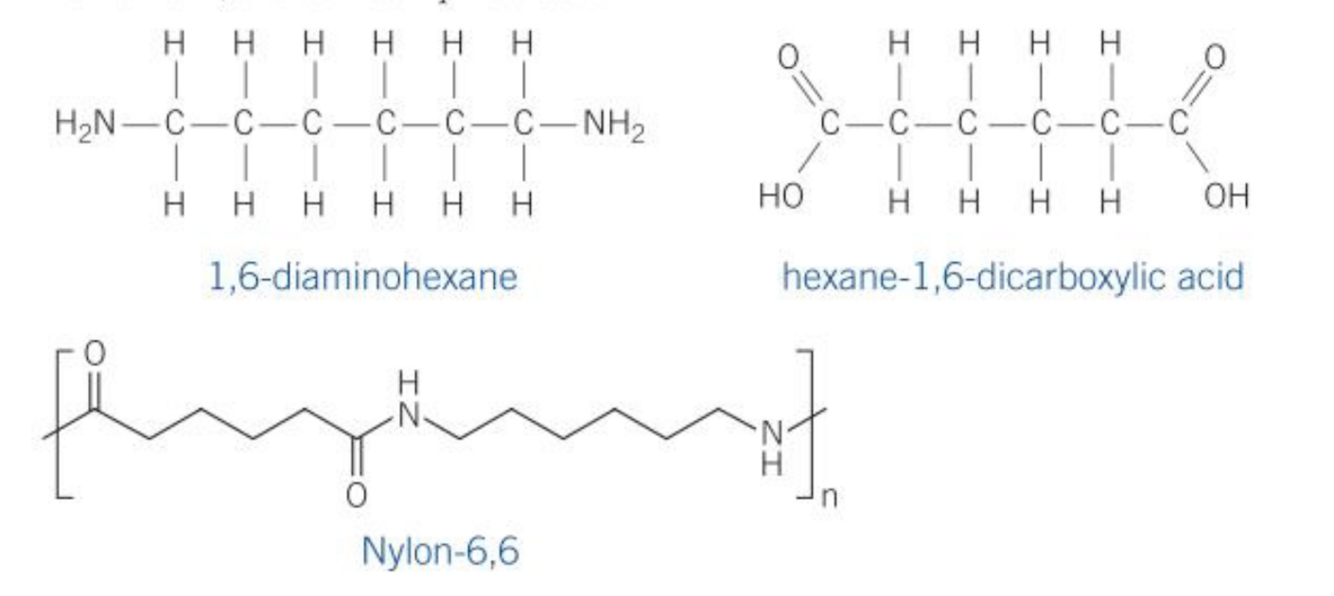
What two monomers make up nylon 6,6?
1,6diaminohexane hexane-1,6dicarboxylic acid (polyamide linkages)
What two monomers make up Kevlar?
Benzene-1,4-diamine Benzene-1,4-dicarboxylic acid (Polyamide linkages)
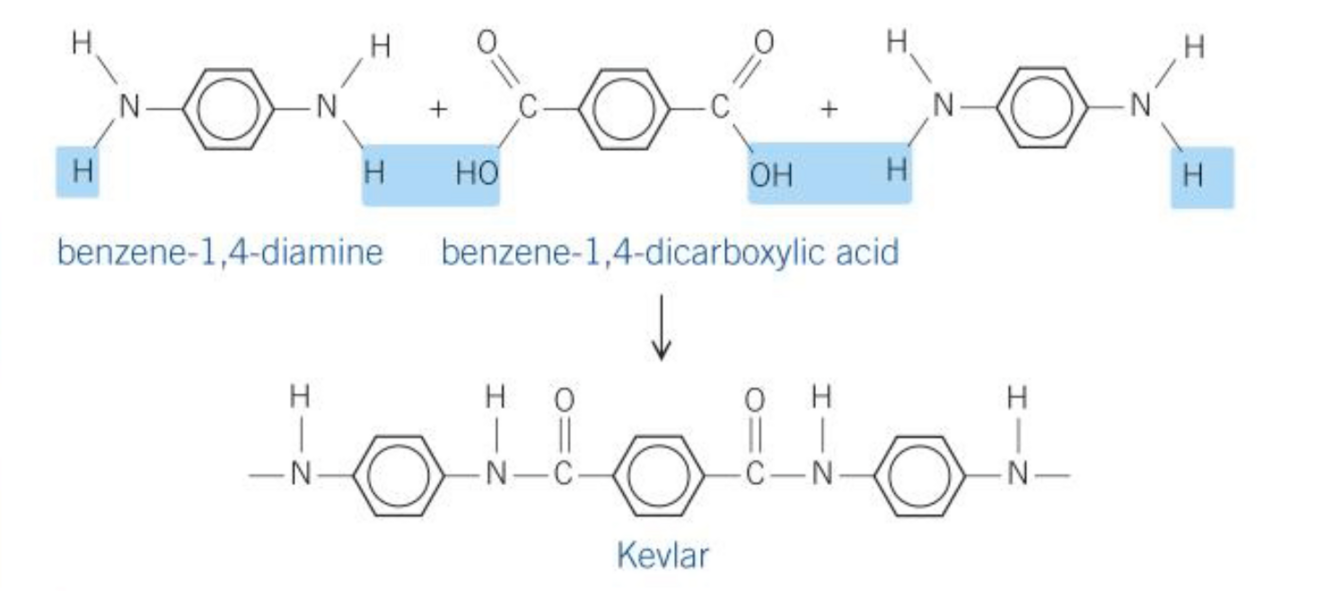
Why is Kevlar so strong?
Due to the rigid chains and ability of the flat aromatic rings to pack together held by strong intermolecular forces