Combined Biology - B2 Organisation
暂无描述。系统推荐的高质量记忆内容,适合每天坚持背诵学习。
卡片预览 (24 张)
Put the following in size order from smallest to largest: organ, cell, organ system, tissue
cell → tissue → organ → organ system
What is a tissue?
A group of cells with a similar structure and function.
What is an organ?
Groups of tissues forming particular functions.
What is the function of the digestive system?
To digest and absorb food
What do enzymes do?
Catalyse (speed up) reactions
Name the part of the enzyme indicated by the arrow
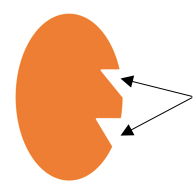
Active site
How does the ‘lock and key’ model explain how enzymes work?
‘Lock and key’ is a simple model to explain that each enzyme has an active site of a specific shape to fit a specific substrate (just like a specific key is needed to fit a lock).
Q. Where is amylase produced? Q. Where does amylase work? Q. What does amylase breakdown and what are the products?
• Amylase is produced in the salivary glands, small intestine and pancreas. • Amylase works in the mouth and small intestine. • Amylase breaks down starch into sugar.
Q. Where is protease produced? Q. Where does protease work? Q. What does protease breakdown and what are the products?
• Protease is produced in the stomach, small intestine and pancreas • Protease works in the stomach and small intestine • Protease breaks down protein into amino acids
Q. Where is lipase produced? Q. Where does lipase work? Q. What does lipase breakdown and what are the products?
• Lipase is produced in the small intestine and pancreas • Lipase works in the small intestine • Lipase breaks down lipids (fats) into fatty acids and glycerol.
What do digestive enzymes do?
Break down food into soluble molecules that can be absorbed into the bloodstream.
Name the enzyme that is a type of carbohydrase.
Amylase
What are the products of digestion used for?
• To build new carbohydrates, lipids and proteins. • Some glucose is also used in respiration.
Q. Where is bile made? Q. Where is bile stored? Q. What two things does bile do?
• Bile is made in the liver. • Bile is stored in the gall bladder. • 1) Bile is alkaline so neutralises hydrochloric acid from the stomach • 2) It emulsifies fat to form small droplets which increases the surface area to increase the rate of fat breakdown.
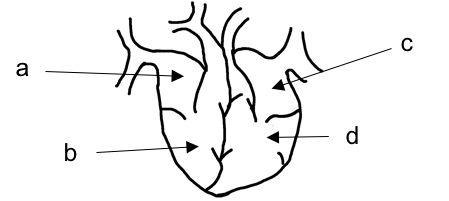
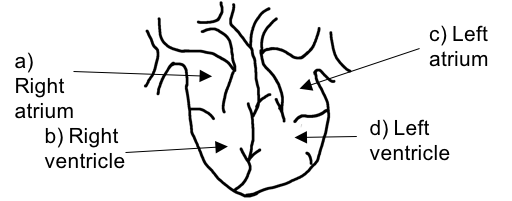
Name the four chambers of the heart.
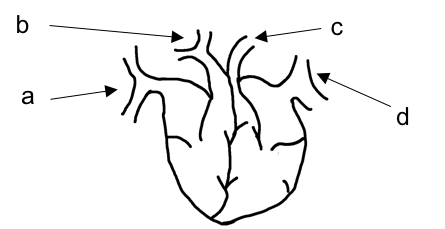
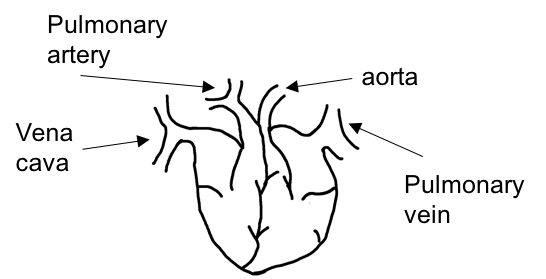
Name the four major blood vessels of the heart.
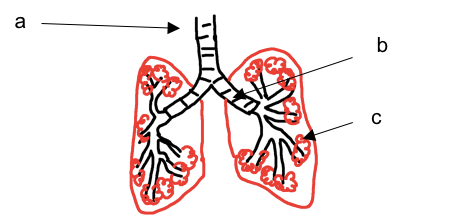
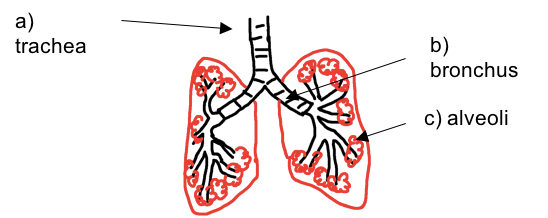
Name the parts of the lungs on the diagram below.
Describe how the double circulatory system works.
Circulatory system made up of two circuits. Circuit 1 – Right ventricle pumps deoxygenated blood to lungs. Oxygenated blood returns to heart. Circuit 2 – Left ventricle pumps oxygenated blood around the body. Deoxygenated blood returns to the heart.
Name the arteries that wrap around the heart, supplying it with oxygen.
Coronary arteries
What is coronary heart disease?
• A disease that is caused by fatty material build up inside the coronary arteries. • These arteries become narrower. • This reduces blood flow to the heart. • This results in a lack of oxygen to the heart muscle.
Describe the three ways in which the lungs are adapted for gas exchange.
• Thin, moist walls, • Large surface area, • Close network of capillaries
Q. Name the cells that control the natural resting heart rate. Q. Where are these cells located? Q. If these cells are not working properly, what might a doctor suggest?
• Pacemaker cells • Right atrium • Have an operation to insert an artificial pacemaker
Describe the structure and function of the three blood vessels in the body.
Arteries - Function: Carry blood away from heart. Structure: Strong, thick, muscular, elastic walls because blood is at high pressure. Veins - Function: Carry blood to the heart. Structure: Thinner walls because blood is at low pressure. Bigger lumen to help blood flow. Valves to stop blood flowing backwards. Capillaries – Function: exchanging materials (e.g. oxygen and glucose) at the tissues Structure: Small lumen and thin, permeable walls.
1520 ml of blood passed through an artery in 5 minutes. Calculate the rate of blood flow through the artery. *this is just an example, you will have to be able to do this for any values when given the appropriate information.
1520 ml / 5 min = 304 ml/min