10.1 amino acids, peptides, and proteins
暂无描述。系统推荐的高质量记忆内容,适合每天坚持背诵学习。
卡片预览 (15 张)
amino acid structure
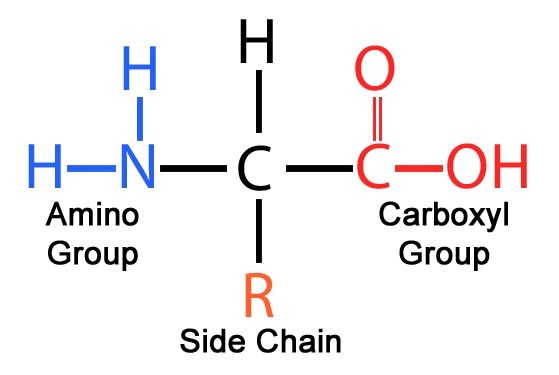
how does glycine differ from the other amino acids
it is NOT chiral because its R group is hydrogen the other amino acids are all chiral because the alpha carbon is attached to 4 different groups
all naturally occurring amino acids in eukaryotes are ____(L/D) -isomers
L-isomers
Fischer projection of amino acids
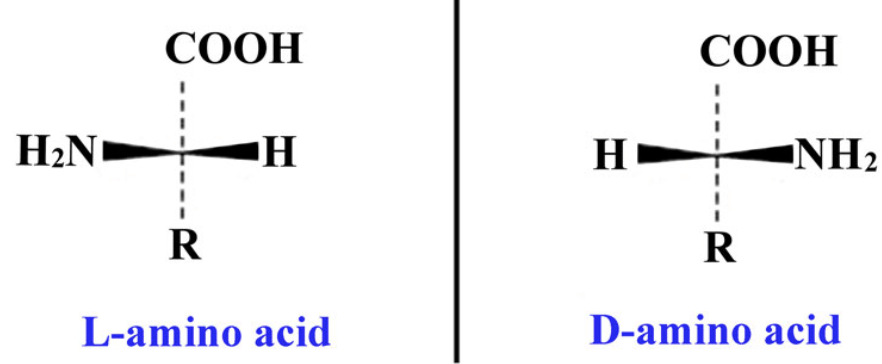
How doe cysteine differ from the other amino acids
it is R configuration while all other L-amino acids have S configuration
the carboxyl group of an amino acid is _______ (acidic/basic)
acidic; can lose an H+ ion
the amino group of an amino acid is _______ (acidic/basic)
basic; can pick up an H+ ion
amino acids are amphoteric (define)
can act as both acids and bases
amino acids form zwitterions in solution (define)
a molecule with charges which “cancel” each other out the amino group becomes protonated and bears a +1 charge the carboxyl group becomes deprotonated and bears a -1 charge
5 categories of amino acids
non polar nonaromatic aromatic polar negatively charged (acidic) positively charged (basic)
aromatic amino acids include:
tryptophan phenylalanine tyrosine (those with benzene rings)
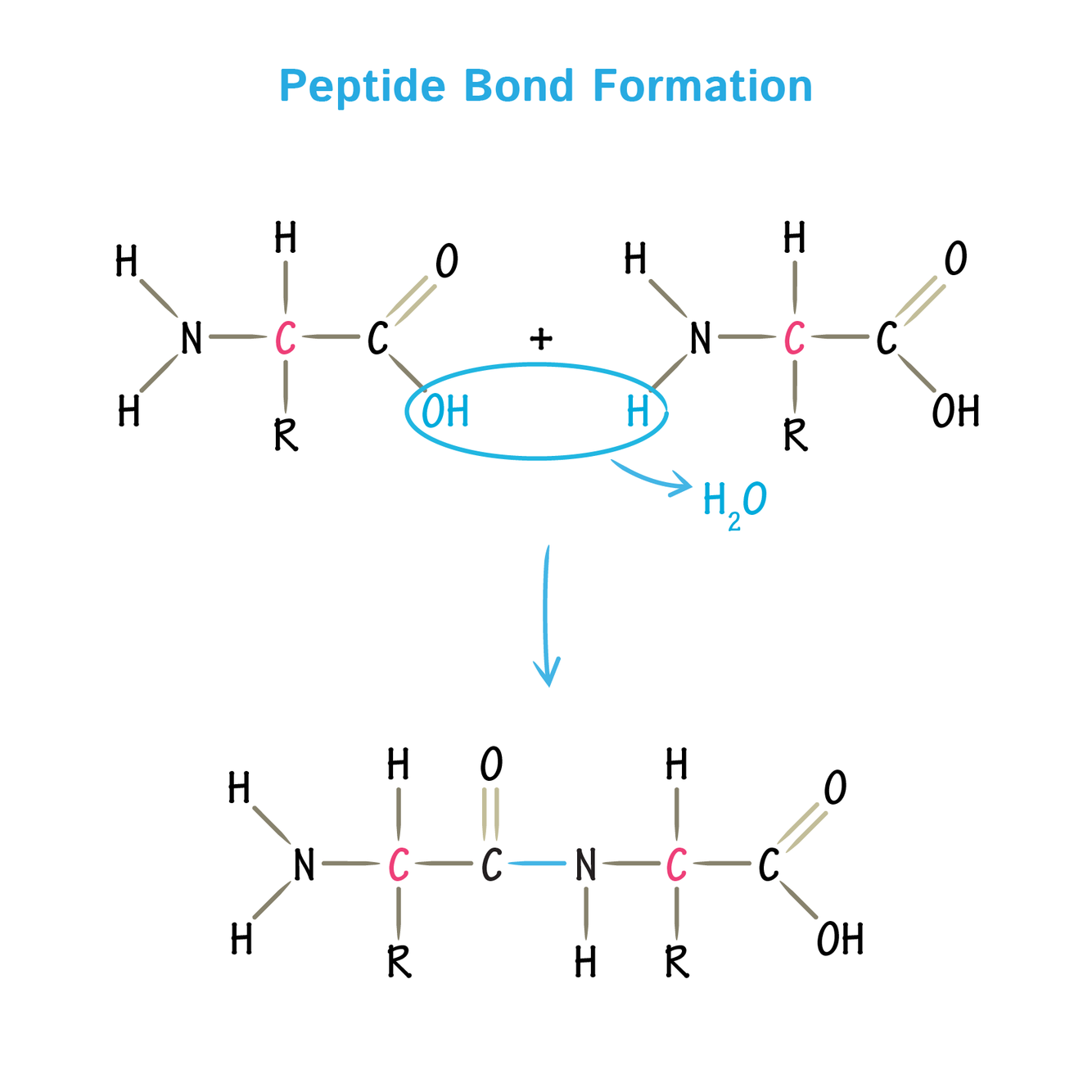
what type of reaction forms peptide bonds
condensation reaction
peptide bond formation
polypeptides form when amino acids undergo condensation to form peptide bonds between them
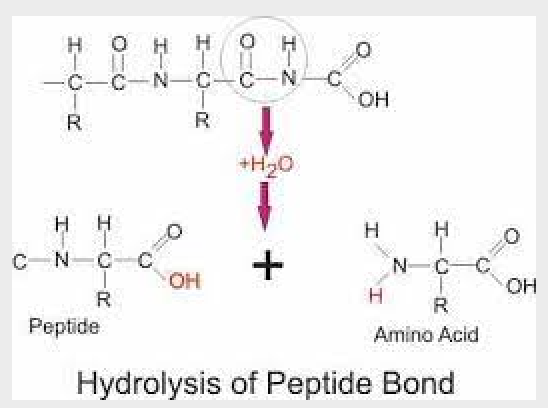
peptide bond cleavage
via hydrolysis of the peptide bond catalyzed by a strong acid or base
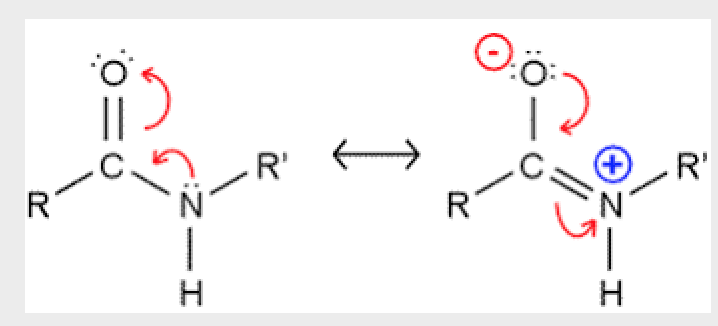
resonance stabilization of peptide bonds
partial double bond character between the nitrogen atom and the carbonyl carbon (no rotation around the C-N bond)