Unit 2-Soaps, Detergents And Emulsions
暂无描述。系统推荐的高质量记忆内容,适合每天坚持背诵学习。
卡片预览 (10 张)
How are soaps made?
Soaps are produced from the alkaline hydrolysis of fats and oils (Triglycerides)
What else is made in the following reaction? Fat or oil + Sodium Hydroxide –> Soap + ????
Glycerol
Describe the structure of a soap molecule.
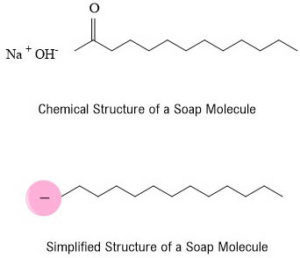
Long non-polar covalent hydrocarbon ‘tail’ and a polar, ionic ‘head’.
What word can be used to describe the tail of a soap molecule which is repelled by water?
Hydrophobic
What word can be used to describe the polar ionic head of a soap molecule which can dissolve in water?
Hydrophilic
How does the structure of soaps allow it to clean?
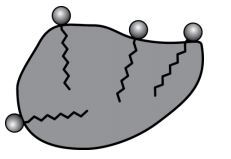
During cleaning using soaps the hydrophobic tails dissolve in a droplet of oil or grease, whilst the hydrophilic heads face out into the surrounding water
What word is used to describe small grease droplets suspended in water?
Emulsion (micelle)
Detergents are particularly useful in hard water areas because they do not form scum. How does a detergent clean?
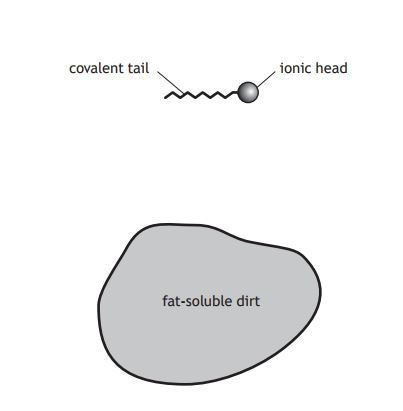
Tails would dissolve into the fat-soluble dirt.
Why are emulsifiers added to foods?
To prevent the oil and water from separating and stop the food from spoiling.
Identify the hydrophobic and hydrophilic parts of these emulsifiers.
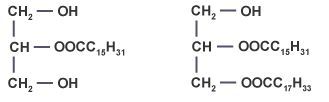
Hydroxyl groups are hydrophilic, whilst fatty acid chains are hydrophobic.