7.2. The Structure and Function of the Brain
No description yet. This curated deck is ready for daily study.
Card preview (24)
Circle of Willis
Basilar artery + Internal carotid arteries Provides a safety mechanism. If one of the arteries gets blocked, the “circle” will still provide the brain with blood.
Function of Cerebellum
-Helps to smooth and coordinate sequences of skeletal muscle contractions. -Regulates posture and balance -Makes possible all skilled motor activities, from catching a ball to dancing
The principal source of energy for brain cells, and what happens when the brain is low on fuel from this source?
The brain obtains energy using glucose and oxygen, which pass rapidly from the blood to the brain cells. Glucose and oxygen are used to make ATP inside the brain by the process of aerobic respiration. Carbohydrate storage in the brain is limited, so the supply of glucose must be continuous. If blood entering the brain has low glucose or oxygen levels, mental confusion, dizziness, convulsions, and loss of consciousness may occur.
Difference between cerebrum and cerebral cortex
Cerebrum is the uppermost largest part of the brain while cerebral cortex is the outer layer of the gray matter of cerebrum
Function of Thalamus
-Relay station –> it receives messages then sends the message to the intended destination -Sends and receives messages between the brain and body -Perception of sensations (pain, temperature, pressure) -Motor signal relay -Cognition
Function of Brainstem
Respiratory and cardiovascular control centres
Function of Cerebrum
-Responsible for high-level brain functions such as thinking, language and emotion, and motivation -Function is divided into three broad processes –> sensory (receiving sensory impulses), association (interpreting and storing input, and initiating a response), motor (transmitting impulses to effectors)
What is the name of the lobe in green? A. Frontal B. Temporal C. Parietal D. Occipital
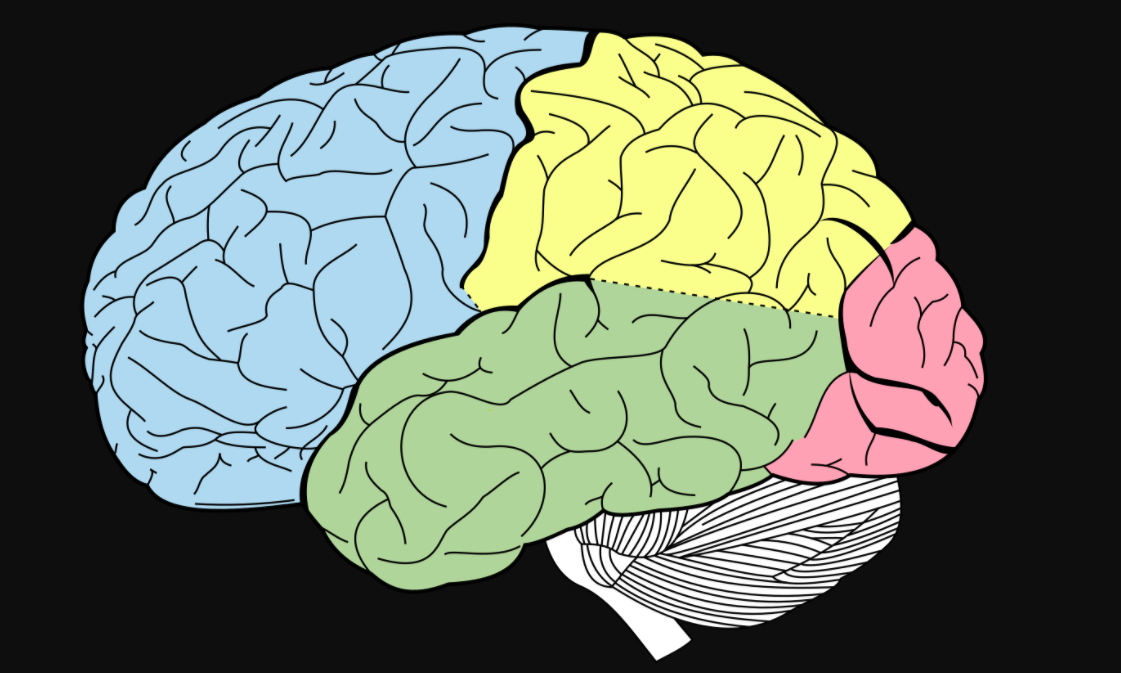
B. Temporal
Blood-brain barrier
protects the brain
What is the name of the lobe indicated in yellow? A. Frontal B. Temporal C. Parietal D. Occipital
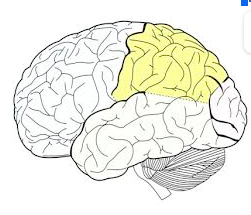
C. Parietal
What is the name of the lobe in blue? A. Frontal B. Temporal C. Parietal D. Occipital
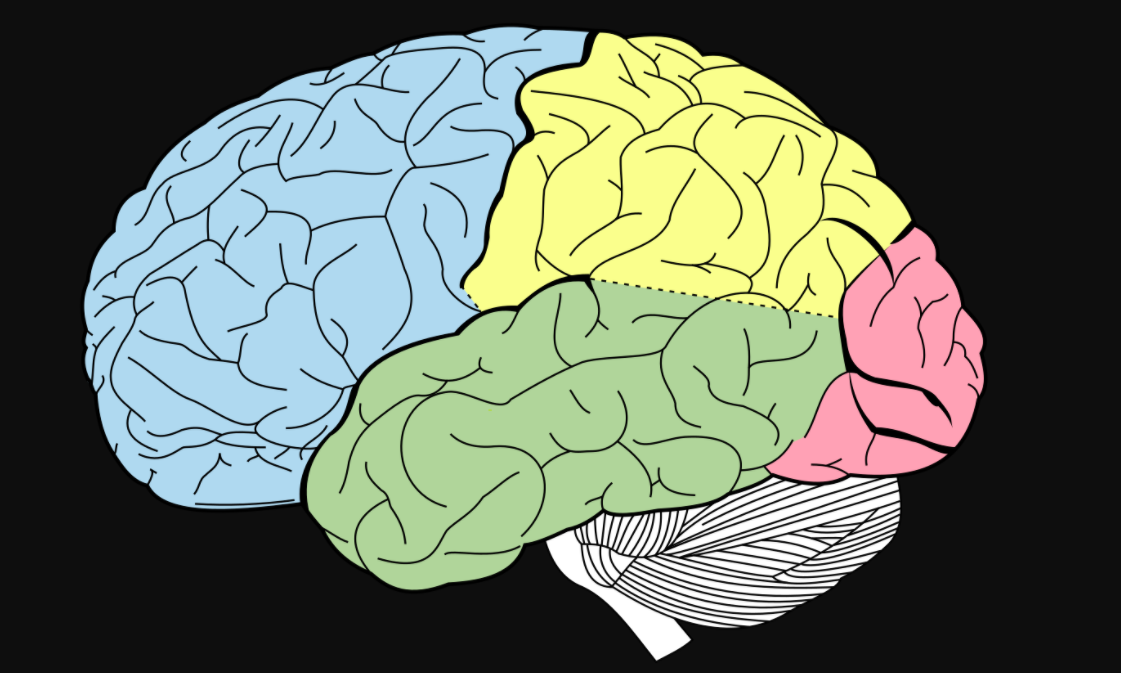
A. Frontal
Brachiocephalic trunk
First branch of aortic branch /supplies blood to the right arm and the head and neck
What is the name of the lobe in red? A. Frontal B. Temporal C. Parietal D. Occipital
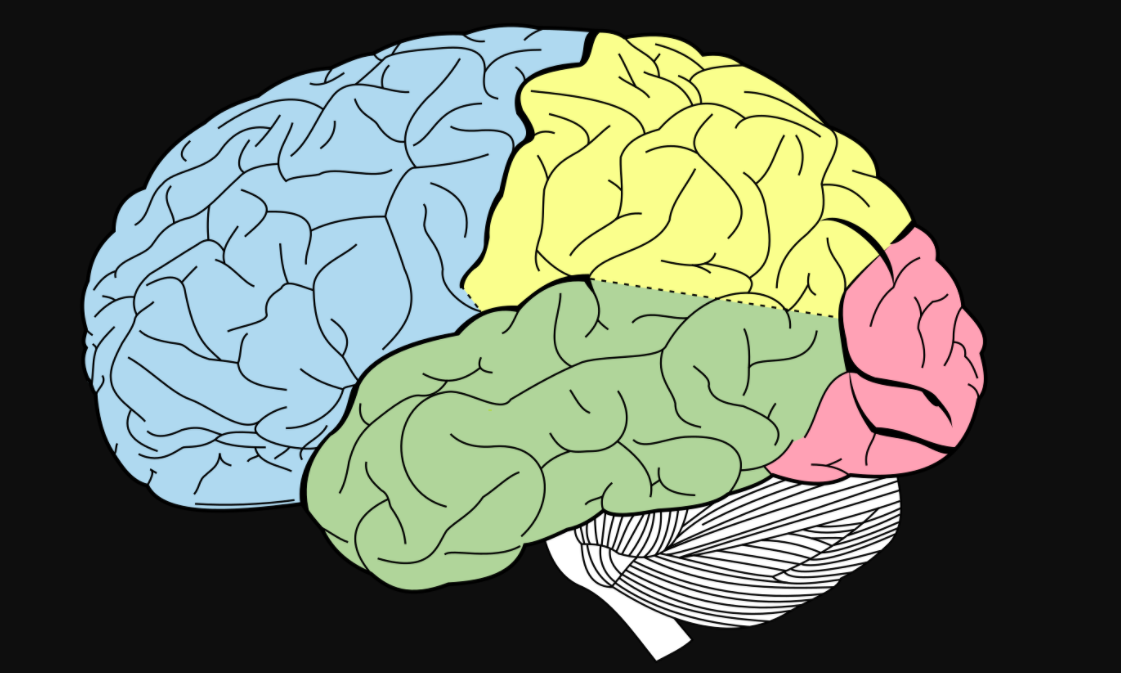
D. Occipital
Function of Hypothalamus
Control of autonomic nervous system (ANS), heart rate and blood pressure, pituitary gland, body temperature, appetite, thirst, fluid and electrolyte balance, circadian rhythms
Frontal lobe
Reasoning and motivation, planning, emotions and problem-solving. Also contains the speech and movement motor areas.
Parietal Lobe
Somatic sensory and motor areas linked to movement, body awareness, orientation and navigation. Also contains symbolic and speech association areas.
Limbic lobe
Concerned with association processes such as emotion, behaviour, motivation and long-term memory.
Occipital lobe
Visual sensory and association centre.
Temporal lobe
Auditory sensory and association area; many aspects of long-term and visual memory.
Principal structures of the brain.
the brain stem the diencephalon the two hemispheres of the cerebrum the cerebellum.
The Diencephalon
Hypothalamus + Thalamus Relaying sensory and motor signals to the cerebral cortex and regulating consciousness, sleep, and alertness.
How is blood carried to the brain?
Left and Right vertebral arteries (posterior supply, primarily to the brain stem and back portions of the brain). They join together to form the Basilar artery. Left and Right carotid arteries (anterior supply and middle). The carotid arteries split in 2: External (supply blood to face and scalp) and Internal (supply blood to most of cerebrum).
Left and Right Carotid arteries
Supplies to the anterior and middle of the brain. The carotid arteries split in 2: External (to face and scalp) Internal (most of the cerebrum).
Left and Right Vertebral Arteries
Supply blood to posterior areas of the brain. They join together to form the Basilar artery.