9 - HETEROCYCLES
No description yet. This curated deck is ready for daily study.
Card preview (24)
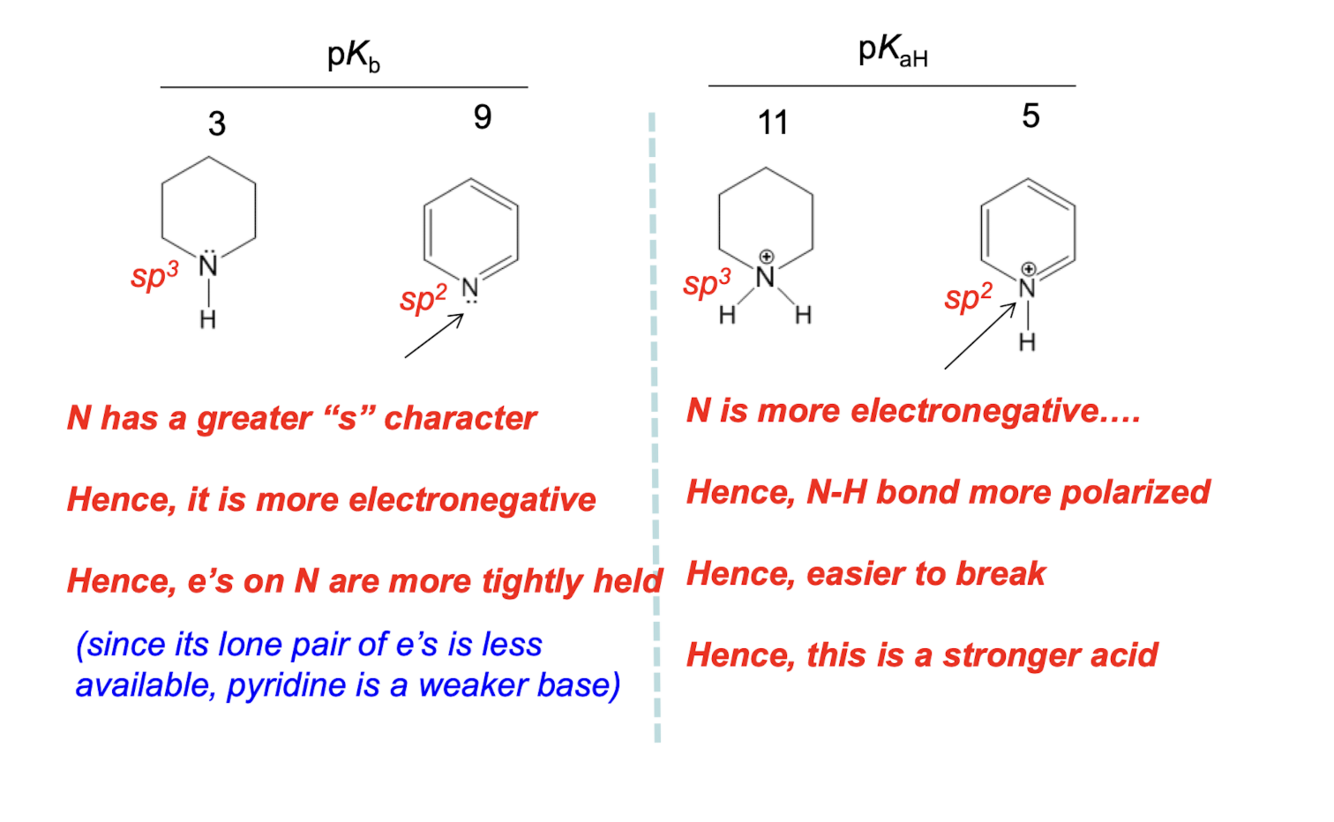
why is pyridine a weaker base than piperidine?
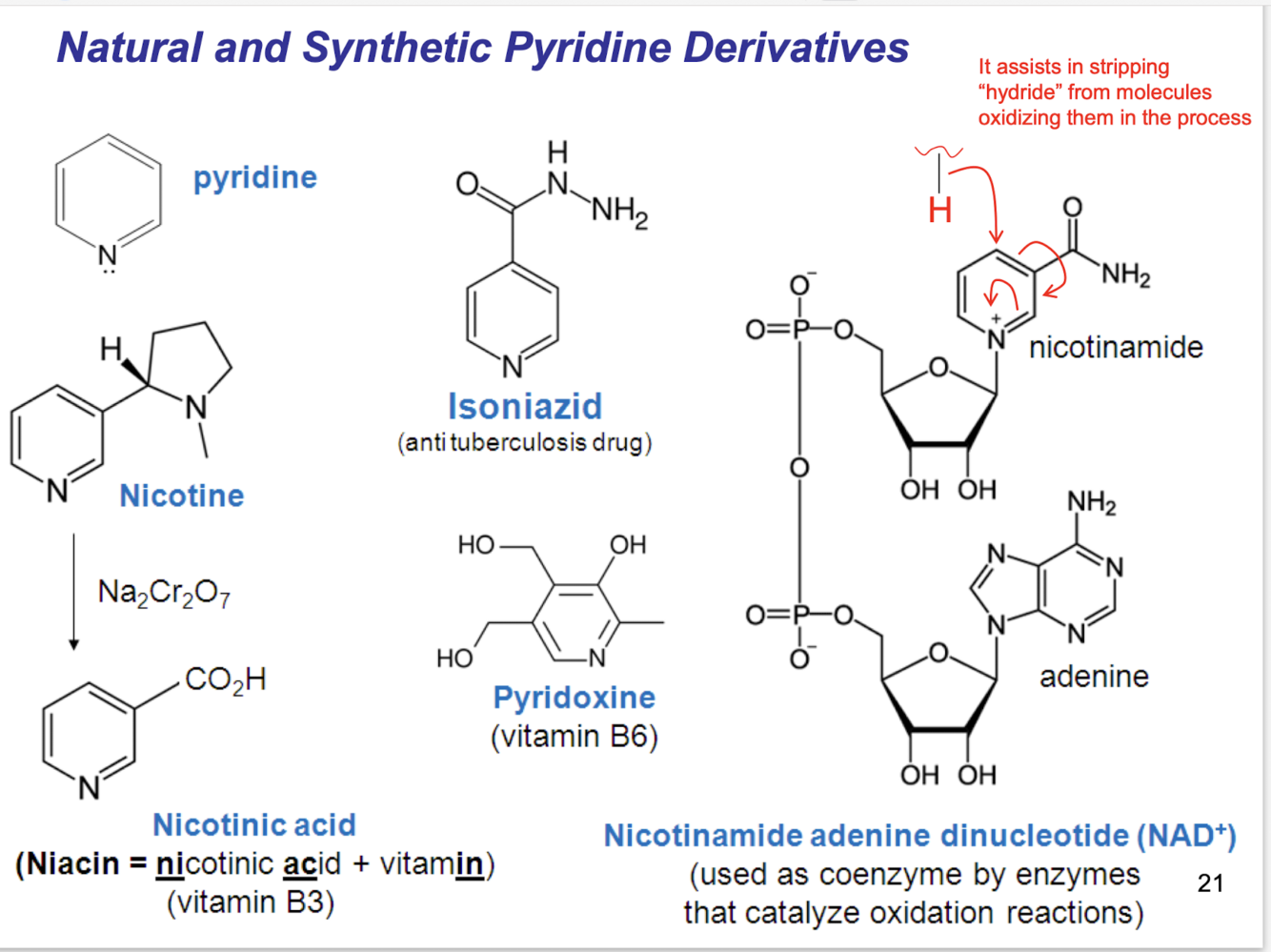
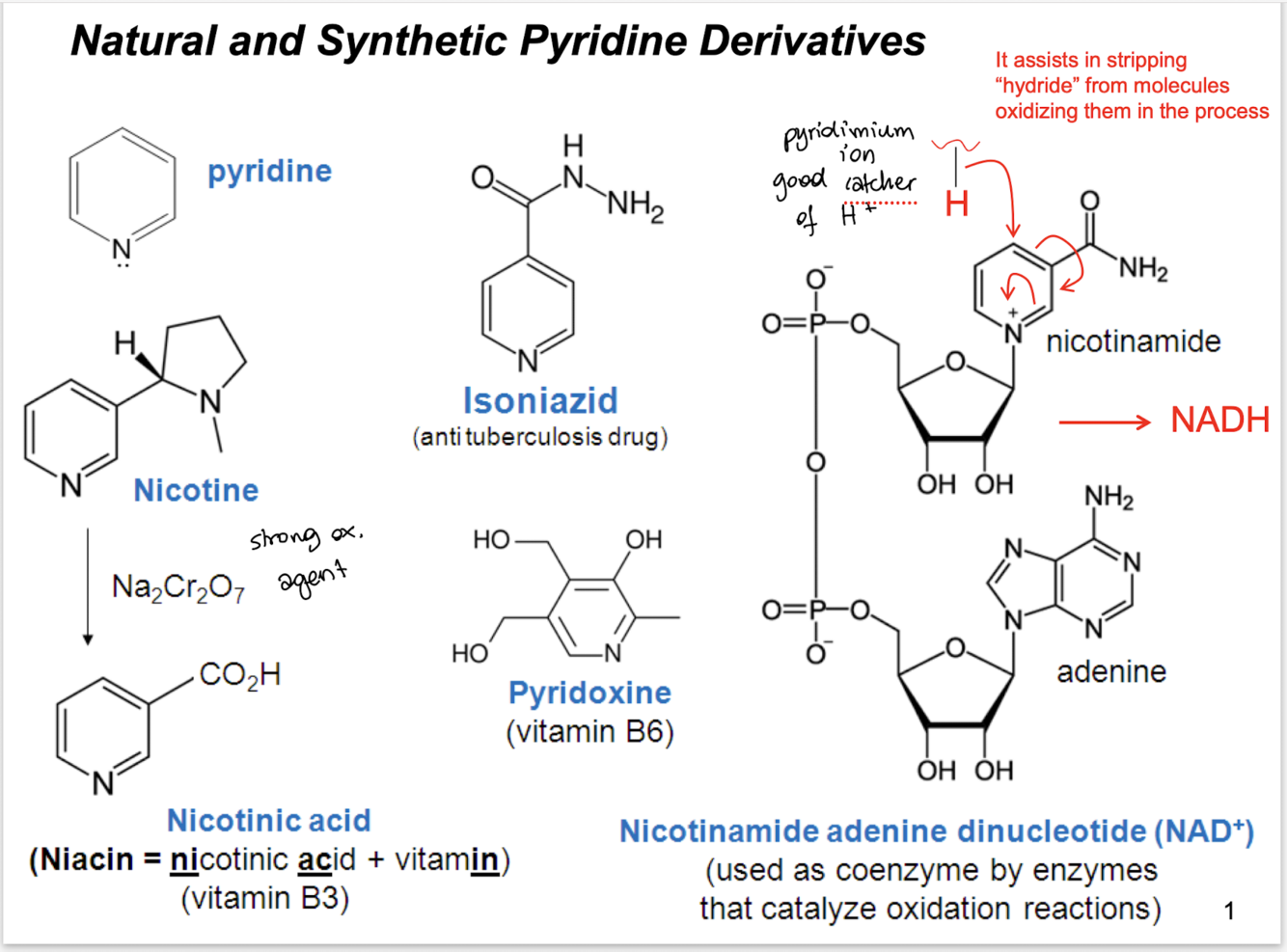
what are some natural and synthetic derivates of pyridine?
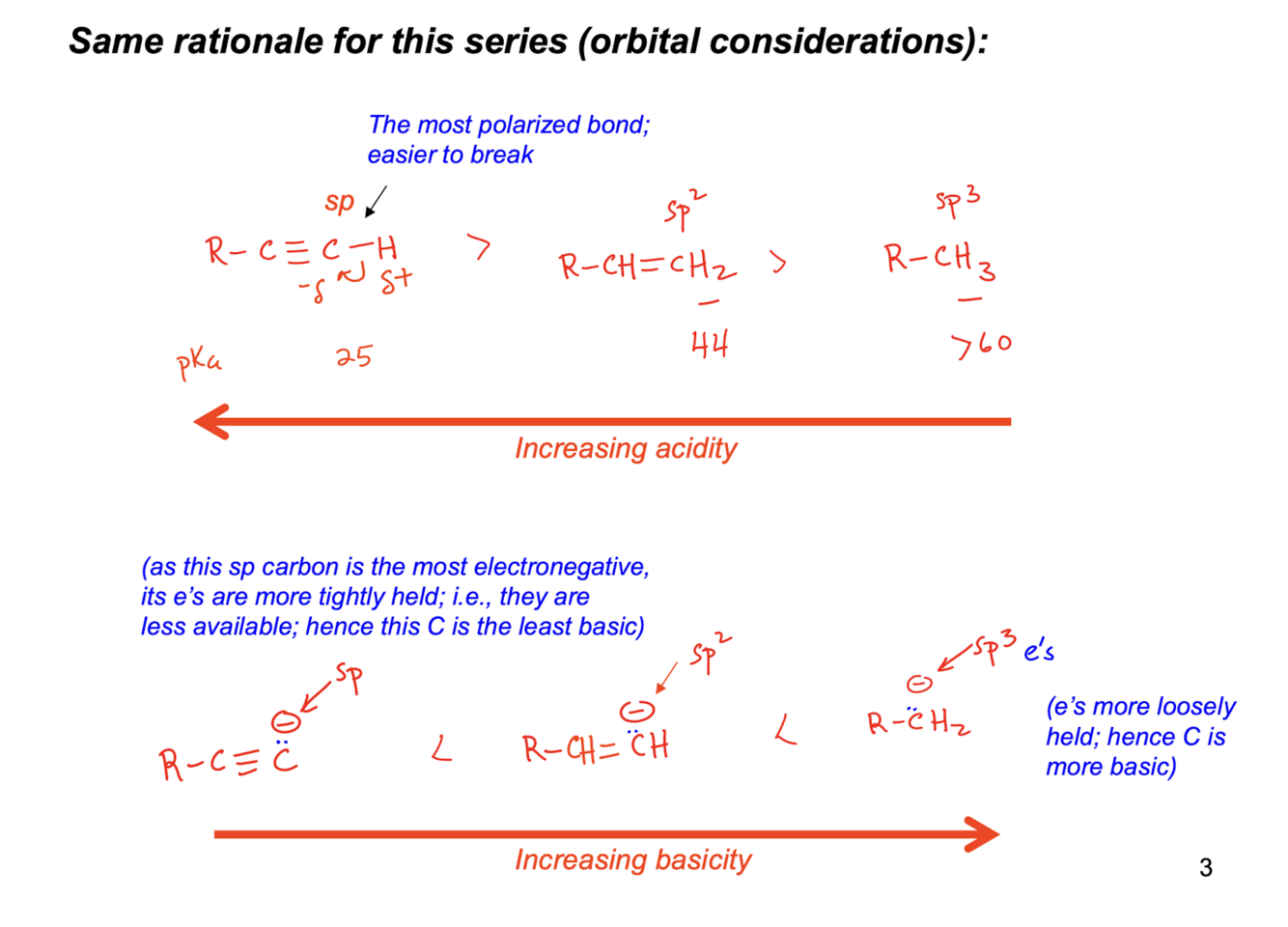
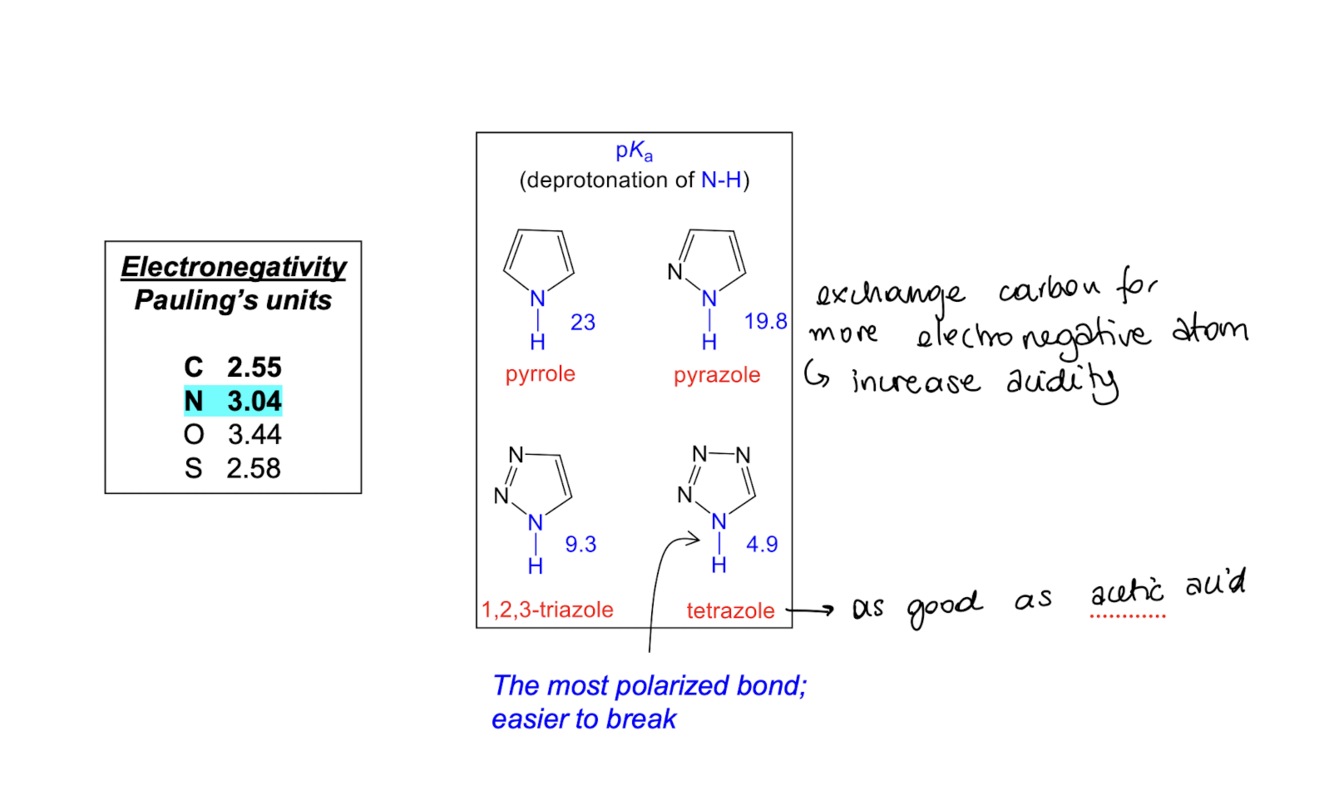
how do orbitals affect acidity and basicity?
how does electronegativity play a role in acidity/basicity?
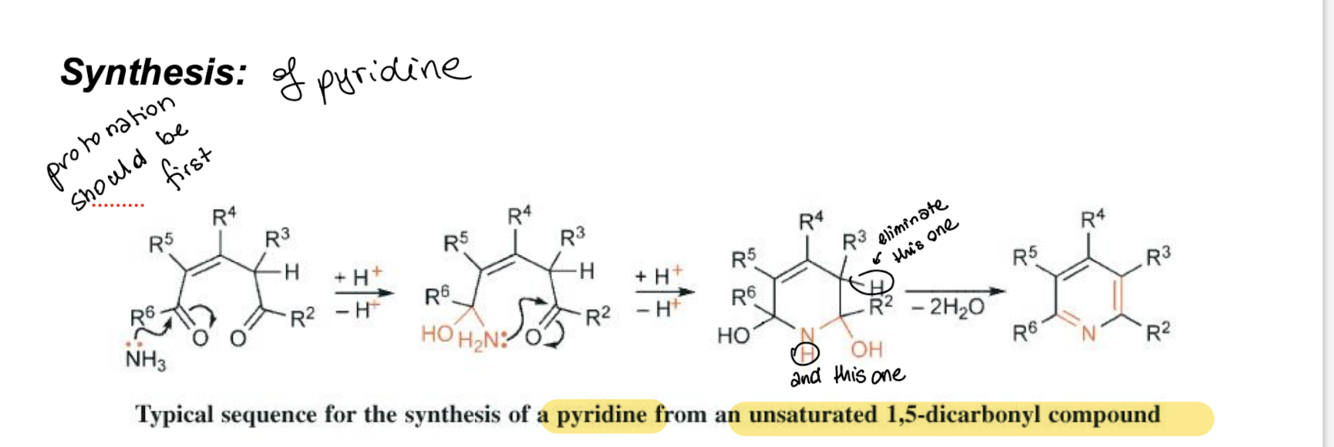
how is pyridine formed from an unsaturated 1,5-dicarbonyl compound?
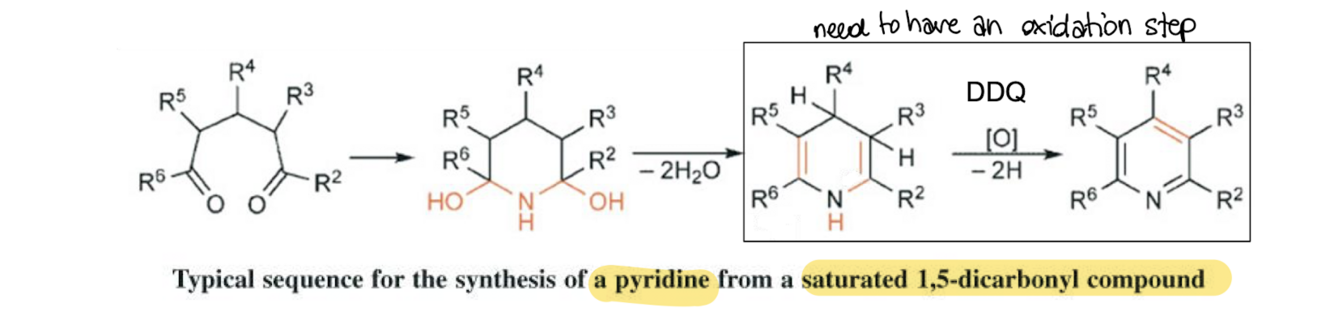
how is pyridine formed from a saturated 1,5-dicarbonyl compound?
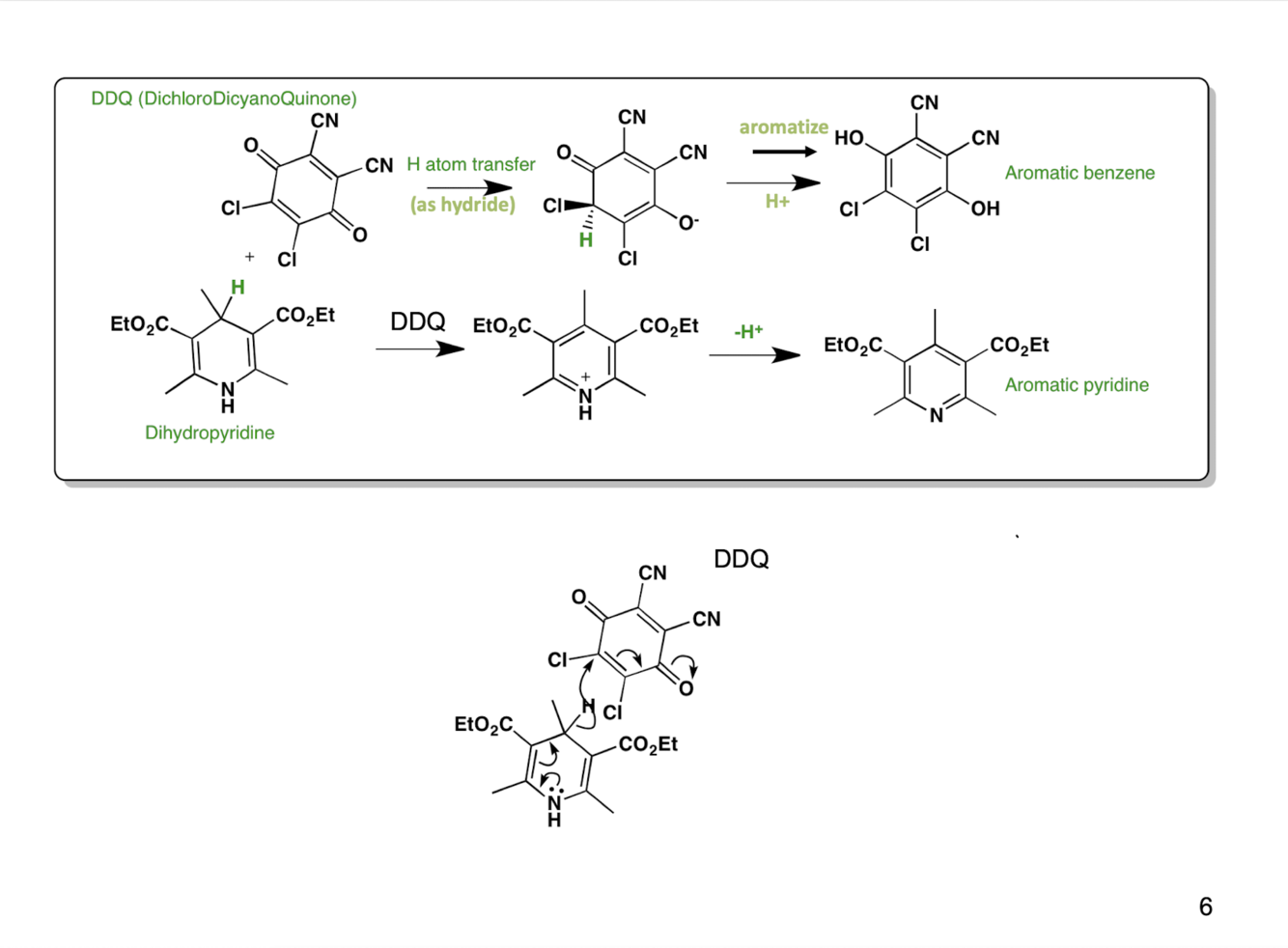
how is dihydropyridine reduced to aromatic pyridine by DDQ?
what is the mechanism of the Hantzsch pyridine synthesis?
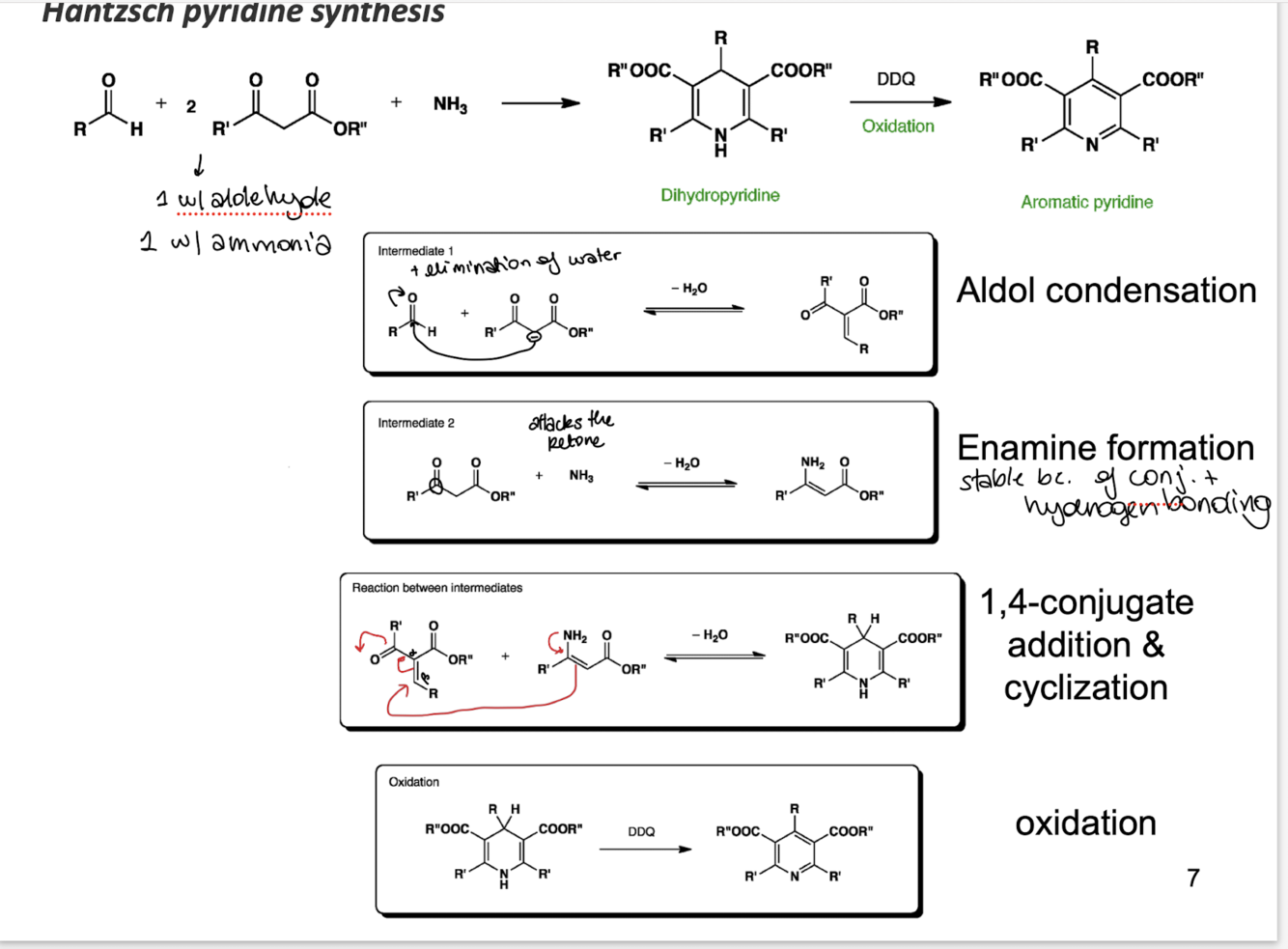
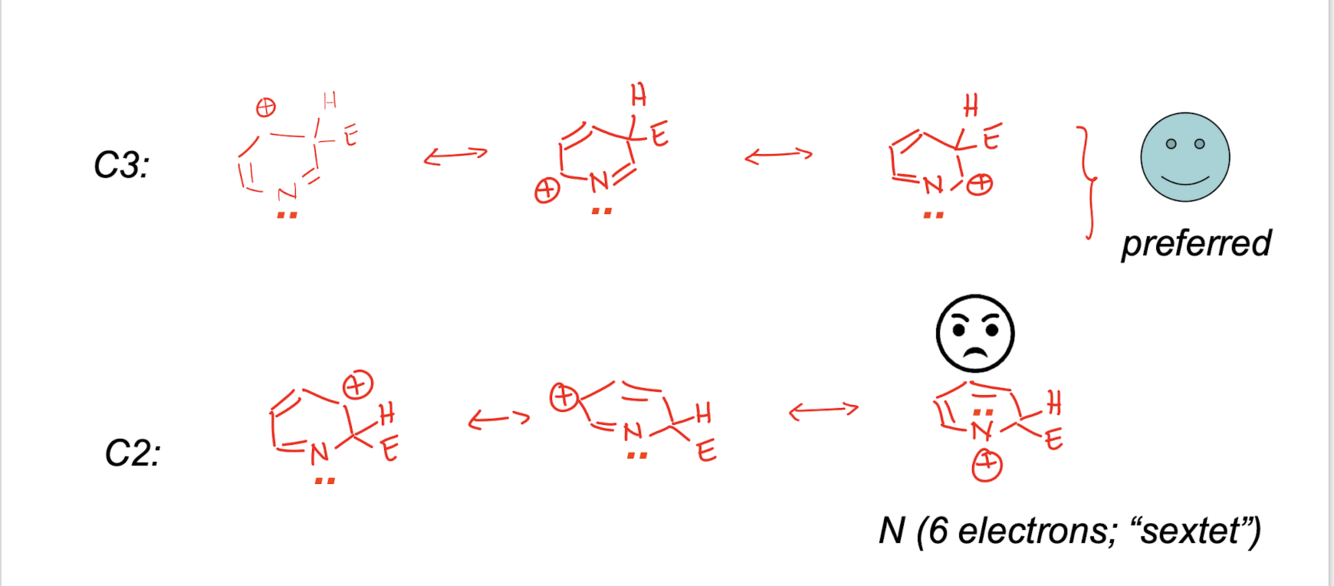
which carbon substitution does pyridine prefer?
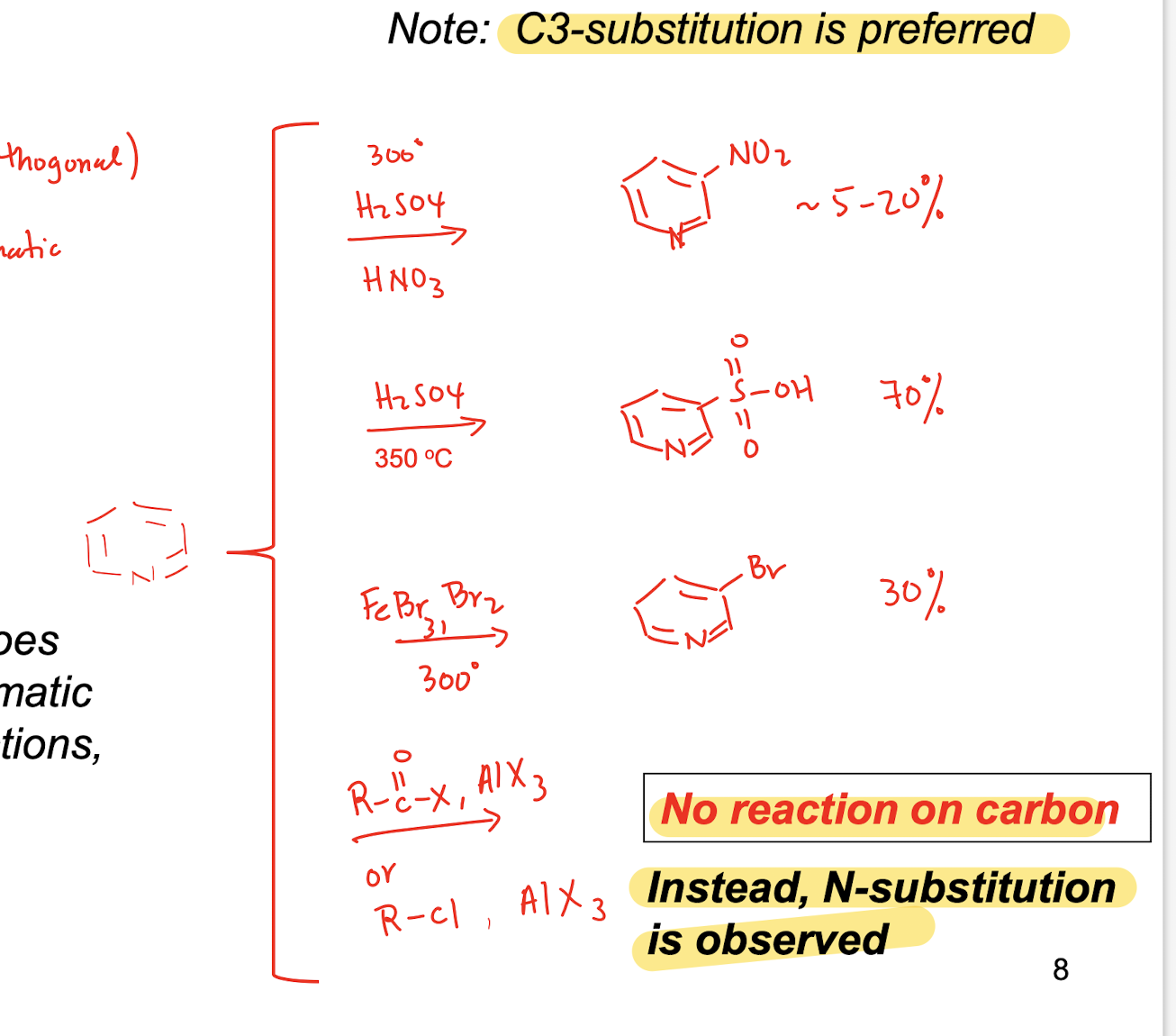
C3 substitution is preferred this maximises the number of resonance forms possible in the intermediate, greater charge delocalization
what are some C3 substitution that pyridine undergoes?
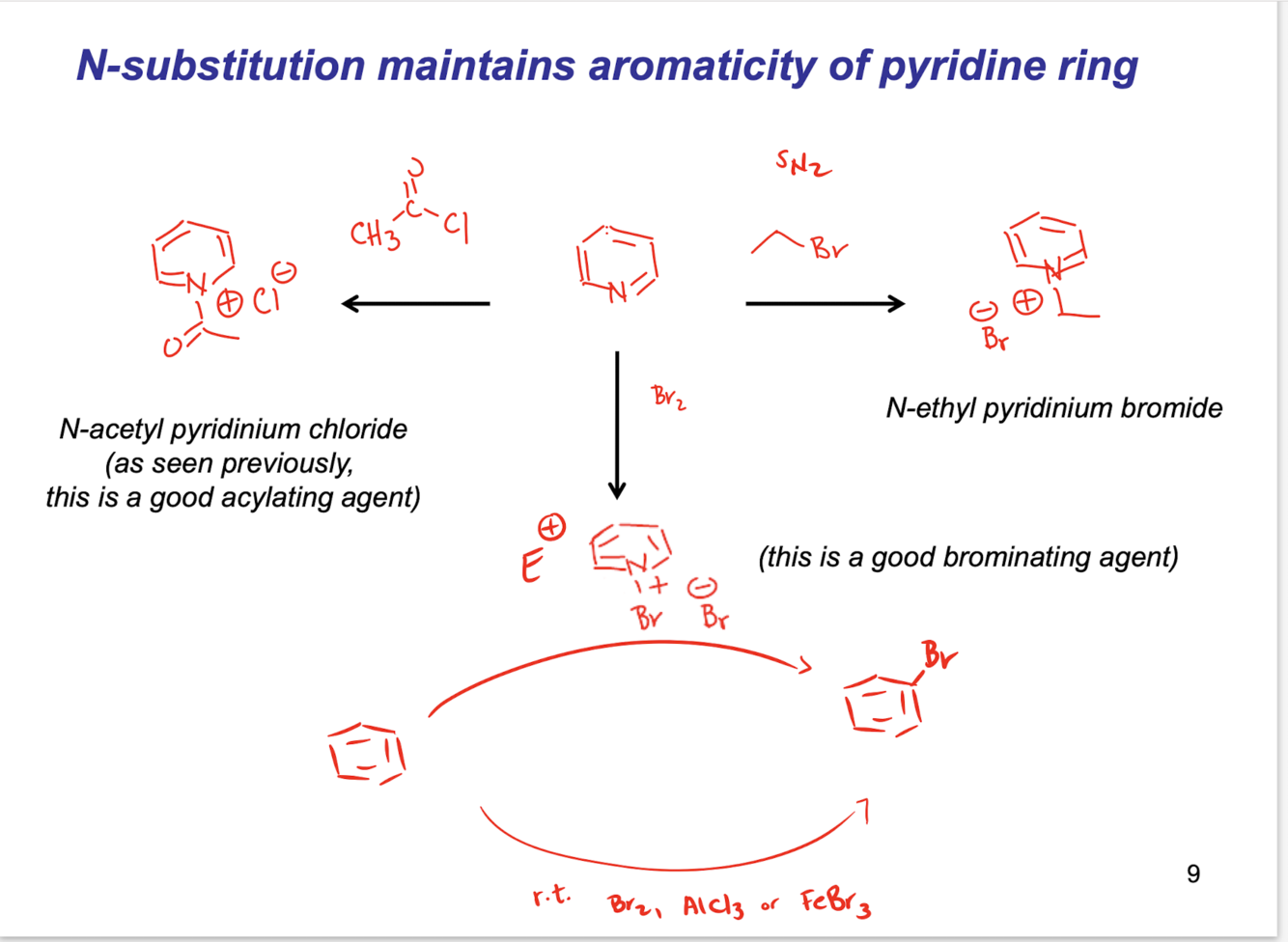
why is N substitution for pyridine preferred and what are some reactions?
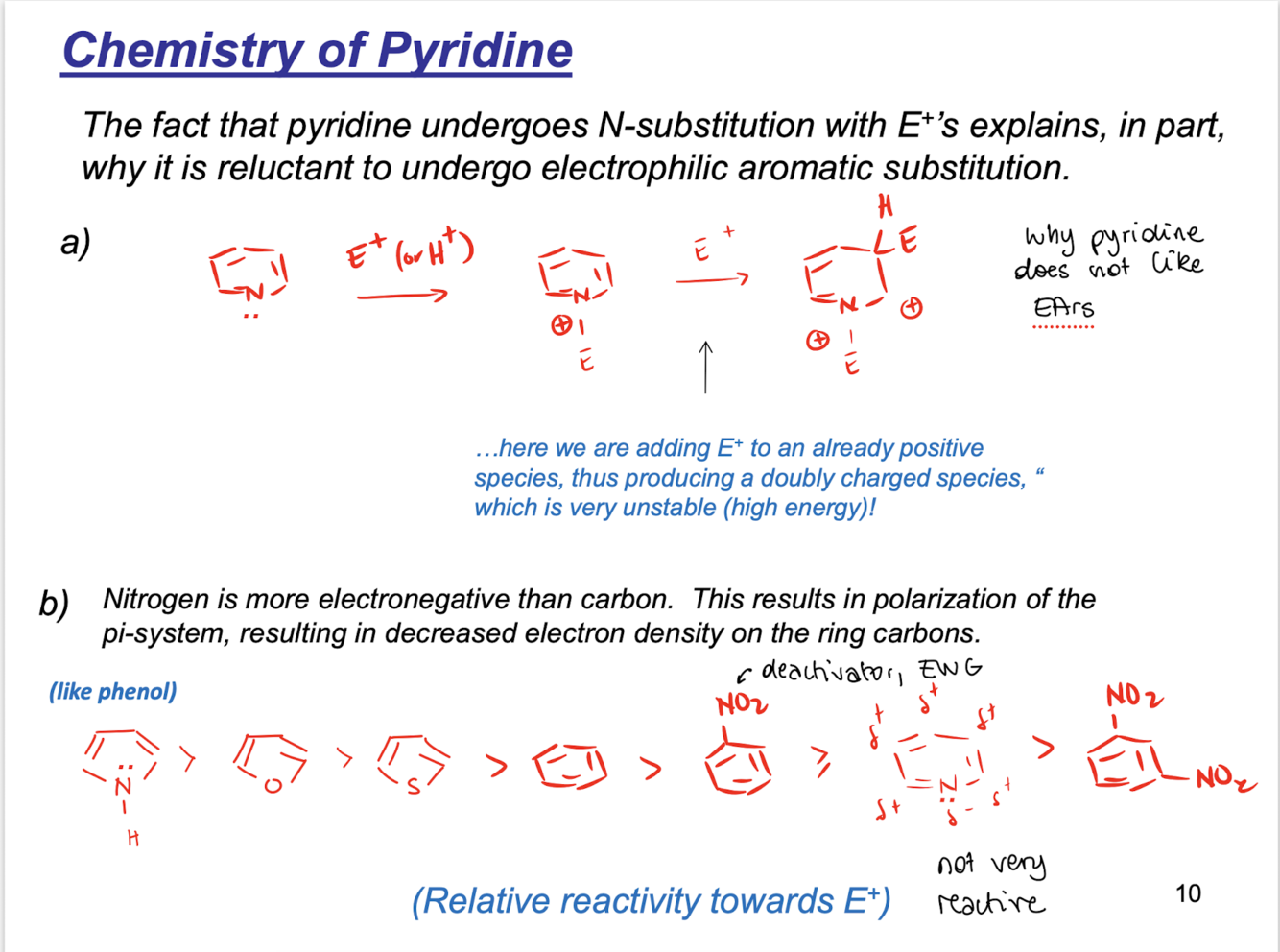
why is pyridine reluctant to undergo electrophilic aromatic substitution?
on which carbon does pyridine prefer doing electrophilic aromatic substitution?
C3 more resonance forms, greater charge delocalisation be able to draw the resonance structures:
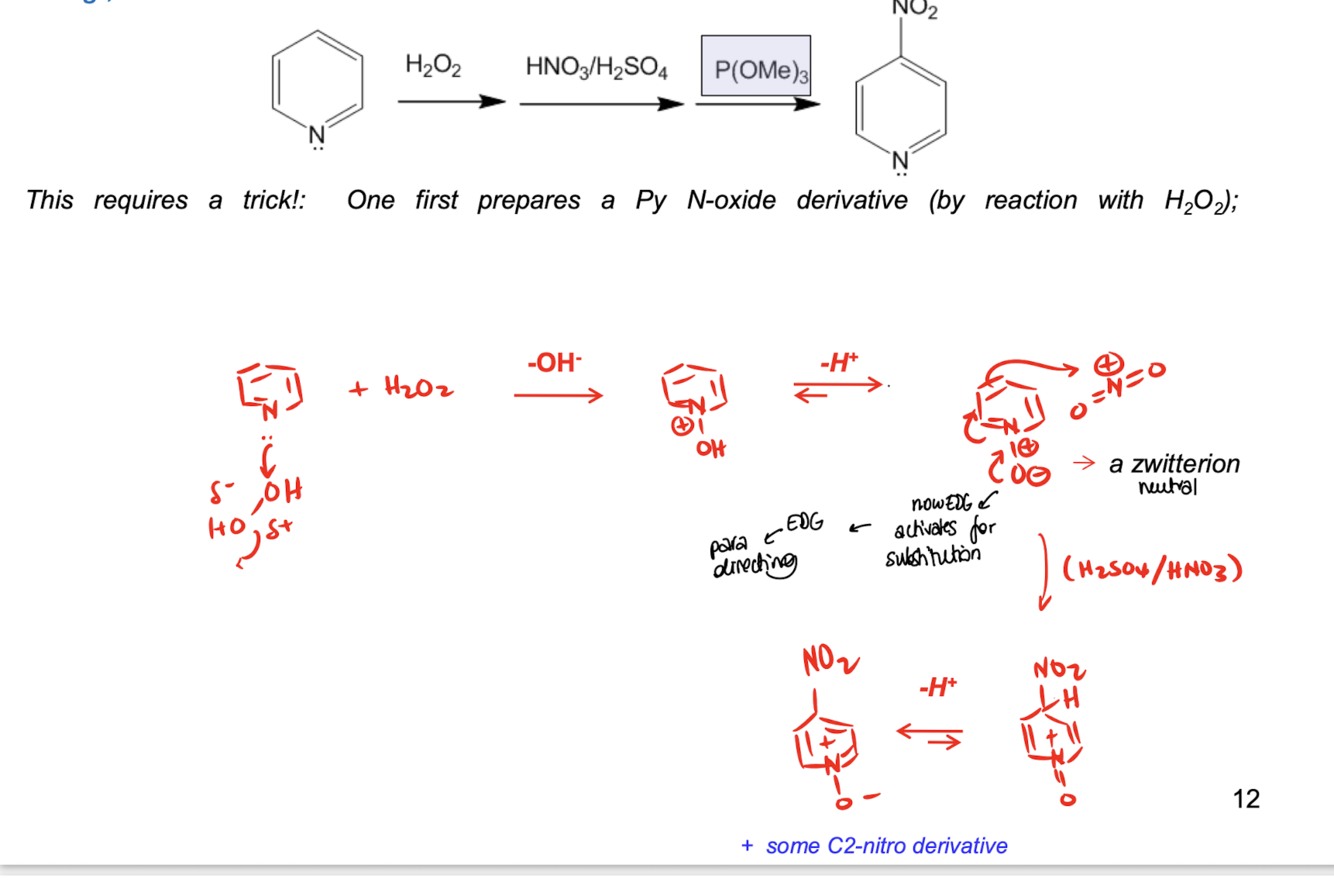
how do we carry out reactions at C4 for pyridine?
first prepare a Py N oxide by reacing with H2O2 then add the desired nucleophile reduce it back to the ring you get some C2-nitro derivatives, but that one is less favored because of sterics and electrostatic repulsion between N+ and NO2+
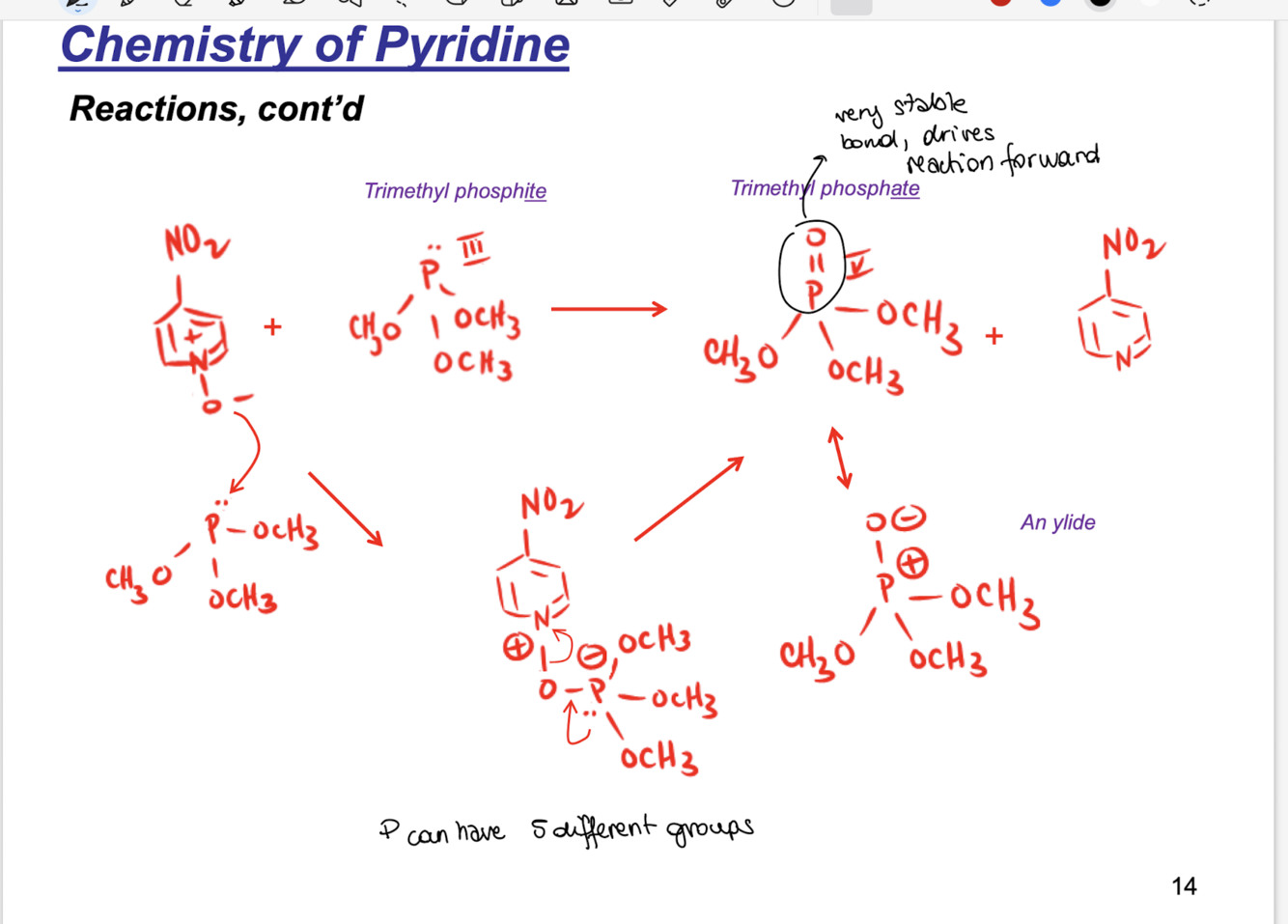
How is the C4 NO2 pyridine reduced with trimethyl phosphite?
trimethyl phosphite is a reducing agent
how do nucleophilic aromatic substitutions on pyridine happen?
they are quite easy
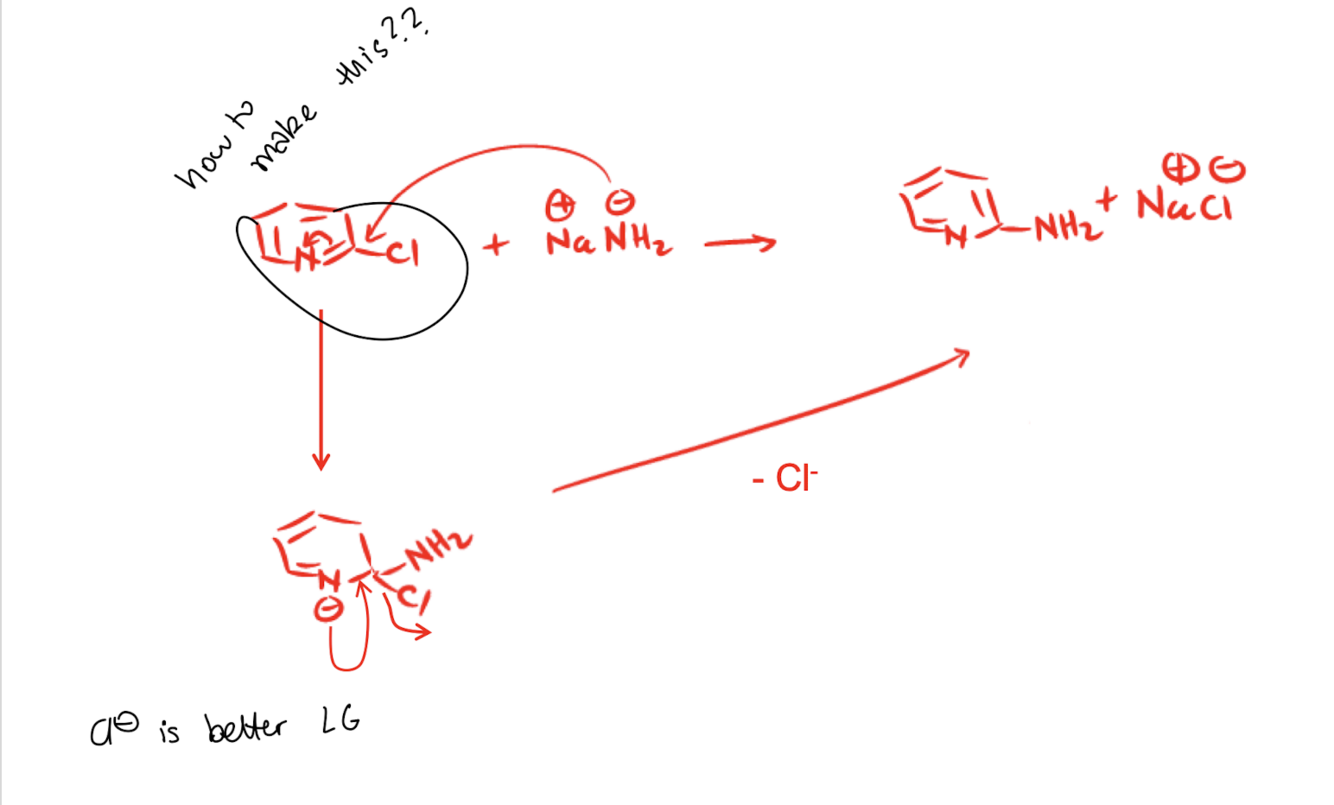
how do you make synthetically useful 2-chloropyridine?
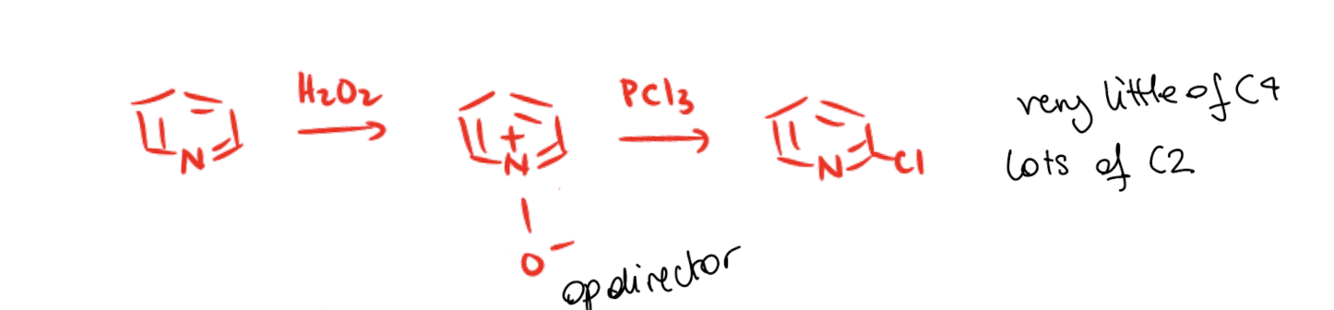
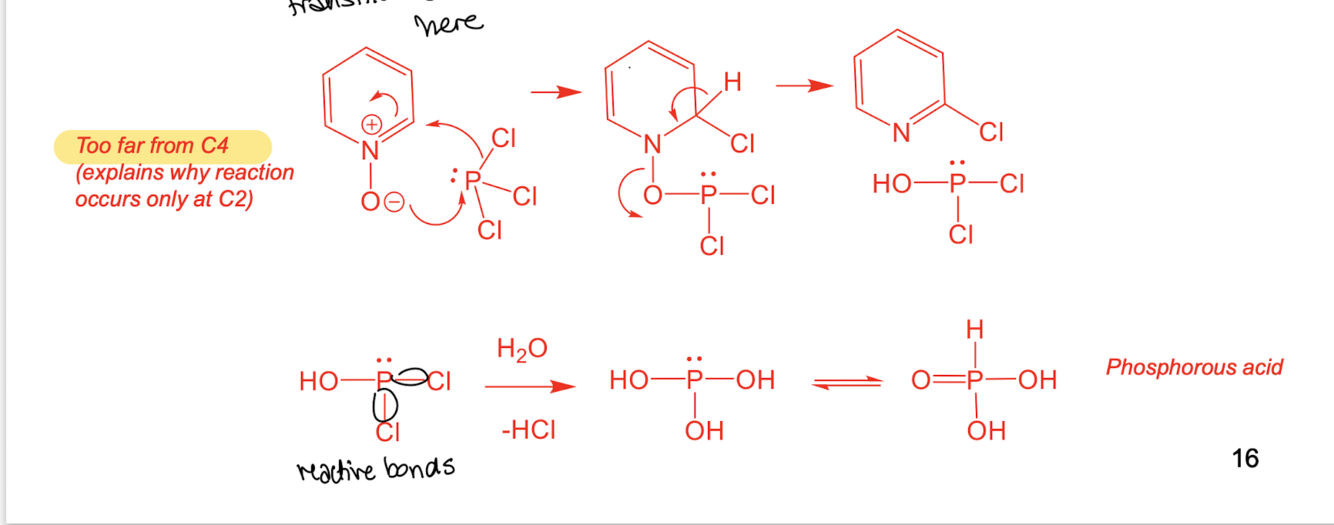
why does making 2-chloropyridine only happen at C2 and not at C4?
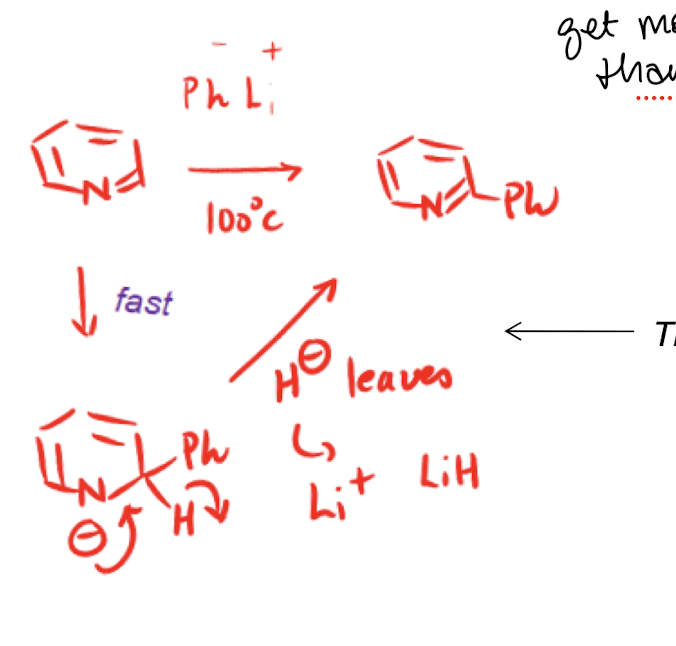
how can a benzene be added to C2 of a pyridine?
need a strong nucleophile, an organolithium reagent hydride leaves because the driving force is the regeneration of the aromaticity
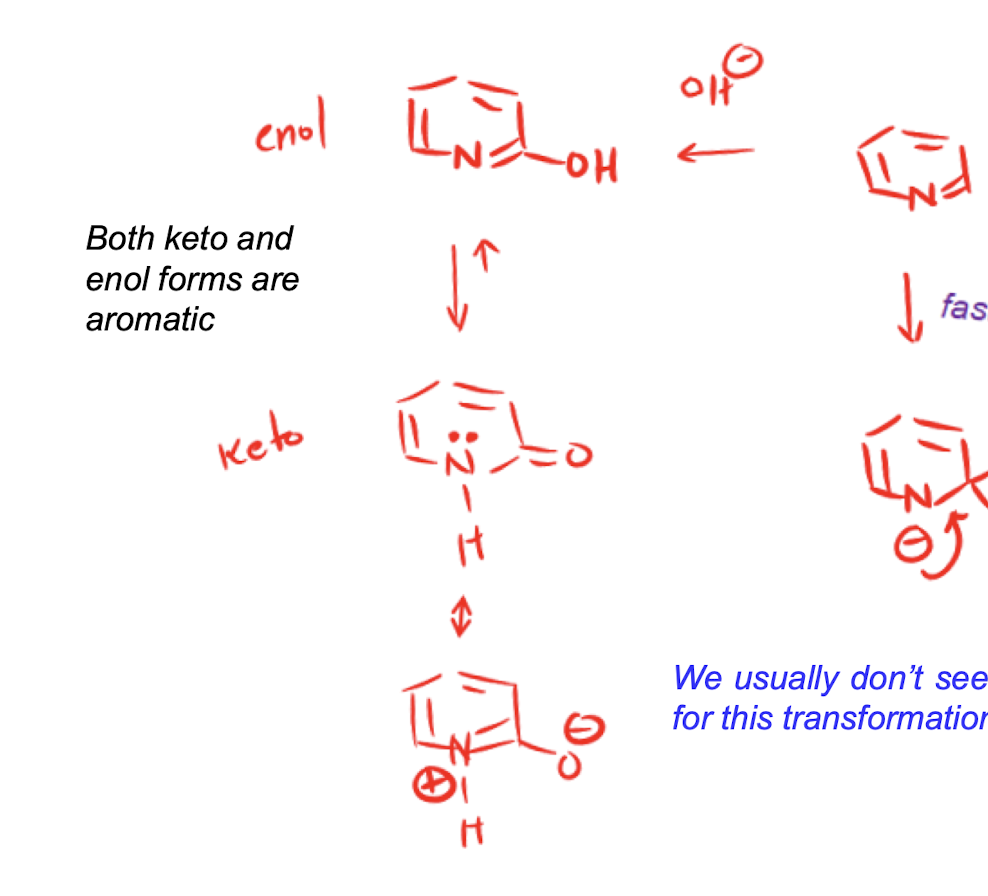
how can a hydroxyl group be added to the C2 of a pyridine?
need a strong nucleophile, in this case OH- you get both the keto and enol form
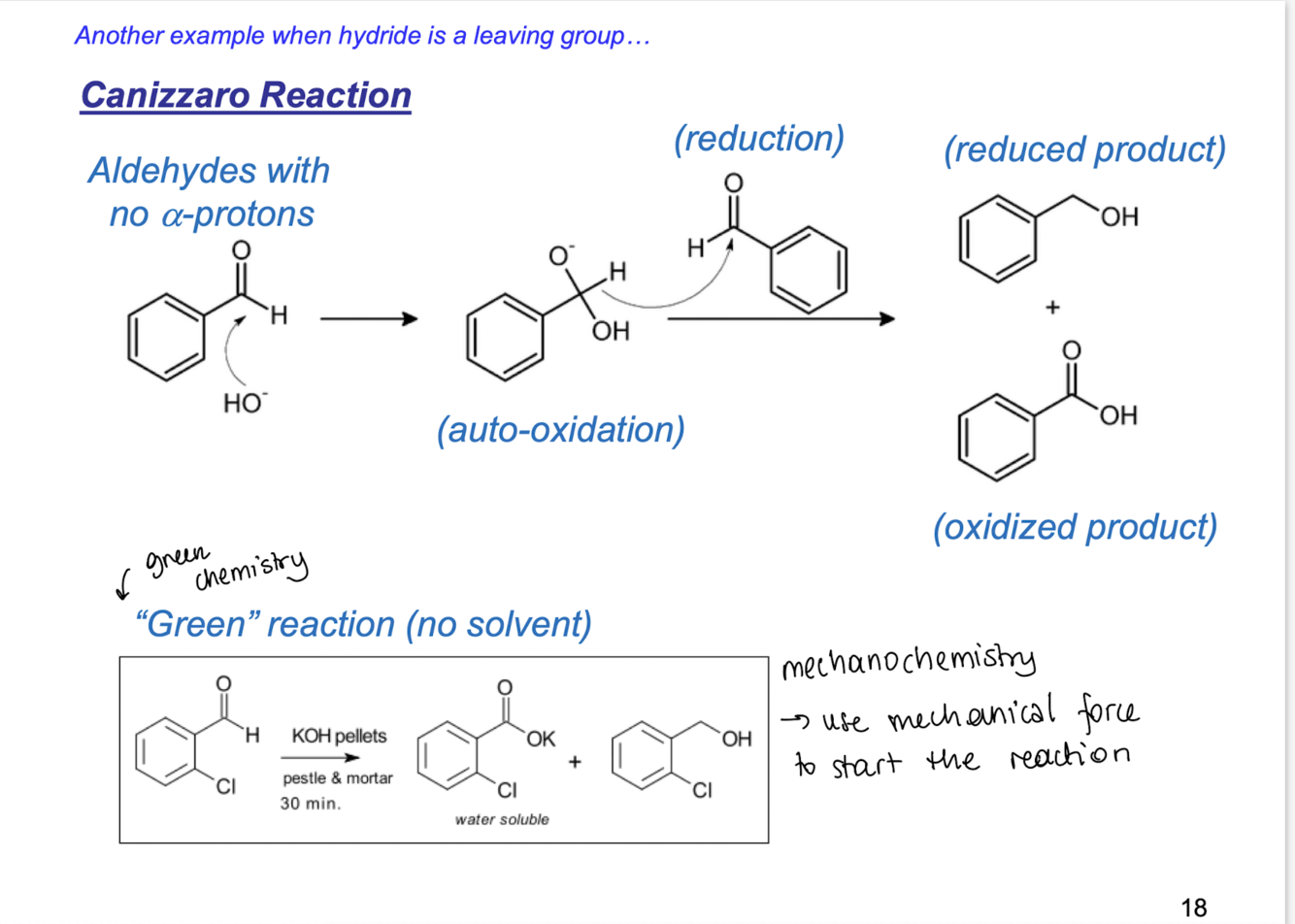
what is the canizzaro reaction?
example of a reaction where hydride is the leaving group this is a green chemistry reaction, no solvent is needed -> mechanochemistry
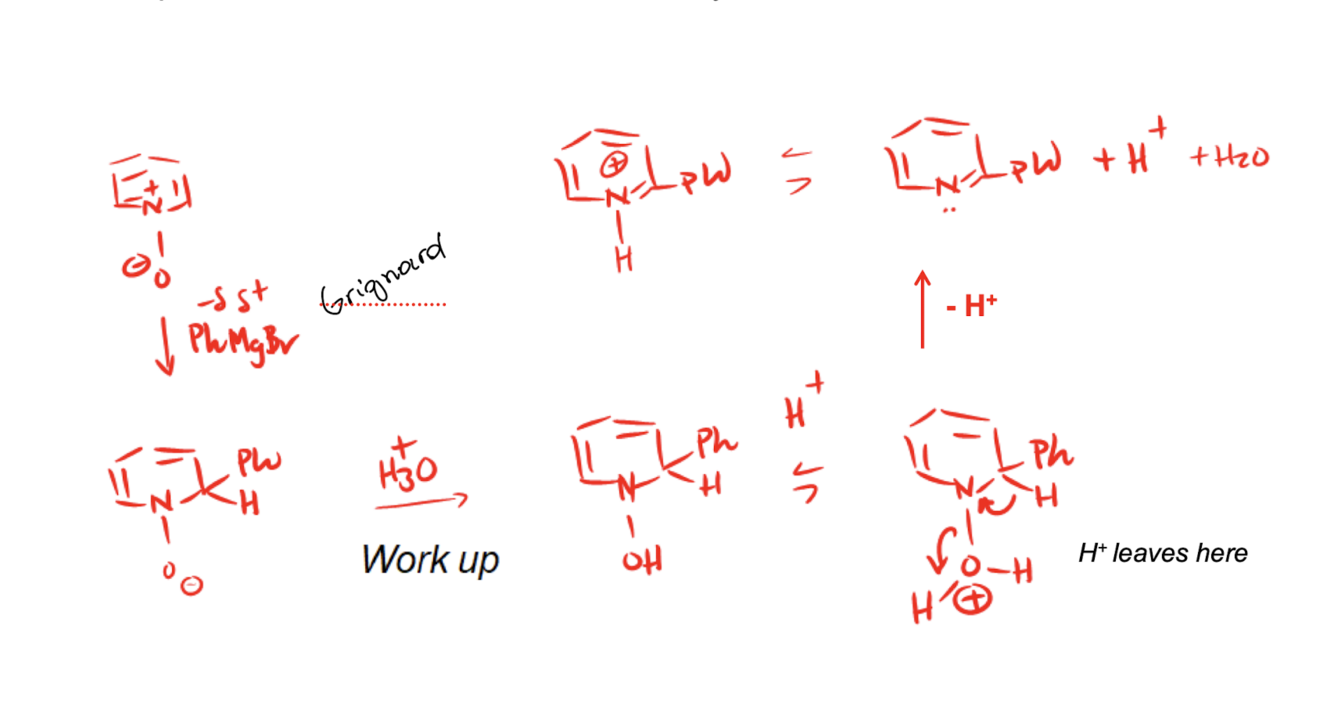
how do nucleophilic aromatic substitutions on Py oxide happen?
also happen easily
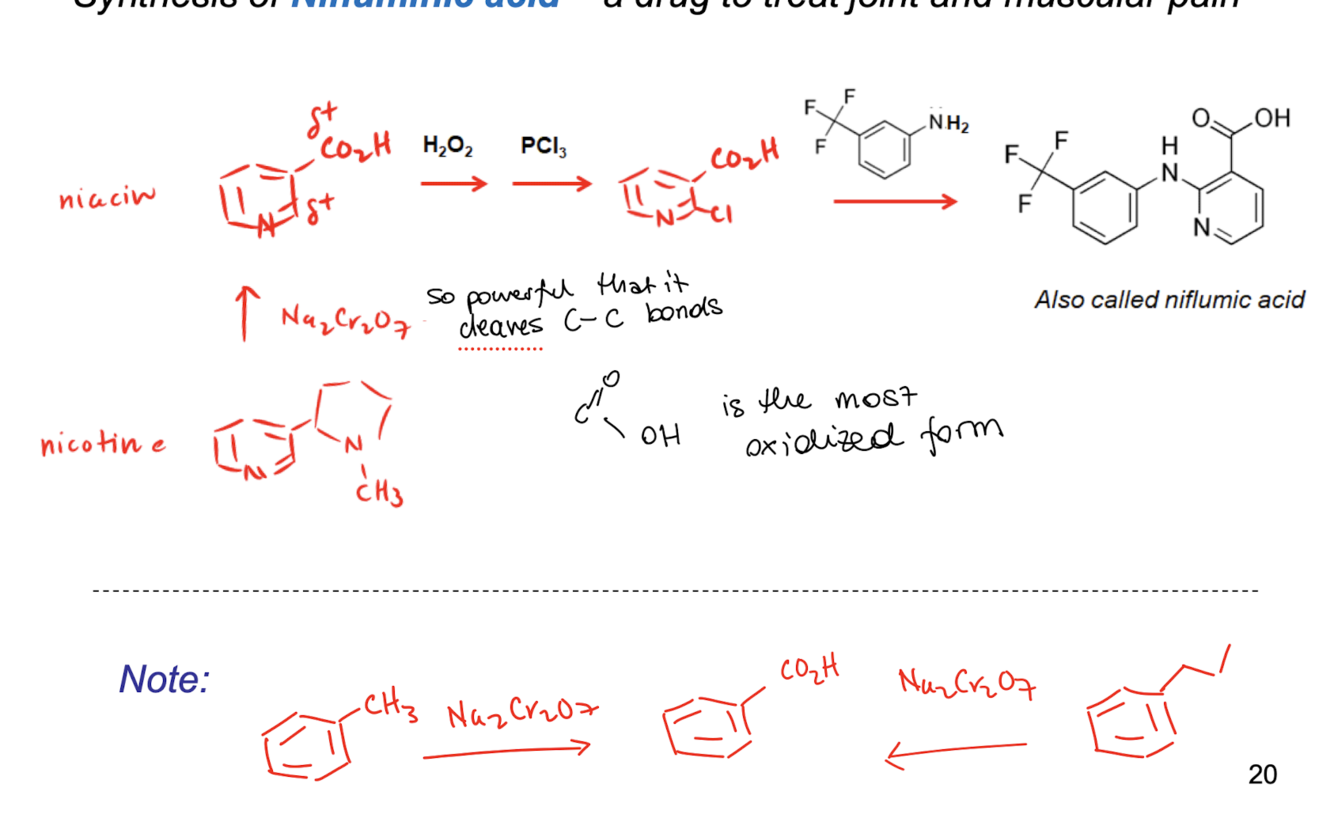
what is the synthesis of nifluminic acid from nicotine and its function?
nifluminic acid=treats joint and muscle pain use N2Cr2O7 as an oxidizing agent
what are some natural and synthetic pyridine derivatives?