Gypsum
No description yet. This curated deck is ready for daily study.
Card preview (19)
what is the purpose of a study model/cast?
• records the position, shape and dimensions of teeth • aids visualisation/assessment of dentition • enables manufacture of dental prosthesis (RPDs)
what are the types of gypsum?
• plaster (β-hemihydrate) • dental stone (α-hemihydrate) • densite (improved stone)
what are the uses of gypsum?
• cast (plaster/stone) • die (stone/improved stone) • mould material (stone) • investment binder (stone)
what is the equation for the manufacture of gypsum?
manufacture conditions determine type of gypsum produced
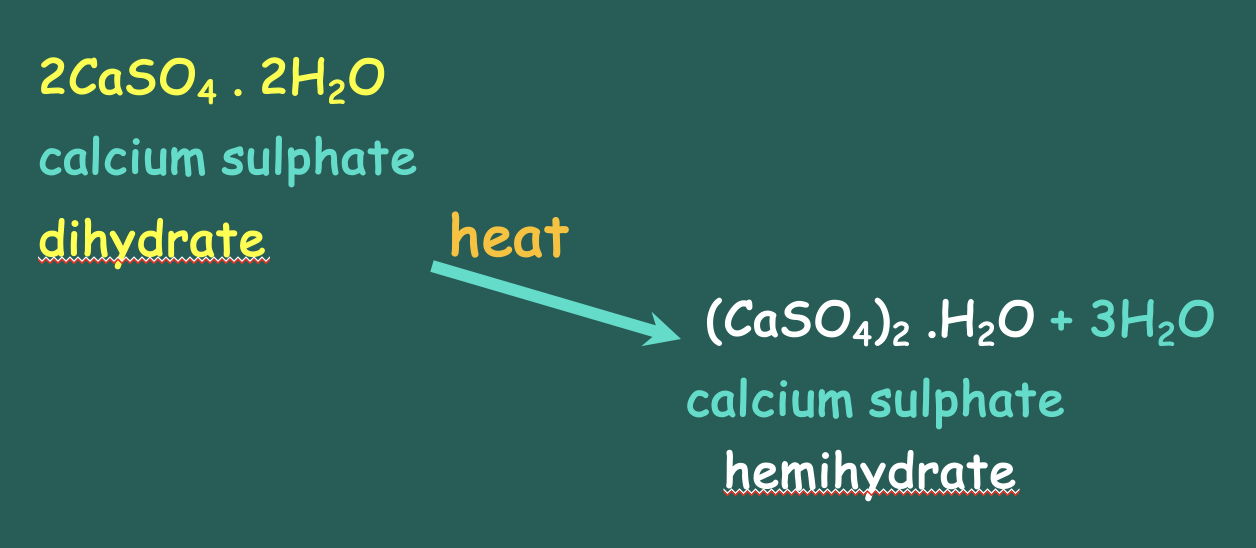
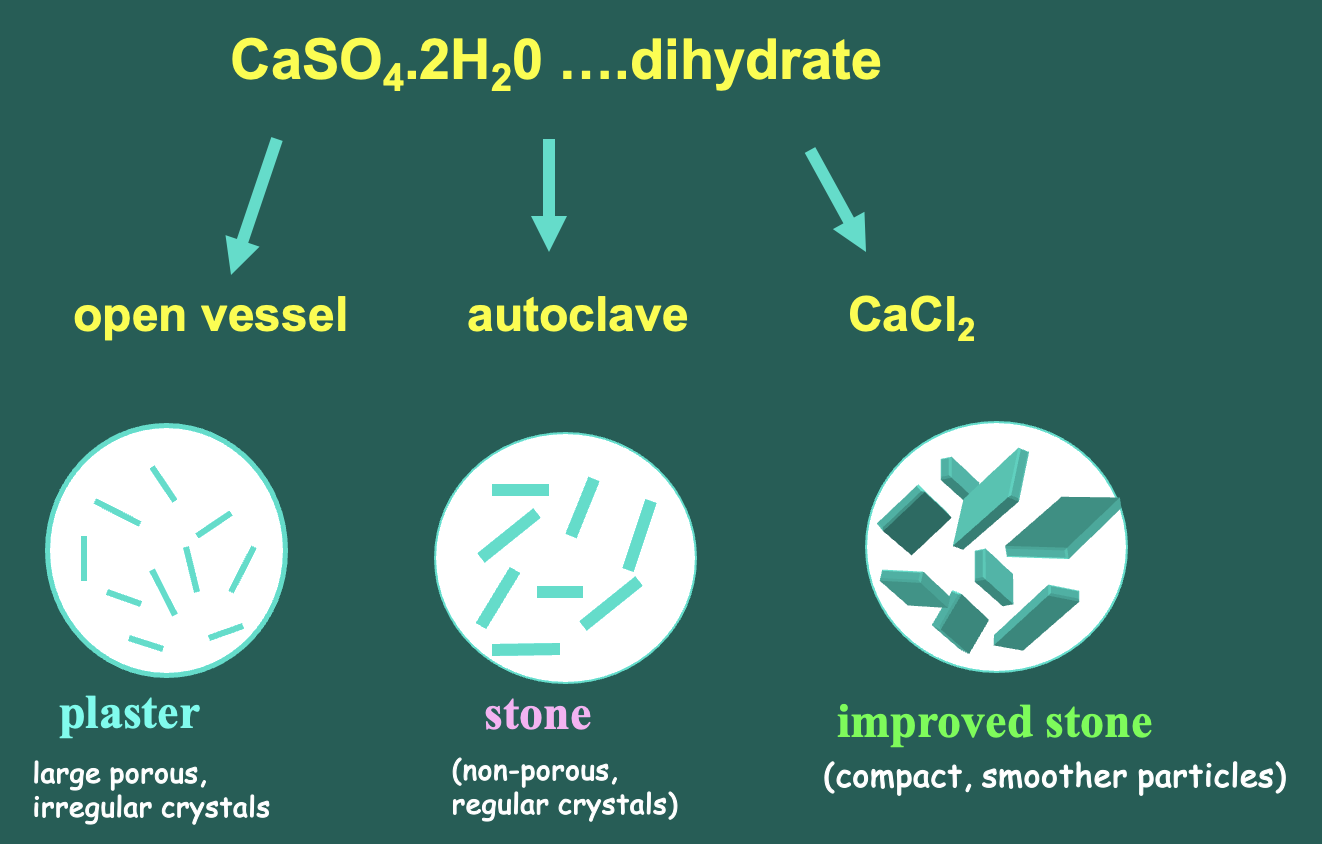
how is plaster (β-hemihydrate) produced?
• dihydrate is heated in an open vessel with air readily available • creates a powder with a large porous and irregular crystal structure
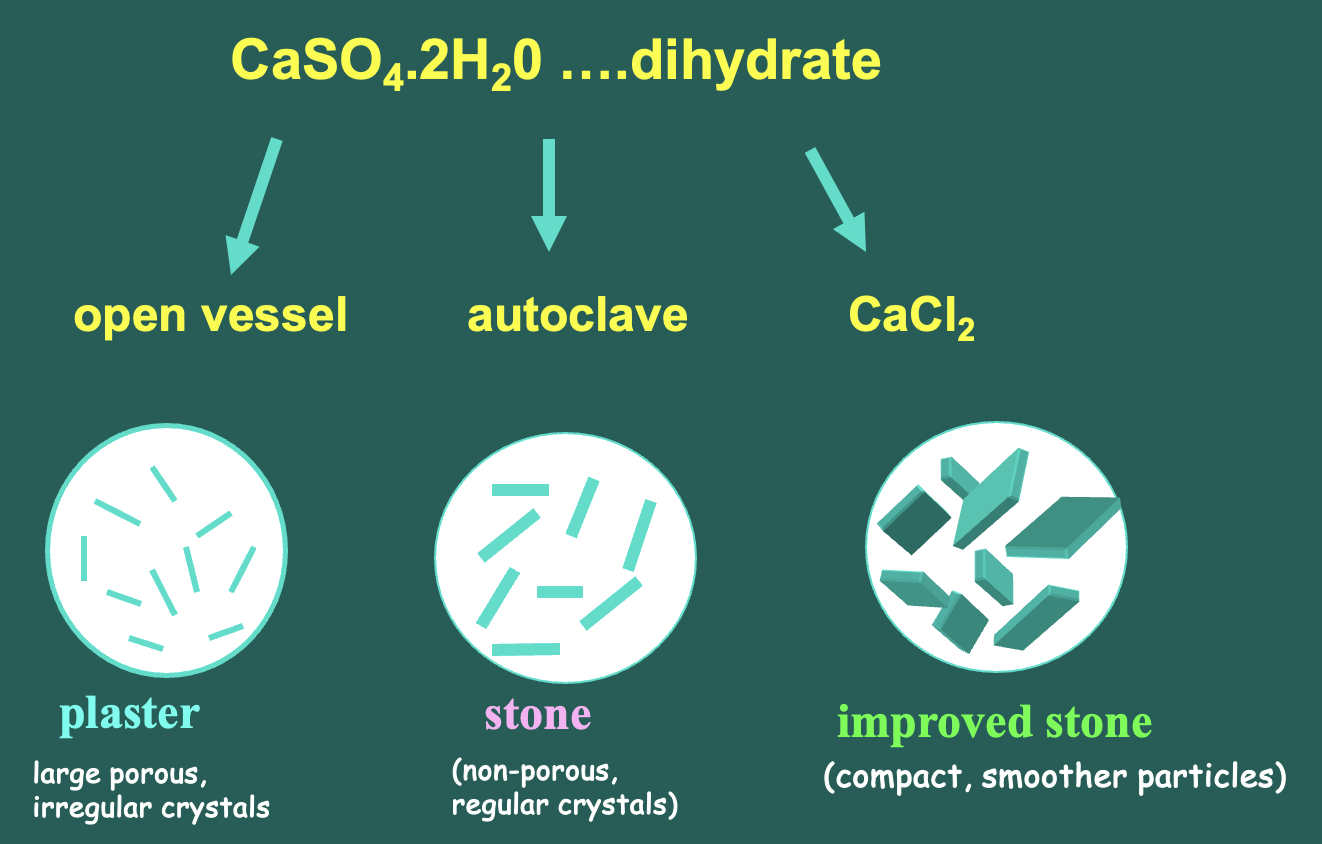
how is dental stone (α-hemihydrate) produced?
• dihydrate is heated in an autoclave (closed vessel) • produces non-porous and regular shaped crystals
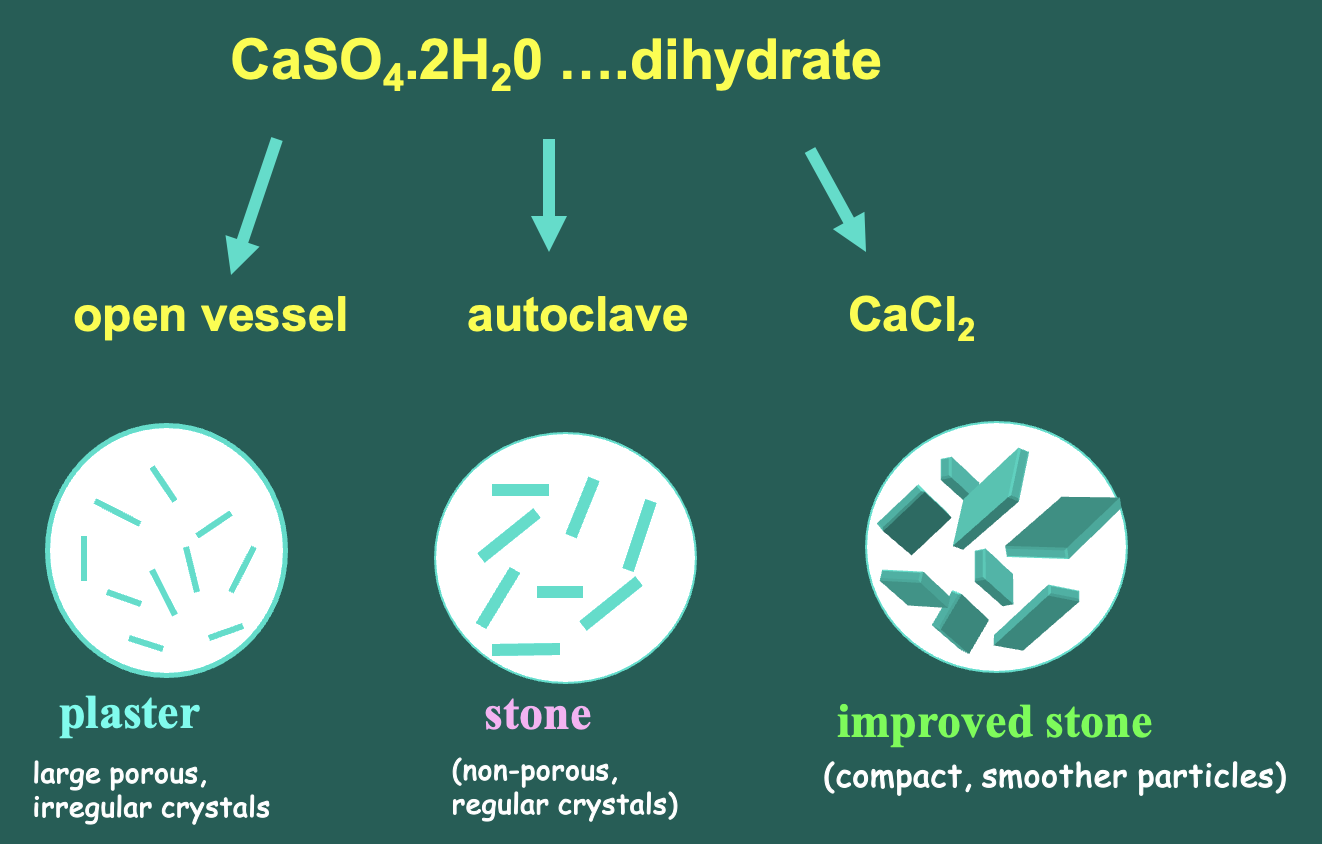
how is densite (improved stone) produced?
• dihydrate is heated in the presence of Ca and Mg (CaCl2, MgCl2) • produces a more compact, less porous material, with smoother particles
what is the setting equation of gypsum?
reverse of manufacturing process

does plaster or stone require more water per 100g of powder?
• plaster requires more - 50-60ml • stone - 20-35ml
describe the setting process of gympsum
• hemihydrate dissolves in water and dihydrate forms • dihydrate crystals precipitate on impurities as crystals and increase in size until all hemihydrate is dissolved • during initial set, dihydrate crystals grow until they contact and expansion starts • during final set, crystals are large and different sizes • gypsum is strong and hard and strength continues to develop
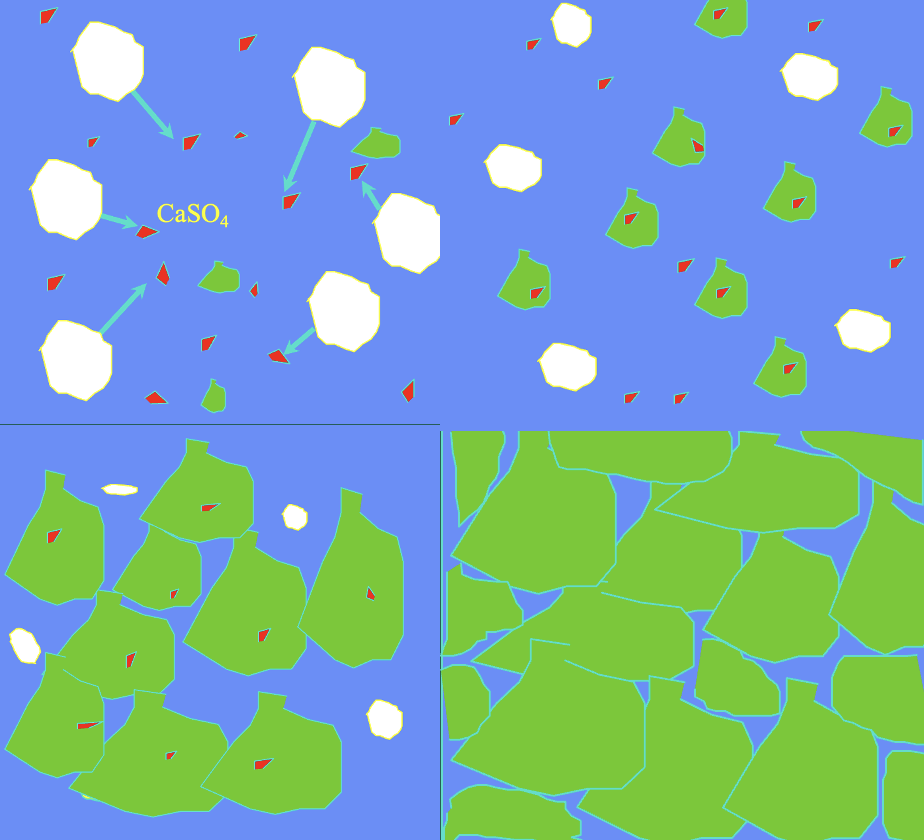
what is the effect of using a higher water:powder ratio than the theoretical ratio?
• excess water allows the powder and water to be mixed easily and achieve the correct consistency to produce an effective cast or die • during setting, excess water is trapped in the powder • on completion of setting, excess water is evaporated and leaves voids (porosity) • evaporation may cause dissolved dihydrate crystals to cement together
what are the properties of gypsum?
• reproduction of surface detail - gypsum is porous and produces a rough surface, reducing accuracy :( • strength - plaster-stone-densite - compressive strength develops over 24 hour period (less water=stronger) :) • low surface hardness - easy to abrade :( • setting time - must be convenient, not too long or short • expansion on setting - should be low :) • compatability with impression materials - need to wet the IM to reduce formation of voids and bubbles :/ • brittle - fractures with small amount of strain :(
how does increased powder quantity affect setting time and expansion?
• decreased setting time • increased expansion • more nuclei of crystallisation per unit volume so crystals come into contact sooner
how does increased spatulation affect setting time and expansion?
• decreased setting time • increased expansion • breaks down growing dihydrate crystals so there are more nuclei of crystallisation • more crystals can be created and come into contact sooner
how does increased impurity quantity affect setting time and expansion?
• decreased setting time • increased expansion • more impurities for dihydrate crystals to precipitate on so more nuclei of crystallisation • more crystals can be created and come into contact sooner
how does increased temperature affect setting time and expansion?
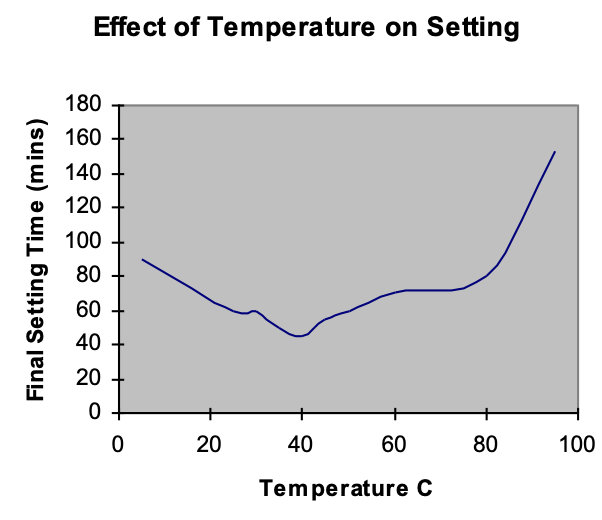
• can increase or decrease setting time depending on specific temperature range • does not affect expansion • water temp from 10-40 degrees reduces setting time • water temp from 40-80 degrees increases setting time • water temp above 80 degrees greatly increases setting time • due to increased rate of diffusion of ions and decreased solubility of hemihydrate with increased temperature
how do chemicals affect setting time and expansion?
• can increase or decrease setting time • decreases expansion • borax decreases setting time as deposits calcium borate on dihydrate crystals, restricting growth • potassium sulfate accelerates setting time as it encourages development of more crystals
what are the advantages of gypsum?
• dimensionally accurate and stable • low expansion of stone/densite • good colour contast
what are the disadvantages of gypsum?
• low tensile strength • poor abrasion resistance • very brittle • surface detail less than elastomer impression • poor ‘wetting’ of some impression materials