6.3 Defense against Disease
No description yet. This curated deck is ready for daily study.
Card preview (5)
Pathogens
Pathogens are disease-causing agent that disrupt the normal physiology of infected organisms (i.e. homeostatic imbalance) Pathogens may be species-specific or cross species barriers * Diseases that can be naturally transmitted between animals and humans are called zoonotic diseases
Lines of Defense
Immune system can be divided into three lines of defense: * 1st line of defense – Surface barriers (skin / mucus) * 2nd line of defense – Innate immunity (non-specific) * 3rd line of defense – Adaptive immunity (specific)
Surface Barriers
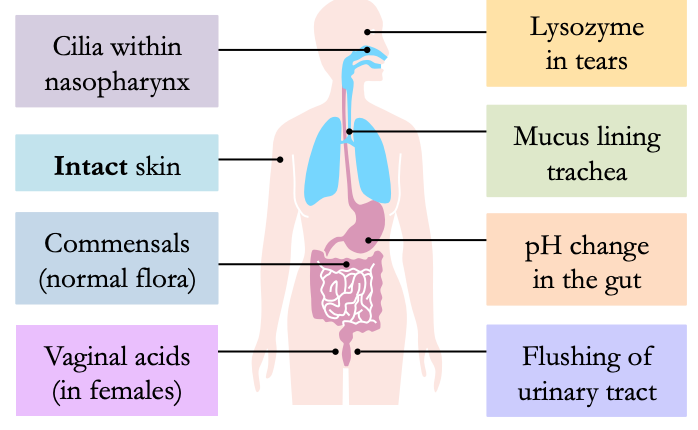
The first line of defense against infectious disease is the surface barriers that function to prevent pathogenic entry Skin * Protects external structures (i.e. outside the body) * Thick, dry and composed predominantly of dead cells * Glands secrete chemicals to restrict bacterial growth Mucous Membranes * Protects internal structures and cavities (inside body) * Thin region composed of living cells that secrete fluid (mucus) to trap pathogens (which may then be removed)
Clotting
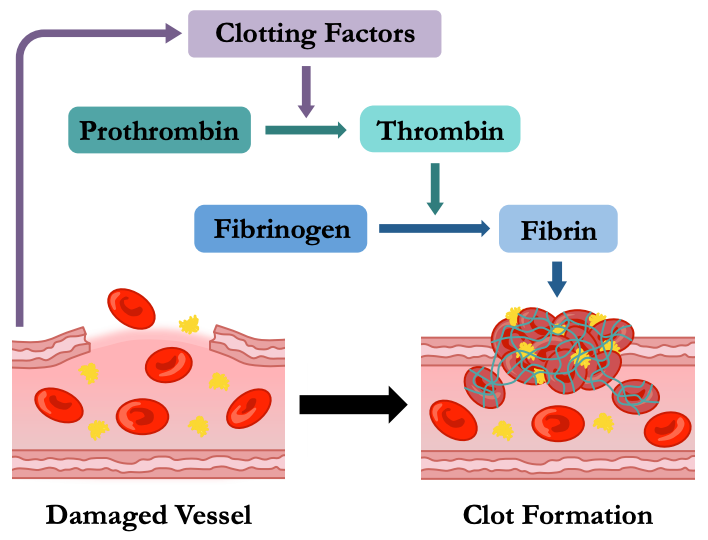
Clotting seals damaged vessels to prevent pathogenic entry * Injured cells and platelets release clotting factors * These factors convert prothrombin into thrombin * Thrombin converts fibrinogen (soluble) into fibrin (insoluble) * Fibrin forms a mesh of fibres that block the injured site * Clotting factors also cause platelets to become sticky and form a solid plug (called a clot), sealing the wound * This process of events is called a coagulation cascade * Clot formation in coronary arteries lead to heart attacks
Antibiotics
Antibiotics are compounds that target prokaryotic features but don’t harm eukaryotic cells (i.e. don’t affect host organism) * May target structures (e.g. cell wall) or metabolic processes Some strains of bacteria have evolved with genes that confer resistance to antibiotics (some even have multiple resistance) * Antibiotics can’t be used to treat viruses (no metabolism) The first antibiotic identified was penicillin (Fleming – 1928) * Its treatment use was demonstrated by Florey and Chain Mice were infected with pathogenic bacteria Conclusion: Penicillin has antibiotic properties