Scientists/Mathematicians
No description yet. This curated deck is ready for daily study.
Card preview (24)
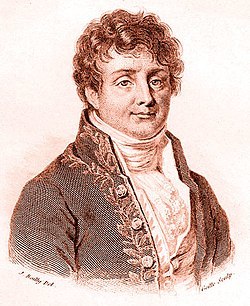
Alessandro (Giuseppe Antonio Anastasio) Volta
1745-1827 Italian physicist y electricity pioneer from Milan - Credited as the inventor of the electrical battery (the Voltaic Pile - 1799), y the discoverer of methane (1776) - Close with Napoleon, y conferred with numerous honours by him
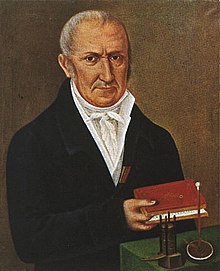
Antoine Lavoisier (Antoine-Laurent de Lavoisier)
1743-94 French chemist y nobleman - Widely considered the father of modern chemistry - Recognized y named hydrogen (1783) y oxygen (1778), y discovered oxygen’s role in combustion - Discovered the law of Conservation of Mass - Powerful aristocrat who used tax administration fees to fund his research, y was guillotined during French Revolution
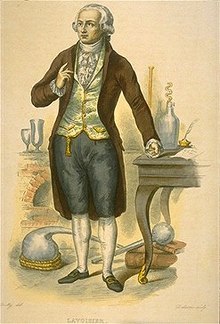
Barbara McClintock
1902-1992 American scientist y cytogeneticist from CT - Studied maize chromosomes, demonstrating many fundamental genetic ideas, incl. the roles of telomeres y centromeres, transposition, genetic recombination, y genetic maps - Awarded Nobel Prize in Physiology/Medicine (1983) y elected a member of Natl. Academy of Sciences in 1944
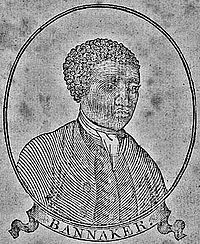
Benjamin Banneker
1731-1806 free African-American almanac author, surveyor, y naturalist from Baltimore - Self-taught in geometry y astronomy - After corresponding with Thomas Jefferson, he was made part of a group led by Major Andrew Ellicott that surveyed the borders of the original District of Columbia - Published his Pennsylvania, Delaware, Maryland, and Virginia Almanac starting in 1792
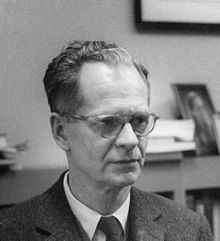
B(urrhus) F(rederic) Skinner
1904-90 American behavioral psychologist - Believed free will an illusion - Studied operant (reinforced) conditioning on human behavior - Wrote books Walden Two (1948) y Verbal Behavior (1957) - Worked at Harvard
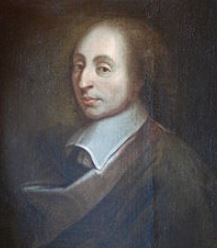
Blaise Pascal
1623-62 French mathematician, physicist, theologian, y inventor - Developed a successful mechanical calculator in 1642 known as the Pascaline - Wrote the religiuos text Pensées (1670), which includes the philosophical argument known as Pascal’s wager - Developed a triangular array of the binomial coefficients known as Pascal’s triangle - Developed a principle in fluid mechanics known as Pascal’s law
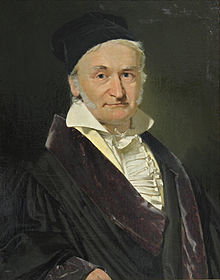
Carl Friedrich Gauss
1777-1855 German mathematician - Contributed significantly to number theory, algebra, statistics, etc. - Often referred to as the “Princeps mathematicorum” (Latin, “the foremost of mathematicians”) and “greatest mathematician since antiquity”
Casimir (Kazimierz) Funk
1884-1967 Polish biochemist - Formulated the concept of vitamins in 1912 while studying the health effects of brown rice
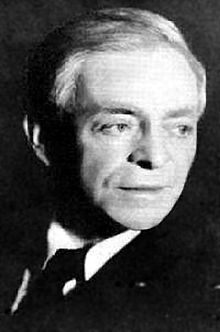
Claudius Ptolemy
100-170 CE Greco-Roman mathematician, astronomer, geographer, y astrologer from Alexandria - Wrote The Almagest, a treatise on math y astronomy highly influential for its geocentric model of the universe - Wrote Geography, an atlas of the geographic knowledge of the Greco-Roman world
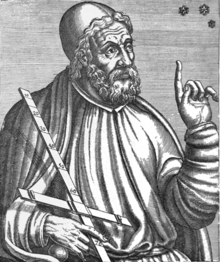
Enrico Fermi
1901-54 Italian physicist - Called “architect of the nuclear age y the nuclear bomb” - Created world’s first nuclear reactor, the Chicago Pile-1 in 1942 - 1938 Nobel Prize in Physics for work on radioactivity - Known for the Fermi Paradox about alien life
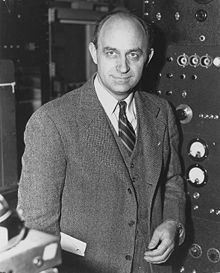
Ernest Rutherford, 1st Baron Rutherford of Nelson
1871-1936 New-Zealand-born British physicist - The father of nuclear physics - Discovered half-life and alpha y beta radiation (Nobel Chemistry 1908) - Discovered atomic nucleus - Discovered the proton - Worked at McGill University, Uni of Manchester, y Cambridge
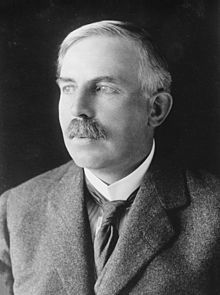
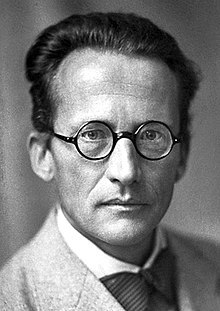
Erwin (Rudolf Josef Alexander) Schrödinger
1887-1961 Austrian physicist - Developed a number of fundamental results in the field of quantum theory, which formed the basis of wave mechanics - Wrote the book What Is Life? The Physical Aspect of the Living Cell (1944) - Shared Nobel Prize in Physics (1933) with Paul Dirac - Known for Schrödinger’s Cat though experiment (1935)
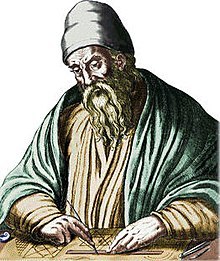
Euclid
Approx 450-350 BCE - Ancient Greek mathematician - Called “the father of geometry” - Wrote Elements (300 BCE), one of most influential works in history of mathematics - Deduced principles of what is now called Euclidian geometry
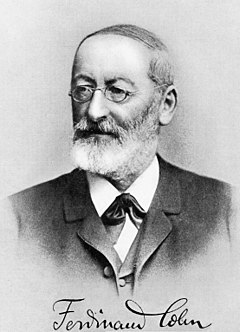
Ferdinand Cohn
1828-98 German biologist from Poland - Founder of modern bacteriology y microbiology - Classified bacteria into four groups based on shape (sphericals, short rods, threads, spirals) - Began career studying plants, y was 1st to classify algae as a plant
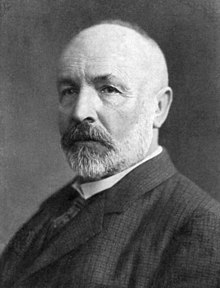
Georg (Ferdinand Ludwig Philipp) Cantor
1845-1918 German mathematician from St. Petersburg - Known for the creation of set theory, y his study of infinites - Developed the theory of transfinite numbers, which he claimed was communicated to him by God - His work on these topics provoked fierce opposition from both mathematicians y philosophers, who called him a renegade y scientific charlatan
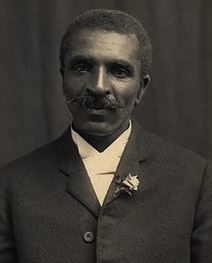
George Washington Carver
1860s-1943 - American agricultural scientist, born into slavery in MO - While a professor at Tuskegee Inst., promoted alternative crops to cotton, like peanuts y sweet potatoes, y methods to prevent soil depletion - Published 44 practical bulletins for farmers, incl. his most popular How to Grow the Peanut and 105 Ways of Preparing it for Human Consumption (1916) - Awarded Spingarn Medal by the NAACP in 1923
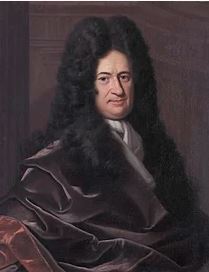
Gottfried Wilhelm Leibniz
1646-1716 German mathematician, polymath, y philosopher from Leipzig - Known for conceiving the ideas of differential y integral calculus, independently of Isaac Newton’s contemporaneous developments - Early pioneer in the field of mechanical calculators - Known in philosophy for his rationalism y optimism
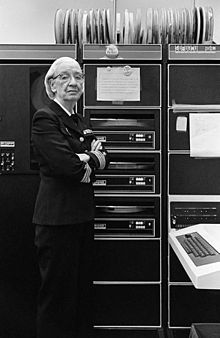
Grace (Brewster Murray) Hopper
1906-92 American computer scientist y Naval rear admiral from NYC - One of the first programmers of the Harvard Mark I computer (1944), and a pioneer in development of compilers y programming languages - Helped develop the UNIVAC I computer (1944), y the COBOL language (1959) - Nicknamed “Amazing Grace” - Awarded Pres Medal of Freedom (2016)
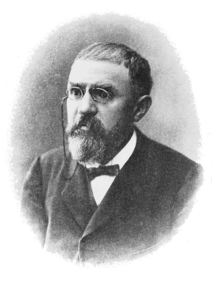
(Jules) Henri Poincaré
1854-1912 French mathematician y theoretical physicist - Considered a polymath, y “the last universalist”, for his mastery of nearly all fields - Known for the Poincaré conjecture, about the characteristics of spheres, which was unsolved until 2003 - First to lay foundations for modern study of chaos theory, topology, relativity, y gravitational waves
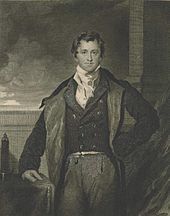
Humphrey Davy
1778-1829 Cornish chemist y inventor - Isolated several elements for the first time, incl. potassium y sodium in 1807; y calcium, magnesium, barium, strontium, y boron in 1808 - Discovered the properties of nitrous oxide, y gave it the nickname “laughing gas” - Invented the Davy Lamp for safe use in coal mines, y an early form of the incandescant light bulb
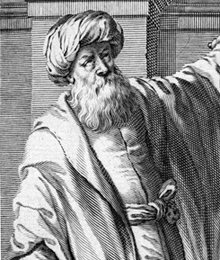
Ibn al-Haytham (Alhazen)
965-1040 Arab mathematician y astronomer from Basra, Iraq - Made significant contributions to the field of optics, y wrote the Kitāb al-Manāẓir (1021 - “Book of Optics”) - Worked mostly in the Fatimid capital of Cairo - Early proponent of scientific method - Called the “father of modern optics” y the “second Ptolemy”
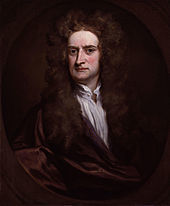
Isaac Newton
1642-1727 English mathematician, astronomer, y physicist - One of the most influential scientists of all time - Made significant contributions to optics y mathematics, y developed calculus - Wrote Principia Mathematica (1687) stating his Laws of Motion, law of universal gravitation, y laws of planetary motion; Opticks (1704) about color y light - Served as President of the Royal Society (1703-27)
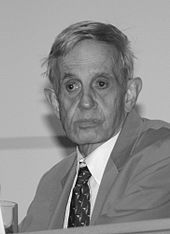
John Forbes Nash Jr.
1928-2015 American mathematician from WV - Made fundamental contributions to game theory, differential equations, y geometry - Nobel Prize in Economics 1994 for game theory work - Suffered from severe mental illness - Subject of film A Beautiful Mind
Joseph Fourier
1768-1830 French mathematician y physicist - Known for creating the Fourier Series to represent wave functions; Fourier’s Law of heat conduction; y the Fourier Transform to convert time functions into component frequencies - Credited with discovering the Greenhouse Effect