2.2.2 electrons, bonding and structure
No description yet. This curated deck is ready for daily study.
Card preview (24)
What are the three types of intermolecular forces that act between particles in all molecular substances?
• Induced dipole-dipole (London forces) • permanent dipole-dipole • hydrogen bonds
Describe induced dipole-dipole (London) forces.
The weakest intermolecular force. Caused by temporary dipoles of a molecule.
What are intermolecular forces?
Attractive force between molecules. Responsible for keeping matter in a solid or liquid state.
Describe the permanent dipole-dipole interaction.
Weak electrostatic forces of attraction between polar molecules.
What is a hydrogen bond?
The strongest intermolecular force. Acts between molecules containing polar bonds of hydrogen and fluorine/nitrogen/oxygen.
Explain “1”
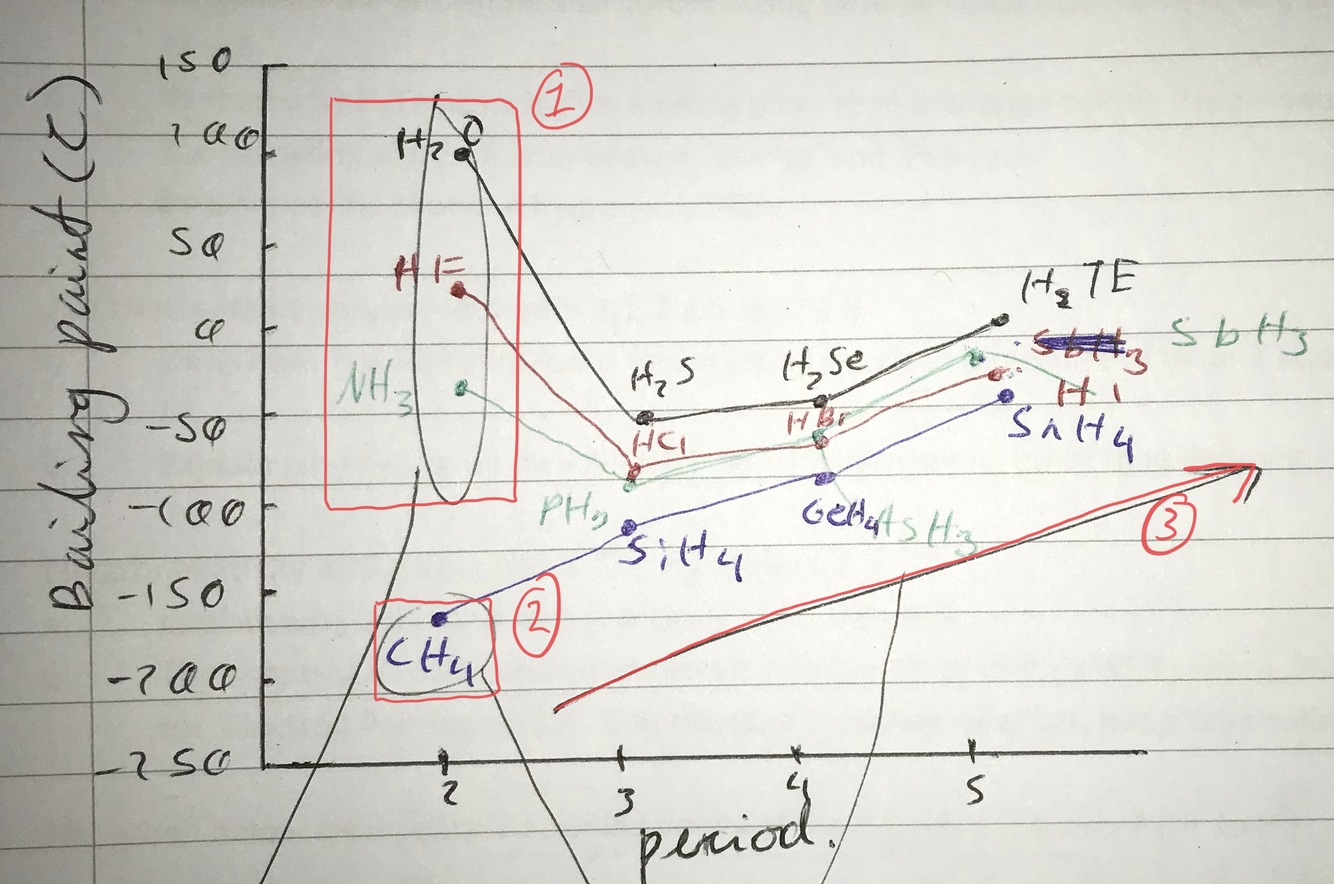
H2O, HF and NH3 all possess hydrogen bonding between molecules so have high boiling points.
Which two factors affects the strength of induced dipole-dipole forces?
• More electrons = stronger force • Close packing of molecules leads to stronger forces
Explain “2”
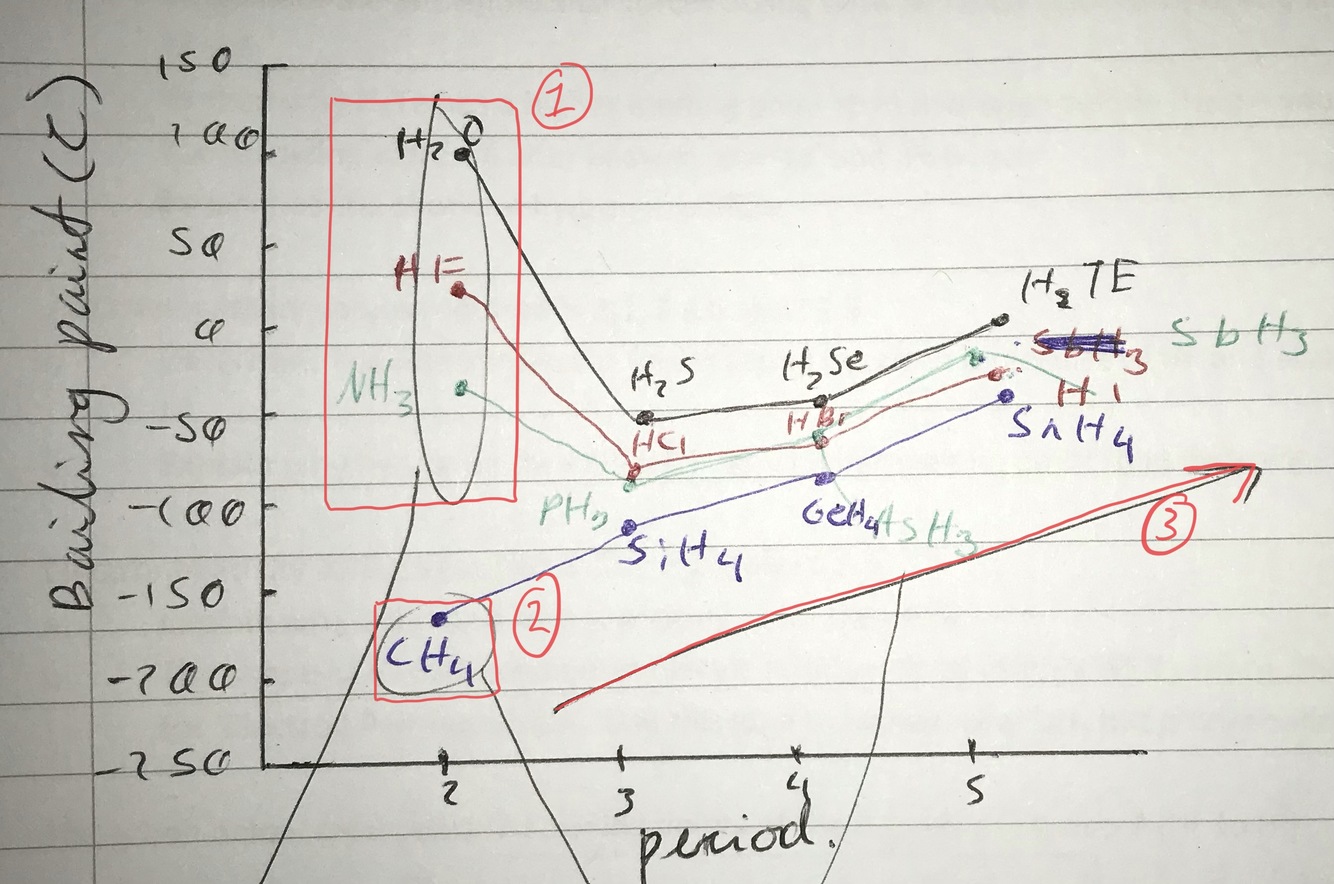
CH4 has weak induced dipole-dipole forces between molecules.
Explain “3”
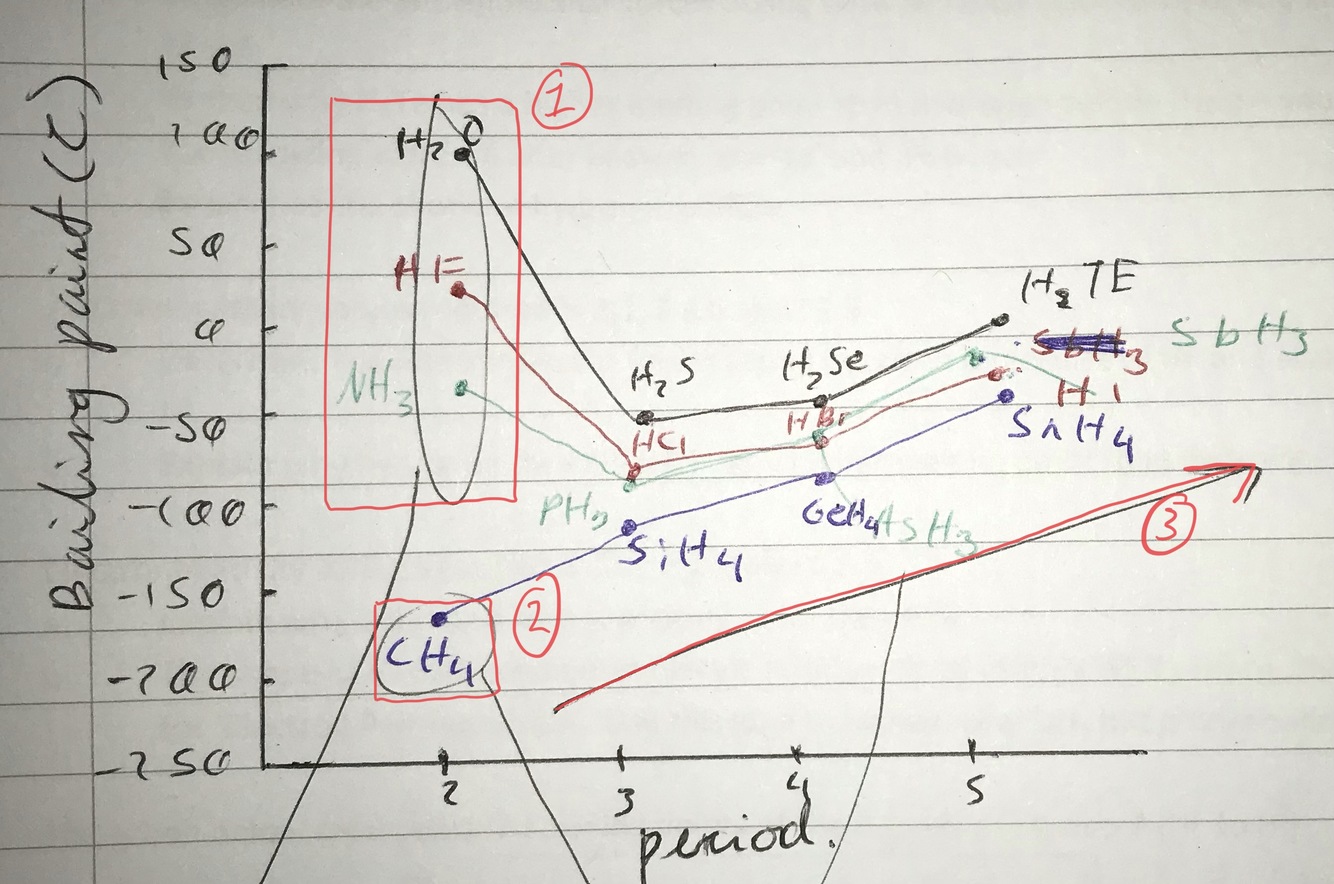
Increasing boiling points due to increasing strength of induced dipole-dipole forces because of higher number of electrons in the molecule.
What structure do ionic molecules form?
Giant ionic lattice
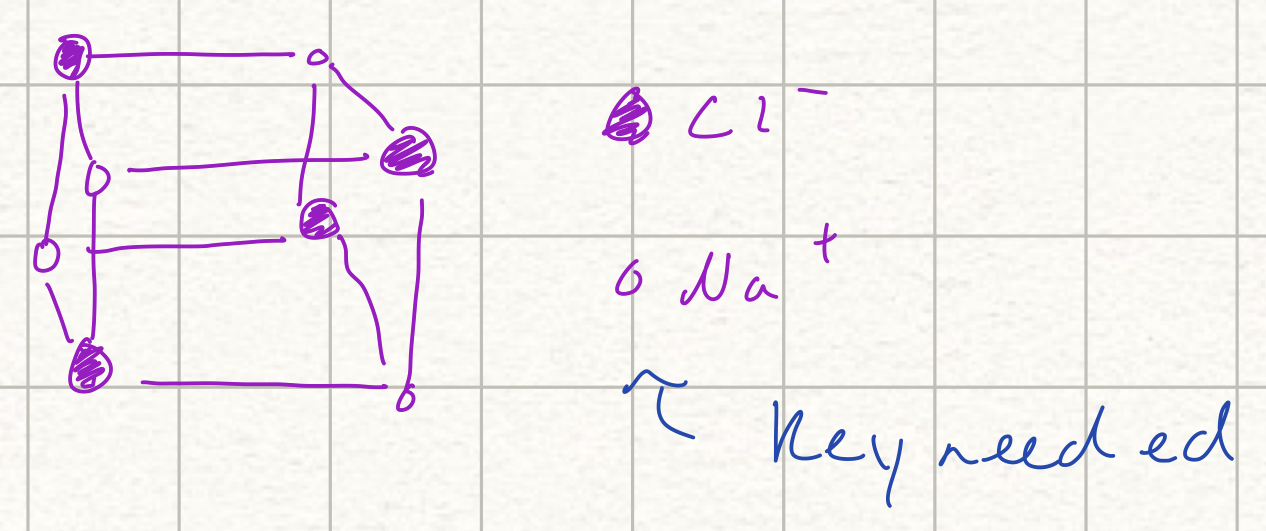
Explain the structure of sodium chloride
• Oppositely charged ions are attracted to each other but repelled by their own ions. • they form a giant ionic lattice to optimise their position, each ion is fixed
Draw the structure of sodium chloride
What happens to ionic solids when immersed in water?
• Ionic substances are soluble in water • ions in structure attracted to polar water molecules and bind to them, hydrating the ions • energy released from hydration overcomes electrostatic attraction between ions
What are the exceptions to ionic solubility? Why?
Ca(OH)2 and BaSO4 hydration energy released is not enough to break ionic bonds between ions.
Ionic bonds- low or high melting and boiling points? Why?
• Giant ionic lattices have a high melting and boiling point • a high amount of energy is needed to overcome to strong bonds between ions in the structure • a high amount of energy is needed, therefore the melting and boiling point is very high
Draw a diagram showing sodium chloride being dissolved
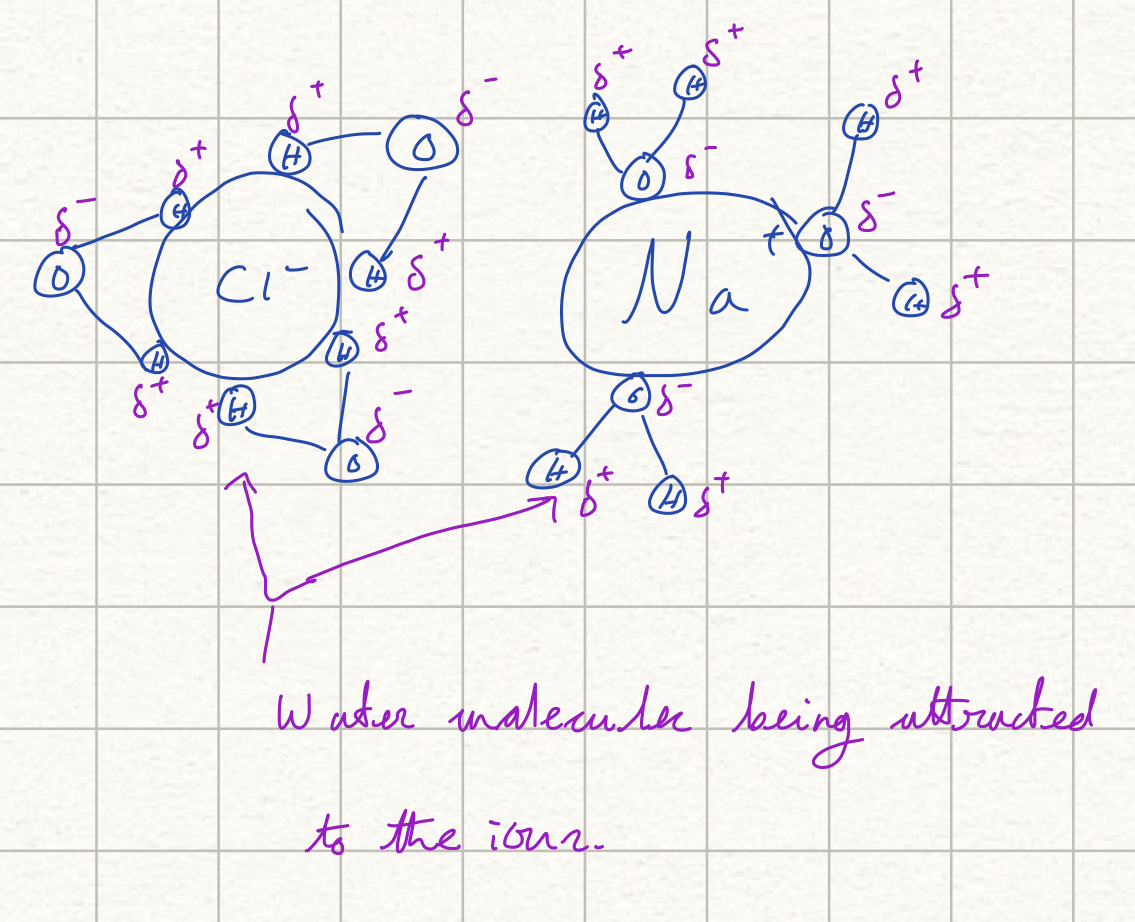
In what state can ionic substances conduct electricity? Why? Why not?
conductivity in liquids but not solids, ions must be able to move for conductivity.
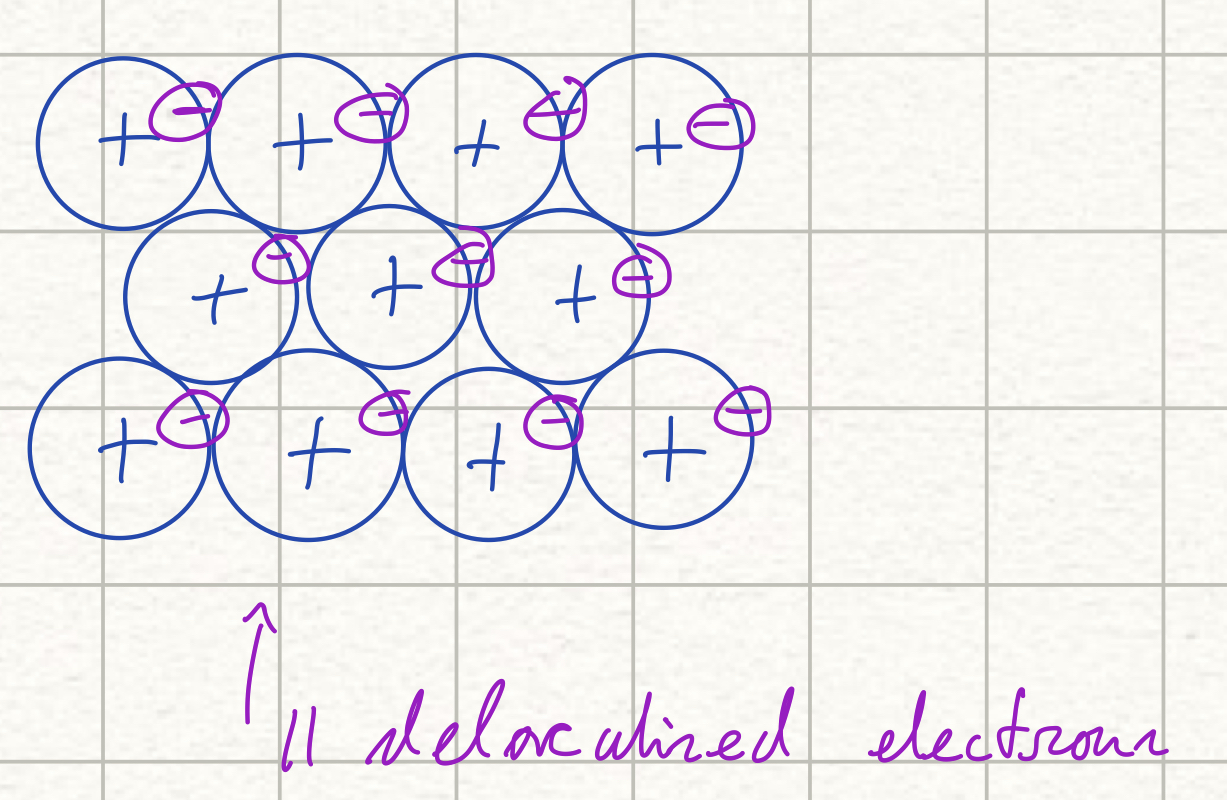
What is metallic bonding?
The electrostatic attraction between positive ions and delocalised electrons of a metal.
What factors affect the melting boiling points of metallic bonds?
• More delocalised electrons equals stronger bond • smaller ionic radius holds more delocalised electrons closer to the nuclei, making stronger bond
What structure do metallic bonds form?
Giant metallic lattice
Draw a diagram showing the structure of solid sodium
Draw a diagram showing the structure of solid Magnesium
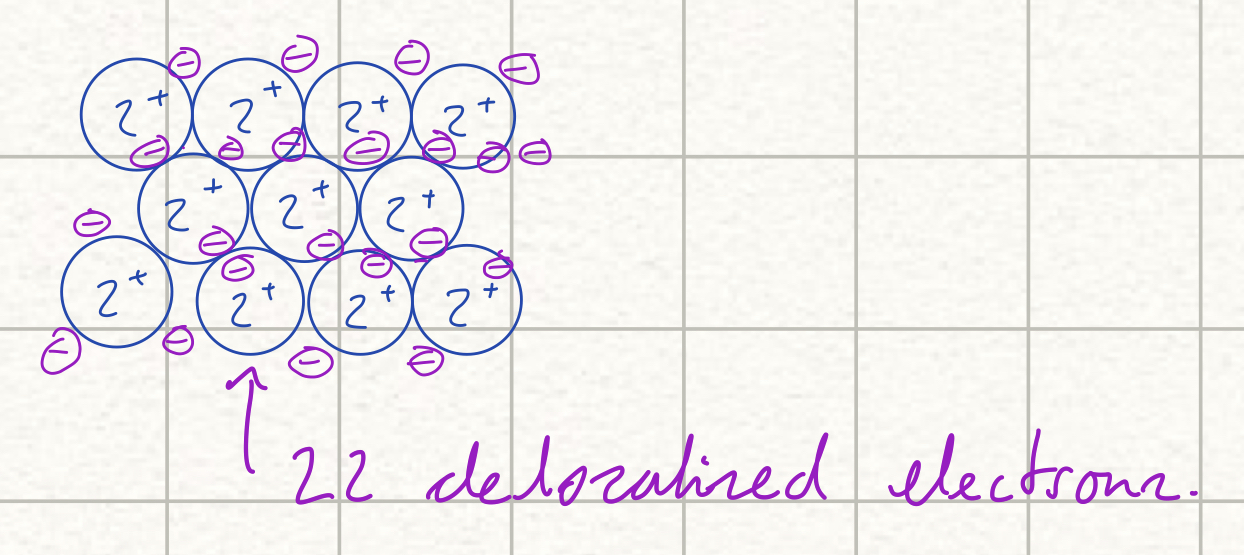
Why does solid magnesium have a higher melting and boiling point than solid sodium?
• Magnesium has a smaller atom size, more delocalised electrons and a higher ionic charge • This gives magnesium a stronger bond than the sodium structure • More energy is required to break Mg’s stronger bonds therefore the melting point in Mg is higher
What are the two types of covalent structures?
Simple molecular lattice and giant covalent lattice