Chapter 9: Alkynes
No description yet. This curated deck is ready for daily study.
Card preview (13)
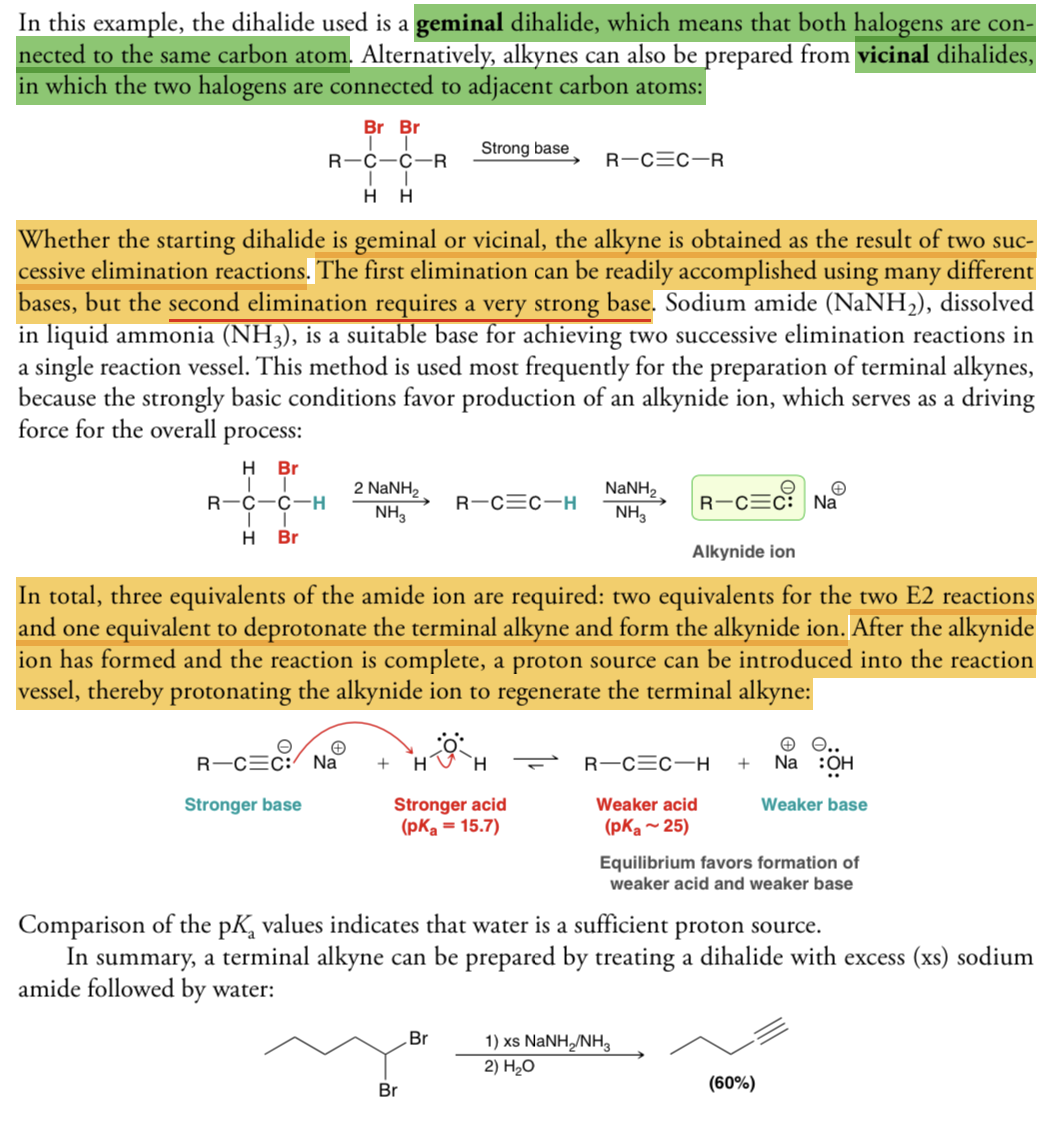
Elimination Reactions Alkynes
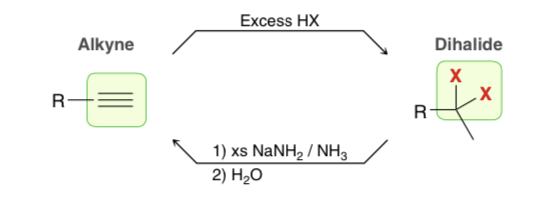
Reagents • xs NaNH2 (sodium amide) & NH3 • H2O Mechanism Alkynes can be prepared from alkyl dihalides through two successive E2 reactions; a geminal dihalide or a vicinal dihalide may be used
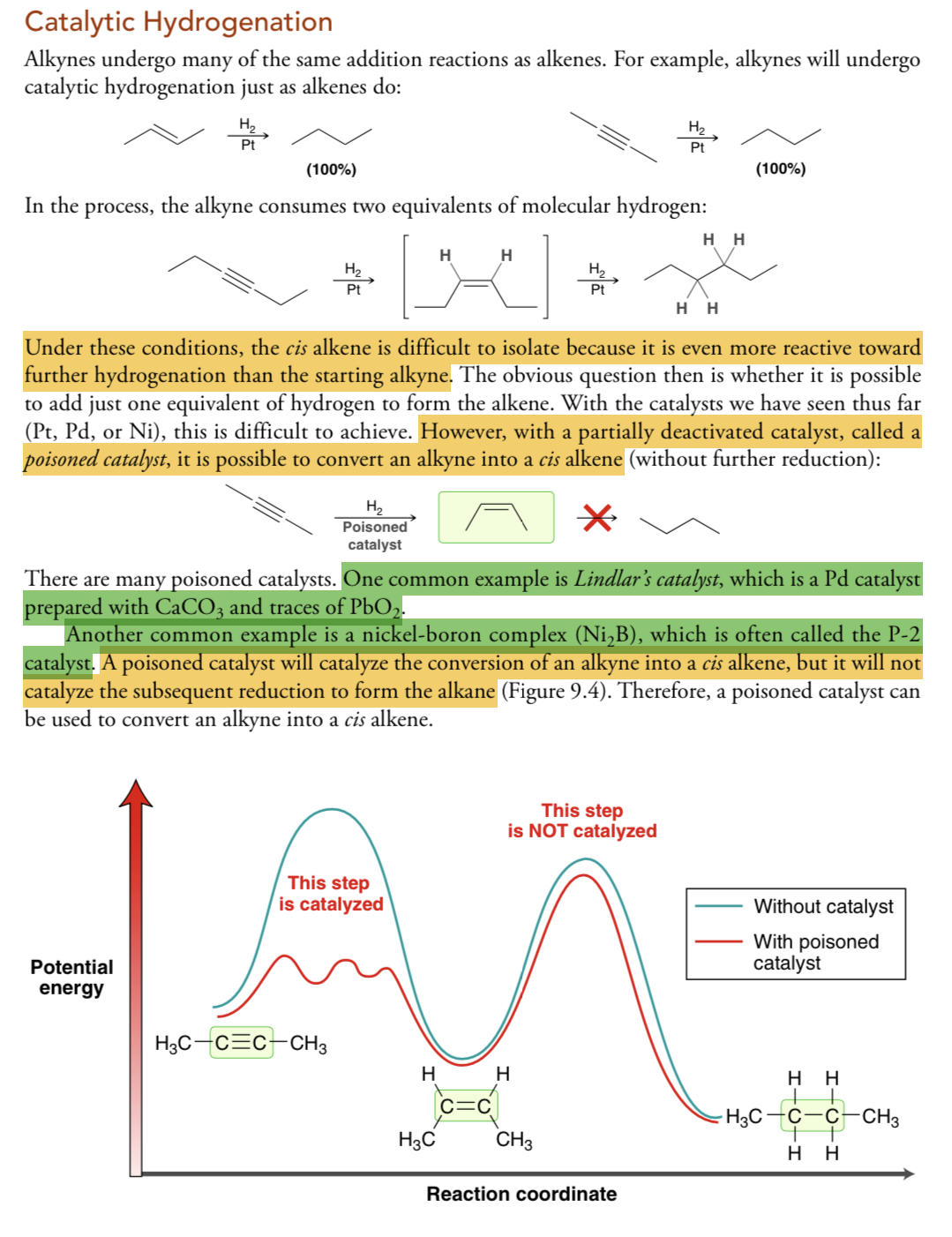
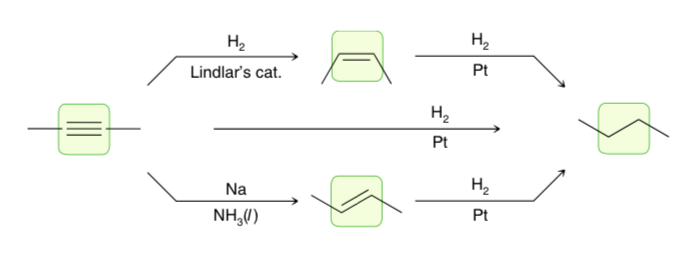
Catalytic Hydrogenation Alkynes
Reagents H2 & Pt, Pd, or Ni or H2 & poisoned catalyst Lindlar’s catalyst or Ni2B (nickel boride) Mechanism Catalytic hydrogenation in the presence of Pt, Pd, or Ni will lead to an alkane Use of a poisoned catalyst will convert an alkyne to a cis alkene; a trans alkene will NOT be produced Stereospecificity Hydrogen is added to the same face of the alkyne; explains the preference for the cis product
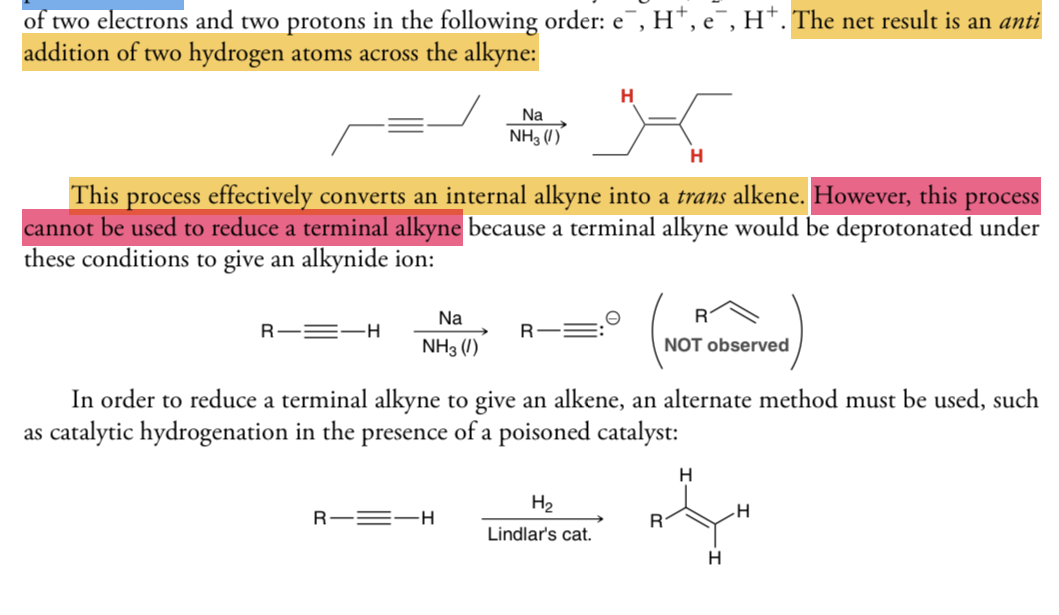
Dissolving Metal Reduction Alkyne
Reagents Na & NH3 Mechanism An internal alkyne is hydrogenated and converted to a trans alkene Reaction can NOT be used on a terminal alkyne; must use catalytic hydrogenation in the presence of a poisoned catalyst
Catalytic Hydrogenation vs. Dissolving Metal Reduction
An alkane can be produced from an alkyne that is treated with H2 in the presence of a metal catalyst such as Pt, Pd, or Ni A cis alkene can be produced from an alkyne that is treated with H2 in the presence of a poisoned catalyst such as Lindlar’s catalyst or Ni2B (nickel boride) A trans alkene can be produced from an alkyne that is treated with sodium metal in liquid ammonia
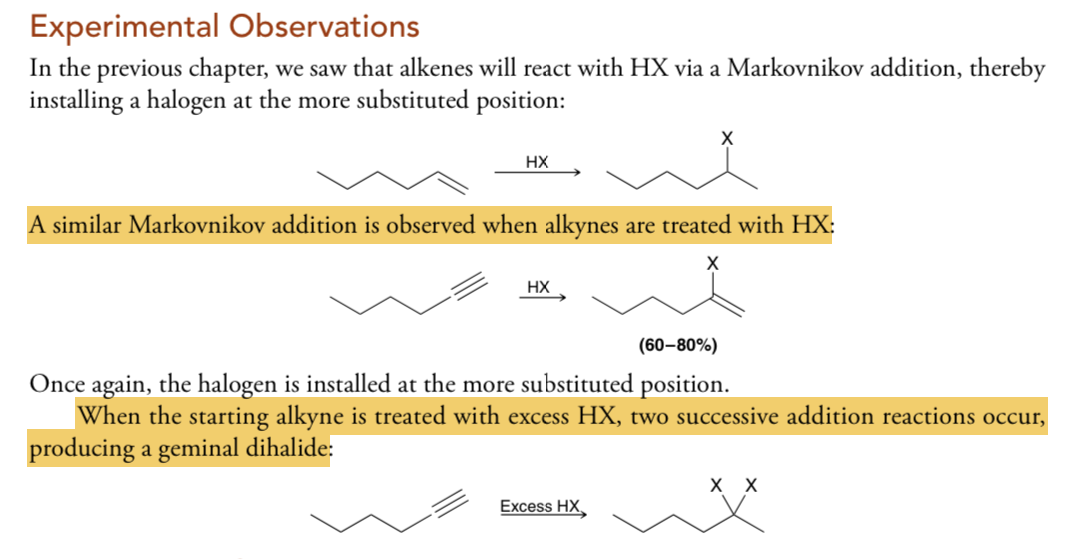
Markovnikov Hydrohalogenation Alkynes
Reagents HX (hydrogen halide) HCl, HBr, or HI Mechanism When an alkyne is treated with one equivalent of HX, the halogen will be installed at the more substituted position When an alkyne is treated with excess HX, two successive addition reactions occur producing a geminal dihalide at the more substituted position
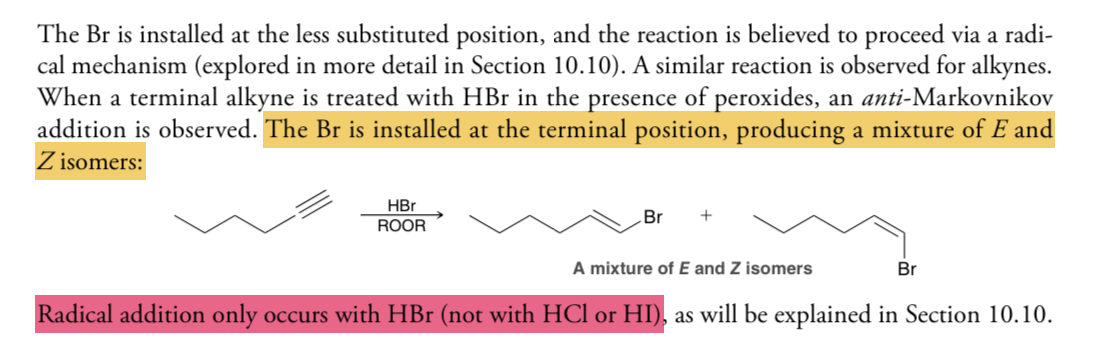
Anti-Markovnikov Hydrohalogenation Alkynes
Reagents HBr & ROOR (organic peroxide) ONLY occurs with HBr Mechanism Bromine is installed at the less substituted position; produces a mixture of E and Z isomers
Interconversion of dihalides and alkynes
Alkynes can be converted to dihalides via hydrohalogenation with excess HX Dihalides can be converted to alkynes via elimination reactions with a strong base
Acid-Catalyzed Hydration Alkynes
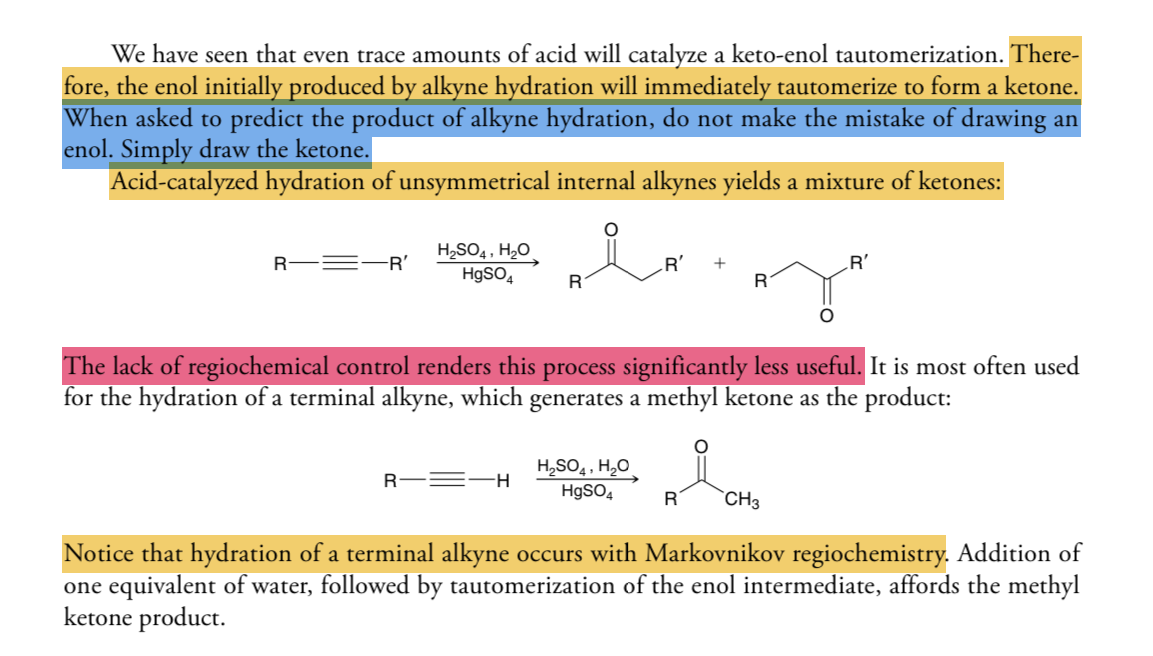
Reagents H2SO4/H2O & HgSO4 (mercuric sulfate) Mechanism Produces a ketone via the Markovnikov addition of a water molecule across an alkyne Produces an enol which is rapidly converted to a ketone via keto-enol tautomerization
Hydroboration-Oxidation Alkynes
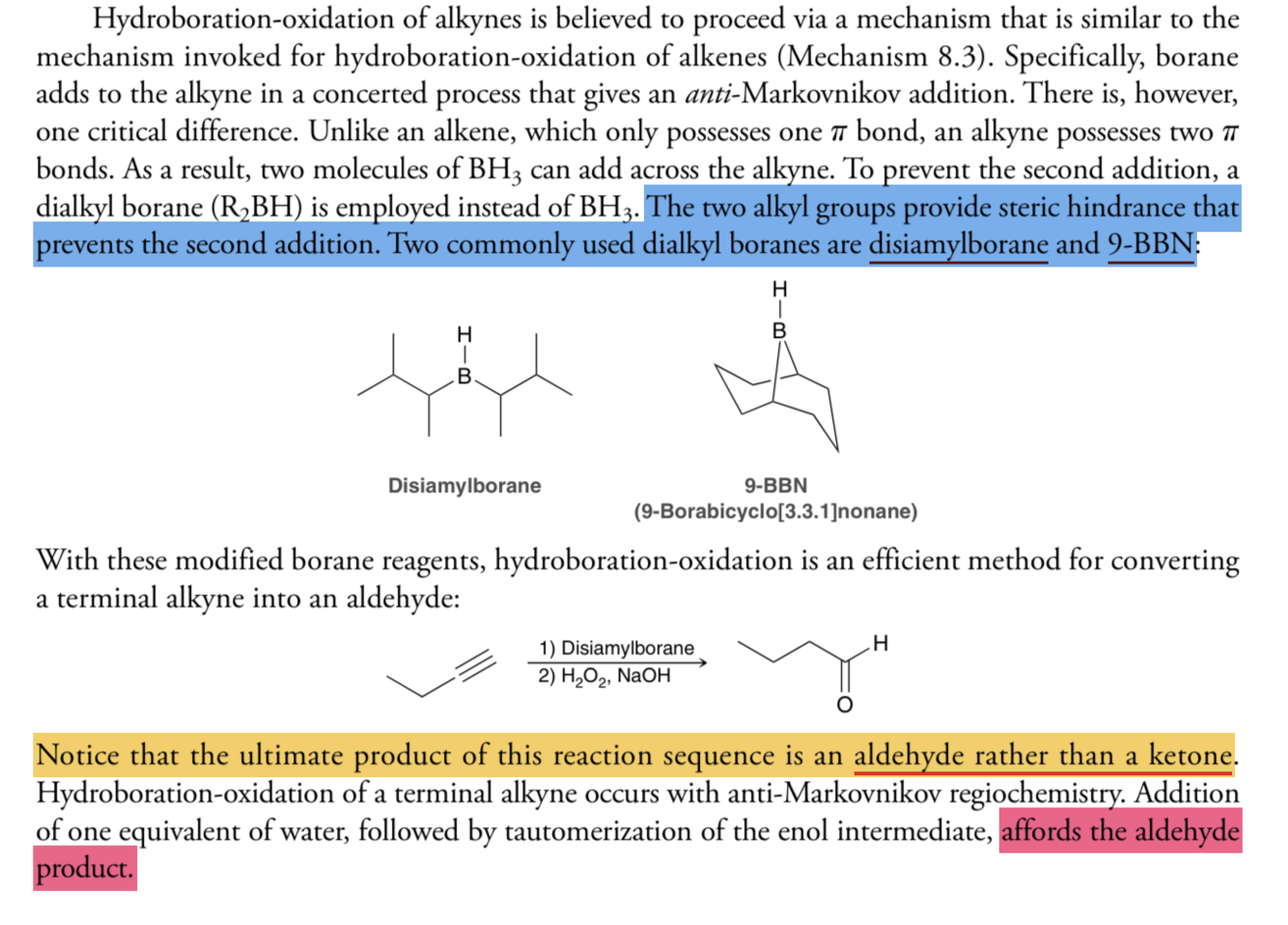
Reagents • R2BH Disiamylborane or 9-BBN • H2O2 & NaOH Mechanism Produces an aldehyde via anti-Markovnikov addition The hydroxyl group is installed at the less substituted position producing an enol which is rapidly converted into an aldehyde via tautomerization
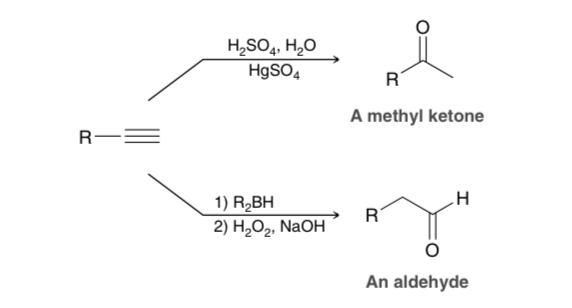
Controlling the regioselectivity of alkyne hydration
Acid-catalyzed hydration of a terminal alkyne produces a methyl ketone Hydroboration-oxidation of a terminal alkyne produces an aldehyde
Halogenation Alkynes
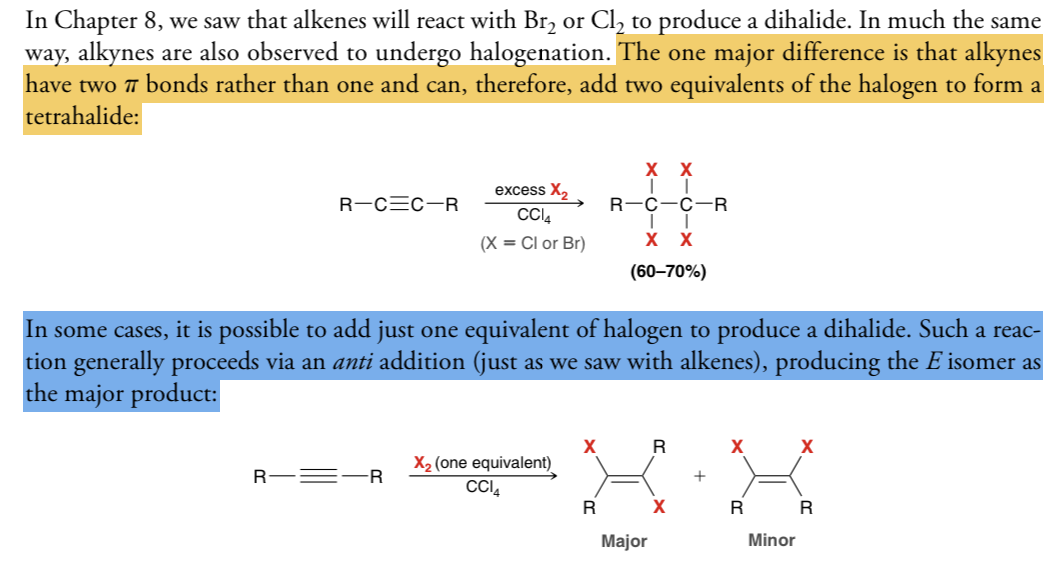
Reagents X2 & CCl4 (carbon tetrachloride) ONLY Br2 or Cl2 Mechanism In an excess of X2, two equivalents of the halogen will add across BOTH π bonds to form a tetrahalide If only one equivalent of X2 is used the reaction will proceed via an anti addition, producing the E isomer as the major product
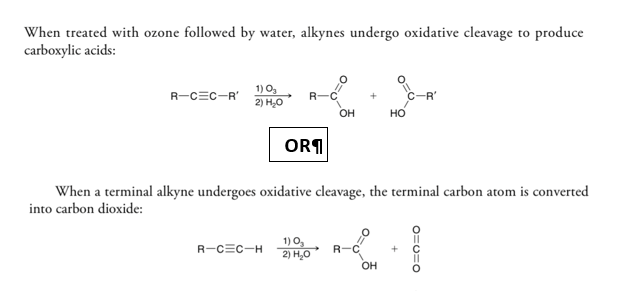
Ozonlysis Alkyne
Reagents • O3 • H2O Mechanism When treated with ozone followed by water, an internal alkyne will undergo oxidative cleavage to produce TWO carboxylic acids When a terminal alkyne undergoes oxidative cleavage, the terminal carbon is converted into carbon dioxide while the other carbon still becomes a carboxylic acid
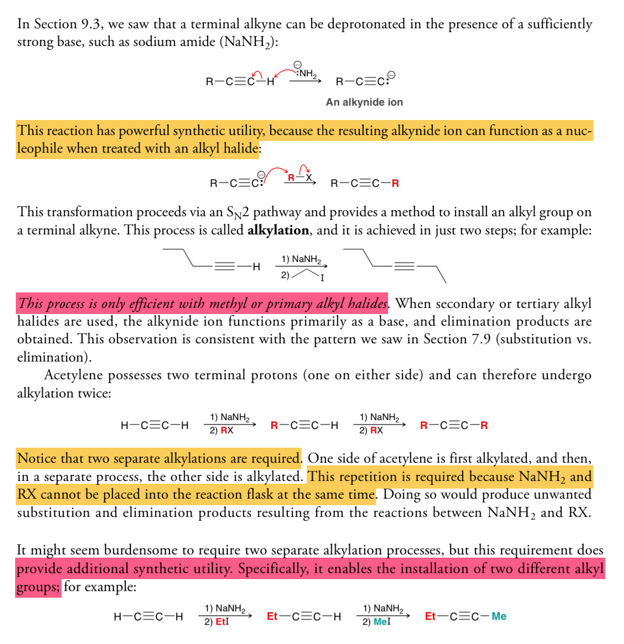
Alkylation of Terminal Alkynes
Reagents • NaNH2 (sodium amide) • RX Mechanism The terminal alkyne is deprotonated by a strong base, creating an alkynide ion that can function as a nucleophile when treated with an alkyl halide