Week 2 Day 1
No description yet. This curated deck is ready for daily study.
Card preview (19)
States of matter
solid liquid gas
changes of state
freezing: liquid to solid melting: solid to liquid condensing: gas to liquid boiling: liquid to gas deposition: solid to gas sublimation: gas to solid
Electronegativity
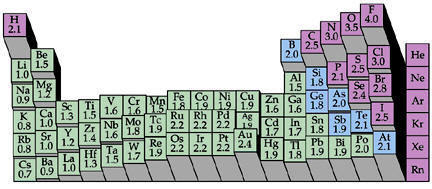
tendancy of an atom to attrackt a bonding electron Floride has highest EN in upper right corner Electron with higher EN will get the chared electron more
dipole
opposite charges on opposite sides of a molecule caused when two atoms have different electronegativity
Intermolecular forces
• The forces between molecules • the STRONGER the forces, the less volatile the matter (e.g. higher melting and boiling points)
Intermolecular force types- strongest to weakest
• Force between permanent dipole and ion • Force between permanent dipoles (hydrogen bonds are special….much stronger) • London force- temporary dipole force between molecules. Stronger when atoms are bigger.
hydrophilic
“Water loving” interactions happen with polar molecules because water is polar as well.
hydrophobic
“water hating” A polar water molecule is unable to establish association with the non polar chemical groups
surface tension
tension of the surface film of a liquid caused by the attraction of the surface particles to one another • Water forms a sphere b/c all the molecules are as close to each other as possible.
Capillary action
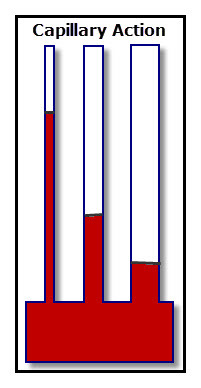
Cohesion creates surface tension while adhesion attracts the liquid to the wall of the container. Liquid moves much farther up the skinnier containers.
Vapor pressure
the pressure of a vapor in contact with its liquid or solid form
Boiling point
liquid boils when its vapor pressure is equal to the pressure it is exposed to.
heat of fusion
the energy required to melt a mle of a material Q = ÂH-fus * m ÂH is heat of fusion m is mass Q is required energy
heat of vaporization
the energy required to boil a mole of a material. Heat of vaporization is always greater than heat of fusion for all substances Q = ÂH-vap *m
specific heat
amount of energy required to change the temperature of a substance. Q = Cp * m * ÂT Cp is specific heat
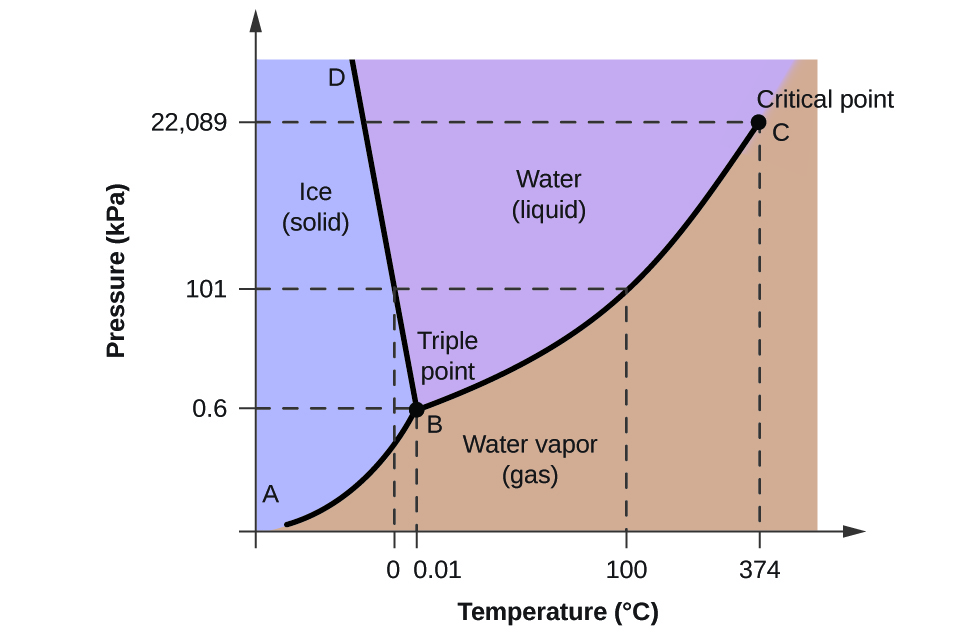
Phase diagrams
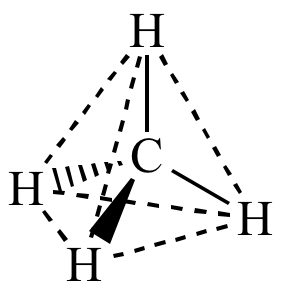
tetrahedral
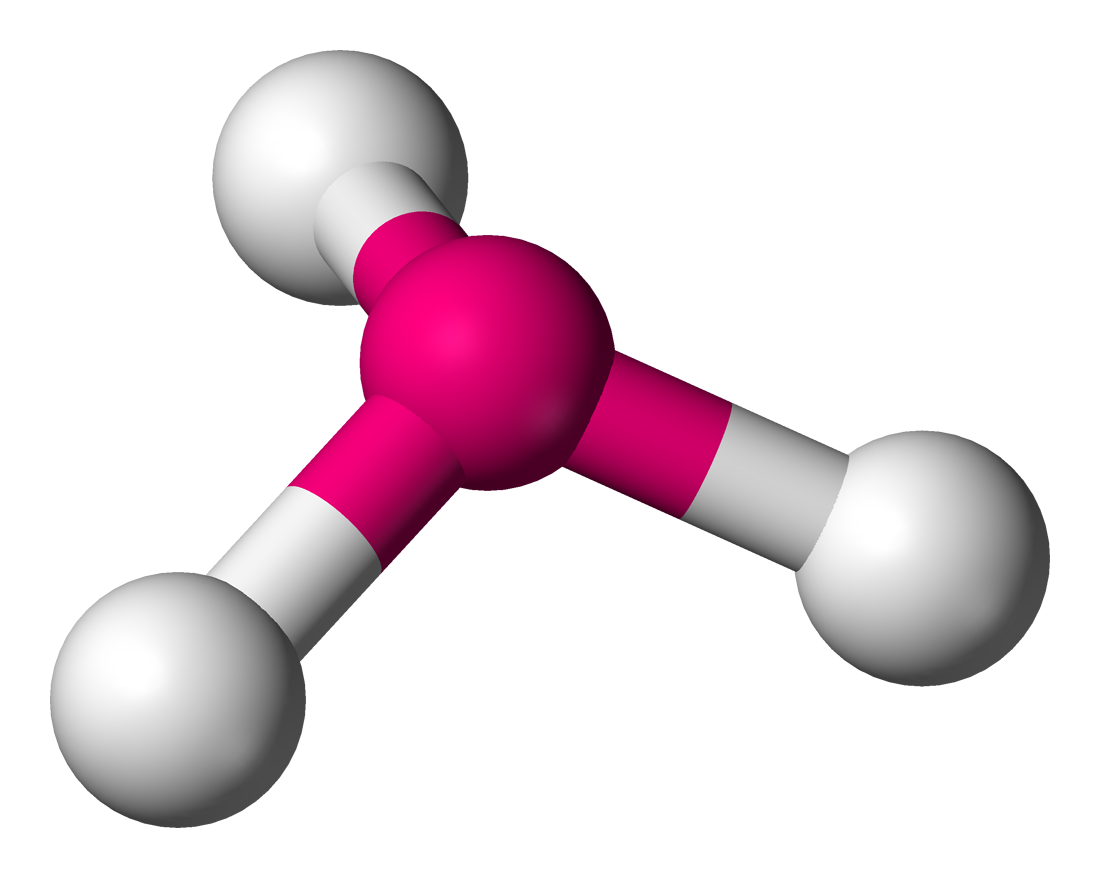
pyramidal