Marine Systems
No description yet. This curated deck is ready for daily study.
Card preview (24)
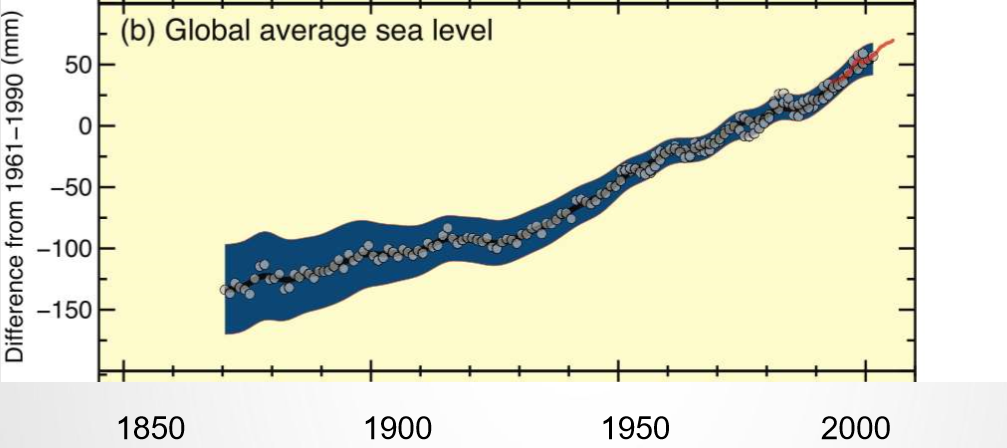
How have sea-level changed since 1993-2010
+3.2 mm yr⁻¹ Changes relative corresponding averages (1961-1990) This has almost doubled fromt the 100yr average
There some spatial patterns in sea level trends What factors will cause this?
• Sea temperature • Density (salinity) • Ocean currents and regional freshwater inputs to the ocean
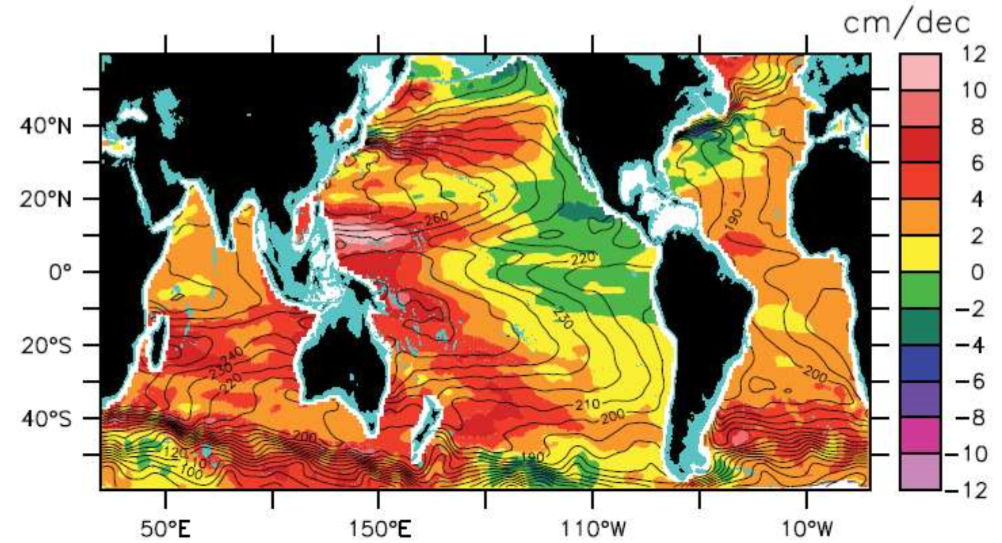
How do sea surface temperatures and sea levels link
Where we have an increase in sea surface temperature, there is an increase in sea-levels
Water moves around the globle through…
…thermohaline circulation
Warming oceans causes the water to expand is known as….
…thermal expansion
Name 6 contribuitors to sea level rise
• Terrestrial water storage, extraction of groundwater, building of reservoirs, changes in runoff, and seeping into aquifers • Subsidence in river delta regions, land movements, and tectonic displacement • Suface and deep ocean circulation changes and storm surges • Warming ocean causes the water to expand • Land can lift when glaciers melt • Exchange of water stored on land as glaciers and icecaps with ocean water
Oceans have experienced around a 0.6°C rise in temperature How much has thermal expansion contributed to sea-level rises
30-40%
The earth has gained 274 ZJ of energy since 1971 What substituents of the earth’s surface absorb this additional energy?
• Oceans (93%) • Melting of ice and glaciers (3%) • Warming of the contients (3%) • Warming the atmosphere (1%)
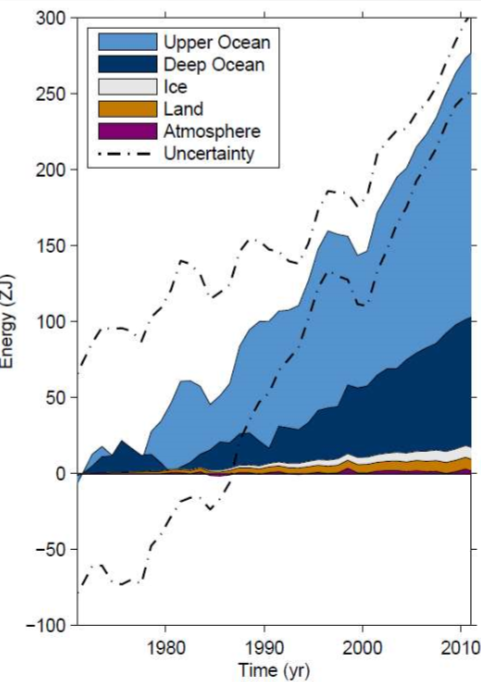
The ocean dominated the changes in the energy balance because of its?
• Large mass • High heat capacity • Low albedo
What is the second biggest input to sea-level rise apart from thermal expansion?
Water from melting glaciers (~30%) with 25% coming from Greenland and Antarctic ice sheets
What are the two factors which have caused the net-loss to the ice sheets
• Loss of ice cover through sublimation, melting and iceberg calving • And increase ablation - low-latitude area of a glacier or ice sheet below solidfied snow where there is a net loss in ice mass
Future patterns of sea levels trends are expected to be affected by….
• Changes in ocean density (e.g. fresh water inputs) • Circulation changes (e.g. weaker ocean currents)
If we reduce emissions by 2100 what will we expect to happen to sea level rise?
Due to thermal expansion sea level rise will continue beyond 2100 irrespective of reduction in emissions
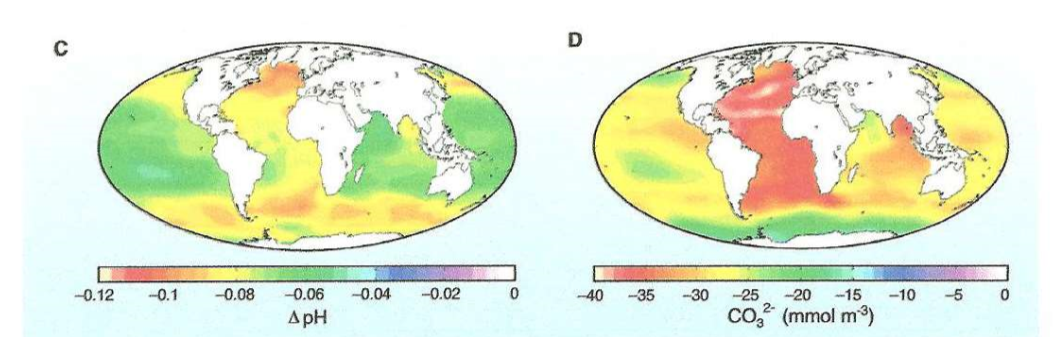
Oceans have absorbed 155 PgC since 1750 corresponding to increasing atmospheric CO₂ from 280 to 392ppm What affect has this had on the oceans?
This has lowered ocean pH And further decreases as expected to occur
Where has most of the CO₂ been absorbed by the oceans
More CO₂ will dissolve in colder oceans due to greater solubility of gases Which is predominately the north Atlantic and southern ocoean
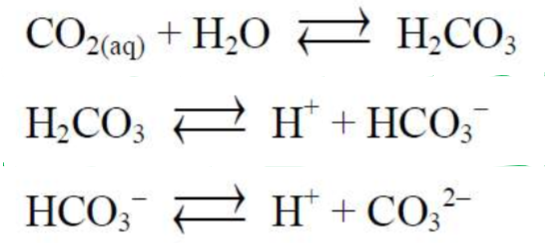
Dissolution of CO₂ in sea water produces ….
….carbonic acid H₂CO₃
Oceanic pH changes, affects the saturation state with respect to…
…Aragonite (CaCO₃) Due to lowering the amount of carbonate (CO₃²⁻) ions Hence limits the formation of aragonite - affecting calsifying organisms and subsequent food webs
What ocean structure is highly affected by increasing ocean acidity?
Corals Affect reef development
What affect does acidifying ocean have on seagrass
• Lower pH results in lower calcification of leaves • and higher shoot density • (also affecting algae + other marine fauna)
It is suggested that we are getting more short-duration stoms while the climate warms As well as the storms increasing in power too What is the reason behind this?
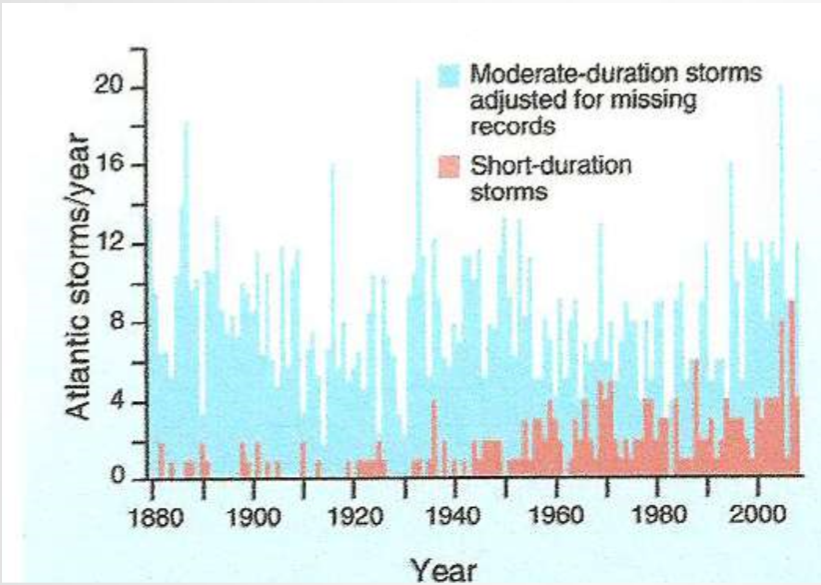
Tropical storm intensity is linked to sea surface temperature (SST) which provides increasing energy to the storm Warming seas also reduces the shear stress of increasing wind speed
What impacts of rising oceanic temperatures is there on marine biology?
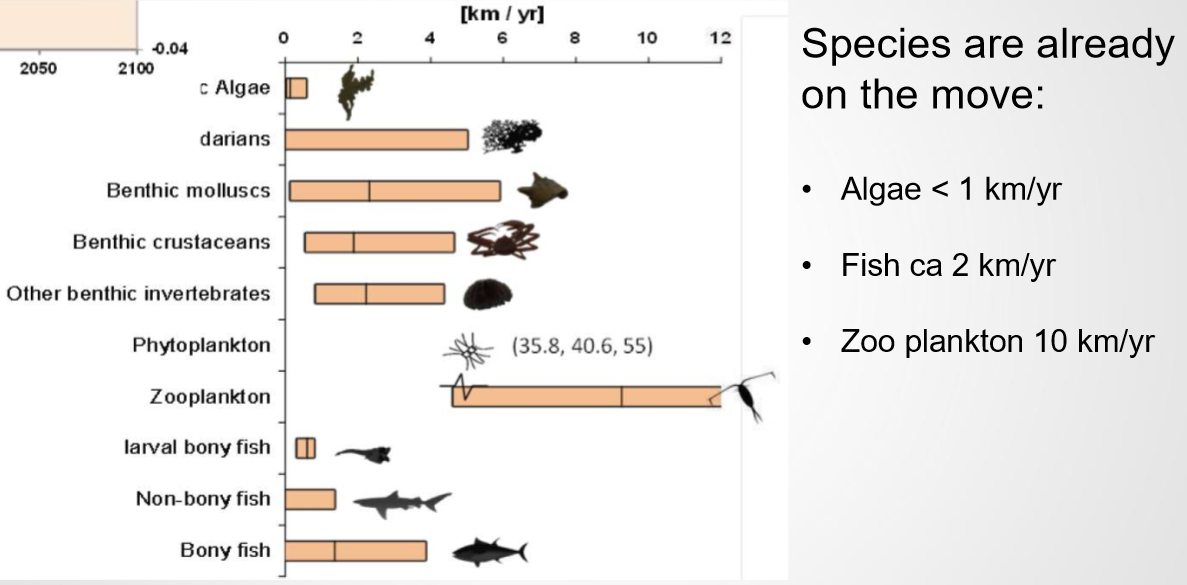
• Shifts in ranges and changes in algal, plankton and fish abundance in high latitude oceans - has actually resulted in higher productivity • Coral bleaching linked to higher temperature
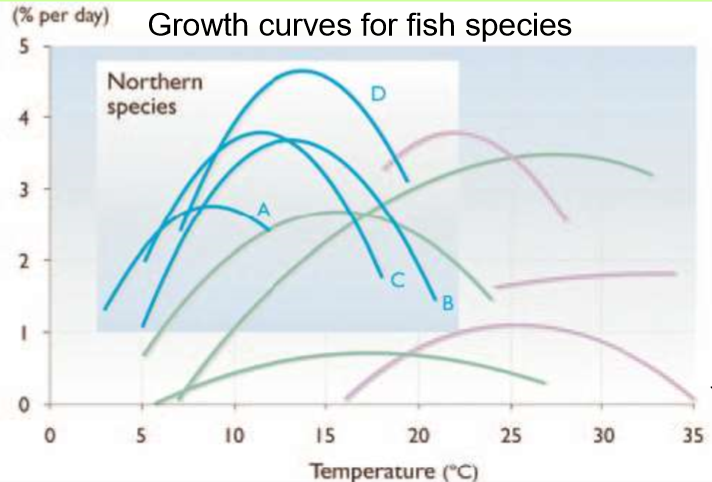
Each species has an optimum temperature range If climate change alters the sea temperature in an area this may affect ….
… fitness of animals
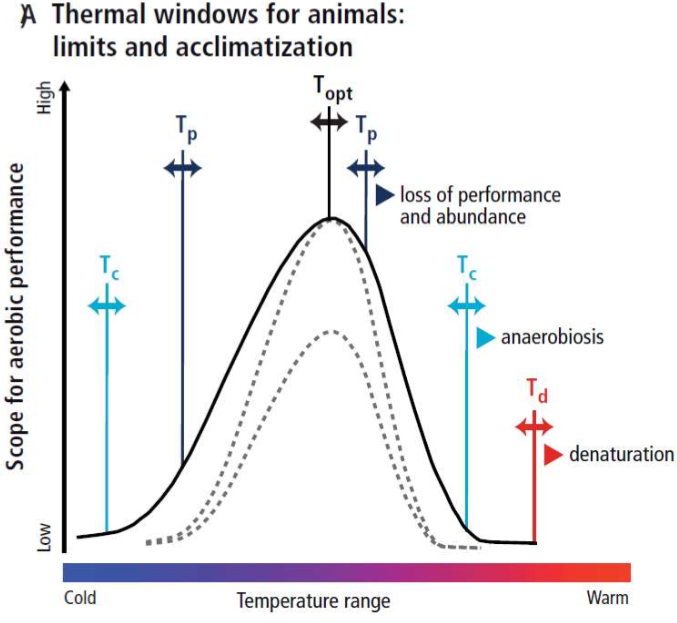
Why may it be hard to conclusively say what will happen to fish with temperatures rises
• Growth increases with temperature up to a certain point • then declines as temperature continues to rise • differences between northern and southern species • implications for fish productivity in warmer species • Implication for different trophic interactions (food chain)
To combat warming oceans, organism may move to deep parts What is the issue however?
If the organism is dependent on light penetration Or prey are still existing in warmer parts of the oceans (sea urchines/corals etc cannot swim)