Escherichia coli
暂无描述。系统推荐的高质量记忆内容,适合每天坚持背诵学习。
卡片预览 (17 张)
Summarise E.coli (and it’s pathogenicity).
e.g. E. coli = NOT always pathogenic = gram negative, facultative anaerobic + non-sporulating, rod-shaped = can live on wide variety of substrates mixed-acid fermentation in anaerobic conditions (ideal for lower gut) = optimal growth = 37 oC = strains that possess flagella are motile, mostly peritrichous = possess ability to transfer DNA via bacterial conjugation, transduction, or transformation (genetic material can spread horizontally through an existing population)
Info about normal distribution of E.coli?
large population = genetic and phenotypic diversity many strains = (sub-groups with unique characteristics - e.g. molecular level, growth differences) = allows the source of faecal contamination to be determined = can benefit hosts (produce vitamin K2, B12) = prevent establishment of pathogenic bacteria within intestine normally = 0.1% of gut flora = colonises infant’s GI tract within 40 hours of birth = in bowel, adhered to mucus of large intestine remain commensal = as long as bacteria do not acquire genetic elements encoding for virulence factors
What are results of pathogenic E. coli?
Causes in humans: = gastroenteritis = UTIs = neonatal meningitis Rarer cases: = haemolytic-uremic syndrome (HUS) = peritonitis (peritoneum) = mastitis = speticeamia = gram-negative pneumonia
What are examples of virulence determinants of pathogenic E.coli?
Adhesins = fimbriae = EPEC adherence factor Invasins = haemolysin = shigella-like invasins Motility / chemotaxis = flagella Toxins = endotoxin (LPS) = siderophores = LT / ST toxin Antiphagocytic surface properties = capsules = K antigen = LPS Defence against serum bactericidal reactions = LPS = K antigens Defense against immune responses = capsules = K antigens = LPS
What is pathogenic E.coli?
= E. coli that have acquired virulence genes (six recognised categories of diarrhoeagenic E. coli with unique features in interaction with eukaryotic cells) Over 700 antigenic types (serotypes) of E. coli recognised = based on O, H and K antigens O = part of lipopolysaccharide layer K = capsule H = flagellin (whip-like structure, locomotion, sensory perception, pathogenicity) (20 structural proteins form basal body, hook, filament) (3 sub domains: N-termini, C-termini, variable region) F = MR fimbriae (rare) (shorter than flagellae) (enhances ability for bacteria to attach to host and cause disease) e.g. Escherichia coli O157:H7 ALL elicit immune response in animals
What are the classes of pathogenic E. coli?
EPEC = EnteroPathogenic E. coli = watery diarrhoea and vomiting = Bfp, Intimin, LEE EHEC = EnteroHaemorrhagic E.coli = Bloody diarrhoea = Shiga toxins, Intimin, Bfp ETEC = EnteroToxigenic E. coli = Watery diarrhoea and vomiting = Heat-labile and sheat-stable toxins, CFAs EAEC = EnteroAggregative E.coli = Diarrhoea with mucus and vomiting = AAFs, cytotoxins DAEC = Diffusely Adherent E. coli = Watery diarrhoea recurring UTI = Daa, AIDA EIEC = EnteroInvasive E. coli = Watery diarrhoea and dysentry = Shiga toxin, haemolysin, cellular invasion, Ipa
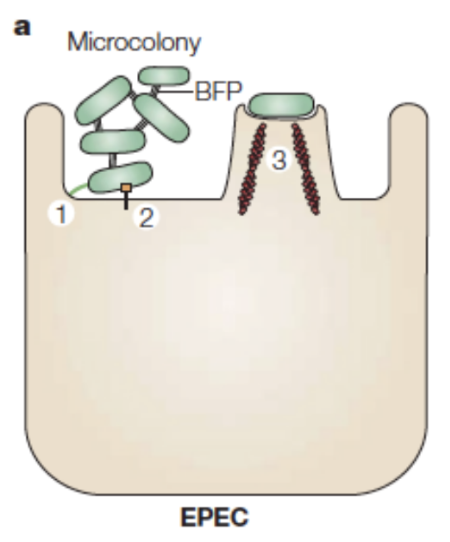
What is EPEC?
= EnteroPathogenic E. coli = adhere to small bowel enterocytes = destroy normal microvillar architecture (attaching and effacing lesion) = cytoskeletal derangements accompanied by inflammatory response and diarrhoea • initial adhesion • protein translocation by type III secretion • pedestal formation
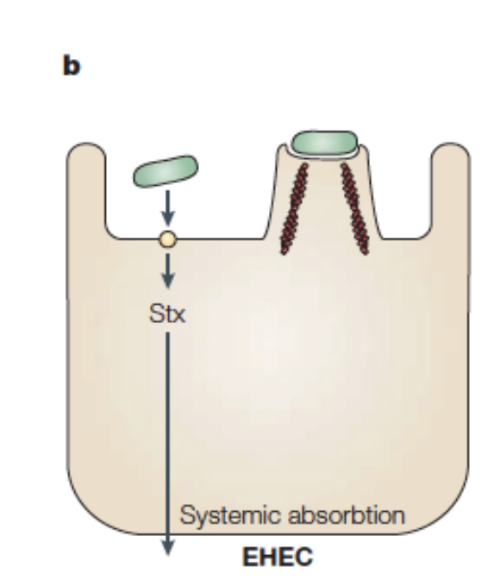
What is EHEC?
= EnteroHaemorrhagic E.coli = induces attaching an effacing lesion in the colon = same as EPEC + elaboration of Shiga toxin = systemic absorption of which leads to potentially life-threatening complications
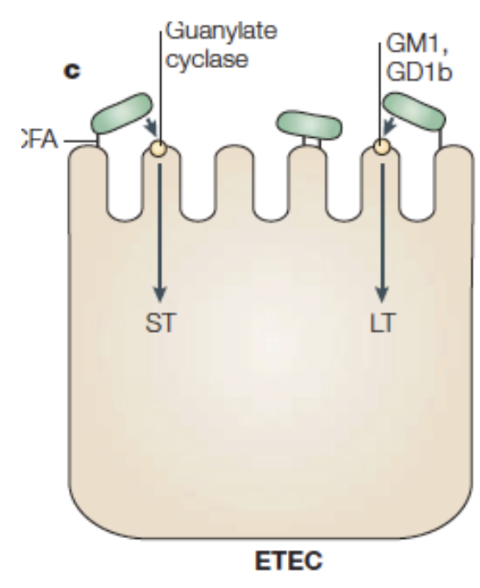
What is ETEC?
= EnteroToxigenic E. coli = adhere to small bowel enterocytes (like EHEC) = induces watery diarrhoea by secretion of heat-labile (LT) / heat-stable (ST) enterotoxins
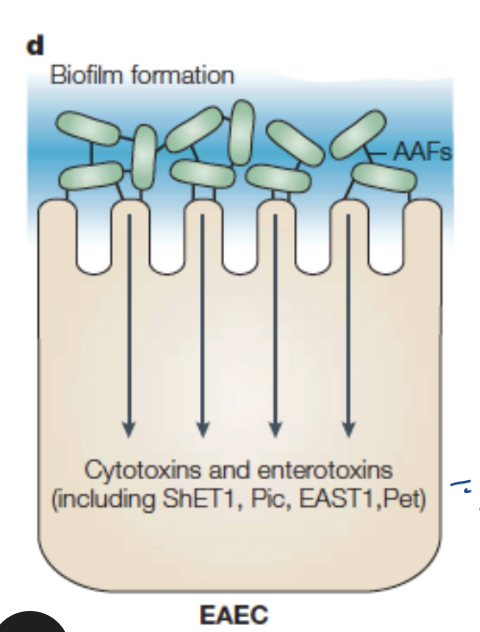
What is EAEC?
= EnteroAggregative E.coli = adheres to small and large bowel epithelia in a thick biofilm = elaborates secretory enterotoxins and cytotoxins
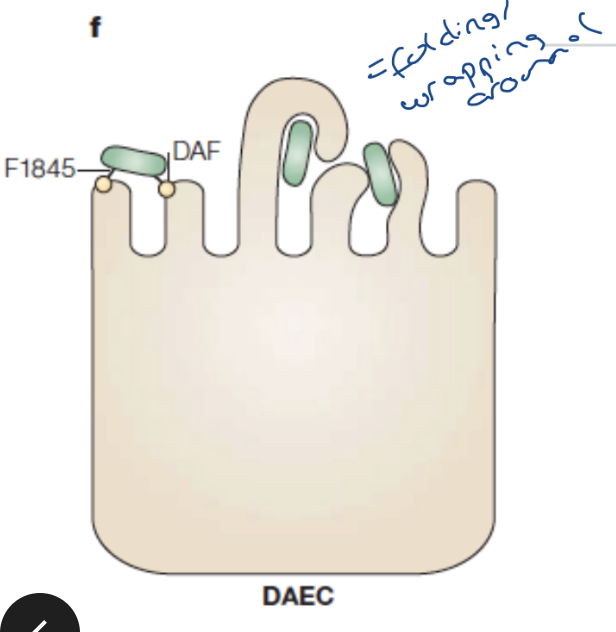
What is DAEC?
= Diffusely Adherent E. coli = elicits signal transduction effect in small bowel enterocytes = manifests as growth of long finger-like cellular projections, which wrap around the bacteria
What is EIEC?
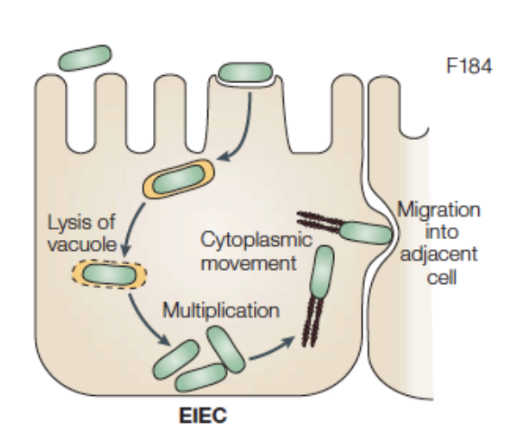
= EnteroInvasive E. coli = E. coli O157:H7 = invades colonic epithelial cells = lyses the phagosome = moves through cell by nucleating actin microfilaments = bacteria might move laterally through the epithelium by direct cell-to-cell spread or might exit and re-enter the baso-lateral plasma membrane = NOT normally found in human intestinal flora = can be spread from ruminants to humans (undercooked meats, unpasteurised milk, contaminated water, petting zoos, contaminated fields = produce)
What is the model of pathogenesis induced by EIEC?
= invades epithelium from intestinal lumen through M-cells = phagocytosed by resident macrophages = escape phagosome + replicate in epithelial cells = induce apoptosis in macrophages = bacteria released (invade epithelial cells from basolateral side, move into cytoplasm by triggering actin polymerisation, spread to adjacent cells) = genes necessary for invasion carried 140-MDa plasmid = have mxi and spa loci (encode type III secretion apparatus - T3SSs) = T3SSs are central virulence factors, inject protein effectors of virulence into eukaryotic host cells = IpaA - IpaD = secreted protein, acts on host cell = causing actin rearrangement and membrane ruffling = bacterial internalisation = once inside cell vacuole = IpaB protein degrades vacuole = release bacteria into cytosol = outer membrane protein (VirG) triggers actin polymerisation by binding cytosol components = propels organisms through cell into neighbouring cells = expression of virulence genes is transcriptionally regulated by VirR gene (affected by temperature) = bacteria are invasive at 37 oC , non-invasive at 30oC
What is the pathophysiology of E. coli O157:H7?
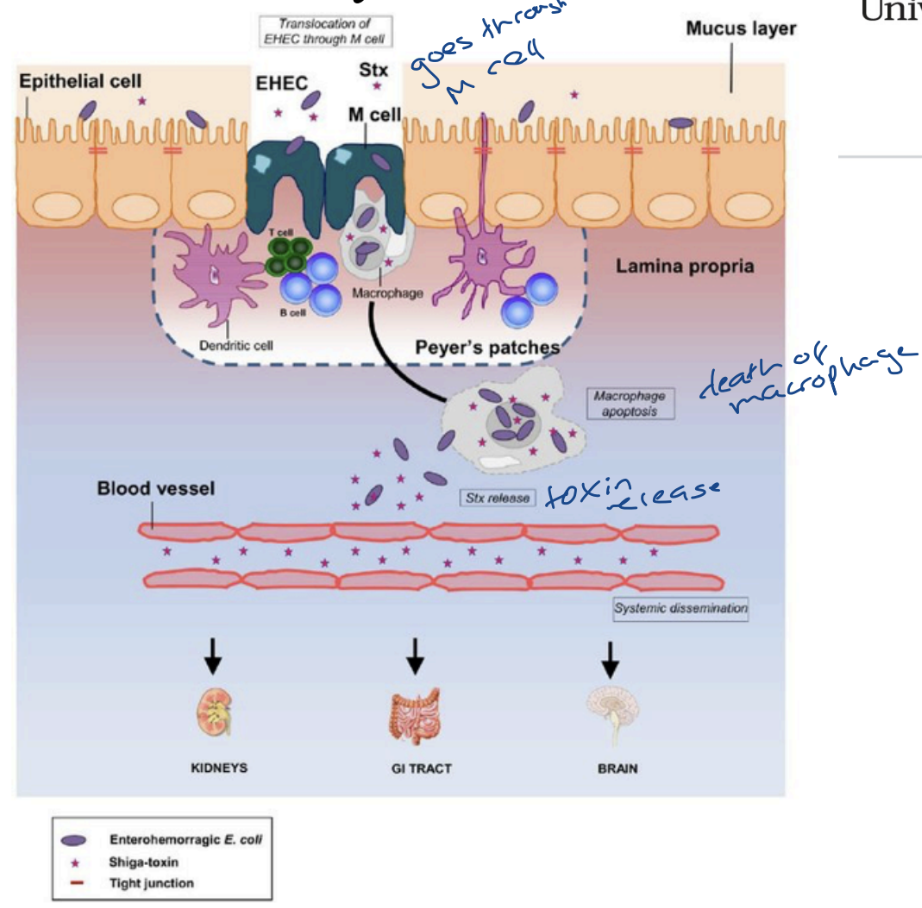
= Organism swallowed and moves through GI tract, adheres to mucosa and colonises = becomes resistant + tolerant to stomach acid then proliferates = body reacts with watery and bloody diarrhoea to flush bacterium out of body = shiga toxins enter bloodstream and begin translocation = damage kidneys
What are the signs and symptoms of E. coli O157:H7 infection?
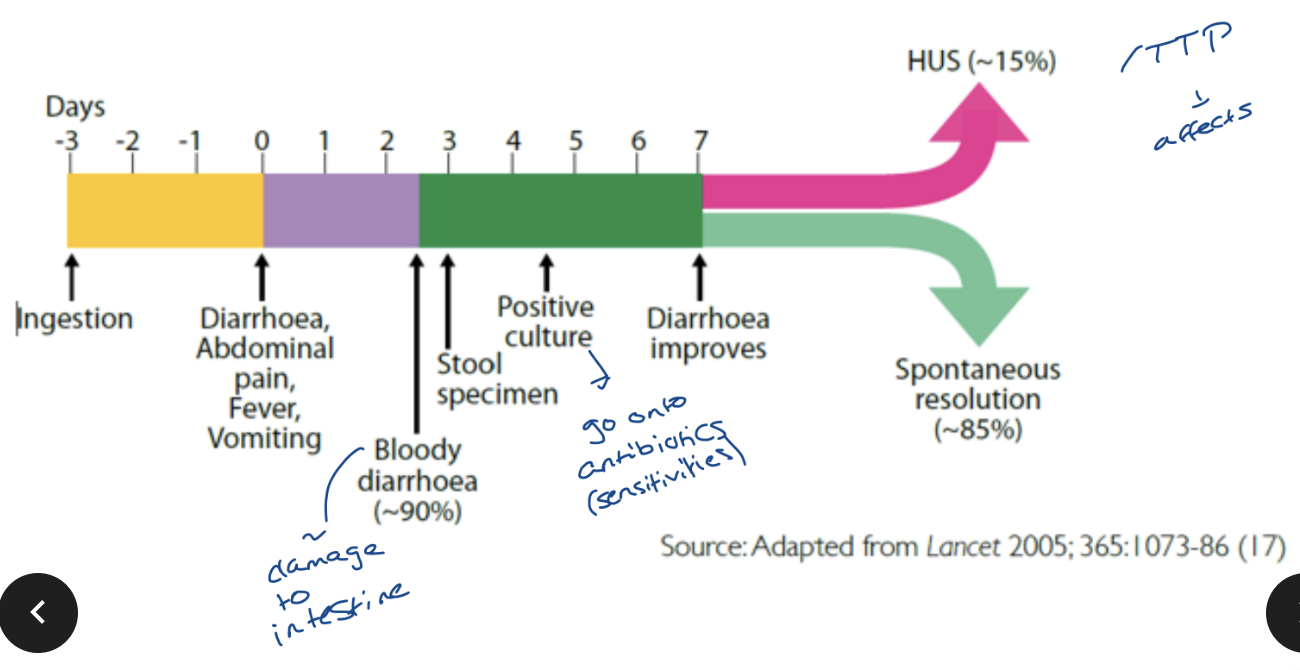
Definite: = bloody diarrhoea = vomiting Potential = no or low fever = haemolytic uremic syndrome (HUS) = thrombotic thrombocytopenic purpura (TTP)
What are the complications associated with E. coli O157:H7?
Hemolytic Uremic Syndrome (HUS) = acute, causes renal failure, mainly in children = haemolytic anemia, acute renal failure, low platelet count = causes significant blood clotting in capillaries = as RBCs pass through clotted capillaries = torn apart = kidney failure, urea / other waste builds up in blood stream Thrombotic Thrombocytopenic Purpura (TTP) = same features as HUS = BUT can include CNS involvement and fever = may have more gradual onset
What are some E. coli O157:H7 Case Studies?
Aberdeenshire, 2002 = scouts camping on land that sheep grazed on = heavy rainfall = many campers infected, no deaths (contaminated through animal faeces - direct contact and indirectly) = E. coli survives in soil for over 15 weeks Lanarkshire, Scotland, 1996 = church lunch, nursing home, individual cases = multiple deaths = linked back to butcher = cooked and raw meat stored together = contamination = resulted in changes to practices in butchers Germany, 2012 = outbreak typed as EAEC (originally thought to be EHEC) = recalled bean sprouts, cucumbers, fenugreek Watercress, UK, 2013 = linked to EHEC in prebagged salads containing watercress