27.3 Condensation Polymerisation
No description yet. This curated deck is ready for daily study.
Card preview (18)
What is condensation polymerisation?
formation of polymer by joining of monomers with loss of small molecule
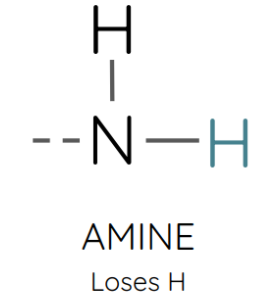
What atom(s) do amines lose during condensation reactions?
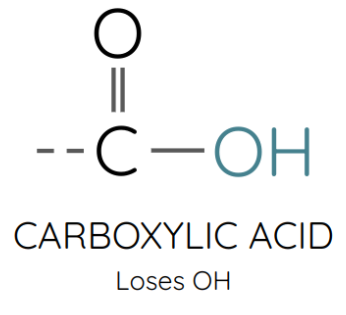
What atom(s) do carboxylic acids lose during condensation reactions?
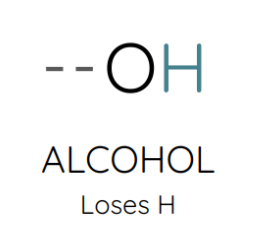
What atom(s) do alcohols lose during condensation reactions?
What is the main difference between addition polymerisation & condensation polymerisation?
addition reaction: monomers join without loss of small molecule condensation polymerisation: monomers join with loss of small molecule
Draw & label an ester linkage:
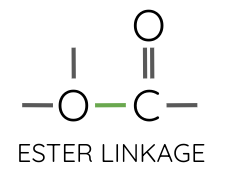
Describe the formation of a polyester using 1 type of monomer:
monomer contains alcohol & carboxylic acid functional groups Ester linkages form between hydroxyl + carboxyl OH from carboxyl + H from alcohol ⟶ H2O (monomer could also be alcohol + acyl chloride, releasing HCl as small molecule)
Describe the formation of a polyester using 2 types of monomers:
MonomerA = dicarboxylic acid, MonomerB = diol Ester linkages formed during condensation between alternating dicarboxylic acid & diol
Draw & label an amide linkage:
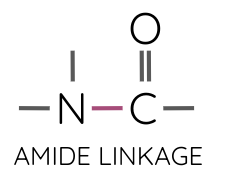
Describe the formation of a polyamide using 1 type of monomer:
monomer contains amine & carboxylic acid functional groups Amide linkages form between amine + carboxyl H from amine + OH from carboxyl ⟶ H2O (monomer could also be amine + acyl chloride, releasing HCl as small molecule)
Describe the formation of a polyamide using 2 types of monomers:
MonomerA = dicarboxylic acid, MonomerB = diamine Amide linkages formed during condensation between alternating dicarboxylic acid & diol
How many small molecules are released from the condensation polymerisation of n lots of monomerA only?
n-1 (1 less than total monomers, because for 2 monomers there is 1 small molecule released)
How many small molecules are released from the condensation polymerisation between n(monomerA) + n(monomerB)?
2n-1 (1 less than number of total monomers, because for 2 monomers there is 1 small molecule released)
Draw the polymerisation reaction from 2-hydroxyethanoic acid monomers:
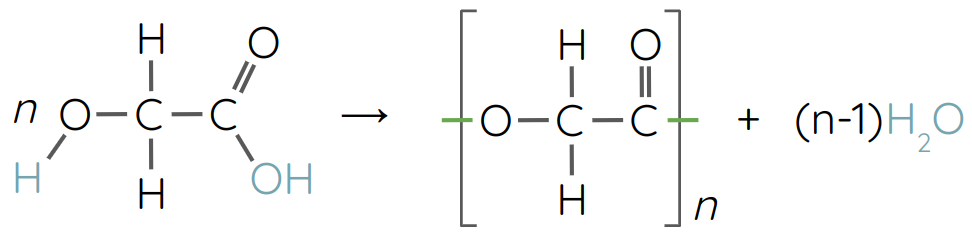
Draw the polymerisation reaction from benzen-1,4-dicarboxylic acid + ethan-1,2-diol monomers:

What 2 functional groups are used for synthesising polyesters?
carboxylic acid + alcohol (could also be acyl chloride + alcohol)
What 2 functional groups are used for synthesising polyamides?
carboxylic acid + amine (could also be acyl chloride + amine)
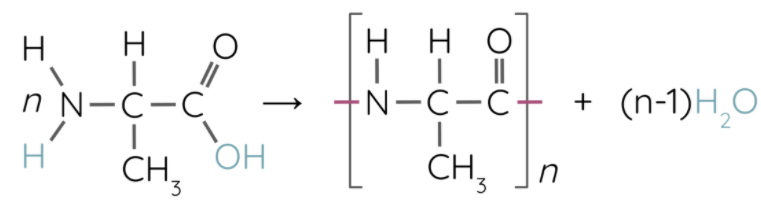
Draw the polymerisation reaction from 2-aminopropanoic acid monomers: