Chapter 24 Transition elements
No description yet. This curated deck is ready for daily study.
Card preview (24)
What sub-shell is at the highest energy level for transition metals ?
• The d-block elements are found between groups 2 and 13 and have a 3D sub-shell as the highest energy level
What is the rule when forming d-block ions/atoms ?
• when forming an ion, lose their 4s electrons before losing any 3d electrons • when forming an atom 4s fill before 3d

What are the physical properties of transition elements ?
• High melting points • shiny • Conduct electricity and heat
What are some exceptions with D-block atoms ?
• For Cr and Cu a 4s electrons is promoted to half-fill or fully fill the 3d Sub-shell • this is because it is more energetically favourable

What are exceptions of D-block ions ? defintion of transition element asw
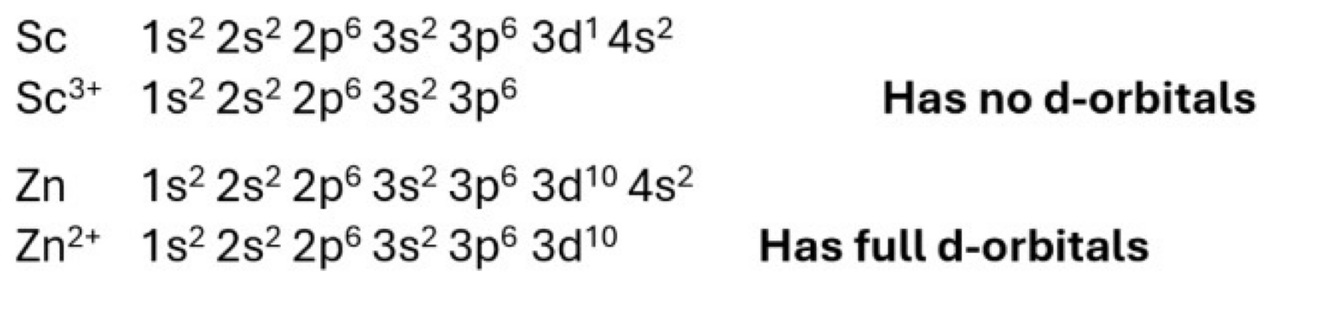
• although in the d-block, Scandium and Zinc do not fall into the definition of a transition element - since neither forms an ion with a partially filled d-orbital • Scandium only forms +3 ion and zinc only forms a +2 ion
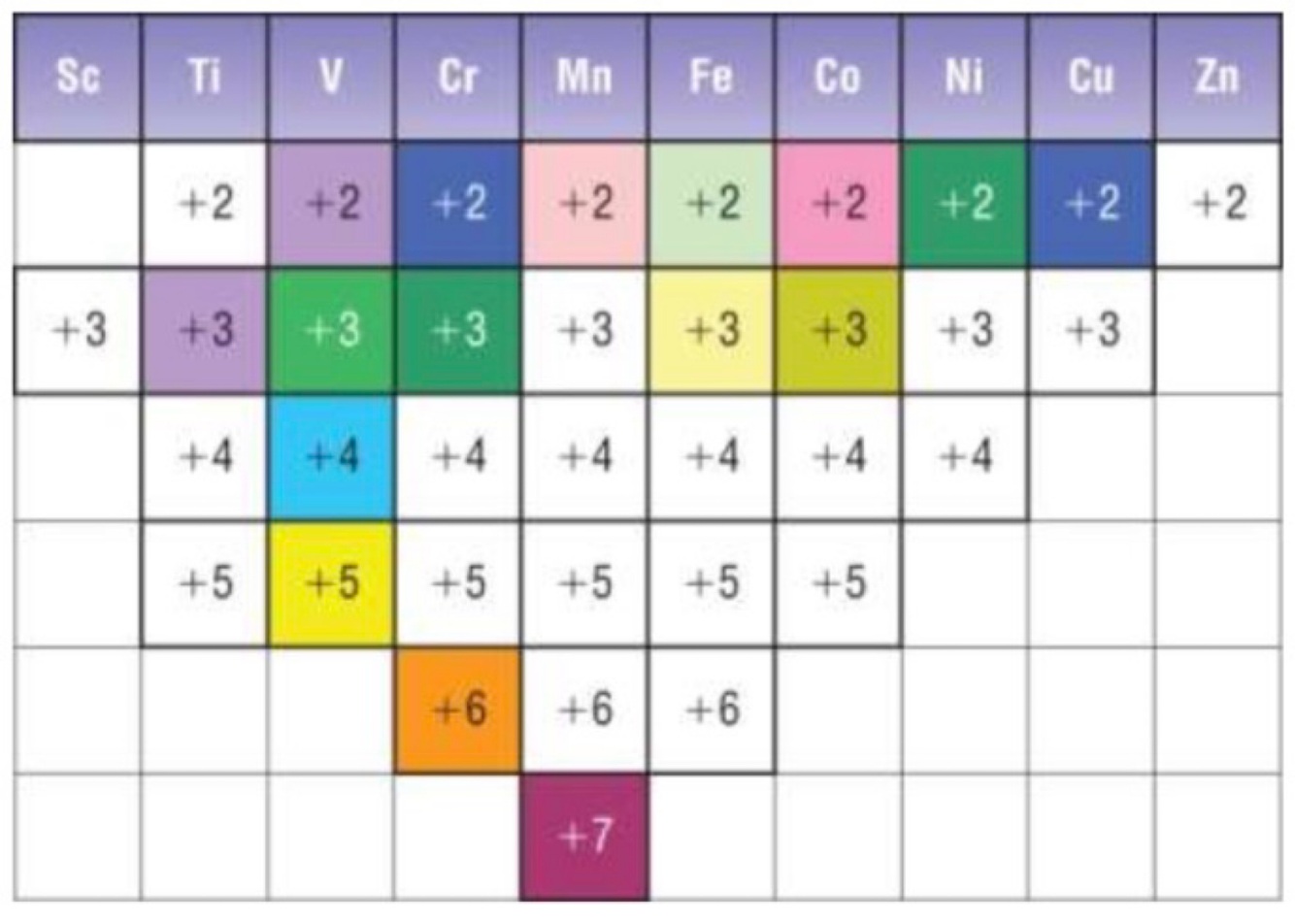
What is the pattern of variable oxidation states for transition elements ?
• the number of oxidation states increases across the transition elements series to manganese then decreases
What are some common transition element heterogenous catalyst ?
• Hager process - Iron catalyst • Contact process - Vanadium (V) oxide • Hydrogenation - nickel catalyst • Decomposition of hydrogen peroxide - Manganese (IV) oxide catalyst
What is a complex ion ?
• Complex ions form when a metal ion is centrally bonded to one or more molecules or negative ions, known as ligands • Ligands donate a pair of electrons to form a dative bond with the central metal ion • a coordinate number indicates the number of dative bonds made
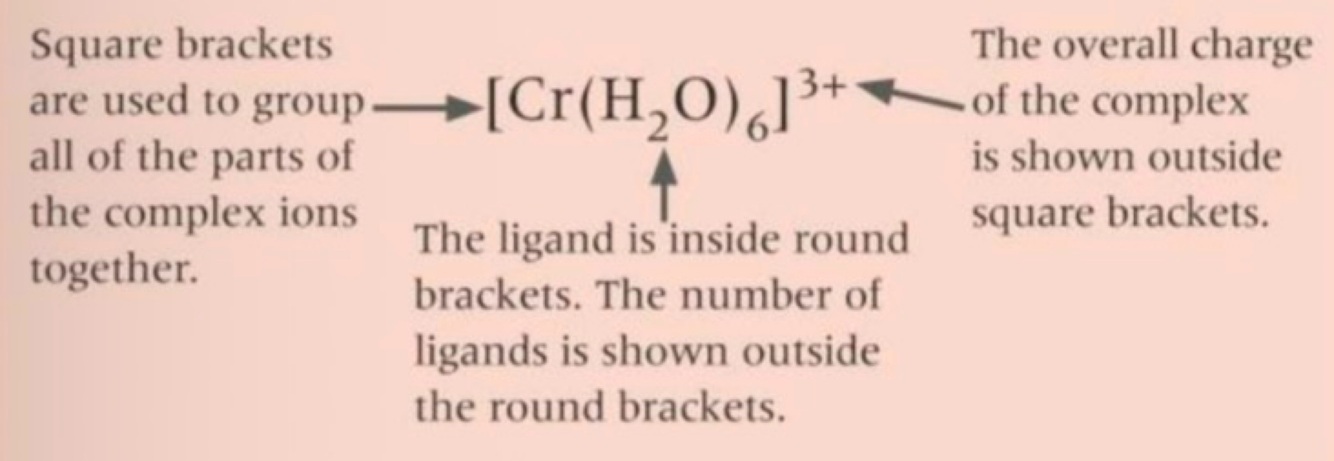
How do you represent complex ions ?
• Cr3+ is the central metal ion - water acts as a ligand with each molecule donating a lone pair of electrons from the oxygen to the central metal atom to form a coordinate bond • coordinate number indicates = 6
What are the different types of ligands ?
• some ligand have no charge and some do 2 types of ligands: 1. Monodentate - donate 1 pair of electrons to central metal ion. E.g Water, ammonia, chloride, cyanide 2. Bidentate - donate 2 pairs of electrons to central metal ion (2 coordinate bonds)
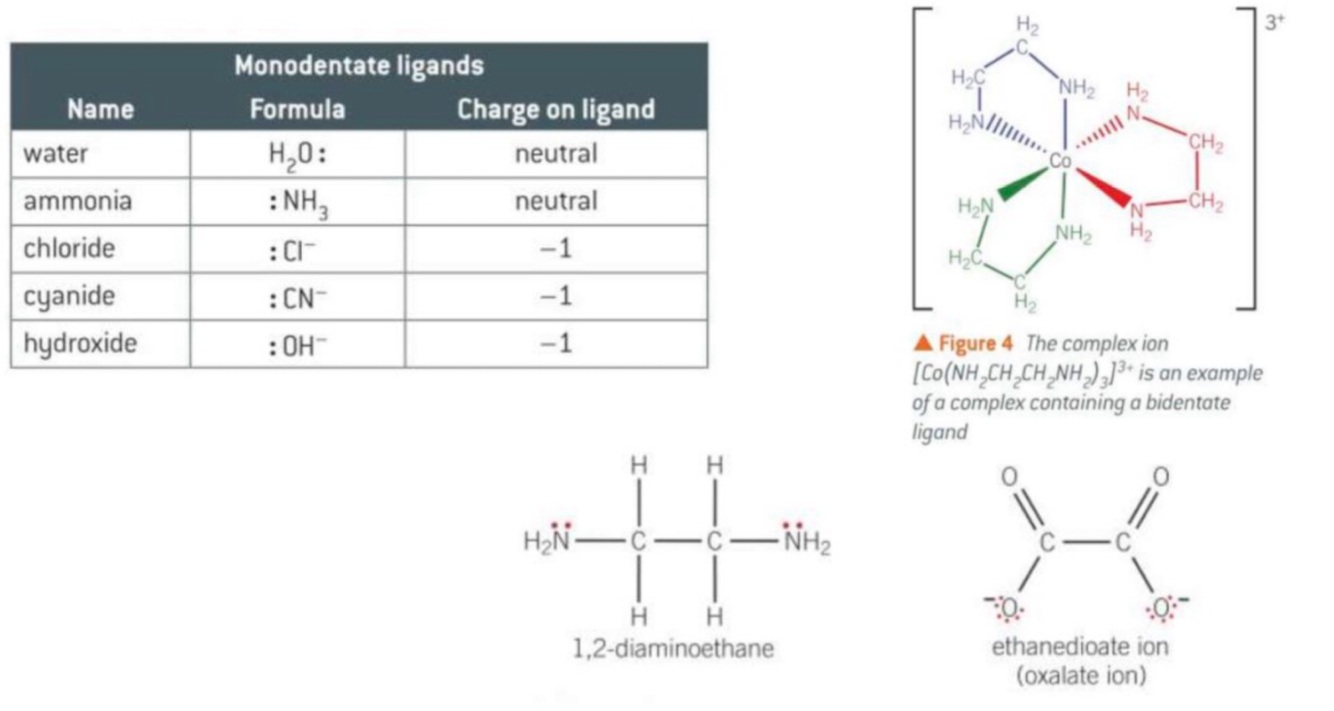
What are the shapes of complex ions ?
• most common coordinate numbers are 6 and 4 • 6-coordinate complexes have octahedral shapes and 90 degree bond angle • 4-coordinate complexes can have: 1. tetrahedral shapes 109.5 degree bond angle 2. Square-planar 90 degree bond angle
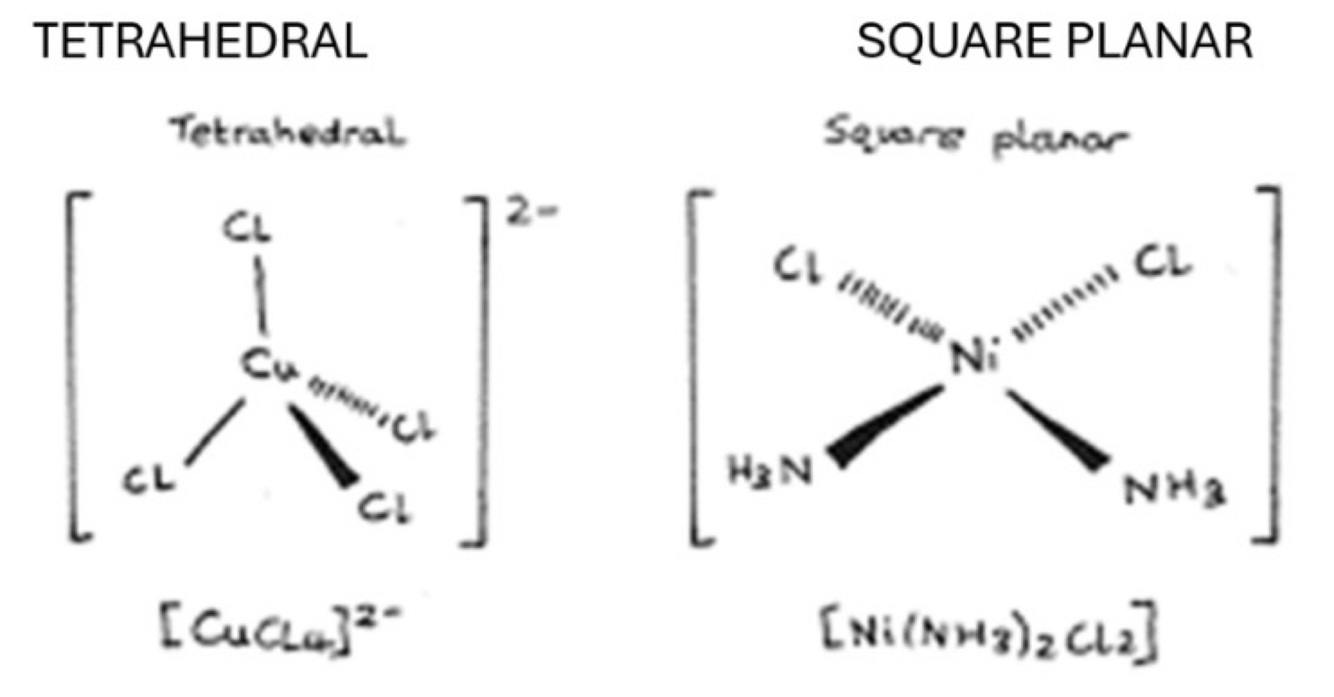
What is a complex ion example ?
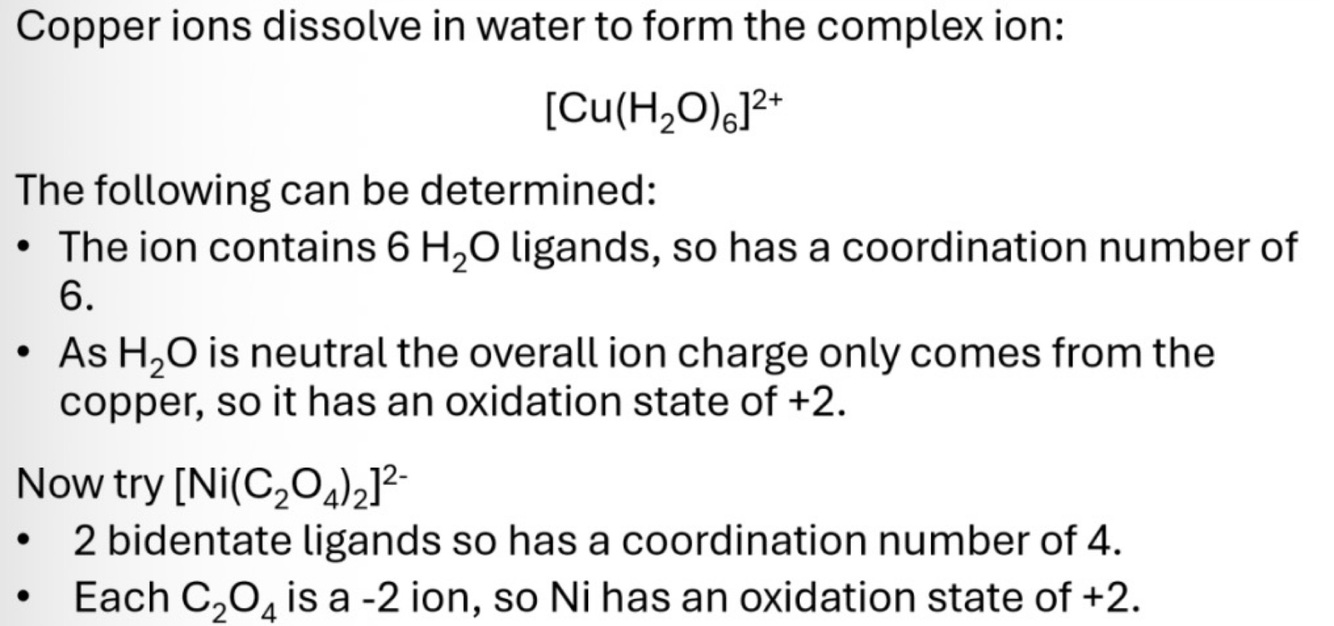
What does the colour of complex ions depends on ?
• it depends on the colour of the central atom
When do complex ions form Cis-Trans isomerism ?
They can display Cis-Trans isomerism if it contains 2 different monodentate ligands
Square planar isomerism example
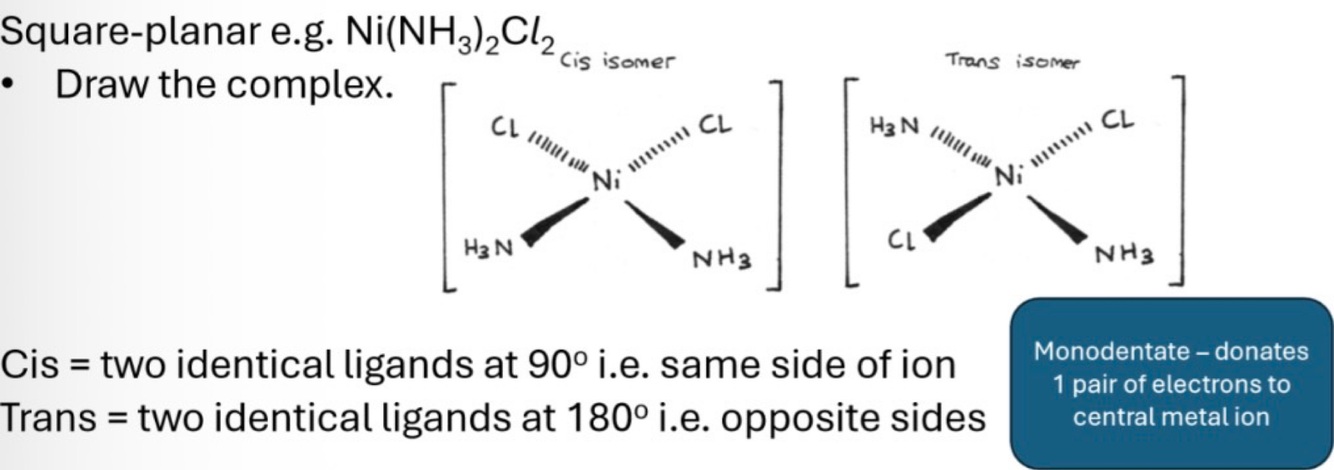
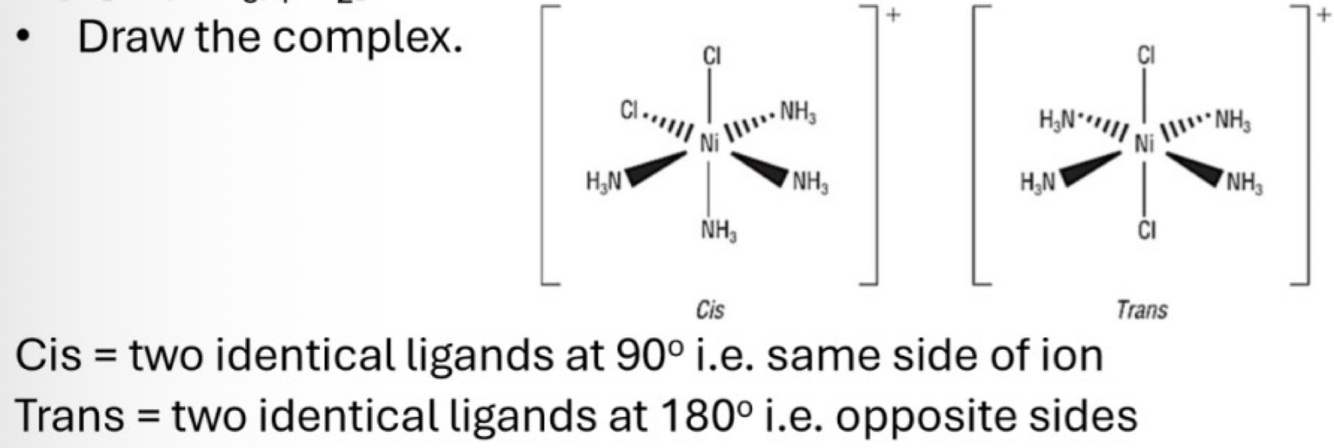
Octahedral monodentate isomerism example
Needs 2 different monodentate ligands with 2 of one ligand and 4 of another ligand
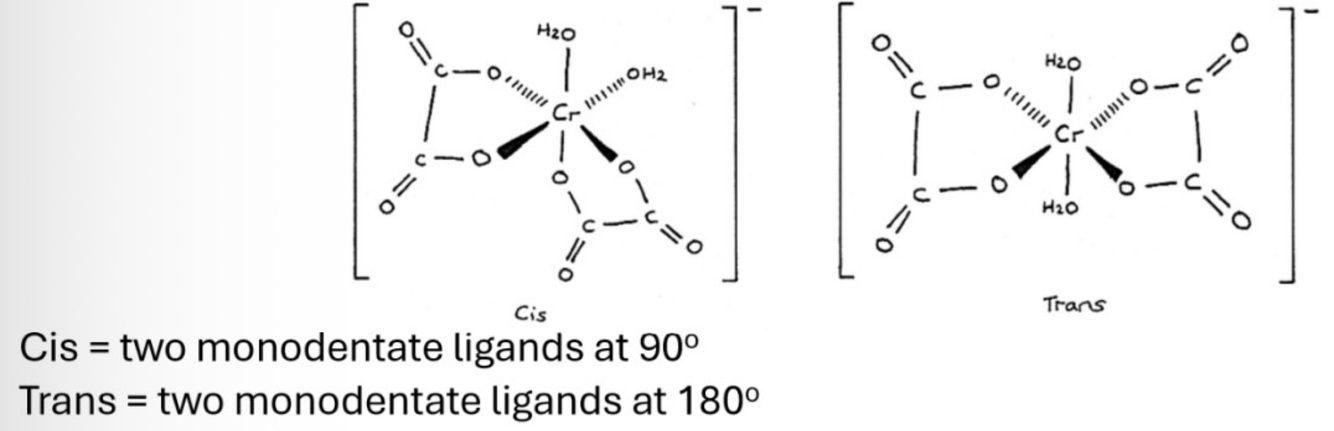
Octahedral bidentate isomerism example ?
contain 2 bidentate ligands and 2 monodentate ligands
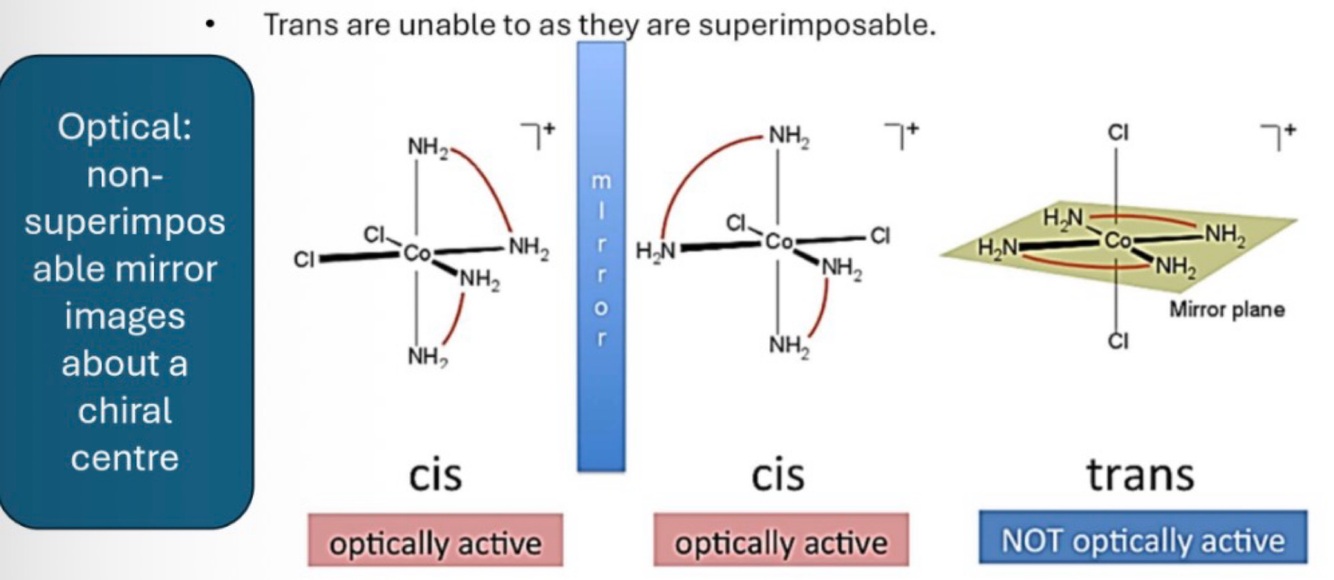
What happens when there is cis isomers in octahedral complexes ?
• Complexes containing monodentate bidentate ligands will display optical isomers (enantiomers) • only in octahedral complexes • also occurs in complexes with only bidentate ligands
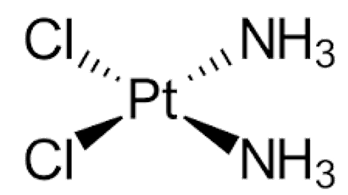
What is Cis-platin ?
• Cis platin was found to bind to DNA and stop cell replication in bacteria • whereas Trans-platin had no effect as the chlorines can’t bind • same happens with cancerous cells, making it an effective anti-cancer drugs, however it can attack other cells and cause side effects
what is a ligand substitiution reaction ?
• occurs when ligand in a complex ion is replaced with another ligand
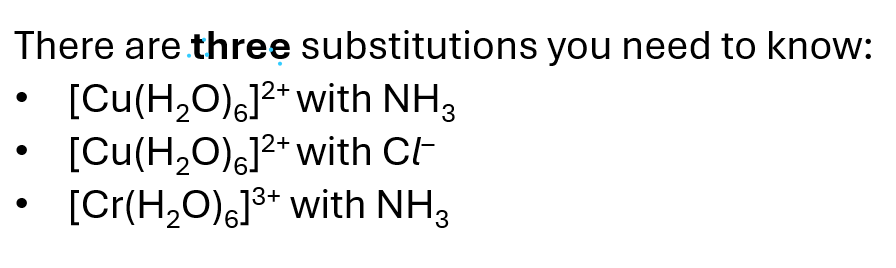
how does the Cu2+ ion work with ammonia ?
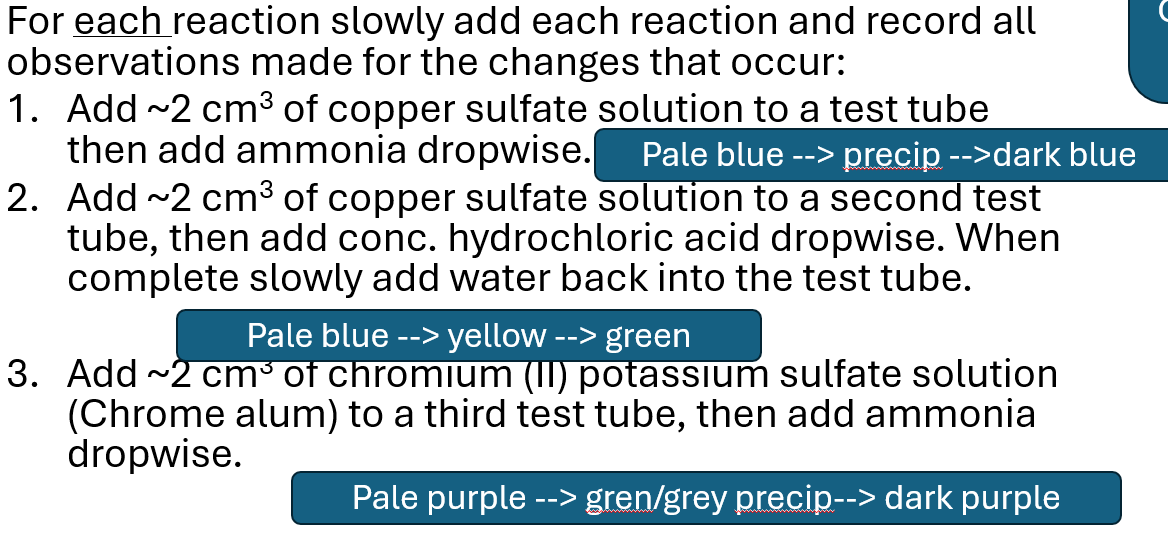
• with the addition of ammonia 4 water ligands are substituted for 4 ammonia ligands 1. the formation of pale blue precipitate Cu(OH)2 2. the precipitate dissolves in excess ammonia to form a **dark blue solution of [Cu(NH3)4(H2O)2]2+ **

how does the Cu2+ ion work with cloride ?
• with the addition of chloride ions (from concentrated HCl) all water ligands are substituted for 4 chloride ligands • chloride ions are larger than H2O so less fit around the Cu2+ • Yellow tetrahedral [CuCl4]2- complex ion forms • an intermediate solution can form and is green due to equal ammount of complex ions (yellow + blue)

how does the Cr3+ ion work with cloride ?
• [Cr(H2O)6]3+ is pale purple • when chormium (III) sulfate dissolves in water a green solution is formed • with the addition of ammonia all water ligands are substituted for ammonia ligands in 2 steps 1. a grey-green precipitate of Cr(OH)3 forms 2. excess ammonia dissolves precipitate to form dark purple complex ion [Cr(NH3)6]3+

what are the practical observations of colour for the reactions ?