Picture/symbol cards
No description yet. This curated deck is ready for daily study.
Card preview (24)
Describe the hybridized orbital that results from: • one s + three p’s • one s + 2 p’s • one s + 1 p
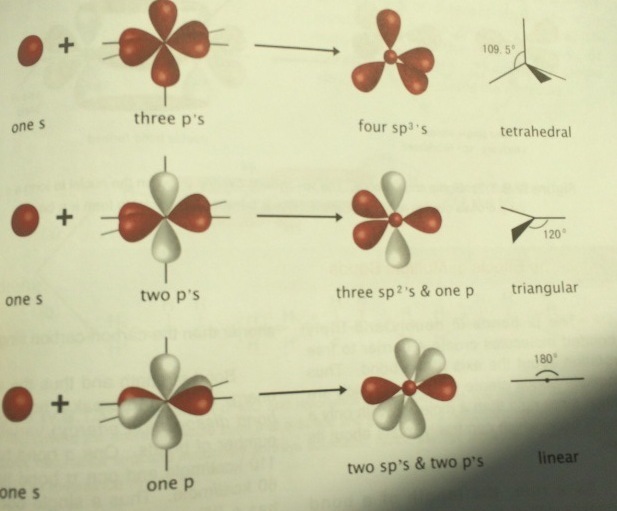
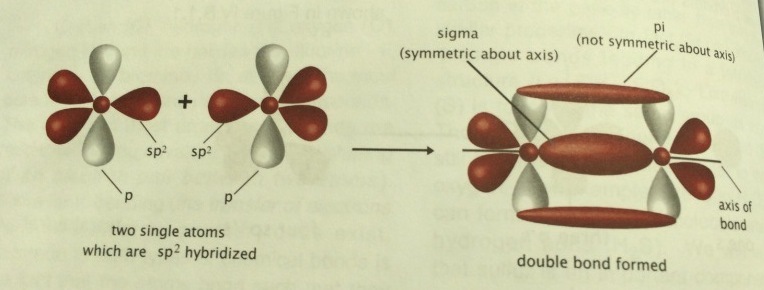
Recall sigma and pi bonding in organic molecules (the configuration of the hybridized/regular orbitals)
What is the general formula for straight chain alkanes? How many hydrogen atoms are subtraced for each ring?
CnH2n+2 Add 2 H per ring
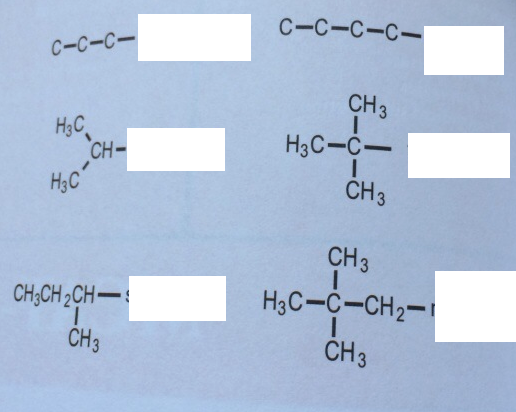
Label these common alkyl groups
Describe complete and incomplete combustion of alkanes Summarize this exothermic reaction (ie. write it out)
Complete: Hydrocarbon converted to CO2 and H2O Incomplete: the reaction gives other products when there is insufficient oxygen for complete combustion (eg. CO and soot/molecular C). CnH2n+2 + excess O2 → nCO2 + (n+1)H2O
Summarize radical substitution reactions with halogens and alkanes. List the three steps and then describe how this can be inhibited
RH + X2 + uv light (hf) or heat → RX + HX The halogen, X2may be F2, Cl2 or Br2 (I2 does not react) • Initiation (formation of free radicals, eg. Cl·, from uv or heat) • **Propagation **(free radicals form new free radicals) eg. CH4 + Cl· → ·CH3 + HCl • Termination (termination reactions destroy the free radicals by coupling) This can be inhibited by using a resonance-stabilized free radical to mop up with termination reactions
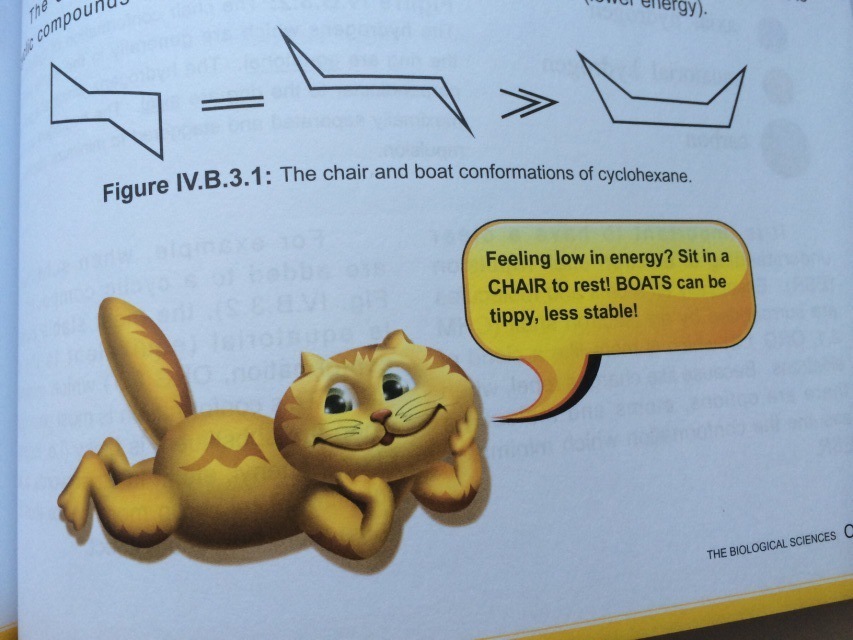
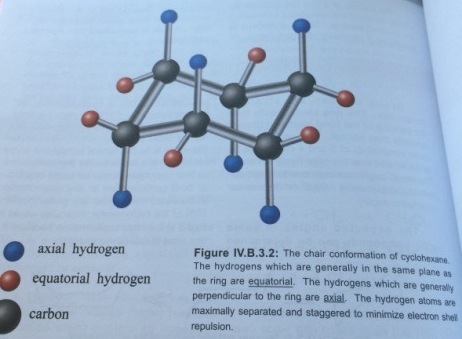
Show the two possible conformations of cyclohexane. Which one is found most in nature (99%) and why?
The chair conformation is found most often in nature because it has bond angles at 109.5º (most resembling stable tetrahedral for sp3 carbons)
In a molecule of cyclohexane, which of the hydrogens are axial and which are equatorial? What does that mean?
Equatorial: hydrogens in the same plane as the ring Axial: Hydrogens that are perpendicular to the ring Hydrogen atoms are maximally separated and staggered to minimize electron shell repulsion
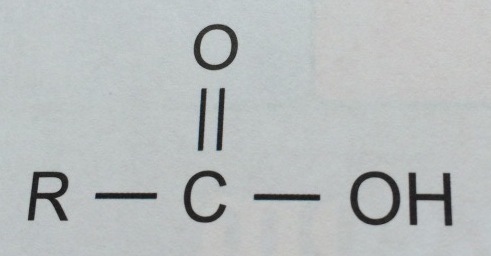
What is the general structure of a carboxylic acid functional group?
How can a carboxylic acid be formed?
• By reacting a Grignard reagent with carbon dioxide • By reacting an aldenyde with KMnO4 • By reacting a nitrile (N≡C-R) with aqueous acid
Carboxylic acids can undergo nucleophilic substitution reactions with many different nucleophiles. What is the product for the following nucleophiles? • OR • NH2 • CL from SOCl or PCl5
• OR ⇒ ester • NH2⇒ amide Cl ⇒ acid chloride
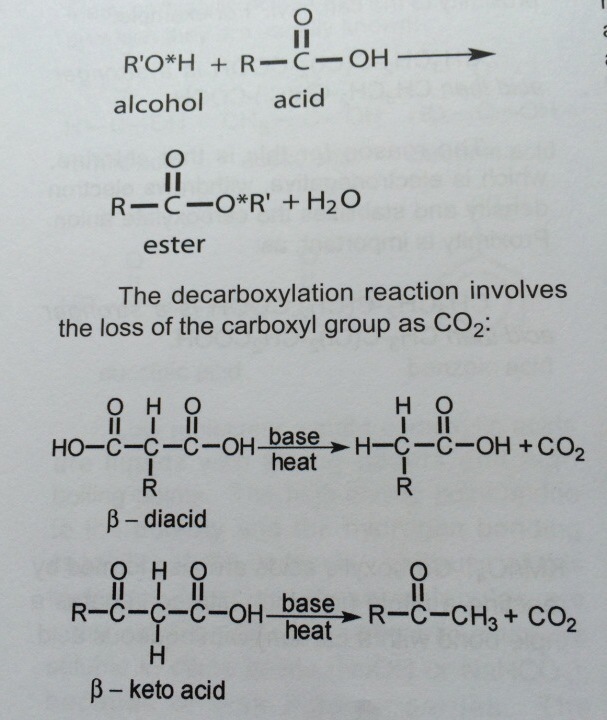
Summarize a typical esterification reaction with carboxylic acid
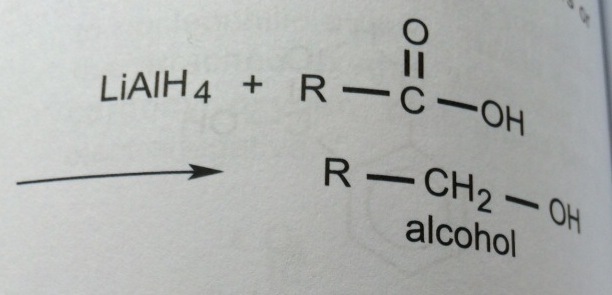
How can carboxylic acids be reduced to alcohols?
• With lithium aluminum hydride (LiAlH4) or H2/metals • Or by converting to esters or amids first (with nucleophilic substitution) and then reducing with NaBH4 (sodium borohydride)
What is the general structure of an acid halide and how are these named?
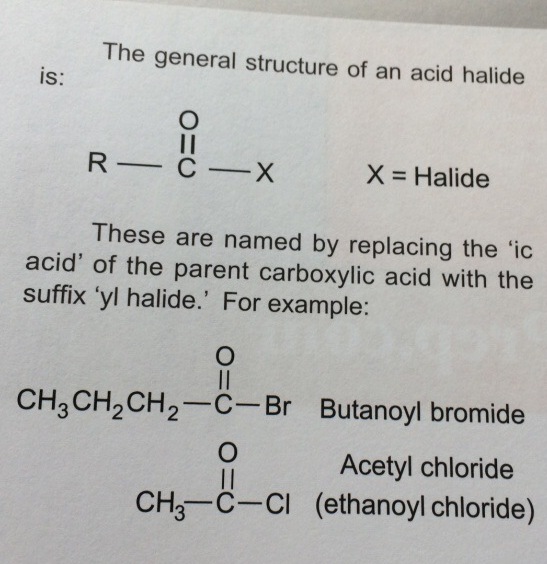
• How are acid chlorides formed? • How can acid chlorides be converted to alcohols? (one or two steps)
Carboxylic acid + PCl5 or SOCl2= Acid chloride Acid chloride + NaBH4= alcohol (one step) Acid chloride + H2/(Pd/C) = carboxylic acid Carboxylic acid + NaBH4 = alcohol (two steps)
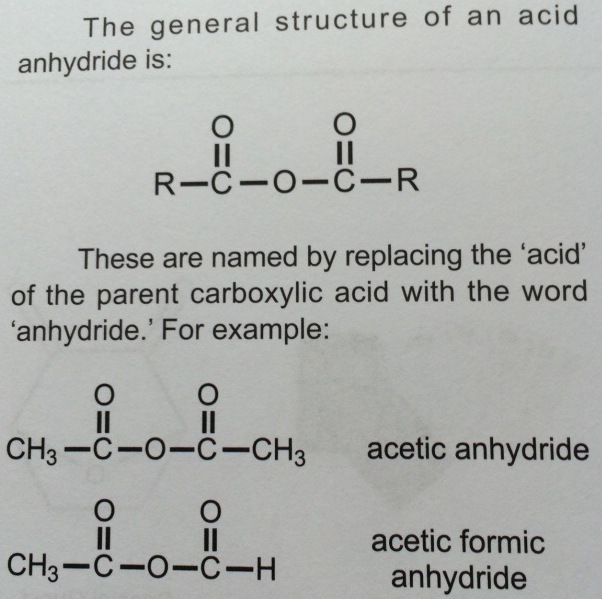
What is the general structure of acid anhydride? How are these named?
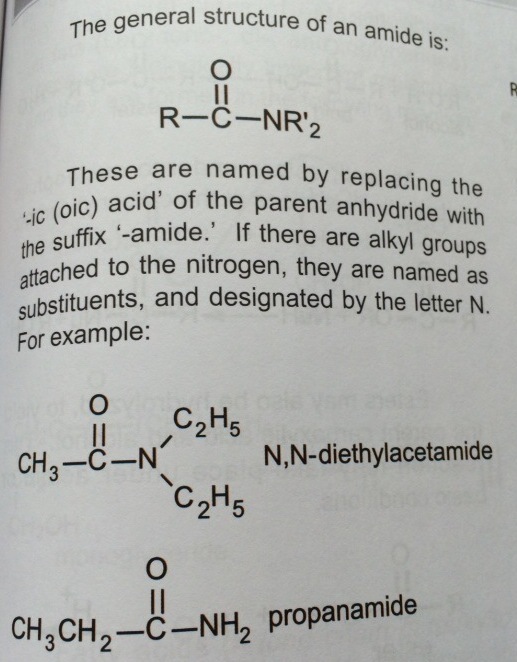
What is the general structure of an amide? How are these named?
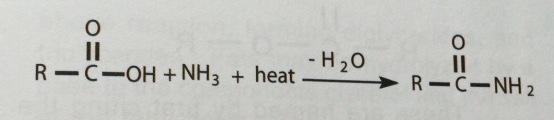
How can amides be synthesized?
Reacting carboxylic acids (or other carboxylic acid derivatives) with ammonia
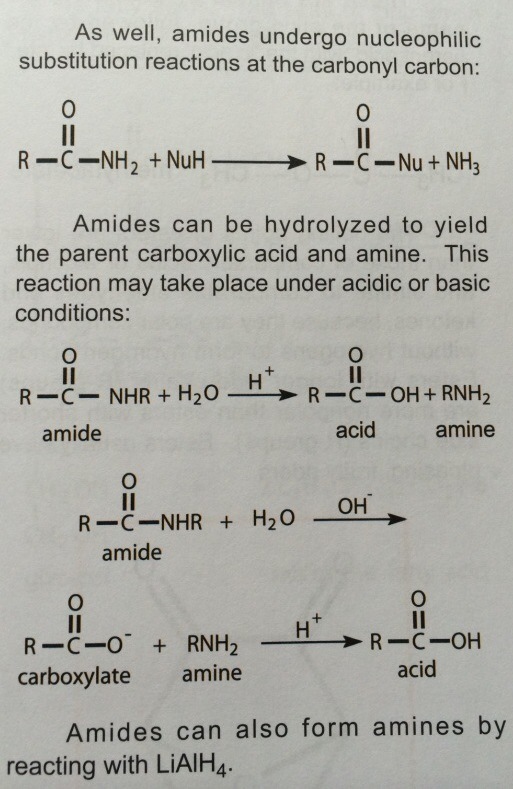
Describe the following reactions with amides: • Nucleophilic substitution • Hydrolyzation (yielding carboxylic acid and amine) • Converted to amines
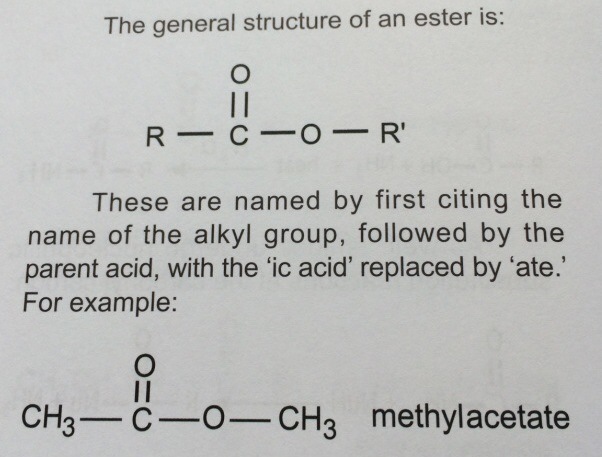
What is the general structure of an ester and how are they named?
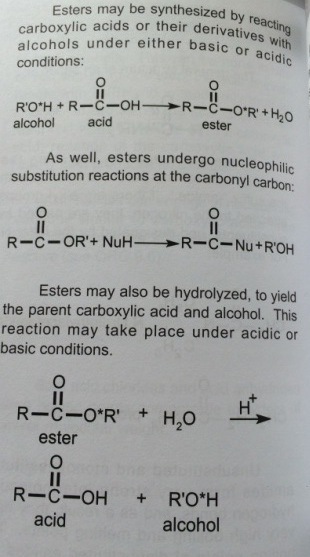
How can esters be synthesized? Describe nucleophilic substitution reactions with esters and hydrolysis of esters.
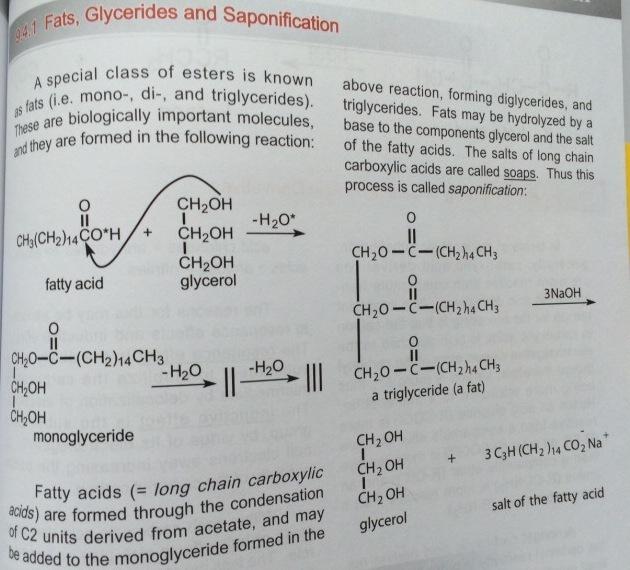
What type of organic compounds are fats (mono-, di- and triglycerides)? In what type of reactions are they formed in? What is the reaction called for their hydrolization? How are fatty acids formed?
Esters, hydrolyzed in saponification reactions (forms salts of long chain carboxylic acids, called soaps). Fatty acids are formed from condensation of C2 units derived from acetate.
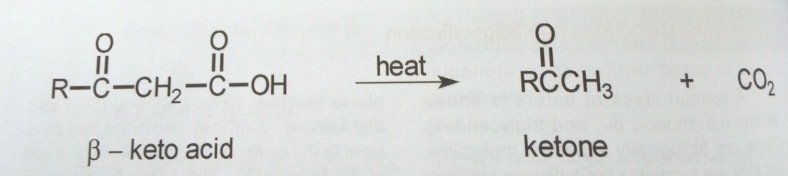
What are β-keto acids? What happens when this is heated?
Carboxylic acids with a keto group (ketone) at the beta position. When it is heated, the carboxyl group is removed as CO2 (decarboxylation)
What are amines? What are: Primary amines? Secondary amines? Tertiary amines? Quaternary amines?
Organic compounds with a trivalent nitrogen atom bonded to one or more carbon atom(s) Primary amines: R-NH2 Secondary amines: R2-NH Tertiary amines: R3N Quaternary amines: R4-N+X-